 Lynden Window
 Window Installation for Kendall Homes: Built for the Land Around You
Kendall sits in the rural, forested stretch of Whatcom County we work out of Lynden, and it's a different install environment than a tighter in-town lot. Homes here tend to sit closer to trees, on properties with more shade and more ground moisture held in by the surrounding tree cover. That changes what a window has to deal with over the years. Add in the driving rain and the long, damp stretch of moss season that defines this whole corner of Washington, and a window that's a little off on its flashing or sealing details won't just look bad eventually — it'll let water into the wall behind it.
We install windows across Whatcom County, and Kendall is part of our regular service area out of Lynden. This page is specifically about window installation for homes in and around Kendall, what the local conditions actually demand from a window and its installation, and what our process looks like from first look to final walkthrough.
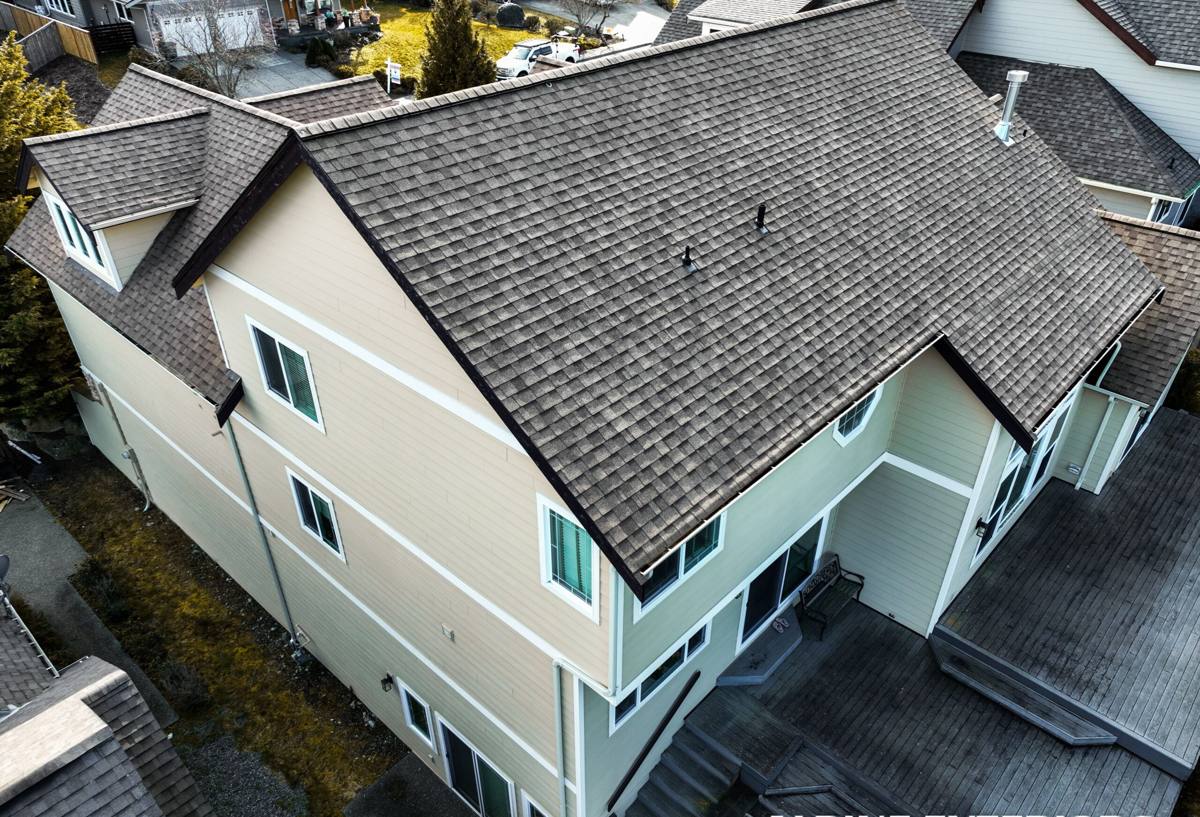
What Kendall's Setting Does to Windows Over Time
Shade, Moisture, and a Longer Moss Season
Trees are a good thing about living out this way, but they also mean more shaded wall surfaces, slower-drying siding and trim, and window sills that don't get the sun exposure to dry out quickly after a rain. That combination is exactly what moss and mildew need to establish themselves, and once moss gets a foothold on a sill or lower sash, it holds moisture against the frame far longer than the same rainfall would on an open, sun-exposed wall. Over a few seasons, that's a real contributor to sill and frame deterioration, especially on older wood-framed windows.
Driving Rain and Wind-Driven Weather
Like the rest of this region, rain around Kendall rarely falls straight down. Wind pushes it sideways into window heads, jambs, and sills, which puts real pressure on the flashing details rather than just the glass and frame. A window that's a good product but poorly flashed will still leak under that kind of load. This is a bigger factor in whether a window stays dry than the brand name on the sticker.
Temperature Swings at the Foothills
Being farther from the moderating effect of open water, properties in and around Kendall can see slightly wider day-to-night and seasonal temperature swings than homes right on the water. That puts more stress on seals and glazing over time, and it's part of why we pay attention to how a given window's frame material handles expansion and contraction, not just its upfront price.
Signs a Kendall Home Needs New Windows
Because of the shade and moisture factors above, window problems in this area often show up earlier or more visibly than they would on a more open, sun-exposed lot. Worth a look if you're seeing:
- Fogging or condensation trapped between panes, meaning the seal on a double- or triple-pane unit has failed
- Visible moss or dark staining collecting on sills, especially on shaded or north-facing walls
- Soft, spongy, or discolored wood at the sill or lower frame corners
- Windows that stick, won't latch properly, or have gotten noticeably harder to operate
- Persistent drafts or a cold spot near a closed window
- Peeling paint, bubbling finish, or gaps where caulk has cracked and pulled away from the frame
- Water staining on interior trim, drywall, or ceiling near a window
Any one of these on its own is usually a straightforward fix. Several of them together, or moss and staining that keep coming back after cleaning, usually point to a moisture problem that's already working its way into the wall.
Choosing the Right Frame Material for a Wooded, Damp Lot
There's no universal right answer here — it depends on your budget, how much sun a given wall actually gets, and how long you're planning to stay in the house. But on a shaded, moisture-heavy lot like a lot of Kendall properties, the trade-offs below matter more than they would on a drier, more open site.
| Frame Material | How It Handles Shade & Moisture | Maintenance | Realistic Lifespan Here |
|---|---|---|---|
| Vinyl | Won't rot; performs well as long as seams and welds are installed correctly | Low; periodic track and weep-hole cleaning to keep moss and debris from clogging drainage | 20-30 years |
| Fiberglass | Very stable through temperature swings, resists moisture well | Low | 30-40+ years |
| Wood, painted or clad | Handsome, but sills and joints need consistent attention on a shaded property or moisture works in over time | Higher; regular repainting or refinishing | 15-30 years depending on upkeep |
| Aluminum | Durable frame but conducts cold and is more prone to condensation on shaded, cooler walls | Moderate | 20-30 years |
On heavily shaded elevations, we generally steer homeowners toward vinyl or fiberglass simply because they hold up with less maintenance in conditions that keep wood and unfinished metal damp longer than they'd like. That said, if you want the look of wood and are willing to keep up the maintenance, we'll install it correctly and tell you honestly what that upkeep schedule looks like.
Full-Frame Replacement vs. Insert Replacement
The first real decision on most window jobs is whether to do a full-frame replacement, which strips the opening down to the rough framing and rebuilds the flashing from scratch, or an insert replacement, which sets a new window into the existing frame. Insert replacement is quicker and less disruptive to surrounding siding and trim, and it's a good option when the existing frame is sound and was properly flashed to begin with. Full-frame replacement takes longer and costs more, but it's the right call when there's already moisture damage at the sill or jambs, or when the original flashing wasn't done correctly. On a shaded Kendall property where moisture has had extra time to work on an older frame, we check for hidden rot before recommending either path — we won't seal a problem up behind a new window just to save a day of labor.
How We Install: The Process That Keeps Water Out
The window itself is only part of the job. What actually determines whether it stays dry for the next few decades is the sequence of steps around it:
- Remove the old window and inspect the rough opening, sill, and surrounding framing for hidden rot or past water damage before anything new goes in
- Repair or rebuild any damaged framing so the new window isn't installed against a compromised structure
- Install a properly pitched sill pan that sheds water outward instead of letting it collect under the frame
- Set the window level, plumb, and square, and secure it per the manufacturer's fastening schedule
- Integrate head flashing with the housewrap or building paper above the window, lapped so water sheds down and out, not behind it
- Tie jamb flashing into the surrounding wall assembly rather than relying on caulk as the only water barrier
- Insulate and air-seal around the frame without trapping moisture against the framing
- Confirm weep holes and drainage paths are clear and functional before trim goes back on
- Finish trim, caulk, and paint or seal exposed surfaces, and walk the finished window with you
None of these steps add meaningful cost relative to the window itself. Skipping any one of them is what turns a decent window into a leak behind the wall two or three winters down the road.
We treat a short list of details as non-negotiable on every install, regardless of budget or window brand:
- Corrosion-resistant fasteners and hardware suited to a consistently damp, salt-tinged climate
- A sill pan pitch that actually moves water out, checked on-site rather than assumed from the plan
- Flashing sequencing that follows correct shingle-lap order — no shortcuts that trap water behind the siding
- Drainage paths and weep holes left open and functional, not caulked shut for a cleaner-looking finish
What Affects the Cost of a Window Installation
Every home is different, and we'll give you real numbers after seeing your windows in person, but these are the main factors that move a project's cost up or down:
| Factor | Why It Matters |
|---|---|
| Insert vs. full-frame replacement | Full-frame costs more due to added labor and flashing work, but is sometimes the only honest fix |
| Number and size of openings | More windows and larger units mean more material and labor, though per-window cost often drops slightly on larger projects |
| Frame material | Vinyl is typically the most budget-friendly; fiberglass and clad-wood options cost more upfront |
| Hidden rot or framing repair | Damage found once the old window is out adds labor, but ignoring it just relocates the problem |
| Access and site conditions | Upper-story windows, tight tree clearance, or difficult site access can add time to a job |
| Trim and finish work | Matching existing trim profiles or repainting disturbed siding adds a finishing cost beyond the window itself |
We'd rather walk you through these factors on your specific home than throw out a broad range that doesn't mean much until we've actually seen the windows.
Why a Crew That Already Works Kendall Matters
A contractor who regularly works the rural, wooded properties around Kendall has a feel for how shade patterns, tree cover, and site access actually play out on jobs, not just how a product spec sheet describes performance. That shows up in small but real decisions: how much extra attention a north-facing wall tucked under trees needs compared to an open, sun-exposed elevation, how aggressively to pitch a sill pan on a lot that holds moisture longer, and which flashing details are worth the extra time on install day so you're not dealing with a leak two winters later. It also means showing up with the right equipment and scheduling flexibility for a property that might have a longer driveway, more tree clearance to navigate, or less predictable access than an in-town lot.
Beyond Windows: The Rest of the Exterior
Windows are our focus on this page, but the same driving rain, moss, and shade that wear on windows wear on the rest of a home's exterior too. We also handle siding, roofing, and decks, and for siding specifically our standard is James Hardie fiber cement, chosen for how it holds up against sustained moisture and moss compared to lower-cost alternatives. If a window project turns up moisture damage in the surrounding siding, trim, or roof-to-wall transition, we can address it as part of the same conversation instead of sending you to find another contractor.
Get a Free, No-Pressure Estimate
If your Kendall home has windows that are fogging, sticking, collecting moss, or just past their useful life, we're glad to take a look and give you a straightforward read on what it actually needs. Reach out using the form below to schedule a free estimate — no pressure, no upsell script.