 Lynden Window
 Roofing Built for Abbotsford's Weather, Not Just a Catalog Photo
Abbotsford sits in the Fraser Valley, close enough to the coast to get salt-laden air on windy days and far enough inland to collect its own weather system of driving rain off the mountains. A roof here does a different job than a roof in a dry climate. It isn't just shedding water — it's managing near-constant dampness, resisting moss and algae growth for months at a time, and holding up to wind-driven rain that gets pushed sideways under poorly sealed flashing. When we install a new roof in Abbotsford, we're building for that specific combination, not just following a generic install checklist.
A lot of roofing problems we see on older Abbotsford homes aren't failures of the shingle or metal panel itself — they're failures of ventilation, flashing, or underlayment choices that didn't account for how much moisture this region actually sees. Getting a new roof right here means getting those details right first.
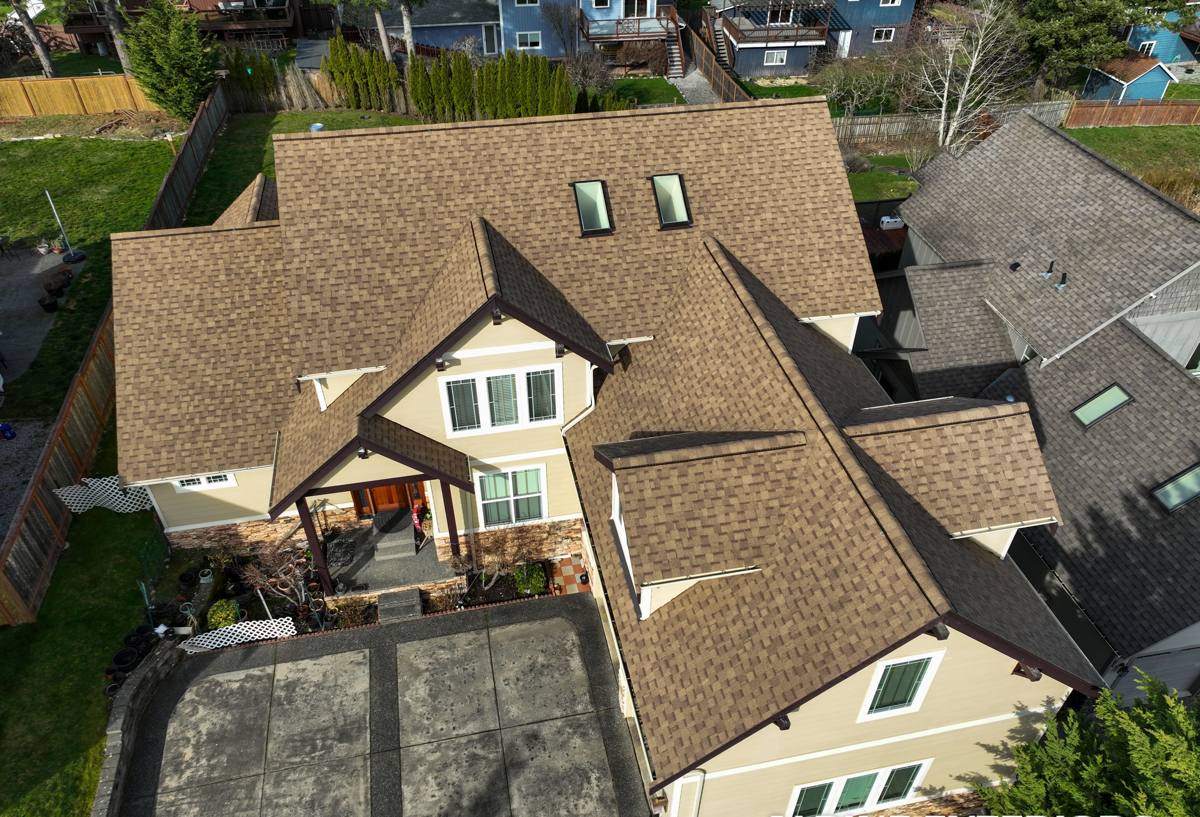
What Abbotsford's Climate Actually Does to a Roof
Moss and Algae Season Runs Long
Between the shade from mature trees common in Fraser Valley neighborhoods and the extended damp stretches from fall through spring, moss has a lot of time to establish itself. Moss isn't just cosmetic — it holds moisture against the roofing material, lifts shingle edges as it grows, and accelerates granule loss on asphalt shingles. A roof system that doesn't account for moss resistance from day one will need more aggressive maintenance for the life of the roof.
Driving Rain and Wind-Driven Water
Rain in this region rarely falls straight down for long. Wind pushes it sideways and up under roof edges, around chimneys, and along valleys. This is where flashing detail and underlayment quality matter more than the shingle brand printed on the wrapper. A roof can have premium shingles and still leak if the valley metal or step flashing around a wall intersection was cut short.
Salt Air and Metal Fasteners
Homes closer to open exposure or higher elevations can pick up salt-influenced air on windy days. Over years, that accelerates corrosion on unprotected fasteners, exposed metal flashing, and lower-grade hardware. It's a slow process, but it's the kind of thing that shows up as rust streaks and loosening fasteners a decade before anyone expected roof problems.
Signs an Abbotsford Roof Needs Replacement, Not Another Repair
- Granules collecting in gutters or at downspout outlets in noticeable amounts
- Shingles that are cupping, curling at the edges, or cracking when touched
- Moss or algae that returns within weeks of cleaning, even after treatment
- Daylight visible through roof boards from inside the attic
- Soft or spongy spots when walked on, especially near valleys or penetrations
- Repeated leaks around the same chimney, skylight, or wall intersection despite past patch repairs
- A roof that's 20+ years old on asphalt shingles, or nearing the end of its rated lifespan on any material
One or two of these on their own might just mean a repair. Several at once, especially combined with the age of the roof, usually means the underlying materials have reached the point where patching is a short-term fix on a longer-term problem.
How We Approach a New Roof Installation
1. Roof and Attic Inspection First
Before we talk materials, we look at what's underneath the current roof covering — the decking condition, existing ventilation, signs of past moisture intrusion, and the state of the flashing. This tells us whether we're doing a straightforward tear-off and replace, or whether there's deck repair or ventilation upgrades that need to happen alongside the new roof.
2. Tear-Off and Deck Assessment
We remove the existing roofing down to the deck rather than layering over old material. Layering over an existing roof traps moisture and hides the exact kind of deck damage that's common in a wet climate like ours. Once the deck is exposed, any soft or water-damaged sections get replaced before anything new goes down.
3. Underlayment and Ice/Water Protection
Given how much sustained rain this area gets, we don't treat underlayment as an afterthought. Synthetic underlayment and additional water-resistant membrane at vulnerable points — eaves, valleys, and around penetrations — form the actual waterproofing layer beneath the visible roofing material. This is where a lot of long-term leak resistance actually comes from.
4. Flashing Detail Work
Chimneys, skylights, wall step-flashing, and valleys get new, properly lapped flashing rather than reusing old pieces. This is the single most common source of leaks in older homes we inspect, and it's not something worth cutting corners on to save an hour of labor.
5. Roofing Material Installation
Shingles, metal panels, or the chosen material go down to manufacturer spec, including correct nailing patterns and exposure — details that affect wind resistance and warranty validity.
6. Ventilation Check and Correction
Proper intake and exhaust ventilation keeps the attic space from trapping moisture, which reduces both moss growth on the roof surface and condensation issues inside the attic. We check this on every install, not just when a homeowner asks.
7. Final Walkthrough
We walk the finished roof and go over what was done, what to watch for, and reasonable maintenance expectations given our climate.
Comparing Roofing Materials for a Fraser Valley Climate
| Material | Moss/Moisture Behavior | Typical Lifespan | Cost Factor |
|---|---|---|---|
| Asphalt Composition Shingle | Prone to moss without proper ventilation; algae-resistant granule options help | 20-30 years | Lower upfront cost |
| Metal Roofing (Standing Seam/Panel) | Sheds moisture quickly, resists moss buildup on the surface | 40-60 years | Higher upfront, lower lifetime maintenance |
| Architectural/Laminate Shingle | Similar to standard asphalt but thicker profile handles wind-driven rain slightly better | 25-30 years | Moderate |
| Cedar Shake | Requires regular maintenance to manage moss and moisture retention in a wet climate | 20-25 years with upkeep | Higher, plus ongoing maintenance cost |
There's no universally "correct" material — the right choice depends on the home's roof pitch, budget, how much ongoing maintenance the homeowner wants to take on, and how the structure is currently ventilated. We'll walk through these trade-offs honestly rather than pushing whatever has the best margin.
Cost Factors Homeowners Should Understand
Roofing quotes vary widely because they're driven by more than square footage. The factors that actually move the price on an Abbotsford job include:
- Roof pitch and accessibility — steeper or harder-to-reach roofs take longer and require more safety setup
- Number of penetrations — chimneys, skylights, and vents each add flashing labor
- Deck condition — hidden water damage discovered during tear-off adds material and labor
- Material choice — metal and cedar carry different upfront costs than standard asphalt
- Layers being removed — a roof with existing layered material takes longer to tear off and dispose of
- Ventilation upgrades — adding proper intake/exhaust venting where none exists
We'd rather walk a homeowner through these variables during an on-site look than give a number over the phone that won't hold up once the tear-off starts.
Permits and Local Considerations
Roof replacements in the City of Abbotsford typically require a building permit, and inspections may apply depending on scope of work. Requirements can shift, so we confirm current permit rules with the city before work begins rather than assuming last year's process still applies. Handling this correctly protects the homeowner if there's ever an insurance claim or a future home sale where permit history gets checked.
Why It Matters That We Already Work in Abbotsford
A crew that regularly works in and around Abbotsford already knows which neighborhoods tend to have shaded, moss-prone roofs, which areas catch more wind exposure, and what the City's permitting process actually looks like in practice. That local familiarity shortens the guesswork on both estimating and installation — we're not learning the area's climate quirks on your project.
It also means accountability doesn't end when the crew packs up. We're a phone call away if a question comes up next winter, not a company that did one job in the area and moved on.
What to Ask Any Roofing Contractor Before Hiring
- Are you licensed and insured to work in British Columbia, and can you provide proof?
- Will you provide a written scope of work, not just a one-line quote?
- Do you handle the permit process, or is that left to the homeowner?
- What underlayment and flashing materials are included, specifically — not just the shingle brand?
- What's the manufacturer's warranty, and what's your own workmanship warranty?
- How do you handle unexpected deck damage found during tear-off?
A contractor who answers these clearly and in writing is worth trusting more than one who quotes fastest.
Ready for a Straight-Talk Estimate
If your Abbotsford roof is showing its age, holding onto moss it won't shake off, or you're just trying to plan ahead before the next wet season, we're happy to take a look and give you an honest read on where things stand. Use the form below to request a free, no-pressure estimate.