 Lynden Window
 Exterior Work for Sumas and Lynden Homes
Sumas sits at the far northern edge of Whatcom County, tucked against the Canadian border and the Nooksack River valley, just a short drive from Lynden. It's a small, close-knit community surrounded by farmland, and the houses here run the gamut — older farmhouses that have been added onto over the decades, mid-century ranch homes, and newer builds on the edges of town. What they share is exposure to the same weather pattern that shapes exterior work across this part of Whatcom County: long stretches of gray, wet weeks, low winter sun that never quite dries things out, and a shoulder season where moss and mildew get a real foothold before anyone notices.
We work throughout Whatcom County, and Sumas and Lynden are core to our service area — not a stretch destination we drive out to a few times a year. That matters for windows, siding, roofing, and decks alike, because the right approach here isn't generic; it's shaped by what actually happens to a house that sits through a Whatcom County winter and a wet spring, year after year.
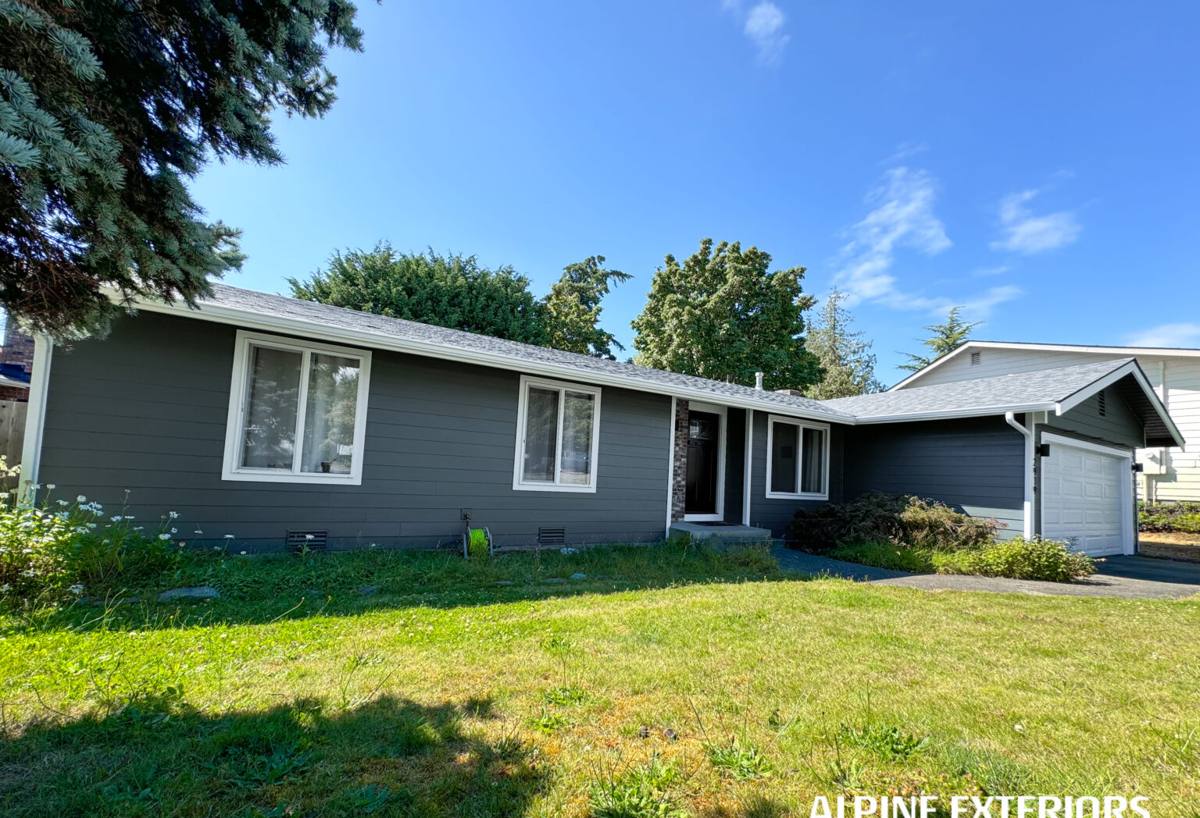
What Local Homes Are Up Against
Driving Rain and Standing Moisture
This part of the county doesn't get dramatic storms as much as it gets persistent, wind-driven rain that finds every gap in flashing, trim, and window sills. Over years, that kind of exposure is what causes rot at window sills, staining below siding seams, and soft spots around roof penetrations — not one big event, but slow, repeated saturation in the same spots. Homes with north- or west-facing exposure tend to take the worst of it.
A Long Moss Season
Between the tree cover common on rural and semi-rural lots and the number of overcast, damp days each year, moss and algae get a long runway to establish themselves on roofs, siding, and shaded decking. Once moss takes hold on a roof, it holds moisture against the shingles and can work its way under tabs and flashing. On siding and decking, algae staining is mostly cosmetic at first, but left alone it traps moisture against the surface and accelerates wear.
Freeze-Thaw Cycling
Whatcom County winters aren't brutally cold, but they do cycle — a hard frost, then a thaw, sometimes several times a week. Water that's worked its way into a crack, a gap in caulking, or a compromised window seal expands when it freezes. Repeated over a winter, that's what turns a small crack into a real problem, and it's a big part of why deferred maintenance costs more here than it would in a drier, more stable climate.
Salt Air Across the Region
Whatcom County's coastal areas add another layer — salt-laden air that accelerates corrosion on fasteners, hardware, and unprotected metal trim. Homes further inland around Sumas and Lynden see less of this directly, but it's part of why we spec corrosion-resistant hardware and fasteners as a standard practice across our work in this region, not just near the water.
Windows That Actually Hold Up Here
Frame Material Matters More Than the Brochure Suggests
In a climate defined by moisture and temperature swings, frame material is one of the biggest factors in how a window performs over 15, 20, or 30 years. We install vinyl and fiberglass frames as our standard for this climate — both resist moisture absorption and don't require repainting, which matters when a house sits through months of damp weather every year. Wood-clad windows can look excellent, but bare or poorly maintained wood exposed to this level of moisture is a maintenance commitment we're upfront about before anyone signs off on it.
Glass Packages and Condensation
Double-pane, low-E glass with argon fill is the baseline we recommend for this area — it cuts down on heat loss during cold snaps and helps reduce interior condensation on cold, damp mornings, which is a common complaint in older single-pane or early double-pane homes around Lynden and Sumas. For homes with road noise or homeowners who run into consistent condensation issues, upgraded glass packages are worth discussing, but we don't push glass upgrades homeowners don't need.
Installation Detailing Is Where Failures Actually Happen
Most window failures we see in this region aren't a bad window — they're a poorly flashed or poorly sealed installation letting water behind the frame. Proper sill pan flashing, correct integration with the house wrap or weather-resistive barrier, and careful sealing at the head and jambs are what keep driving rain out. This is detail work that's easy to rush and hard to inspect once siding goes back on, which is exactly why we treat it as non-negotiable.
Comparing Window Frame Options
| Frame Material | Moisture Resistance | Maintenance | Typical Fit for This Area |
|---|---|---|---|
| Vinyl | Excellent — won't rot or absorb water | Low — occasional cleaning | Strong all-around choice for Sumas and Lynden homes |
| Fiberglass | Excellent — very stable through freeze-thaw | Low | Good for larger openings and homes wanting a higher-end feel |
| Wood (clad exterior) | Good on the clad side, vulnerable if coating fails | Moderate to high | Best for homeowners committed to upkeep or interior wood aesthetics |
| Aluminum | Prone to condensation without thermal breaks | Low, but performance concerns | Rarely our first recommendation for residential replacement here |
Beyond Windows: How the Rest of the House Ties In
Windows don't perform in isolation. A window replacement done without attention to the surrounding siding and trim can leave gaps that undercut the whole job, and a roof that's shedding moss and losing granules will eventually push water problems down into fascia, soffits, and eventually window headers. We handle siding, roofing, windows, and decks because on most homes in this area, these systems interact — and a crew that only sees one piece of the house tends to miss how water actually moves through it.
Siding
Fiber cement and quality vinyl siding both hold up well against the region's rain and moss exposure when installed with proper flashing and drainage gaps. We look at siding condition any time we're doing window work, since compromised siding around an opening is often the real source of a "window leak."
Roofing
Roof condition affects everything below it. Moss removal, proper ventilation, and flashing details at valleys and penetrations are what keep a roof performing through a long Whatcom County wet season instead of quietly failing from the inside.
Decks
Decks take direct weather exposure and are often the first place moss and rot show up, especially in shaded yards common around Lynden and Sumas. Proper board spacing, ledger flashing, and material choice all matter more here than they would in a drier climate.
Why a Local Crew Makes a Real Difference
Contractors who don't work this area regularly tend to spec and install the same way they would in a milder or drier climate, because that's what they know. A crew that's actually done this work across Whatcom County season after season builds in the extra flashing detail, the drainage gap, the corrosion-resistant fastener — not because a manual says to, but because they've seen what happens on local homes when those steps get skipped. That local pattern recognition is worth more than a slightly lower bid from an out-of-area company that won't be around to answer for the callback.
It also means faster response. Being close to Sumas and Lynden means we can get out for an estimate, a follow-up question, or a warranty visit without it being a special trip.
What to Expect From the Process
- An in-person walkthrough to assess existing windows, siding, roof, or deck condition — not just the area you called about
- Honest feedback on what needs attention now versus what can reasonably wait
- A written estimate with clear scope, materials, and timeline — no vague allowances
- Proper flashing, sealing, and drainage detailing on every installation, not just on request
- Cleanup and a final walkthrough before we consider the job done
Cost Factors Worth Understanding
Window replacement costs vary based on a handful of factors that matter more than most homeowners expect: the number and size of openings, frame material, glass package, and how much extra work is needed at the opening due to rot or old, poor installation. Homes with existing water damage around windows — common in older Lynden-area farmhouses that haven't been touched in a while — sometimes need sill or framing repair before a new window even goes in. We flag that kind of work upfront during the estimate rather than as a surprise mid-project.
Broadly, straightforward vinyl replacement in an existing opening tends to run lower per window than full-frame replacement involving trim, flashing repair, or structural attention. We'll always walk through where your home falls on that range before any work starts.
A Simple Maintenance Checklist for This Climate
- Inspect window sills and caulking each fall before the wet season sets in
- Clear debris from window tracks and weep holes so water drains instead of pooling
- Check for moss or algae buildup on north-facing siding and shaded roof sections each spring
- Keep gutters clear so overflow isn't running down siding and past window heads
- Have a professional look at any soft spots, staining, or fogging between panes sooner rather than later — small issues here don't stay small
If you're weighing new windows, or want an honest look at your siding, roof, or deck while we're out, we're happy to walk the property with you. Estimates are free, there's no pressure, and you'll get a straight answer about what actually needs doing — just fill out the form below to get started.