 Lynden Window
 Windows Built for Bellingham's Climate
Bellingham sits right on the water, and that changes what a window has to put up with compared to a house forty miles inland. Between Bellingham Bay's salt air, the wind-driven rain that comes off the Strait of Georgia through the winter, and a moss season that can stretch from October into May, the exterior of a home here works harder than most homeowners realize. Windows are one of the first places that shows up — in fogged glass, sticky sashes, soft trim, or a draft you can feel from across the room.
We're based in Lynden and work throughout Whatcom County, including Bellingham, and we size window projects around what this specific climate does to a house, not a generic checklist. That means paying close attention to flashing and moisture management around every opening, choosing materials that hold up to salt-laced air near the bay, and scheduling installs around the weather windows we actually get here rather than an idealized forecast.
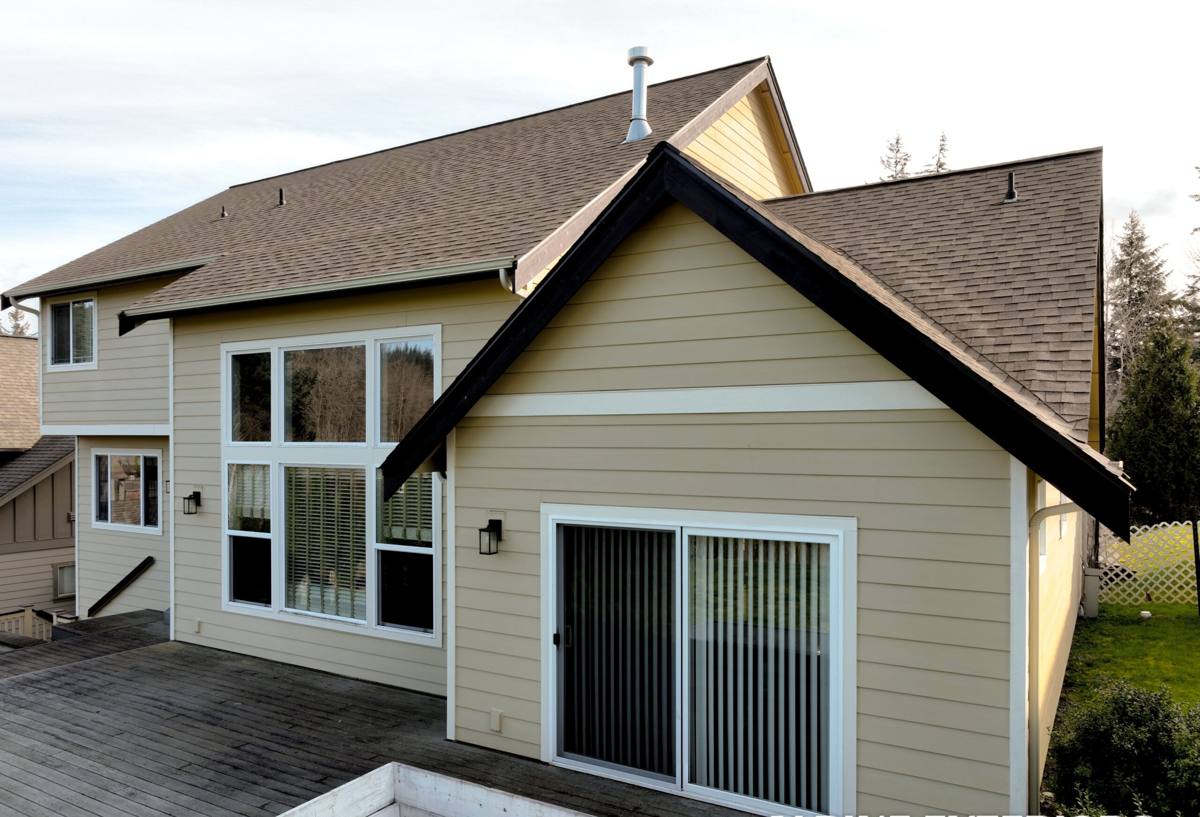
What Bellingham Homes Are Up Against
Salt Air and Corrosion
Homes closer to Bellingham Bay and the waterfront neighborhoods deal with a fine layer of salt in the air that settles on everything, including window hardware. Over years, that salt exposure can pit unprotected metal hinges, latches, and screen frames, and it accelerates the breakdown of cheaper finishes on both vinyl and metal components. It's not dramatic — it's slow, and it's the kind of thing that turns a smooth-operating window sticky and stiff a decade before it should.
Driving Rain and Wind Pressure
Storms off the Strait don't just drop rain straight down — they push it sideways into siding and window openings. A window that's watertight in a still, gentle rain can still leak under wind-driven rain if the flashing detail, sill pan, or sealant around it isn't done right. This is one of the most common sources of hidden water damage we find in older Bellingham homes: not a failed window unit itself, but a poor seal or missing sill pan letting water track behind the frame and into the wall cavity.
The Long Moss and Mold Season
Whatcom County's mild, wet winters are great for growing things — including moss and mildew on north-facing trim, sills, and anywhere water sits instead of draining away. Wood sills and painted wood trim are especially vulnerable if drainage paths get clogged or caulking has failed. Vinyl and fiberglass frames resist this kind of growth far better, though even they need periodic cleaning where moss and algae can gain a foothold in shaded, damp corners.
Signs Your Windows Are Losing the Fight
- Condensation or fog trapped between panes (a failed seal on double- or triple-pane glass)
- Sashes that stick, drag, or won't stay open on their own
- Visible daylight or a draft around the frame when the window is closed
- Soft, discolored, or spongy wood at the sill or exterior trim
- Paint or finish peeling from the inside frame near the glass (often a sign of moisture intrusion)
- A noticeable jump in heating costs with no other explanation
- Moss or dark staining building up on the exterior sill that keeps coming back after cleaning
Any one of these is worth a look. Several together usually means the window's protective layers — glass seal, weatherstripping, and flashing — have broken down together, which is common once a window passes the 20-year mark in a coastal climate.
Choosing Materials for This Climate
There's no single "best" window material — the right choice depends on the home, the budget, and where on the property the window sits. We walk homeowners through the real trade-offs rather than pushing one product line.
| Frame Material | How It Handles Bellingham's Climate | Maintenance |
|---|---|---|
| Vinyl | Good moisture and salt resistance, won't rot or corrode, solid value | Low — occasional cleaning |
| Fiberglass | Excellent dimensional stability in temperature and moisture swings, strong against salt air | Low |
| Wood-clad | Warm interior look, but the exterior cladding needs a good seal to keep coastal moisture out of the wood core | Moderate — inspect cladding seals periodically |
| Aluminum | Strong but conducts cold and is more prone to salt-air corrosion on hardware over time | Moderate — hardware upkeep |
For most Bellingham homes, especially those closer to the bay, we steer people toward vinyl or fiberglass for the exterior-facing performance, and reserve wood-clad options for homeowners who want that interior look and are willing to keep up with the cladding seal. We're upfront when a product isn't a fit for a given exposure — it's about matching the material to the job, not steering everyone toward the same option.
Glass and Energy Performance
Whatcom County doesn't see extreme heat, but it does see a lot of gray, wet, cool days, and heating costs add up over a long winter. Double-pane glass with a low-E coating and an insulated (usually argon-filled) gap is the standard we install for good reason — it cuts heat loss without adding meaningful cost to the project. Triple-pane is worth discussing for north-facing rooms, homes near louder roads, or anyone chasing the lowest possible energy bills, but it's a step up in cost that not every home needs.
Just as important as the glass package is the installation seal around it. A high-performance window installed with a poor air seal will still leak heat and let moisture in — the glass spec only matters if the installation backs it up.
Why Installation Quality Matters More Than the Brand
We see it often: a perfectly good window unit failing early because of how it was installed, not because of the product itself. In a climate that throws wind-driven rain at a house for months at a time, a few details make the difference between a window that lasts decades and one that causes a slow leak behind the wall:
- A properly formed and sloped sill pan so any water that gets past the sash drains outward, not into the wall
- Correctly layered flashing tape that sheds water down and over the layer below it, not the reverse
- Full, continuous sealant beads at the right points — not just at the visible trim
- Proper shimming so the window operates square and the seals compress evenly
- Compatibility between the new window's nailing fin or flange and the home's existing weather-resistive barrier
These are the same principles that apply to the siding and roofing work around those openings, which is part of why it helps to have one crew that understands how windows, siding, and roofing details tie together at every penetration in the building envelope.
What Affects the Cost of a Window Project
| Factor | Why It Matters |
|---|---|
| New construction vs. replacement | Replacement into an existing opening is typically less invasive and less costly than a full frame-out |
| Frame material and glass package | Vinyl is generally the most budget-friendly; fiberglass and wood-clad cost more upfront |
| Number and size of openings | Larger or custom-shaped windows and multi-window jobs affect labor and material scope |
| Condition behind the existing window | Hidden rot or water damage found during removal can add repair work before the new window goes in |
| Access and site conditions | Second-story or hard-to-reach openings take more time and equipment |
We give straightforward, itemized estimates so homeowners can see exactly what's driving the number, rather than a flat lump sum that hides where the money's going.
Maintaining Windows Through a Whatcom County Winter
- Rinse pollen, salt residue, and grime off exterior glass and frames a couple of times a year
- Keep weep holes at the bottom of the frame clear so water can drain out instead of pooling
- Check and refresh exterior caulking where it's cracked or pulled away from the trim
- Clear moss or debris off sills and nearby trim before it holds moisture against the surface
- Lubricate hardware and tracks occasionally, especially on homes closer to the water where salt air accelerates wear
- Watch for condensation between panes — it's an early sign a seal has failed and isn't something that fixes itself
A Local Crew That Knows Bellingham
Working out of Lynden means our crews are in and around Bellingham regularly, and we plan window installs around the realities of Whatcom County weather — scheduling exterior work for drier stretches when possible and knowing how to protect an open wall if conditions turn while a job is in progress. We also carry the local permitting and code knowledge for both Whatcom County and City of Bellingham jurisdictions, which keeps a window replacement project moving instead of stalling on paperwork.
Because we handle windows alongside siding, roofing, and decks, we can look at a home's exterior as one connected system. A window replacement is a natural time to check the condition of the surrounding siding and flashing, and we'll flag anything we see — without turning a window quote into an upsell pitch.
If you're noticing drafts, fogged glass, sticking sashes, or just want an honest read on whether your windows are holding up to the Bellingham climate, we're happy to take a look. Fill out the form below for a free, no-pressure estimate.