 Lynden Window
 Serving Aldergrove From Just Across the Line
Aldergrove sits close enough to Whatcom County that a lot of homeowners there already cross the border for work, shopping, and services — and exterior contracting is no exception. Lynden Window Co is based in Lynden, Washington, a short drive south of the Aldergrove-Lynden crossing, and we've built our scheduling and crews around serving both sides of that line. If you own a home in Aldergrove and need windows, siding, roofing, or deck work done by a crew that understands Pacific Northwest weather rather than a generic install manual, that's the work we do every week.
We're upfront that we're a US-based contractor working across the border into BC. For most exterior projects — window replacement, siding, roofing, and decks — that's a straightforward, well-worn path for us. We'll walk you through what that means for your specific project when we quote it, including any paperwork or logistics that come with crossing materials and crews into Canada.
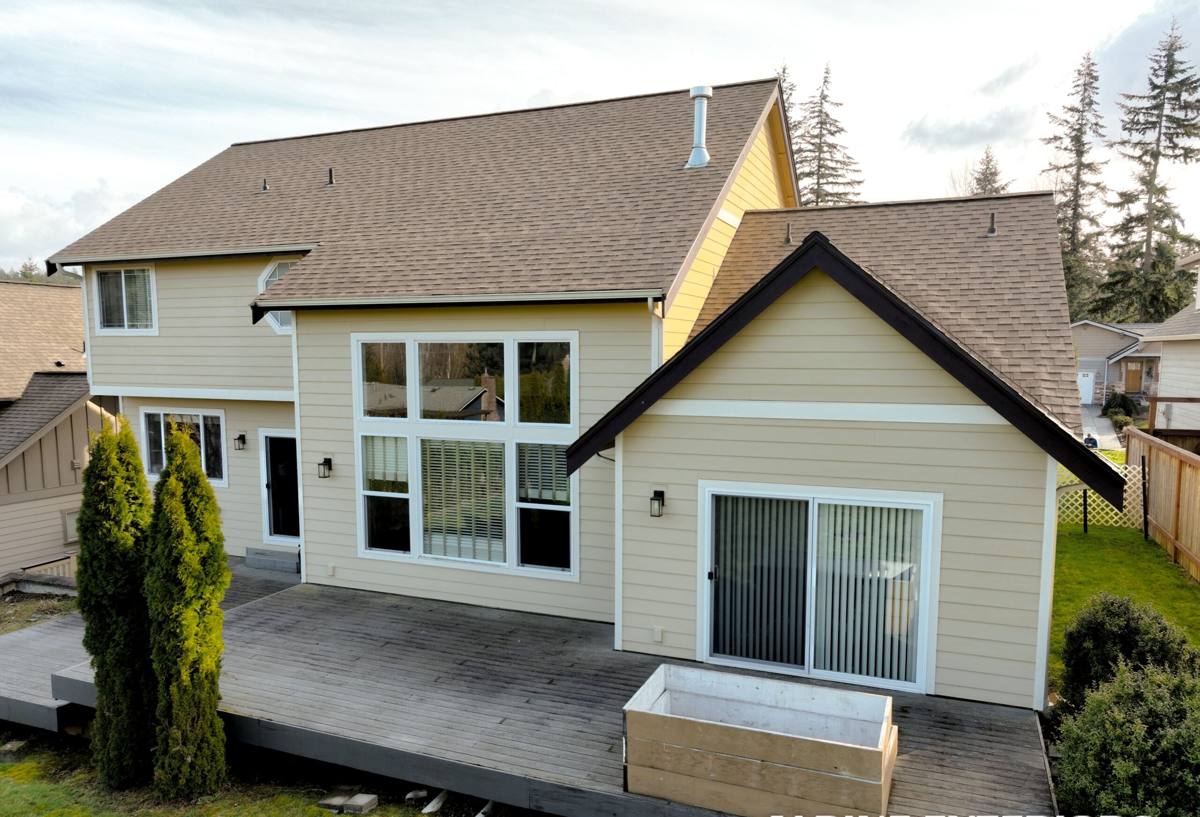
What Aldergrove's Climate Does to a Home's Exterior
Aldergrove and Lynden share essentially the same weather system. This is the Fraser Valley and northern Whatcom County — a stretch of the Pacific Northwest that gets a long, wet fall-through-spring season, persistent low cloud cover, and enough rainfall that moisture management is the single biggest factor in how long an exterior holds up. A few things stand out for homes in this specific area:
Driving Rain and Wind-Driven Moisture
This part of the valley isn't just wet — the rain here often comes in sideways during fall and winter storms, pushed by wind funneling through the valley. That matters because driving rain finds gaps that straight-down rain never would: poorly flashed window openings, siding laps installed backward, roof valleys without enough underlayment overlap. A lot of the water damage we find in older homes here didn't come from a leak in the obvious sense — it came from wind-driven moisture working its way past details that were fine for a calmer climate but not for this one.
A Long Moss and Algae Season
With months of damp, shaded, mild-temperature conditions, moss and algae get a long runway to establish themselves on roofs, siding, and decking — especially on north-facing slopes and anything shaded by mature trees, which are common on Aldergrove properties. Moss isn't just cosmetic. It holds moisture against roofing material, lifts shingle edges, and creates a wicking layer that keeps wood and even fiber-cement products wetter than they should be for longer than they should be.
Salt Air Influence
While Aldergrove isn't coastal in the way Vancouver or Bellingham's waterfront is, this region still sees enough marine air influence off the Salish Sea to accelerate corrosion on exposed metal — fasteners, flashing, hardware — faster than you'd see in a drier inland climate. Combined with the constant moisture, it's a double factor: metal corrodes faster, and corroded fasteners fail sooner, which means whatever they're holding (siding panels, trim, gutters) starts moving and opening gaps for water.
Freeze-Thaw Cycling
Winters here aren't brutally cold, but they do dip below freezing regularly, then swing back above it within days. That freeze-thaw cycling is hard on anything that's already holding water — cracked caulk joints, saturated wood trim, deck boards with standing moisture. Water expands when it freezes, and that's what turns a small crack into a bigger one over a few seasons.
Windows: Where This Climate Shows Up First
Windows are usually the first place homeowners notice trouble, because the symptoms are visible from inside the house — fogging between panes, drafts, sashes that won't seal, sills that feel soft. In this climate, window failure is almost always a moisture story.
Common Issues We See on Aldergrove-Area Homes
- Failed seals on older double-pane units, showing up as permanent fogging or condensation between the glass layers
- Wood sills and jambs that have started to soften or rot from years of driving rain hitting the same spot
- Poorly flashed openings where the original installer didn't account for wind-driven moisture, leading to staining below the window inside and out
- Aluminum-frame windows from older builds that conduct cold and contribute to condensation and mold at the frame edges
- Caulking that's cracked or pulled away from the frame after repeated freeze-thaw cycles
What We Actually Do
Window replacement in this climate is as much about the installation as the window itself. We flash every opening to shed water outward and downward, never relying on caulk alone as the primary water barrier. We pay close attention to sill pans and drainage paths so that any moisture that does get past the exterior cladding has somewhere to go besides your wall cavity. On the product side, we install vinyl and fiberglass-framed windows with modern insulated glass units — good options for this region because they don't corrode, don't require repainting, and perform well thermally in a climate that's more about damp cold than deep freeze.
Siding: Managing Moisture, Not Just Looks
Siding does two jobs: it's the visible skin of the house, and it's the first line of defense against the rain we described above. In a climate like this, siding that isn't installed with proper drainage behind it will trap moisture regardless of how good the material is.
What We Look For on Existing Siding
- Buckling or warping, often a sign of moisture trapped behind the panel
- Moss and algae staining, especially on north and shaded elevations
- Soft spots, particularly near ground level, around window trim, or under roof valleys where water concentrates
- Nail pops or fastener corrosion loosening panels and opening gaps
Material Trade-Offs for This Region
We install fiber-cement, engineered wood, and vinyl siding depending on the home, the budget, and the owner's priorities. Fiber-cement holds up very well against moisture and doesn't feed moss the way wood can, but it's heavier and needs correct fastening and painting to perform long-term. Vinyl is low-maintenance and budget-friendly but can look and perform inconsistently if the substrate underneath isn't properly prepped and flashed first. We'll always tell you honestly which option fits your house and your goals rather than pushing whatever's easiest for us to install.
Roofing: Where Moss Does the Most Damage
A roof in this climate is fighting a two-front war — shedding a high volume of rain, and resisting the moss and organic growth that thrives in the shaded, damp conditions common around Aldergrove's tree-lined properties.
Moss Isn't Cosmetic — It's Structural Wear
Once moss establishes on a roof, it holds water against the shingle surface well after the rain has stopped, keeps that section of roof cooler and damper than the rest, and physically lifts shingle tabs as its root structure grows underneath them. Left long enough, moss growth shortens the usable life of asphalt shingles significantly compared to a roof that's kept clear.
Our Approach
We install roofing systems with proper underlayment and ice-and-water protection at eaves and valleys — the areas most exposed to wind-driven rain and ice damming during cold snaps. We pay close attention to valley flashing and step flashing at wall intersections, since these are the highest-failure points on roofs in this region. We also talk with homeowners about moss prevention measures like zinc or copper strips near the ridge, which help suppress regrowth between cleanings without requiring harsh chemical treatments.
Decks: Built for Standing Water and Shade
Decks in this climate take a beating from the same moisture and shade conditions as roofs, but with the added stress of foot traffic and structural load. Wood decking that isn't properly gapped and ventilated underneath will trap moisture, and that's where rot and mold take hold first — usually at the ledger board connection to the house and around post bases set in or near grade.
What Holds Up Best Here
We build with proper flashing at the ledger board (a critical, often-skipped detail that prevents water from tracking behind the deck and into the house structure), correct board spacing for drainage and airflow, and post bases that keep wood off standing water. Composite decking is a strong option for shaded, damp yards since it doesn't absorb water or feed mold the way untreated wood can, though it costs more upfront. Pressure-treated wood remains a solid, budget-conscious choice if it's detailed and maintained correctly.
Comparing Exterior Materials for This Climate
| Material | Where It's Used | Strength Here | Watch-Out |
|---|---|---|---|
| Fiber-cement | Siding | Resists moisture and moss buildup | Needs correct fastening and paint upkeep |
| Vinyl | Siding, windows | Low maintenance, won't corrode | Performance depends on proper prep underneath |
| Fiberglass/vinyl frames | Windows | No rot, no corrosion, good thermal performance | Upfront cost higher than aluminum |
| Asphalt shingle | Roofing | Cost-effective, widely proven | Needs moss management and proper flashing |
| Composite decking | Decks | Doesn't absorb water or feed mold | Higher material cost than wood |
| Pressure-treated wood | Decks | Budget-friendly, familiar to maintain | Needs consistent sealing and inspection |
A Homeowner's Seasonal Checklist for This Region
Whether or not you're ready for a full project, these are the checks that matter most for homes in the Aldergrove-Lynden climate zone:
- Look at north-facing and shaded roof sections each spring for moss growth before it spreads
- Check window sills and interior trim for soft spots or staining after the heaviest fall and winter storms
- Clear gutters before the fall rains start — clogged gutters push water back under roofing and siding edges
- Inspect the caulk lines around windows and doors annually; cracked caulk is an early warning sign, not a cosmetic issue
- Walk your deck and press on the ledger board area and any spots that stay shaded most of the day, checking for soft or spongy wood
- Watch for algae streaking on siding, especially under roof overhangs where runoff concentrates
Why a Local Crew Matters for Cross-Border Work
A contractor unfamiliar with this specific stretch of the Pacific Northwest might build to a generic spec — fine for a drier or milder region, but not matched to what Aldergrove homes actually face. We work in this climate zone constantly, on both sides of the border, which means our flashing details, material choices, and maintenance advice are built around the real conditions here: heavy driving rain, long moss seasons, salt-influenced air, and freeze-thaw cycling. We also handle the logistics of cross-border scheduling and materials ourselves, so you're not left coordinating that piece on your own.
If you're dealing with an aging roof, tired siding, drafty windows, or a deck that's starting to show its age, we're happy to come take a look and give you a straightforward, no-pressure estimate — including an honest read on what's urgent versus what can wait.