 Lynden Window
 Why Window Condition Matters in Lynden's Climate
Whatcom County doesn't get extreme weather so much as relentless weather. Lynden sits in a stretch of northwest Washington where damp, salt-tinged marine air off the Sound and Georgia Strait mixes with driving rain off the water and a moss season that can stretch from October well into spring. None of that is dramatic on any single day. But windows take a slow, cumulative beating here that homeowners in drier climates never have to think about. Seals age faster. Wood trim holds moisture longer. Moss and algae find any foothold they can, including on sills and frames that stay shaded and damp for weeks at a time.
That's why "how old are my windows" is often less useful than "how are my windows actually performing." A 20-year-old window that was installed well and gets sun exposure can still be doing its job. A 10-year-old window on a north-facing wall that stays wet half the year can already be failing. This page walks through the signs worth paying attention to, what's normal wear versus what's a real problem, and how to think through the repair-or-replace decision without guesswork.
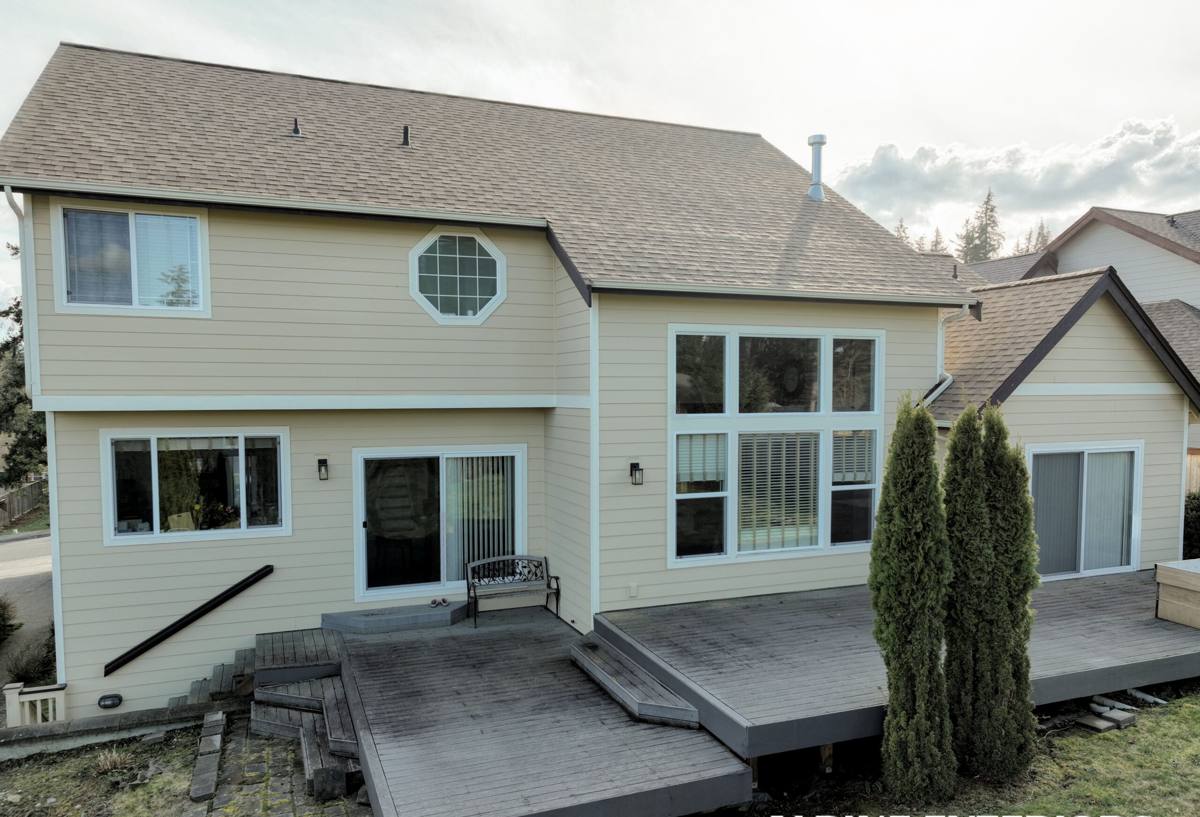
Visible Signs Your Windows Are Failing
Drafts and Air Movement
If you can feel air moving near a closed window on a windy day, or a candle flame flickers when you pass it along the frame, the weatherstripping or seal has broken down. This is one of the most common complaints we hear from Lynden homeowners, especially on walls that face the prevailing wind and rain.
Condensation and Fogging
Condensation on the inside of a single-pane window is normal in a cold, humid house. Condensation or fogging between the panes of a double-pane window is not — it means the seal has failed and the insulating gas or dead-air space has been compromised. Once that happens, the glass unit itself needs to be replaced; there's no repair for a failed seal.
Windows That Are Hard to Open, Close, or Lock
Wood swells and shrinks with humidity, and Lynden's damp stretches make that worse. If a window sticks, won't stay open, or the lock no longer lines up cleanly, the frame has likely warped or the hardware has worn out. This isn't just an annoyance — a window that doesn't lock securely is a real security gap.
Visible Rot, Cracking, or Paint Failure
Peeling paint, soft or spongy wood when you press on the sill, or cracking at the corners of the frame are signs that moisture has gotten into the wood itself. Once rot sets in, it spreads, and it's rarely limited to just the window.
Hidden Signs That Don't Show Up Right Away
Some of the most costly window problems aren't obvious from a quick look. These are the ones we ask about specifically during an inspection.
- Rising energy bills without a change in usage — old, leaky windows are one of the most common culprits for heating costs creeping up year over year.
- Musty smell or visible mold near a window frame, especially on interior trim or drywall below the sill, which usually means water has been getting in for a while.
- Cold spots near windows that you can feel from several feet away, even with the window fully closed.
- Fading furniture or flooring near a window, which can indicate an old or damaged low-E coating that's no longer blocking UV effectively.
- Noticeable moss or algae staining that keeps returning on the sill or lower frame even after cleaning — often a sign the wood underneath is staying damp longer than it should.
How Long Should Windows Last?
Lifespan depends heavily on material, installation quality, and how much weather exposure a given wall gets. Here's a general, honest range for what we see in this region:
| Window Type | Typical Lifespan in Whatcom County | Common Failure Point |
|---|---|---|
| Wood (unclad) | 15-25 years | Rot at sill and joints from moisture exposure |
| Wood-clad (aluminum or vinyl exterior) | 25-35 years | Seal failure, cladding damage at fasteners |
| Vinyl | 20-30 years | Seal failure, hardware wear, UV brittleness over time |
| Fiberglass | 30-40+ years | Seal failure (frame itself rarely degrades) |
| Aluminum (older, non-thermally-broken) | 20-30 years structurally, poor efficiency throughout | Condensation and heat loss, not structural failure |
These are general ranges, not guarantees — a well-installed window on a sheltered, sun-exposed wall will consistently outlast one on an exposed, north-facing wall that catches every storm coming off the water.
Why Whatcom County Weather Speeds Up Window Wear
Three regional factors do most of the damage here, and they compound each other:
Driving Rain
Wind-driven rain doesn't just hit glass — it gets pushed into gaps around trim and flashing that would stay dry in a calm rain. Over years, this is what breaks down caulking and finds its way into wood framing.
Moss and Algae Season
Long stretches of overcast, damp weather from fall through spring give moss and algae plenty of time to establish on horizontal surfaces like sills and muntins. Beyond looking bad, sustained moss growth holds moisture against wood and paint far longer than open air would.
Salt-Tinged Marine Air
Being close to Puget Sound and the Strait, Lynden and the rest of Whatcom County get some marine air influence, which is harder on metal hardware, fasteners, and unprotected wood than drier inland climates. It's a slow effect, but it adds up over the life of a window.
A Simple Inspection You Can Do This Weekend
You don't need special tools to get a rough sense of where your windows stand. Walk the house, inside and out, and check each window against this list:
- Press firmly on the sill and lower corners of the frame — does it feel soft or spongy anywhere?
- Open and close each window — does it move smoothly, or does it stick or drag?
- Check the lock — does it line up and engage without forcing it?
- Look between the panes on double-pane windows for fogging, haze, or moisture streaks.
- Hold your hand a few inches from the glass and frame on a cold day — is there a noticeable draft or cold spot?
- Look outside at the caulking and trim — is it cracked, pulled away, or missing in sections?
- Check for moss, algae, or dark staining on sills, especially on north- and west-facing walls.
- Note any musty smell or visible mold on the interior trim or nearby drywall.
If you find issues on more than a couple of windows, or any sign of soft wood or interior mold, it's worth getting a professional opinion before deciding whether to repair or replace.
Repair or Replace? How to Think It Through
Not every issue means a full replacement. Here's how we generally frame that decision for homeowners:
| Situation | Usually Repairable | Usually Needs Replacement |
|---|---|---|
| Worn weatherstripping, minor draft | Yes | |
| Broken hardware, lock, or balance | Yes | |
| Failed seal / fogging between panes | Yes (glass unit or full window) | |
| Soft or rotted frame/sill wood | Yes | |
| Single window with isolated damage | Often yes | |
| Multiple aging windows, rising energy bills | Usually more cost-effective long term |
As a rule of thumb: if the frame itself is structurally sound and the problem is hardware, weatherstripping, or a single failed seal, repair is often the right call. Once wood rot, widespread seal failure, or persistent moisture problems show up across several windows, replacement tends to be the more honest long-term answer — repeated repairs on failing frames rarely save money once you count them up over a few years.
What to Look For in Replacement Windows
If you do decide to replace, a few decisions matter more than others for a house in this climate:
Frame Material
Vinyl and fiberglass both hold up well against sustained damp weather and require far less upkeep than unclad wood. Wood-clad options give you the interior look of wood with a more weather-resistant exterior shell. We'll talk through the maintenance trade-offs honestly based on your home and budget rather than pushing one product line.
Glass Package
Double-pane with a low-E coating is the standard baseline for this region. Triple-pane adds meaningful noise and heat-loss benefits but comes at extra cost — worth discussing if a room is especially exposed to wind or cold.
Installation Quality
Even a good window performs poorly if it's flashed and sealed incorrectly. Proper flashing and sealing around the rough opening is what actually keeps driving rain out over the long run — it matters at least as much as the window itself.
Sill and Trim Detailing
Given how much moss and moisture exposure sills see here, sloped sill design and quality caulking at trim joints go a long way toward keeping new windows performing the way they should for the long haul.
Getting a Second Opinion
If you're not sure whether what you're seeing is a minor fix or a sign of bigger problems, it's worth having someone take a direct look rather than guessing from a checklist. A short on-site inspection can usually tell you within a few minutes whether you're dealing with a simple repair, a single window that needs replacing, or a house-wide issue worth planning for.
We offer free, no-pressure estimates for Lynden homeowners — walk us through what you're noticing, and we'll give you a straight assessment of what's actually going on and what your realistic options are. Use the form below to get started.