 Lynden Window
 Roofing for a Border Climate That Doesn't Cut Homeowners Any Slack
Aldergrove sits in that stretch of the lower Fraser Valley where marine air off the Pacific meets the foothills, and the result is a roofing climate that punishes shortcuts. Homes here deal with long stretches of driving rain carried in on southwest winds, damp air that lingers under tree cover, and a moss season that can run from fall through spring. None of that is unusual for the region, but it means an asphalt shingle roof installed the way it would be in a drier climate simply won't hold up the same way here.
We work this area regularly, on both sides of the border in the greater Lynden and Whatcom County market, so we're not guessing at what Aldergrove roofs need. We're describing what we actually see when we get up on them.
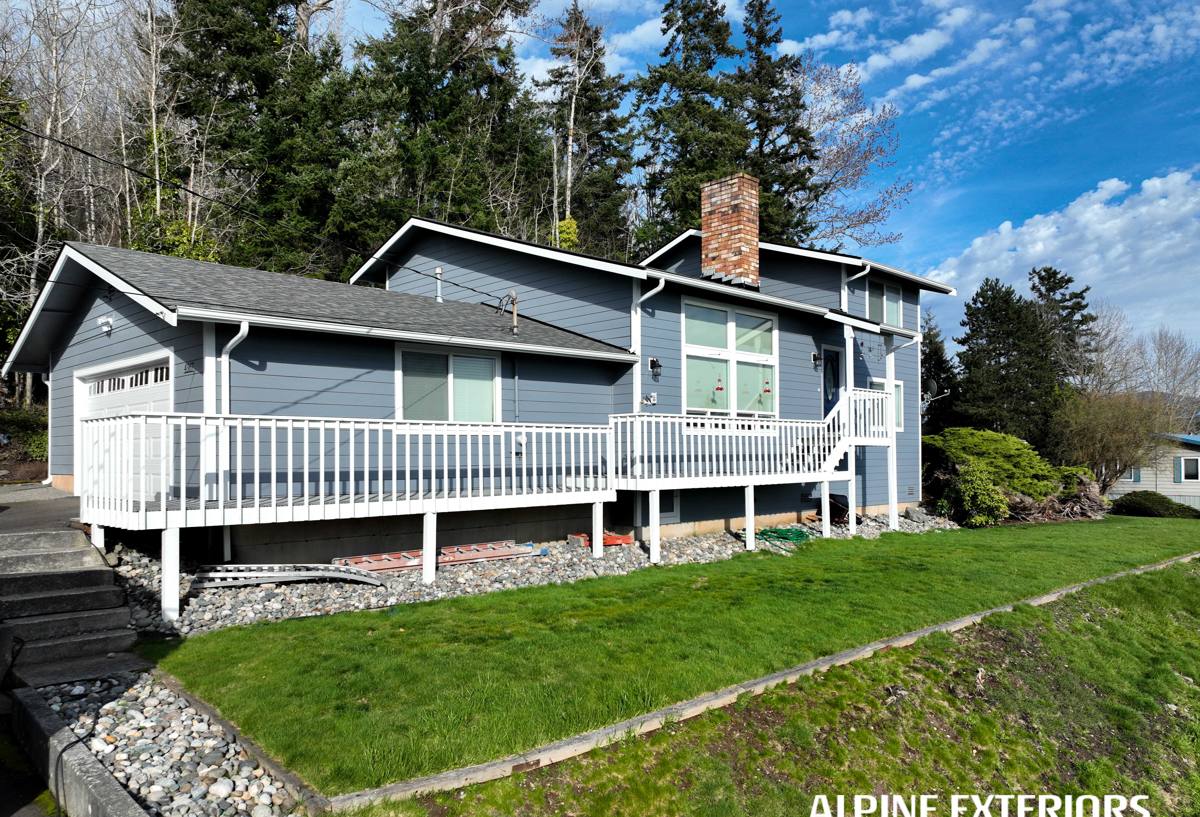
What Driving Rain Actually Does to a Shingle Roof
Wind-driven rain is different from rain that falls straight down. When storms push moisture sideways under wind gusts, water gets forced up and under shingle tabs, into exposed nail heads, and along any seam where flashing wasn't lapped correctly. A roof that would shed a calm rain without issue can still leak in a sideways storm if the details underneath weren't handled right.
This is why the underlayment and flashing work matter more here than the shingle brand printed on the wrapper. A correctly built roof assumes wind-driven rain will reach the deck at some point and gives that water a way to drain back out rather than a place to pool.
Where Driving Rain Finds Weak Points
- Valleys where two roof planes meet and water concentrates
- Step flashing along walls, chimneys, and dormers
- Nail heads that sit proud of the shingle instead of flush
- Eaves and low-slope sections where wind can lift the shingle edge
- Skylight and vent penetrations with aging boot seals
Building the Roof From the Deck Up, Not Just From the Shingle Down
A shingle is only the visible layer. What keeps water out of the house in a coastal-influenced climate like this one is everything underneath it, done in the right order.
Underlayment
We use a synthetic or self-adhering underlayment appropriate to the roof's slope and exposure, not just whatever is cheapest by the roll. On lower-slope sections or areas that catch prevailing wind, a heavier-duty underlayment earns its cost back the first hard storm season.
Ice and Water Shield at Vulnerable Edges
Along eaves, valleys, and around penetrations, a self-adhering membrane gives a second line of defense in exactly the spots where wind-driven rain and ice-dam backup (on the colder nights we do get) are most likely to force water backward under the shingle course.
Flashing
Step flashing at walls and chimneys, properly lapped and integrated with the underlayment — not just caulked over an old flashing that's already failing. Caulk is a maintenance item, not a repair method, and we don't rely on it to do a flashing detail's job.
Ventilation
Balanced intake at the soffits and exhaust at the ridge keeps the attic close to outdoor temperature and controls moisture from the inside. In a damp climate, poor ventilation traps humid air against the roof deck, which shortens shingle life and feeds the exact moss and mold growth homeowners are already fighting from the outside.
Moss and Algae: The Slow Damage Homeowners Don't See Coming
Aldergrove's long wet season, combined with shaded lots and mature tree cover common in this area, creates ideal conditions for moss and algae to take hold on a north-facing or shaded roof slope. Moss isn't just cosmetic. As it grows, it lifts shingle edges, holds moisture against the granule surface, and gives water a place to sit instead of run off. Over a few seasons, that moisture retention accelerates granule loss and can work its way under the shingle tabs.
What Actually Helps
- Algae-resistant shingles with copper-infused granules, which slow regrowth far better than standard granules on shaded slopes
- Zinc or copper control strips installed near the ridge, which release trace metal ions with every rain and inhibit new growth downhill of them
- Keeping overhanging branches trimmed back so the roof gets more sun and airflow
- Gentle, low-pressure cleaning rather than power-washing, which can strip granules and shorten shingle life faster than the moss would have
We treat moss control as part of the roofing plan, not an afterthought sold separately. On a re-roof, we'll flag which slopes are moss-prone based on orientation and shading and build the prevention into the shingle and detail choices up front.
Choosing a Shingle That's Actually Suited to This Climate
Not every asphalt shingle on the market is built for sustained wet weather and wind exposure. We steer homeowners toward products with a wind rating and algae resistance that match what Aldergrove actually sees, rather than the lowest-cost option that's rated for a milder or drier region.
| Factor | Standard 3-Tab | Architectural (Laminate) |
|---|---|---|
| Wind rating | Typically lower, more prone to lifting in gusty driving rain | Higher rated, better resistance to wind-driven storms |
| Moss/algae resistance option | Available but thinner granule bed | Available with deeper granule bed, holds resistance longer |
| Typical lifespan in this climate | Shorter, especially on shaded slopes | Longer, better handles freeze-thaw and moisture cycling |
| Upfront cost | Lower | Moderate, but usually worth it over a 20+ year ownership window |
| Appearance | Flat, uniform look | Dimensional, heavier shadow line |
We'll walk through the honest tradeoffs for your specific roof rather than defaulting to one product for every job. A steep, sun-exposed south slope has different needs than a shaded north slope, and the right spec can vary even across the same roof.
Our Process, Start to Finish
- On-site inspection. We look at the deck condition, existing ventilation, flashing details, and moss/algae history before quoting anything, including a walk of the attic where accessible.
- Written scope and estimate. You get a clear breakdown of materials, underlayment type, flashing plan, and any deck repair — no vague line items.
- Tear-off and deck check. Old material comes off and the deck gets inspected for soft spots or rot before anything new goes down, since covering a bad deck with new shingles just hides the problem.
- Underlayment, flashing, and ice/water shield installation. This is where the actual weatherproofing happens, done to the details above.
- Shingle installation. Installed to manufacturer nailing patterns and exposure specs — pattern and fastening matter as much as the product itself for wind performance.
- Ventilation check and correction. We confirm intake and exhaust are balanced, adding or adjusting vents where the existing setup falls short.
- Cleanup and final walkthrough. Magnetic sweep for stray nails, debris hauled off, and a walk-through so you know exactly what was done.
Signs an Aldergrove Roof Needs Attention Now
Because leaks from wind-driven rain can travel along the deck before showing up as a ceiling stain, waiting for obvious interior damage often means the problem has been building for a while. Watch for these instead.
- Granules collecting in gutters or at downspout outlets
- Visible moss patches, especially on shaded or north-facing slopes
- Curling, cupping, or lifted shingle edges, particularly along eaves
- Dark streaking that isn't just surface dirt (often algae, not damage itself, but a sign moisture is lingering)
- Daylight visible through the roof deck from inside the attic
- Soft or spongy spots when walked, or sagging along a ridge or valley
A Realistic Maintenance Schedule
A shingle roof in this climate isn't maintenance-free, and treating it that way is how small issues turn into deck repairs. A simple seasonal rhythm goes a long way.
| When | What to Check |
|---|---|
| Spring | Winter storm damage, lifted shingles, gutter debris after moss season |
| Summer | Trim back overhanging branches, spot-treat any new moss growth |
| Fall | Clear gutters and valleys before the wet season starts in earnest |
| Winter | Watch for ice buildup at eaves and confirm attic ventilation isn't trapping moisture |
Why It Matters to Hire a Crew That Already Works This Area
Aldergrove sits close enough to the border that homeowners here sometimes get quotes from contractors based well outside the region who aren't factoring in the moss cycle, the driving-rain exposure, or the shaded-lot conditions common to this part of the Fraser Valley and Whatcom County border area. A crew that works Aldergrove and greater Lynden regularly has already seen what fails here and specs the underlayment, flashing, and shingle choice accordingly instead of applying a generic template. That local pattern recognition is worth more than a marginally lower bid from someone who won't be back next storm season.
If you're weighing a repair against a full re-roof, or just want an honest read on how much life is left in your current roof, we're happy to take a look. Reach out for a free, no-pressure estimate using the form below.