 Lynden Window
 Why Birch Bay Homes Need a Different Approach to Windows
Birch Bay sits right on the water, and that changes what a window has to survive day to day. Homes just a few miles inland in Whatcom County deal with rain and wind, but Birch Bay properties also take on salt-laden air, near-constant humidity, and wind-driven rain that comes in sideways off the bay during winter storms. Add a long moss season where shaded siding and trim rarely get a chance to dry out, and you have a set of conditions that will find every weak point in a window system over time.
None of this means custom windows are a bad investment for a Birch Bay home — it means the material choice, the installation detail work, and the ongoing maintenance plan all need to account for the environment. A window that performs fine in a dry inland neighborhood can start showing corrosion, seal failure, or wood rot within a few years out here if it wasn't specified and installed with the coast in mind.
What Salt Air Actually Does to a Window
Salt in the air settles on hardware, frames, and glass coatings. Over time it accelerates corrosion on unprotected metal components — hinges, locks, and low-quality cladding fasteners are usually the first to show it. It can also degrade certain finishes faster than the manufacturer's warranty assumes, since most warranty testing isn't done under coastal salt exposure conditions.
What Driving Rain Tests
Wind-driven rain doesn't just fall on a window — it gets pushed into every gap, seam, and fastener penetration around the frame. This is a flashing and sealant problem as much as it is a window problem. A high-end window installed with poor flashing detail will leak; a modest window installed correctly with proper flashing and drainage will often outperform it.
What a Long Moss Season Adds to the Mix
Shaded, damp trim and siding around window openings stay wet longer here than in drier parts of the county. That moisture holds against wood trim, cladding, and caulked joints, which is exactly the environment moss, algae, and eventually rot need to take hold. Window openings that aren't detailed to shed water quickly become the first spot where that damage shows up.
What a Correct Custom Window Job Involves in Birch Bay
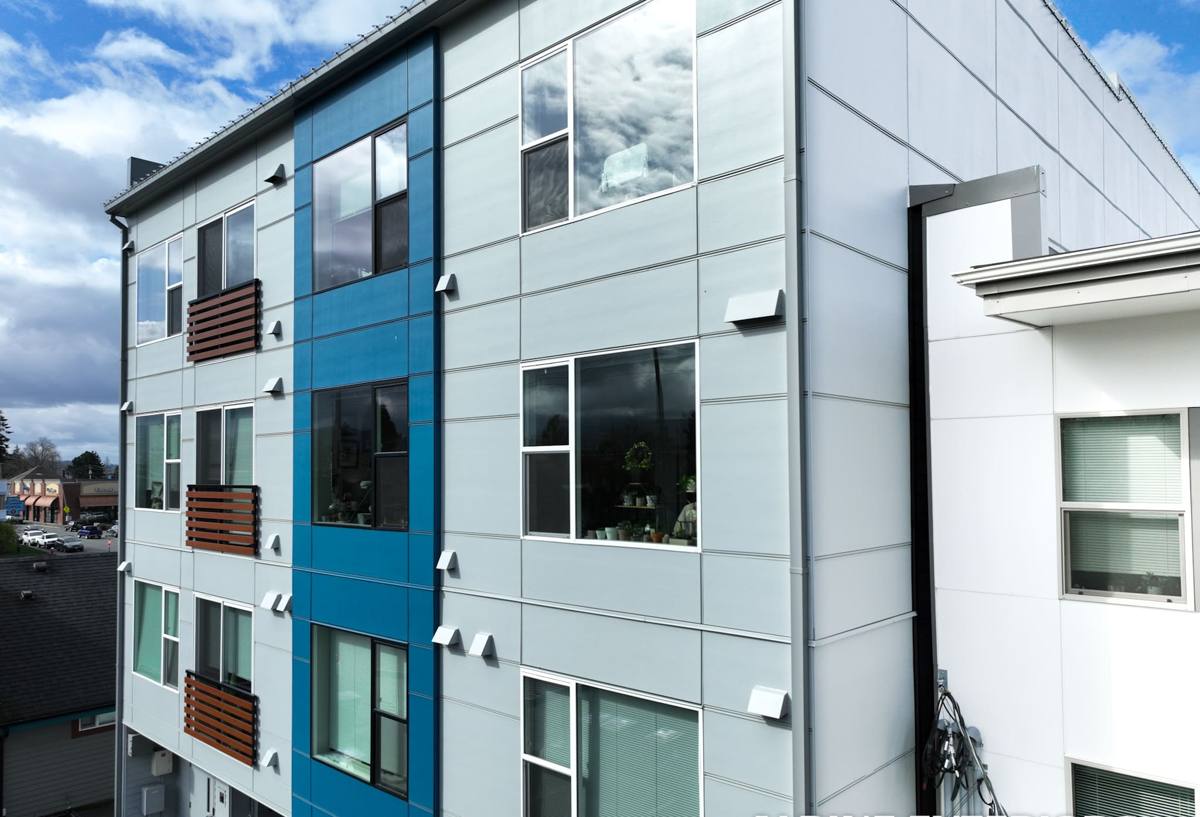
"Custom windows" covers more than picking a size and a color. For a coastal Whatcom County home, a correct job means matching the frame material, glazing package, and installation method to the specific exposure of that wall — a window facing the water on the windward side needs more attention than one tucked under an eave on the leeward side of the house.
Frame Material Selection
We evaluate each opening based on sun exposure, wind exposure, and how close it sits to salt spray, then recommend a frame material suited to that spot rather than defaulting to one product for the whole house.
Glazing and Seal Performance
Insulated glass units rely on their edge seals to keep moisture and argon gas where they belong. In a marine environment, seal quality and installation care matter more than they do inland, because humidity cycles put more stress on those seals year-round.
Flashing and Water Management
This is the part homeowners rarely see and contractors most often rush. Proper flashing tape sequencing, a sloped sill pan, and correctly lapped house wrap around the opening are what actually keep wind-driven rain out — not the caulk bead you can see from the outside.
Choosing Window Materials for a Salt Air, High-Moisture Climate
There's no single "best" window material for every Birch Bay home — it depends on budget, the look you want, and how exposed a given opening is. Here's how the common options compare for this specific climate:
| Material | Salt Air Behavior | Moisture / Rot Resistance | Maintenance Load |
|---|---|---|---|
| Vinyl | Does not corrode; UV exposure can affect finish over decades | Not affected by moisture directly | Low — occasional cleaning |
| Fiberglass | Excellent corrosion resistance, stable in temperature swings | Very good; dimensionally stable when wet or dry | Low to moderate |
| Aluminum | Can corrode without marine-grade coatings or anodizing | Good once properly finished | Moderate — coating needs monitoring |
| Wood (clad or unclad) | Interior wood unaffected; exterior needs protection | Vulnerable if finish or cladding fails | Highest — regular inspection and finish upkeep |
We're honest with clients about this: an unclad wood window can look beautiful, but in a moss-season, salt-air environment it asks for more upkeep than most homeowners want to sign up for. If wood is the look you want, a clad wood window with a durable exterior shell gives you that appearance while keeping the maintenance burden closer to vinyl or fiberglass. That's a trade-off decision, not a knock on wood as a material — it's about matching the product to how much upkeep you actually want to do.
Installation Details That Matter Most Near the Water
The window unit itself is maybe half the equation. The other half is how it's installed, and this is where coastal jobs diverge most from a standard inland install.
- Sill pan flashing: a sloped, sealed pan under every opening so any water that gets past the window drains back out, not into the wall cavity.
- Proper flashing tape lap sequence: installed shingle-style so water moving down the wall never meets an upward-facing seam.
- Continuous backer rod and sealant: not just a surface caulk line, but a real weatherproofing joint sized correctly for the gap.
- Corrosion-resistant fasteners: hardware rated for coastal exposure, not standard interior-grade screws.
- Weep hole clearance: making sure any built-in drainage paths in the frame are never accidentally sealed or painted shut.
Our Process for a Birch Bay Custom Window Project
- On-site assessment. We look at each opening individually — sun exposure, wind exposure, proximity to the water, and the current condition of the surrounding trim and framing.
- Material and glazing recommendation. Based on that assessment, we recommend frame materials and glazing packages suited to each wall, not a one-size-fits-all spec.
- Written estimate. A clear scope covering removal, disposal, flashing and weatherproofing work, and installation — not just the window units.
- Removal and inspection. Old windows come out carefully so we can check the framing underneath for hidden moisture damage before anything new goes in.
- Flashing and installation. Sill pans, flashing tape, and sealant go in to spec before the new window is set and secured.
- Final weatherproofing and cleanup. Exterior trim and caulking finished, interior and exterior cleaned, and the work walked through with you before we call it done.
Maintenance That Actually Matters in This Climate
A properly installed window still benefits from seasonal attention in a place like Birch Bay. Most of this is quick and doesn't require a professional visit, but skipping it is how small issues turn into repairs.
- Rinse salt residue off exterior frames and hardware a few times a year, especially after winter storms.
- Check that weep holes at the base of the frame are clear of debris, moss, or paint buildup.
- Inspect exterior caulk lines annually for cracking or separation, particularly on walls facing prevailing wind and rain.
- Keep gutters and downspouts near window openings clear so runoff isn't sheeting directly across the glass and frame.
- Look for early moss or algae growth on trim below and beside windows — it usually means that area is staying wet longer than it should.
- Operate locks and hardware periodically, even on windows you rarely open, so corrosion doesn't set in unnoticed.
Cost Factors for Custom Windows in a Coastal Setting
Pricing depends on the number of openings, size, frame material, and glazing package, so we won't quote a number without seeing the project. What we can say is that coastal installations often carry a modest premium over a comparable inland job, driven by upgraded flashing materials, corrosion-resistant hardware, and the extra care taken on exposed elevations. Homeowners are generally in the four-figure range per opening once material and installation quality are factored in, with the specifics depending heavily on the choices above.
| Factor | Why It Affects Cost |
|---|---|
| Frame material | Fiberglass and clad wood typically cost more upfront than vinyl |
| Exposure of the opening | Windward, water-facing walls often need extra flashing and sealant detail |
| Existing frame condition | Hidden moisture damage found during removal adds repair scope |
| Glazing package | Upgraded glass units add cost but improve seal longevity and comfort |
| Number of openings | Per-window cost typically decreases somewhat as the job scales up |
Why It Matters to Hire a Crew That Already Works This Area
Whatcom County has plenty of microclimates, and Birch Bay's is distinct even from nearby Lynden. A crew that mostly installs windows on drier, inland properties can still do competent work, but they may not default to the flashing detail, hardware grade, or material recommendations that a saltwater-adjacent, high-moss property actually needs unless they're specifically thinking about it. A crew that regularly works in Birch Bay has already seen where standard installations tend to fail here — and builds around those failure points as a matter of habit, not an afterthought.
That local knowledge shows up in small decisions throughout a project: which openings get extra flashing attention, which hardware finish holds up, and how trim details should be handled to shed water instead of holding it. Those decisions add up over the life of the window, long after the crew has left.
Get a Straight Answer for Your Home
If you're weighing a window replacement or a new custom install for a Birch Bay property, we're happy to walk the property, look at each opening's exposure, and give you an honest recommendation — including where you can save money and where it's worth spending more. There's no pressure and no obligation. Use the form below to request a free estimate and we'll get back to you to schedule a visit.