 Lynden Window
 Building a Deck That Holds Up in Blaine
Blaine sits close enough to Semiahmoo Bay and Drayton Harbor that salt-laden air is a daily fact of life, not an occasional coastal breeze. Combine that with Whatcom County's long, wet winters and a moss season that can stretch from October well into spring, and you have one of the tougher environments in Washington State to build an outdoor structure that lasts. A deck that would hold up fine in a drier inland town can start showing corrosion, soft spots, and slick green growth within a few seasons out here if it wasn't built with these specific conditions in mind.
We build decks throughout Whatcom County, and Blaine jobs get planned differently from the start. The material choices, the hardware, the drainage details under the boards — all of it gets selected with salt air and standing moisture as the baseline assumption, not an afterthought.
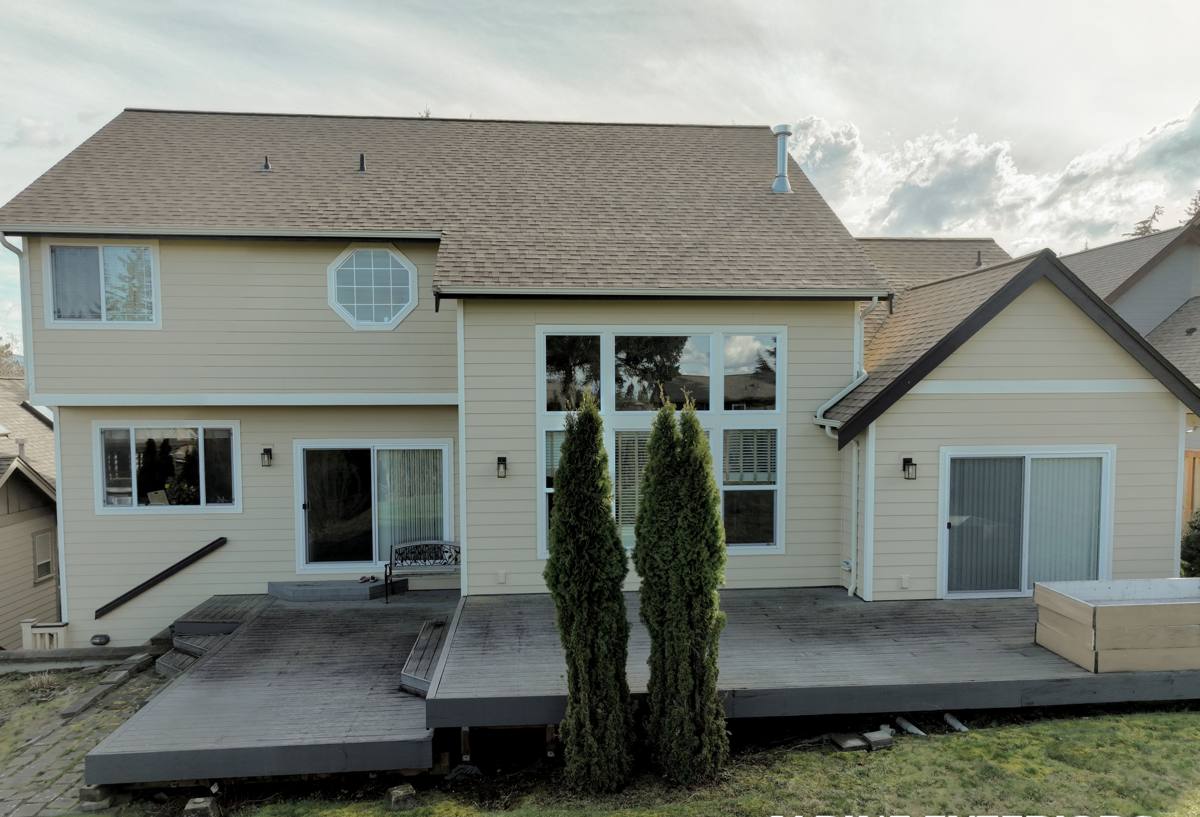
What Salt Air, Rain, and Moss Actually Do to a Deck
It helps to understand the specific failure modes before talking about how we prevent them.
Salt Air
Airborne salt accelerates corrosion on any exposed metal — fasteners, brackets, hidden fastener clips, railing hardware. Standard galvanized coatings that hold up fine 20 miles inland can start pitting and rusting years earlier this close to the water. Once a fastener starts to corrode, it weakens exactly where you need strength: at the connection points holding the deck together.
Driving Rain
Whatcom County doesn't just get rain — it gets sustained, wind-driven rain that finds its way into every gap, seam, and unflashed joint. On a deck, the most vulnerable spot is almost always the ledger board where the deck attaches to the house. Water that gets behind an improperly flashed ledger doesn't just damage the deck — it can rot into the house framing itself.
Moss
Moss needs shade, moisture, and time — and Blaine's climate provides all three for months at a stretch. Moss on deck boards isn't just cosmetic; it holds moisture against the wood or composite surface and turns a walking surface genuinely slippery. Decks with poor airflow underneath, tight board spacing, or a lot of shade are the worst offenders.
Choosing the Right Decking Material for This Climate
There's no single "best" decking material — there's the material that fits your budget, your maintenance appetite, and how much shade and salt exposure your specific site gets. Here's how the common options actually perform in Blaine conditions:
| Material | Salt Air Behavior | Moss/Moisture Behavior | Maintenance |
|---|---|---|---|
| Pressure-treated wood | Fasteners need to be rated for treated lumber's chemical makeup, or corrosion accelerates fast | Absorbs moisture, needs airflow and periodic sealing to resist moss and rot | Highest — annual cleaning, periodic staining/sealing |
| Cedar | Naturally rot-resistant, but still needs correctly rated fasteners near the coast | Better natural resistance than PT wood, still benefits from airflow underneath | Moderate — periodic oiling to maintain appearance |
| Composite decking | No wood to absorb salt, but hardware and hidden fasteners still need marine-rated hardware | Resists rot entirely, but can still grow surface moss/algae in shaded, damp spots without cleaning | Low — occasional washing |
| PVC/capped polymer | Fully sealed surface, best resistance to salt exposure of any decking surface | Least prone to moss taking hold, but still benefits from occasional rinsing | Lowest |
Composite and capped polymer boards have become the more common choice for homes closest to the water, largely because they remove the wood-rot variable entirely. That said, plenty of homeowners still prefer the look and feel of real wood, and a well-built cedar deck with the right fasteners and enough airflow underneath can perform well for many years. We'll walk through the honest trade-offs for your specific site rather than push one product line.
Framing and Fasteners: The Part Nobody Sees
The decking boards get all the attention, but the framing and fasteners underneath determine whether a deck is actually safe in ten years. This is where corner-cutting shows up latest — and does the most damage.
- Structural fasteners and brackets rated for coastal/high-corrosion exposure, not standard interior-grade galvanized hardware
- Joist tape or flashing over framing lumber to keep fasteners from sitting in standing moisture
- Correct joist spacing and blocking sized to the decking material and the span — composite and PVC often require tighter joist spacing than wood
- Post bases that keep support posts off direct ground contact and standing water
- Ledger board flashing that sheds water away from the house wall, not toward it
None of this is visible once the deck is finished, which is exactly why it's worth asking a contractor directly what fastener grade and flashing details they're using before work starts.
Footings, Drainage, and the Ledger Connection
Whatcom County's wet season puts real pressure on how a deck sheds water, both on top of the surface and underneath the frame.
Footings need to be sized and set to local frost and soil conditions, with concrete piers or footings deep enough to stay stable through wet winters. Under the deck, grading and drainage matter more than most homeowners expect — a low spot that collects standing water under the frame becomes a long-term moisture and moss problem even if the decking surface above looks fine.
The ledger board — where the deck ties into the house — deserves special attention. Proper flashing (typically a metal or self-adhesive membrane flashing installed correctly behind the siding, not just caulked over the top) keeps rain from tracking behind the house wall. This is one of the most common failure points we see on older decks in this area, and it's not something that shows itself until the damage is already done.
Railings, Fascia, and Coastal Finish Details
Railings and fascia boards take direct weather exposure and use a lot of hardware, which makes them another spot where salt air shortens the life of the wrong materials. Aluminum and composite railing systems generally hold up better than untreated wood balusters in this environment, and any metal railing hardware should carry the same corrosion-resistant rating as the structural fasteners underneath the deck. Fascia boards — the trim along the deck's edge — benefit from the same capped or composite materials as the decking surface, since they're just as exposed to driving rain and salt spray but get less airflow to dry out.
Our Deck Building Process
- On-site assessment — we look at sun/shade exposure, drainage, proximity to the water, and how the deck will tie into your house before recommending materials
- Material and layout discussion — honest trade-offs between wood, composite, and PVC options based on your budget and maintenance preferences
- Permitting — we handle the permit process where required for the scope of work
- Footings and framing — built to span and spacing requirements for your chosen decking material, with corrosion-rated hardware throughout
- Ledger flashing and waterproofing — installed before any decking goes down, not patched afterward
- Decking, railings, and finish work — installed with attention to drainage gaps and airflow underneath
- Final walkthrough — we go over care and maintenance specific to the material you chose
Living With a Deck Through Blaine's Moss Season
Even a well-built deck needs some seasonal attention in this climate. A short annual routine keeps most problems from ever starting:
- Sweep debris and leaves off the surface regularly through fall — trapped organic matter is what moss needs to get started
- Rinse the deck surface once or twice a year, more often in heavily shaded areas
- Check that gaps between boards stay clear so water drains through rather than sitting on top
- Inspect railing hardware and structural connections annually for early signs of corrosion
- Trim back overhanging branches or vegetation that keeps sections of the deck shaded and damp
- Reseal wood decking on the manufacturer's recommended schedule if you went with cedar or pressure-treated lumber
Why a Crew That Already Works Blaine Matters
A lot of deck problems in this area trace back to plans and materials that were never adjusted for coastal exposure in the first place — standard-grade fasteners, ledger flashing details that work fine inland but not here, or decking chosen without accounting for how much shade and moisture a given yard actually gets. Working with a crew that already builds regularly in Blaine and the surrounding Whatcom County coastline means those adjustments happen automatically, not as an afterthought once something starts failing.
If you're planning a new deck or replacing one that's showing its age, we're happy to come take a look and talk through what makes sense for your specific site. Reach out for a free, no-pressure estimate using the form below.