 Lynden Window
 Decks Built for Custer's Weather, Not Just Its Views
Custer sits close enough to the water that salt air is a real factor in how a deck ages, and it's inland enough from the coast to still get the long, wet Whatcom County winters that most of Western Washington deals with. That combination is harder on outdoor structures than either factor alone. A deck built the same way you'd build one in a dry inland climate is going to show problems here faster — soft spots, loose fasteners, slick moss growth, and finishes that fail years ahead of schedule.
We build and repair decks for homes in and around Custer and Lynden, and we've adjusted our approach specifically for this stretch of Whatcom County. That means different fastener choices, different framing details at ground contact points, and a maintenance conversation with every homeowner before we ever cut a board.
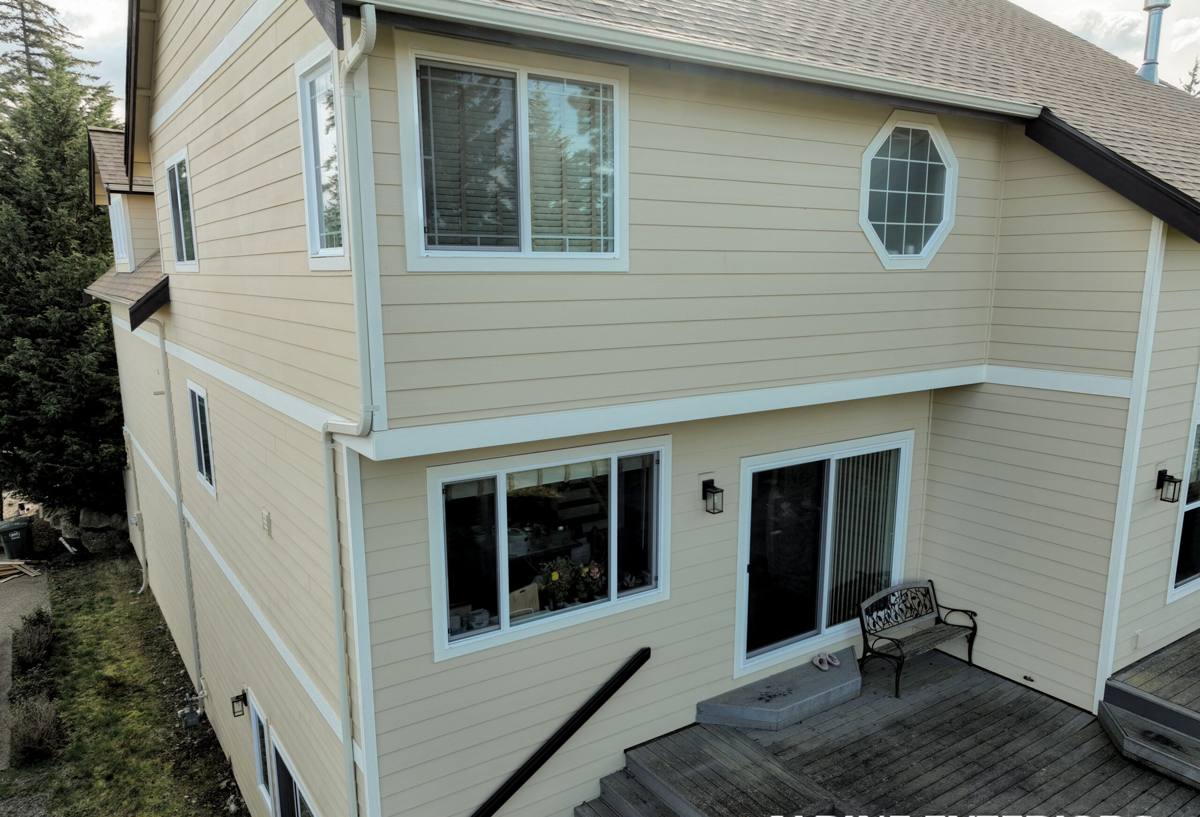
What Local Homes Actually Need From a Deck
Three things drive almost every deck problem we get called out for in this area: moisture that doesn't dry out fast enough, salt-laden air that accelerates corrosion, and shade or tree cover that keeps surfaces damp long after the rain stops. A deck built without those three in mind will still look fine on install day. The failures show up two, five, and ten years later.
Salt Air and Metal Fasteners
Salt in the air speeds up corrosion on anything metal — nails, screws, joist hangers, structural brackets. Standard galvanized hardware can start showing rust streaks and pitting well before a deck's structural life is over, and once fasteners corrode, they lose holding strength quietly, with no visible warning until something moves underfoot.
Driving Rain and Water Management
It's not just how much rain falls here — it's the wind-driven angle it often comes in at. Rain that hits siding and railings sideways finds gaps that vertical rain never would. A deck ledger board attached to the house without proper flashing is one of the most common failure points we find, because water gets behind the ledger and starts rotting the rim joist or sheathing long before anyone notices from the outside.
Moss, Algae, and Slick Surfaces
Long wet seasons with limited direct sun mean moss and algae get a real foothold on horizontal surfaces, especially on the north side of a house or under mature trees. Beyond the safety issue of a slippery deck, moss holds moisture against the decking surface, which shortens the life of wood and can trap grit against composite boards.
Choosing Decking Material for This Climate
There's no single "best" decking material — there's a best material for your budget, your maintenance appetite, and how much shade and moisture your specific site deals with. Here's how the common options actually compare once you factor in Custer's conditions.
| Material | Upfront Cost | Maintenance Needed | How It Handles This Climate |
|---|---|---|---|
| Pressure-treated wood | Lowest | Annual cleaning, re-staining every 2-3 years | Needs consistent upkeep or moss and graying set in fast; good value if maintained |
| Cedar | Moderate | Regular sealing to hold color and resist moisture | Naturally rot-resistant but still needs sealant renewed to fight the wet season |
| Composite decking | Higher | Periodic washing, no staining or sealing | Resists rot and moisture well; still needs washing to keep moss from gripping the surface texture |
| PVC/capped polymer | Highest | Occasional washing only | Best moisture resistance of the group; performs well in salt-air, high-moss environments |
For homes closer to the water or under heavy tree cover, we usually steer people toward composite or capped polymer if the budget allows, simply because the maintenance burden of wood climbs fast in shaded, damp spots. That's not a knock on wood decking — it's a great product when it gets sun and regular care. It's a poor fit for a deck that sits in shadow most of the day.
What a Correctly Built Deck Involves
A deck that holds up in this climate isn't about using a fancier board on top — most of what determines lifespan happens in the framing and connections you never see once the project is finished.
- Ledger board attached with proper flashing so water is directed away from the house rim joist, not trapped behind it
- Footings set below the local frost depth and sized for the actual load, not guessed at
- Joist hangers and structural fasteners rated for the exposure — coated or stainless hardware where corrosion risk is higher
- Proper spacing and airflow underneath the deck so the structure can dry out between rain events
- Beam and post connections built to current code for both vertical load and lateral (sideways) forces
- Railing posts blocked and fastened to resist the code-required lateral load, not just toe-nailed to the rim joist
Any one of these done wrong won't fail on day one. That's what makes deck framing mistakes dangerous — the deck looks and feels solid for years, right up until it isn't.
Our Process, Start to Finish
Site Visit and Honest Assessment
We walk the site, look at drainage, sun exposure, tree cover, and how the deck ties into the house. If it's a replacement, we check the ledger connection and framing underneath before quoting anything, because that's where hidden problems live.
Design and Material Conversation
We talk through decking material, railing style, and layout based on how you'll actually use the space and how much upkeep you want to take on long-term — not just what looks good in a photo.
Permitting
Most new decks and many significant deck replacements in Whatcom County require a building permit, particularly once you're above a certain height or attaching structurally to the house. We handle that process as part of the job rather than leaving it for the homeowner to sort out.
Build and Inspection
Framing goes in first, including all the flashing and fastener details covered above, followed by decking, railings, and any stairs. Where a permit is required, the framing gets inspected before it's closed in with decking, which is exactly the order that catches problems while they're still cheap to fix.
Final Walkthrough
We walk the finished deck with you, cover basic care for whatever material you chose, and make sure you know what routine maintenance actually looks like for your specific setup.
Maintaining a Deck in a Salt Air, Moss-Prone Climate
Whatever material you choose, a little seasonal attention goes a long way toward getting the full lifespan out of it. Here's what we recommend for homes in this area.
- Sweep debris off the deck regularly, especially in fall — trapped leaves hold moisture and feed moss growth
- Wash the surface at least once a year with a deck cleaner appropriate to your material; a pressure washer on the wrong setting can damage wood fibers or composite caps
- Check railing posts and stair connections annually for movement, especially after a windy winter
- Inspect fastener heads for rust staining, which can signal corroding hardware underneath
- Keep gutters and downspouts near the deck clear so runoff isn't dumping directly onto or under the structure
- Re-seal or re-stain wood decking on the schedule your product calls for — don't wait until it's visibly gray and dry
Common Mistakes We Find on Older Custer Decks
When we get called out to look at an aging or failing deck in this area, the same handful of issues show up again and again. Ledger boards attached directly to siding with no flashing are near the top of the list — water gets behind the board and rots the framing from the inside out, often for years before it's visible from the deck surface. Undersized or shallow footings are another common find, particularly on older decks built before current frost-depth requirements were as clearly enforced. We also frequently see railings that were fastened for looks rather than load, which is a safety issue as much as a durability one. None of these are visible to a homeowner walking across their own deck — they show up in an inspection, or they show up as a failure.
Why a Local Crew Matters for This Kind of Work
Deck building isn't exotic work, but building one correctly for Whatcom County's combination of salt air, wind-driven rain, and long moss seasons takes more than a generic framing approach. A crew that already works in and around Custer and Lynden has already seen how ledger flashing details hold up here, which fastener grades actually resist corrosion in this air, and which sites need extra attention to drainage and airflow underneath the structure. That's the difference between a deck that's fine on installation day and one that's still solid in fifteen years.
We're not asking you to take our word for any of this sight unseen. If you're considering a new deck, a replacement, or you're not sure whether an existing deck's framing is sound, we're happy to come take a look. The estimate is free, there's no pressure attached to it, and you'll walk away with a straight answer about what your project actually needs — just fill out the form below to get started.