 Lynden Window
 Bellingham's Siding Problem Isn't Really About Style
Most homeowners start looking into new siding because of how a house looks — faded paint, a dated color, curb appeal before a sale. In Bellingham, that's usually not the real problem. The real problem is what Whatcom County's climate does to exterior materials over time. Proximity to the water means salt-laden air moves across roofs and walls even on homes that aren't waterfront. Add driving rain that comes in sideways during winter storms, and a moss season that can run eight or nine months out of the year on shaded, north-facing walls, and you've got a climate that's genuinely tough on siding — tougher than most manufacturers' marketing accounts for.
We install James Hardie fiber cement siding exclusively, and Bellingham is one of the areas where that decision matters most. This page covers what local homes actually need from their siding, what a correct Hardie installation involves in this climate, and how our process works from first estimate to finished wall.
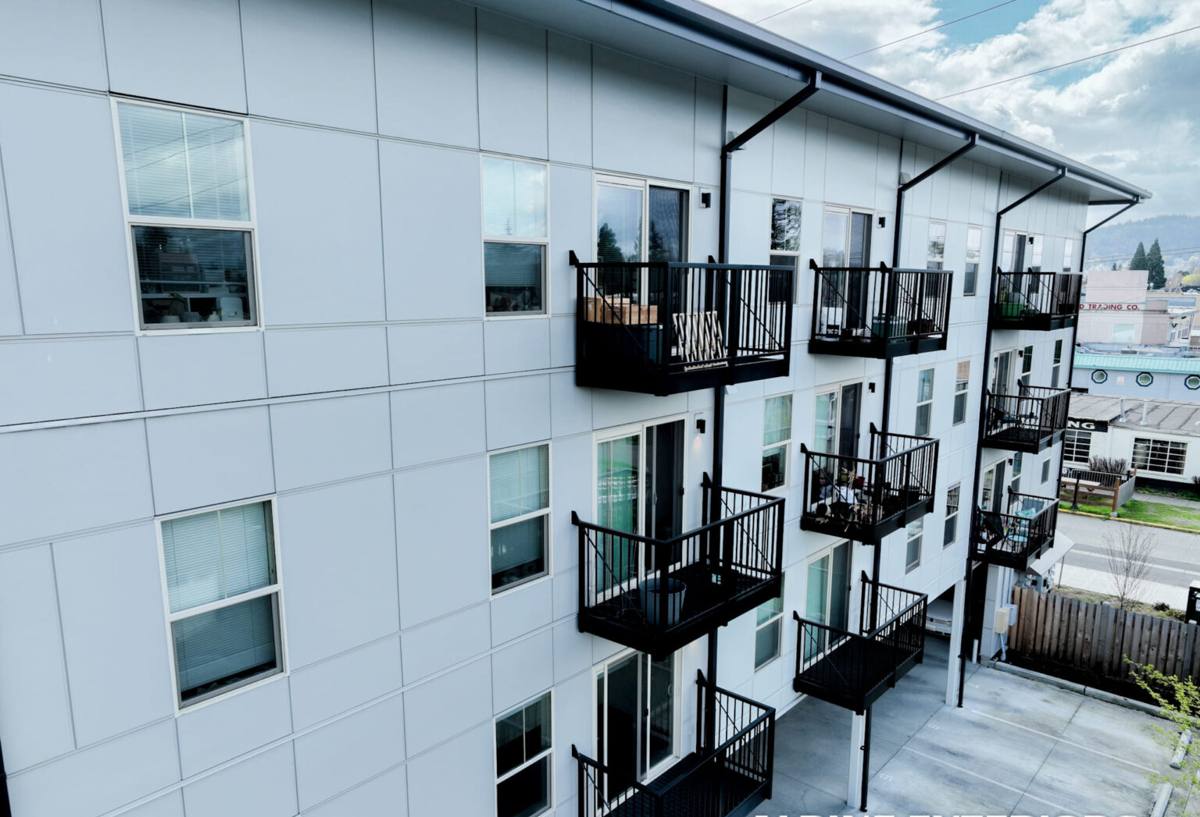
What Salt Air, Driving Rain, and Moss Actually Do to Siding
Salt Air
Airborne salt is corrosive and hygroscopic — it pulls moisture out of the air and holds it against whatever surface it lands on. On metal fasteners, trim, and flashing, that means accelerated corrosion if the wrong hardware was used. On vinyl siding, salt exposure combined with UV tends to show up as premature chalking and brittleness. On untreated or poorly primed wood, it speeds up paint failure and grain-raising.
Driving Rain
Bellingham's storms don't just fall straight down — wind-driven rain gets pushed sideways into lap joints, butt seams, and anywhere caulking has started to fail. Siding systems that rely on face-sealing (caulk and paint as the only water barrier) tend to trap moisture behind the cladding instead of shedding it, which is exactly the wrong outcome in a high-rainfall climate.
The Long Moss Season
Shaded walls, roof overhangs, and the persistent damp common to this part of Washington create ideal conditions for moss and algae growth on siding, especially on north- and west-facing elevations. Porous or fibrous materials give moss something to root into. Smooth, factory-finished fiber cement gives it far less to hold onto, and it cleans off without stripping the finish underneath.
Why We Standardized on James Hardie Fiber Cement
James Hardie fiber cement is a cement, sand, and cellulose fiber composite that's non-combustible and dimensionally stable — it doesn't expand and contract with moisture the way wood does, and it doesn't get brittle in cold snaps the way vinyl can. Two things matter most for a climate like Bellingham's:
- ColorPlus factory finish — baked-on color applied under controlled conditions, with better adhesion and UV resistance than field-applied paint, which matters when a wall is going to sit under constant damp and salt exposure for years between touch-ups.
- HZ5 climate engineering — Hardie's HZ product lines are formulated for regional moisture and freeze-thaw conditions rather than a single national spec. The Pacific Northwest's wet, moderate-freeze profile is exactly the kind of environment that engineering is built around.
We don't install LP SmartSide, vinyl, Cemplank, Allura, primed spruce, or cedar. That's not a knock on every homeowner who has one of those products on their house — it's a statement about what we're willing to warranty and stand behind, given what we've seen this climate do to those materials over time. Vinyl can warp and fade under UV and salt exposure. Engineered wood products depend heavily on edge sealing and site conditions staying dry during installation, which is a hard ask on a wet coastal jobsite. Cedar and primed wood need real maintenance discipline — regular repainting and moss treatment — to hold up here. Fiber cement, installed correctly, asks a lot less of the homeowner over the life of the siding.
What a Correct Installation Actually Involves
Fiber cement siding is only as good as the installation behind it. A rushed or spec-cutting crew can put Hardie board on a wall and still end up with moisture problems within a few years. In a climate with this much rain, the details below aren't optional extras — they're the difference between siding that lasts and siding that fails from behind.
Drainage Plane and Rainscreen Gap
Correct installation starts with a weather-resistive barrier behind the siding and, in most cases, a vented rainscreen gap — a small air space between the back of the siding and the wall sheathing. That gap lets any moisture that does get past the cladding drain and dry out instead of sitting against the wall assembly. This is especially important on the wetter, wind-exposed walls common in this area.
Flashing and Water Management
Every window, door, and horizontal trim transition needs proper flashing — head flashing above openings, kick-out flashing where a roofline meets a wall, and step flashing at any roof-to-wall intersection. These are the spots where driving rain finds its way in if flashing was skipped or installed backwards.
Fastening and Clearances
Hardie's installation instructions specify fastener type, spacing, and embedment depth, and they matter more in a coastal environment where the wrong fastener corrodes early. Boards also need proper clearance from grade, roofing, and decks — typically several inches minimum — so splashback and standing water don't sit against the bottom edge of the siding.
Joint Treatment and Caulking
Butt joints, especially, need to be treated correctly — either back-primed and caulked per spec or, on some board types, left as a shadow-line joint designed to shed water without caulk at all. Skipping this step is one of the most common causes of early paint and joint failure we see on poorly installed siding jobs.
Comparing Materials in a Wet, Salty Coastal Climate
| Material | Salt air behavior | Moss/algae resistance | Maintenance in this climate |
|---|---|---|---|
| James Hardie fiber cement | Non-corrosive material; factory finish holds up well | Smooth finish resists rooting; cleans off easily | Occasional wash; ColorPlus finish extends repaint interval significantly |
| Vinyl siding | Can chalk and become brittle with UV/salt exposure over time | Textured panels can hold moss in shaded areas | Low, but panels can warp or crack and are hard to color-match if damaged |
| Cedar / primed wood | Salt accelerates paint and grain breakdown | Porous surface is prone to moss and algae rooting | Regular repainting and moss treatment needed to prevent rot |
| Engineered wood (e.g. LP-type products) | Edge and cut-end sealing is critical near salt exposure | Moderate; depends on finish and site sealing quality | Requires disciplined field sealing at install; less forgiving of wet-season installation |
Our Process, From Estimate to Finished Wall
1. On-Site Assessment
We walk the exterior with you, looking at existing siding condition, moisture staining, moss patterns, and wall exposure. North- and west-facing walls, and anything close to grade, usually get the closest look.
2. Scope and Product Selection
We talk through board profile (lap, shingle, or panel), color, and any trim details, and put together a scope that's specific to your home rather than a generic package.
3. Tear-Off and Wall Prep
Old siding comes off, sheathing gets inspected for hidden moisture damage, and the drainage plane and rainscreen assembly go on before any new siding is installed.
4. Installation to Spec
Boards go up with correct fastening, flashing, clearances, and joint treatment — not shortcuts to save a day of labor.
5. Final Walkthrough
We walk the finished job with you, check trim and caulk lines, and go over basic care so the siding performs the way it's supposed to for years.
What Homeowners Actually Need to Do After Installation
One of the practical advantages of factory-finished fiber cement is how little ongoing maintenance it asks for compared to wood. That said, "low-maintenance" isn't "no-maintenance," especially in this climate.
- Rinse siding periodically with a garden hose to keep salt residue and organic buildup from accumulating, particularly on shaded elevations.
- Keep gutters and downspouts clear so water isn't overflowing directly onto siding below.
- Trim back vegetation and tree cover that keeps walls damp and shaded longer than necessary — a major driver of moss growth.
- Check caulking at trim and joints every year or two and have any cracked sections resealed before winter rains set in.
- Watch for any soft spots, staining, or bubbling paint near grade or roof intersections, which can signal a flashing or drainage issue worth checking early.
Checklist: What a Correct Hardie Job Should Include
- Weather-resistive barrier installed and lapped correctly before any siding goes up
- Vented rainscreen gap where called for by the wall assembly and exposure
- Head, kick-out, and step flashing installed at all openings and roof intersections
- Correct fastener type and spacing per Hardie's published installation instructions
- Proper clearance from grade, roofing, decks, and other horizontal surfaces
- Joints and butt seams treated per spec, not just caulked over and painted
- Final walkthrough covering care instructions specific to your home's exposure
Why Hiring a Crew That Already Works This Area Matters
Siding installation isn't one-size-fits-all across Washington. A crew that mostly works drier inland climates may not default to a rainscreen assembly or think twice about kick-out flashing, because they haven't had to reckon with what Bellingham and Lynden's weather does to a wall over a decade. Working across Whatcom County regularly means we've seen how salt air, sideways rain, and shaded moss-prone walls actually play out on real houses here — not in a manual, but on the jobs we've walked and repaired. That local pattern recognition is part of what you're paying for when you hire a crew that already knows this area, not just the product.
If you're weighing a siding project in Bellingham or Lynden and want a straight answer about what your home actually needs, we're happy to take a look. Use the form below to request a free, no-pressure estimate.