 Lynden Window
 Decking in Blaine: A Different Set of Problems Than Inland Whatcom County
Blaine sits about as close to the water and the Canadian border as a Whatcom County home can get, and that location comes with a specific set of decking problems. You're dealing with salt-laden air rolling in off the Strait of Georgia and Semiahmoo Bay, wind-driven rain that hits horizontal surfaces harder than a straight-down shower ever would, and a wet season that stretches long enough to grow a healthy crop of moss on anything that holds moisture. A deck built with a generic, one-size-fits-all approach doesn't hold up here the way it might in a drier part of the state.
We install and replace decks throughout Blaine and the surrounding Lynden and Whatcom County area, and the decks that last are the ones built with this specific coastal climate in mind from the framing up — not just decking boards swapped onto a standard build.
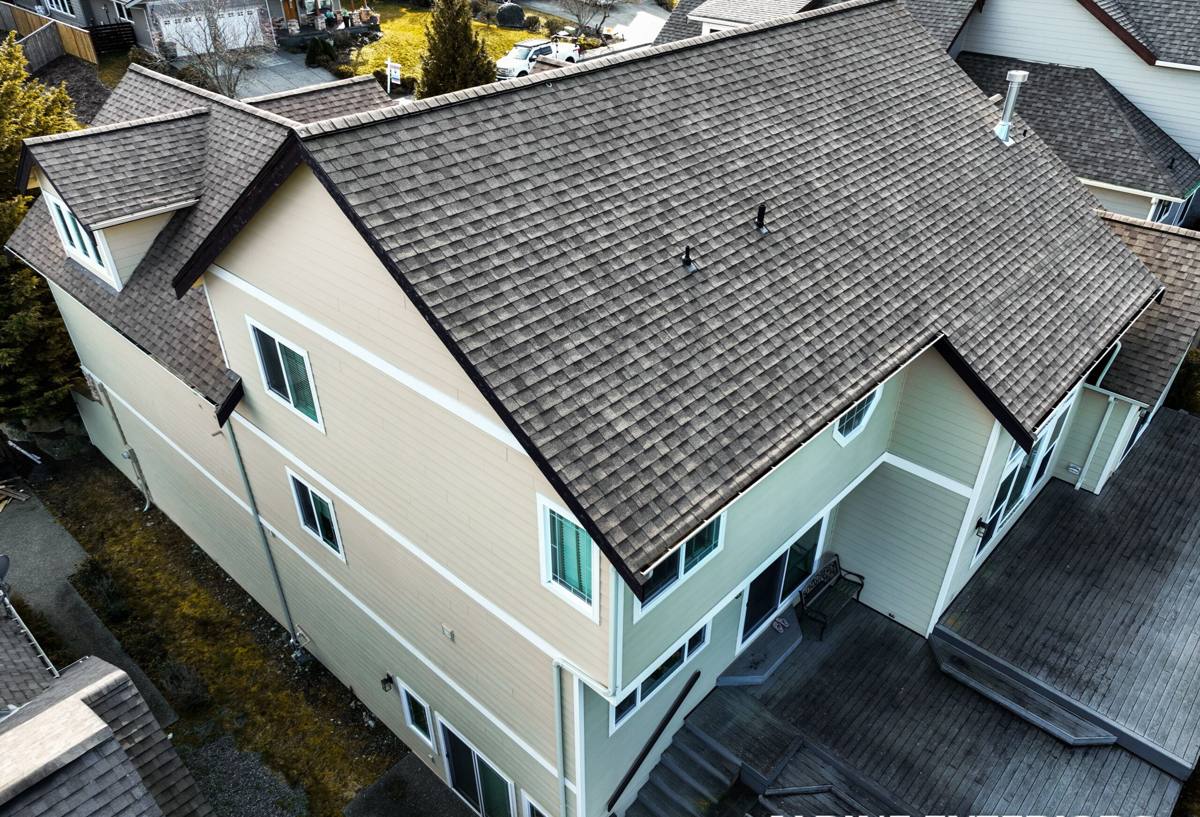
What Salt Air, Driving Rain, and Moss Season Actually Do to a Deck
Salt Air
Airborne salt is corrosive to exposed metal. Fasteners, brackets, and hardware that aren't rated for coastal exposure can start showing rust and pitting years before they would inland. Once fasteners weaken, the structural integrity of the deck is compromised even if the decking boards on top still look fine.
Driving Rain
Wind off the water doesn't just fall on a deck, it drives into seams, gaps, and end cuts at an angle. Water that would run off a flat surface elsewhere in the county gets pushed into joints, around posts, and under ledger boards. Any spot where water can collect and sit — a poorly flashed ledger connection, a low spot in the joists, a board butted too tightly against a house wall — becomes a slow rot or mold problem.
Moss Season
Whatcom County's wet months give moss and algae plenty of time to establish themselves on any surface that stays damp and shaded. On a deck, that usually shows up first in the spots that get the least sun and the least air movement: under railings, along the house line, and anywhere debris collects between boards. Moss holds moisture against the decking material, and on organic materials that moisture retention accelerates decay from underneath.
Why Composite Decking Makes Sense for This Location
Composite decking is engineered from a blend of wood fiber and recycled plastics, which gives it a real practical edge in a climate like Blaine's. It doesn't absorb water the way solid wood does, it doesn't need annual staining or sealing to keep moisture out, and it resists the kind of surface decay that shows up on wood decks that spend months at a time damp. That doesn't mean composite is maintenance-free — moss and algae will still grow on any deck surface that stays wet and shaded, composite included — but the board itself isn't breaking down while you deal with it.
We'll be straightforward about the trade-off: composite decking costs more upfront than pressure-treated wood. For Blaine homeowners, we think that cost is usually worth it, because the ongoing maintenance burden and the risk of moisture damage in this climate are real, and composite reduces both. It's a professional judgment call based on what holds up here, not a claim that wood decking is a bad product everywhere.
Composite vs. Wood in a Coastal Climate
| Factor | Composite Decking | Pressure-Treated Wood |
|---|---|---|
| Moisture absorption | Low — resists swelling and rot | Higher — needs regular sealing to resist water |
| Annual maintenance | Occasional wash-down | Sanding, staining, sealing on a regular schedule |
| Splintering / warping over time | Rare with quality boards | Common as wood ages and moves with moisture |
| Upfront material cost | Higher | Lower |
| Moss and algae resistance | Surface growth still possible, easier to clean | Surface growth can work into grain over time |
| Typical board lifespan | Long, with manufacturer warranty backing | Shorter without consistent upkeep |
What a Correct Composite Deck Installation Involves
Composite boards are only as good as what's underneath them. A lot of decking problems we get called out to fix in this area trace back to shortcuts in the framing or fastening, not the decking material itself. A correct install includes:
Framing and Structure
Joists sized and spaced according to the board manufacturer's specifications — composite has different span requirements than wood, and using wood-spec spacing can leave a deck feeling springy or lead to sagging over time. All structural framing should be treated for exterior/ground contact exposure.
Ledger and Flashing Details
Where the deck attaches to the house, proper flashing keeps driving rain from working its way behind the ledger board and into the wall structure. This is one of the most common failure points on decks in wet, wind-exposed areas like Blaine, and it's not a spot to cut corners on.
Fasteners and Hardware
In a salt-air environment, we use stainless steel or coated fasteners and structural hardware rated for corrosion resistance. Standard galvanized hardware can start to rust well before the decking itself shows any wear, and once hardware fails the whole structure is at risk.
Hidden Fastening Systems
Most composite boards are designed for hidden fastener clip systems rather than face-screwing. Done correctly, this keeps the board surface free of screw holes where water and debris can collect, and it allows boards a small amount of room to expand and contract with temperature changes without buckling.
Ventilation Beneath the Deck
Adequate airflow under the deck surface helps everything dry out between rain events instead of staying damp for days. In a climate that gets as much sustained wet weather as Whatcom County's coast, under-deck ventilation is not optional — it's part of what keeps moss and mildew from taking hold on the underside of boards and the framing itself.
Our Process for a Blaine Composite Deck Project
- On-site assessment — We look at the existing structure (if there is one), sun and wind exposure, drainage, and how the deck ties into the house.
- Removal of the old deck — If we're replacing an existing deck, we tear out and haul away the old material and inspect the ledger and any framing that will be reused.
- Framing and structural work — New or reinforced framing built to the board manufacturer's span and spacing requirements, with corrosion-resistant hardware throughout.
- Flashing and waterproofing — Ledger flashing and any other water-management details installed before decking goes down, not patched in afterward.
- Composite board installation — Boards installed with hidden fastener clips, proper expansion gaps, and attention to board direction relative to drainage and sun exposure.
- Railing, stairs, and finish details — Matching or complementary railing systems, fascia, and trim.
- Final walkthrough — We go over care and cleaning expectations specific to this climate before we consider the job done.
What Drives the Cost of a Composite Deck
| Cost Factor | Why It Matters |
|---|---|
| Deck size and shape | More square footage and more corners/angles increase material and labor |
| Board tier and brand | Composite lines vary in price based on capping, color technology, and warranty length |
| Substructure condition | Reusing sound existing framing costs less than a full rebuild |
| Height and access | Elevated decks or difficult site access add labor and sometimes engineering requirements |
| Railing and stair systems | Composite, metal cable, or glass rail options each carry different material costs |
| Fastener and hardware grade | Coastal-rated hardware costs more than standard-grade but is worth it here |
Composite decks in this region typically run from the mid four figures for a small, simple deck to well into five figures for larger or more detailed projects. Exact pricing depends on the factors above, which is why we give site-specific estimates rather than flat quotes.
Living with a Composite Deck Through Whatcom County's Wet Season
Composite decking cuts down on maintenance, but "low-maintenance" isn't "no-maintenance," especially with the moss pressure this area sees every fall through spring. A simple seasonal routine goes a long way:
- Sweep off leaves, needles, and debris regularly, especially in shaded areas and along the house line where they collect
- Rinse the deck surface periodically to keep salt residue and organic buildup from settling into the board texture
- Clean visible moss or algae promptly with a soft-bristle brush and a cleaner rated safe for composite — avoid pressure washers on high settings, which can damage the board's protective cap
- Keep gutters and downspouts near the deck clear so runoff isn't dumping extra water onto the deck surface
- Check railing posts and stair connections once a year for any looseness, especially after winter storms
- Trim back overhanging vegetation that keeps sections of the deck shaded and damp
Why Local Experience in Blaine Specifically Matters
A deck built to a generic spec sheet doesn't account for what actually happens on a lot two blocks from the water versus one further inland in Lynden. Wind exposure, salt drift, drainage patterns, and how much sun a given yard gets all change block by block along this stretch of Whatcom County. A crew that has worked decks in Blaine before already knows where driving rain tends to cause problems, which fastener grades hold up, and how to plan ventilation and drainage for a site that stays damp longer than most of the state. That local knowledge shows up in fewer callbacks and a deck that's still solid well down the road.
Ready to Talk About Your Blaine Deck Project?
If you're planning a new composite deck or replacing one that's struggled with this area's weather, we're happy to take a look and talk through what makes sense for your home. Reach out using the form below for a free, no-pressure estimate — there's no obligation, just a straight answer about what your project would involve.