 Lynden Window
 Siding Replacement for the Sumas Area
Homes on the north end of Whatcom County — out toward Sumas and the surrounding farmland along the Canadian border — deal with a specific combination of weather that most siding products were never built to handle gracefully. Long stretches of driving rain, damp air that lingers for months at a time, and a moss season that can run from October well into spring all put steady pressure on exterior walls. Add in the salt-laden marine air that moves through this part of the Pacific Northwest, and you have a climate that rewards correct materials and correct installation — and punishes shortcuts in both.
This page is about one job, done right, in one area: replacing siding on a Sumas-area home. Not a general overview of siding in the abstract — the specific realities of doing this work on homes that sit in open, wind-exposed farmland one week and under dripping tree cover the next.
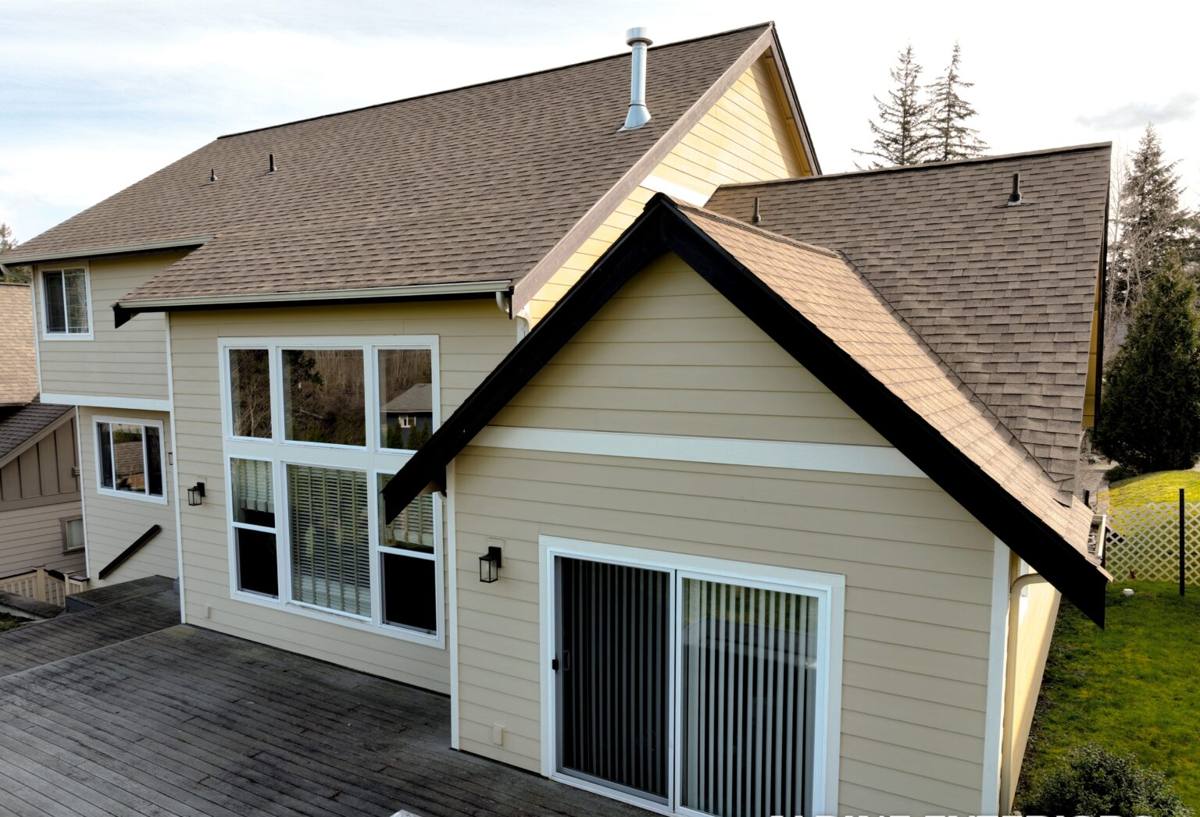
Why Sumas-Area Homes Wear Out Siding Faster
Moisture That Doesn't Let Up
Whatcom County gets a lot of rain, but it's the duration more than the volume that does the damage. Siding here rarely gets a long, dry stretch to fully release the moisture it absorbs after a storm. Wood-based products — cedar, primed spruce, and engineered wood siding like LP SmartSide — depend on that drying-out period to stay stable. When it doesn't come, moisture works into seams, panel edges, and any spot where caulk has started to fail, and it stays there.
Moss and Organic Growth
Shaded walls, north-facing elevations, and anywhere airflow is restricted by fencing, outbuildings, or mature trees will grow moss and algae on almost any siding material if it isn't cleaned. On wood-based products, that growth holds moisture directly against the substrate. On a well-installed fiber cement wall, it's a cosmetic issue that pressure washing resolves; on wood or wood-composite siding, it's an early warning sign of deeper trouble.
Wind-Driven Rain and Open Exposure
Much of the Sumas area sits in open farmland with few windbreaks. That means rain doesn't just fall — it's driven sideways into walls, soffits, and trim during storms. Siding systems depend on correct lap, flashing, and a functioning water-resistive barrier behind the panels to handle that kind of exposure. When any one of those details is off, wind-driven rain finds the gap.
Signs a Sumas Home Needs Siding Replaced, Not Just Repaired
- Soft or spongy spots when you press on the siding, especially near the bottom courses and around window trim
- Paint that keeps failing within a couple years of repainting, even after prep work
- Visible swelling, delamination, or bubbling on panel faces or edges
- Persistent moss or dark staining that returns quickly after cleaning
- Gaps opening up at butt joints, corners, or where siding meets trim, windows, or doors
- Warping or bowing panels, particularly on sun-and-rain-exposed elevations
- Interior signs — musty smell, discoloration on interior walls near exterior corners — that suggest moisture has already gotten past the siding
Any one of these on its own might be a repair. Several at once, or damage that shows up in multiple places on the same wall, usually means the siding system as a whole has reached the end of its useful life and patching it will just delay a bigger repair later.
What a Correct Siding Replacement Actually Involves
Siding replacement isn't just pulling off old panels and nailing up new ones. On a home dealing with the moisture load this area sees, the parts you don't see after the job is done matter more than the parts you do.
Full Tear-Off and Substrate Inspection
We remove the old siding down to the sheathing and check for rot, soft spots, or hidden water damage before anything new goes up. Covering over a compromised wall with new siding just hides the problem — it doesn't fix it.
Water-Resistive Barrier and Flashing
A correctly lapped weather-resistive barrier, properly integrated window and door flashing, and correct kick-out flashing at roof-to-wall intersections are what actually keep wind-driven rain out of the wall assembly. This is the layer that does the real work — the siding itself is the second line of defense, not the first.
Fastening and Clearances
Fiber cement siding has specific fastening patterns, nailing zones, and clearance requirements from grade, roofing, and decks. Getting these wrong is one of the most common ways an otherwise good product fails early — and it's not something you can verify without knowing the manufacturer's installation spec by heart.
Trim, Caulking, and Paint System
Correct trim details and the right caulk in the right joints — not every joint — keep the wall able to manage moisture instead of trapping it. On factory-finished siding, this step is much simpler, because the color coat is already cured and warrantied before it ever reaches the wall.
Why We Only Install James Hardie Fiber Cement
We don't install vinyl, LP SmartSide, primed wood, or cedar siding, and in a climate like this one, that's a deliberate standard, not a limitation. Fiber cement doesn't rely on staying dry to stay dimensionally stable the way wood-based products do. It won't swell, delaminate, or rot from sustained moisture exposure the way engineered wood siding can when installation details slip or maintenance falls behind. It's also non-combustible, which matters given the wildfire smoke and dry-season fire risk that shows up even in a generally wet region like Whatcom County.
James Hardie's ColorPlus factory-applied finish is baked on and warrantied separately from the siding itself, so homeowners aren't relying on a field-applied paint job to hold up against this area's rain and moss cycle. Hardie also engineers specific product lines (their HZ5 line, for example) for climate zones like ours, rather than selling one universal product everywhere. That's a meaningful difference from products that don't vary by region at all.
None of this means other products are junk — cedar has real appeal, and engineered wood siding has improved over the years. It means that after years of doing this work in this specific climate, we settled on the one material that consistently holds up here without asking homeowners to stay on top of maintenance to keep it that way.
Our Process for a Sumas-Area Job
- On-site assessment — we walk the exterior, check for existing moisture damage, and look at exposure conditions specific to your lot (tree cover, wind exposure, drainage).
- Scope and product selection — we walk through the relevant James Hardie product line, panel or lap style, and ColorPlus color options for your home.
- Tear-off and substrate repair — old siding comes off, sheathing is inspected, and any rot or damage is repaired before new material goes up.
- Weather barrier and flashing — the water-resistive barrier and all flashing details are installed to manufacturer spec, not shortcuts.
- Siding installation — fastened, lapped, and finished to James Hardie's published installation guidelines, which is also what keeps the manufacturer's warranty intact.
- Final walkthrough — we go over the finished work with you before calling the job done.
Cost Factors on a Siding Replacement
| Factor | How It Affects the Job |
|---|---|
| Home size and wall complexity | More corners, dormers, and cutouts mean more labor and material waste |
| Extent of substrate damage | Rot found under old siding adds repair work before new siding can go up |
| Siding profile and accessories | Lap width, panel style, trim details, and soffit work all shift cost |
| Access and site conditions | Outbuildings, fencing, and open exposure on rural lots affect staging and scaffolding |
| Existing siding removal | Layers of old material, or siding installed over older siding, adds tear-off time |
| Window and door integration | Re-flashing openings correctly during a re-side is real work, not an afterthought |
We give firm, itemized numbers after seeing the actual house — broad online estimates don't account for what's underneath your existing siding, and on a moisture-heavy job site, that's often the deciding factor in scope and cost.
Why a Crew That Already Works This Area Matters
Rural Whatcom County jobs come with details that don't show up on a suburban job in town: longer driveways and material staging on gravel or grass, septic and well locations to work around, outbuildings and fencing that affect access, and weather windows that close fast once fall rain sets in. A crew that already works the Sumas and Lynden area knows to plan around these things instead of discovering them mid-job.
There's also a permitting and inspection side to re-siding that varies by jurisdiction. Knowing the local process ahead of time — rather than learning it during your project — keeps the schedule realistic and avoids the kind of delays that leave a house exposed to weather longer than it needs to be.
What to Ask Any Siding Contractor in This Area
- Do you fully tear off old siding and inspect the sheathing, or install over it?
- What water-resistive barrier and flashing details do you use, and are they to manufacturer spec?
- Are you a certified or trained installer for the specific siding product you're proposing?
- What does the manufacturer's warranty actually require from installation to stay valid?
- How do you handle rural access, staging, and weather delays on jobs like mine?
Maintaining Fiber Cement Siding After Installation
One of the practical advantages of James Hardie siding in this climate is how little ongoing maintenance it asks for compared to wood-based alternatives. It still benefits from basic care:
- Periodic gentle rinsing to clear moss spores and organic buildup before they take hold, especially on shaded walls
- Keeping gutters clear so overflow doesn't run down the siding face repeatedly
- Trimming back vegetation that keeps walls damp and shaded longer than necessary
- Re-caulking joints if any caulk fails over time, rather than letting a gap sit open through a wet winter
- Checking that grade and landscaping haven't crept up to reduce the siding's clearance from soil
None of this is heavy maintenance — it's the kind of upkeep that, done occasionally, lets factory-finished fiber cement siding go the distance in a climate that's hard on almost everything else.
If your Sumas-area home is showing signs its siding is past its useful life, or you're planning ahead before the next wet season sets in, we're glad to come take a look. The estimate is free, there's no pressure, and you'll get a straight answer about what your siding actually needs — not a sales pitch.