 Lynden Window
 Siding Repair in Kendall: A Climate That Doesn't Let Up
Kendall sits in the rural stretch of Whatcom County northeast of Lynden, and homes out here take the same beating as the rest of the county — just with fewer neighbors around to notice the damage before it spreads. Whatcom County's marine-influenced climate means moisture-laden air, driving rain that comes in sideways during winter storms, and long stretches of shade and dampness that keep moss and algae established on north- and west-facing walls for most of the year. Siding here doesn't fail because homeowners neglect it. It fails because the material and the installation weren't built for this specific combination of wet winters, cool damp summers, and a moss season that can run eight months or longer.
Repair work in Kendall usually falls into a few categories: storm-damaged boards that got cracked or blown loose, rot where trim and siding meet at windows and corners, moss and algae staining that's more than cosmetic, and caulking or flashing failures that let water behind the siding where nobody can see it. Each of those needs a different fix, and the wrong one just buys a homeowner a year or two before the same spot fails again.
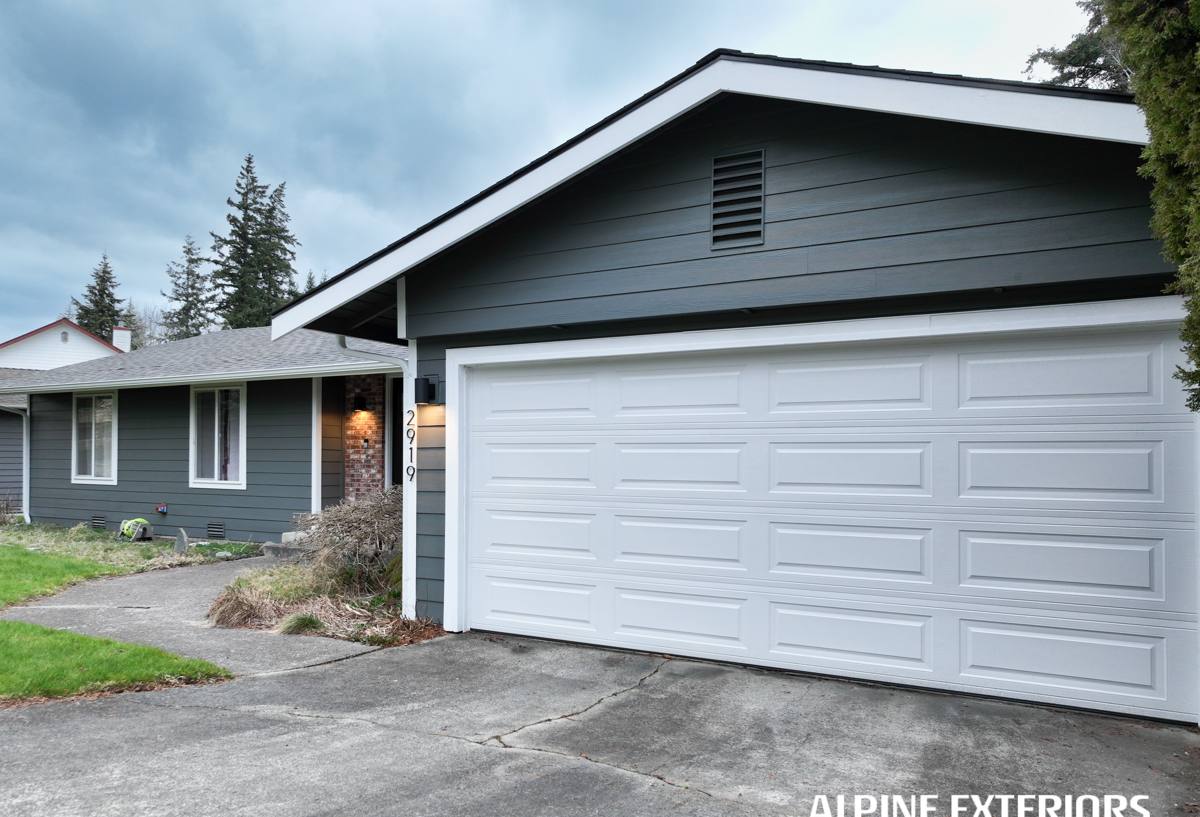
Signs a Kendall Home Needs Siding Repair
Some damage is obvious from the driveway. Other damage is quietly doing its worst work behind boards that still look fine. Here's what we tell Kendall homeowners to watch for between our visits:
- Boards that are cupping, bowing, or pulling away from the wall at the edges
- Soft or spongy spots when you press on the siding near the ground, at corners, or under windows
- Persistent black or green staining that comes back within weeks of being cleaned
- Paint that's peeling, bubbling, or chalking heavily in patches rather than evenly across the wall
- Visible gaps or cracked caulking at trim joints, window edges, and butt seams
- Interior signs — a musty smell, a discolored patch of drywall, or peeling interior paint on an exterior wall
- Increased pest activity around the base of the siding, which often points to softened, moisture-damaged wood underneath
Any one of these on its own might be minor. Several showing up in the same area of the house usually means water has been getting behind the siding for a while, and the repair needs to address what's underneath, not just what's visible.
What a Correct Repair Actually Involves
A siding repair that's done right starts before anyone touches a board. We pull the damaged section and look at what's behind it — the house wrap or building paper, the sheathing, and the framing at that spot. In a wet climate like ours, the siding itself is often the least of the problem; it's whatever let water in behind it that needs fixing, or the repair fails again on the same schedule.
The core steps
- Isolate the damage. Determine whether the problem is limited to the visible boards or has spread into the sheathing and framing.
- Address the water path first. Fix or replace failed flashing, house wrap, and sealant before any new siding goes back on — this is the step that gets skipped in a rushed patch job.
- Replace what's compromised. Rotted sheathing and framing get replaced, not just covered up.
- Match the material correctly. New boards need to match the existing siding's profile, reveal, and fastening pattern so the repair doesn't stand out or create a weak seam.
- Finish and seal properly. Paint, caulk, and flashing details get finished to the same standard as the surrounding wall — not just enough to pass a glance from the street.
Skipping step two is the single most common shortcut in siding repair, and it's the one that costs homeowners the most in the long run. A new board over a still-leaking wall just hides the problem for another season.
Repair or Replace? How We Make the Call
Not every damaged wall needs full replacement, and not every repair is worth doing. We look at the extent of the damage, the age and condition of the material around it, and how many times that section has already been patched. The table below is a general guide — every house gets an actual inspection before we recommend either path.
| Situation | Usually Points To |
|---|---|
| Isolated storm damage on an otherwise sound wall | Targeted repair |
| Rot concentrated at one corner, window, or ground-contact area | Localized repair, with a close look at the flashing detail that caused it |
| Damage that's already been patched more than once in the same spot | Full replacement of that wall or elevation |
| Widespread cupping, cracking, or moisture damage across multiple walls | Full siding replacement |
| Original material is a type prone to repeat moisture failure in this climate | Replacement with a more climate-appropriate material, even if the current damage is limited |
That last row matters more in Kendall than it does in drier parts of the state. Some siding materials hold up to repair after repair with no real long-term fix; others just aren't built for repeated wet-dry cycling and eventually reach a point where patching is throwing money at a losing fight.
Why the Material Matters When We Repair
We install James Hardie fiber cement siding exclusively — we don't install vinyl, LP SmartSide, or cedar. When we're called for a repair on a home with one of those other materials, we'll do the repair honestly and correctly. But part of doing right by a Kendall homeowner is telling them what we see: some materials take repeated moisture exposure well, and some don't.
Cedar looks great and repairs cleanly when it's fresh, but it's a natural material that moves, cups, and rots with age, especially in shaded, damp spots that never fully dry between rain events — which describes a lot of wall area in this part of the county. Engineered wood products can perform well when installation details are followed exactly, but they're unforgiving of the small gaps and moisture entry points that show up over years of settling and weather exposure. Vinyl doesn't rot, but it cracks on impact, fades unevenly, and can't be color-matched years later, so a repair often looks like exactly what it is: a patch.
James Hardie fiber cement doesn't solve every problem, but it's engineered specifically for wet Pacific Northwest conditions, resists moisture-driven rot by nature of the material, holds its factory-applied ColorPlus finish for years without the fade-and-peel cycle we see on painted wood siding, and is non-combustible. When a repair job turns into a "how much of this wall is actually worth saving" conversation, we'll tell a Kendall homeowner straight — including when the honest answer is that a targeted repair is all the situation calls for.
Our Process for Kendall Siding Repair Calls
We keep repair calls straightforward, because most homeowners just want the problem fixed correctly without a sales pitch attached to it.
What to expect
- Inspection first. We look at the damaged area and enough of the surrounding wall to know whether the problem is contained or spreading.
- A straight assessment. We'll tell you what caused the damage, not just what it looks like on the surface.
- A written scope and estimate. No verbal promises — you get a clear description of the work before anything starts.
- Repair work performed to match. Profile, reveal, and finish matched to the existing wall wherever that's possible.
- Cleanup and a final walkthrough. We show you the completed repair and explain what we found and fixed.
Because we work regularly throughout the Lynden area, including out in Kendall, we're not guessing at travel time or treating a repair call out here as an inconvenience tacked onto a Lynden-based schedule. It's a normal part of our route.
What Siding Repair Typically Costs
Every repair is different, so we won't put a number on a job we haven't inspected. What we can tell you is what drives the cost up or down, so you know what questions to ask when you're comparing estimates.
| Cost Factor | Why It Matters |
|---|---|
| Extent of hidden damage | Rot in the sheathing or framing behind the siding adds labor and material beyond the visible boards |
| Material match | Older or discontinued siding profiles can be harder to match, sometimes requiring a wider repair area |
| Accessibility | Second-story work, steep grades, or areas near landscaping can add setup time |
| Root cause repair | Fixing the flashing or water-entry point that caused the damage, not just the visible symptom, adds a step but prevents repeat calls |
| Paint and finish matching | Blending new material into weathered existing paint takes more care than a uniform, factory-finished repair |
In general, a small patch repair on a single board is a modest expense; a repair that involves opening up a wall section to address rot underneath costs more because of the added labor, not because anyone's padding the bill. We'll always explain which category your repair falls into before we start.
Why Hire a Crew That Already Works in Kendall
Siding repair is detail work, and the details that matter are specific to this climate. A crew that mostly works drier regions of the state can still do competent carpentry, but they won't necessarily know why a particular corner in a shaded Kendall yard keeps failing, or which flashing details hold up against a Whatcom County winter and which ones don't. Knowing the region means recognizing the difference between cosmetic moss staining and the kind of sustained dampness that's already done structural damage — and not guessing which one you're looking at.
It also means being realistic about scheduling. Winters here bring stretches of sustained rain where exterior repair work has to pause for the material and the wall to be workably dry, and a crew that works this area regularly plans around that instead of rushing a repair into a wall that isn't ready for it.
Get an Honest Look at Your Siding
If you're seeing damage, staining, or soft spots on your Kendall home's siding, we're happy to come take a look. We'll give you a straight assessment of what's actually going on, what it will take to fix it correctly, and whether a repair or a longer-term replacement makes more sense for your situation — no pressure either way. Reach out for a free estimate using the form below.