 Lynden Window
 Fiber Cement Siding Built for Kendall's Climate
Kendall sits in a part of Whatcom County that takes a specific, sustained kind of weather beating year after year. Salt-tinged air moving through the region works on fasteners and lower-grade finishes over time. Driving rain doesn't arrive gently — storm fronts push it sideways and upward into wall assemblies rather than letting it run straight down and off. And a long, damp moss season settles into shaded and north-facing walls for months at a stretch, keeping surfaces wet far longer than a sunnier exposure would allow. Siding on a Kendall home isn't decorative trim. It's the first line of defense against all three of those stresses at once, every day, for decades.
This page covers fiber cement siding specifically for Kendall homes — why we install James Hardie fiber cement and nothing else, what a correct installation actually involves given this climate, how our process works, and why a crew that already works in this community is worth choosing over one that doesn't.
What Kendall's Climate Actually Demands From Siding
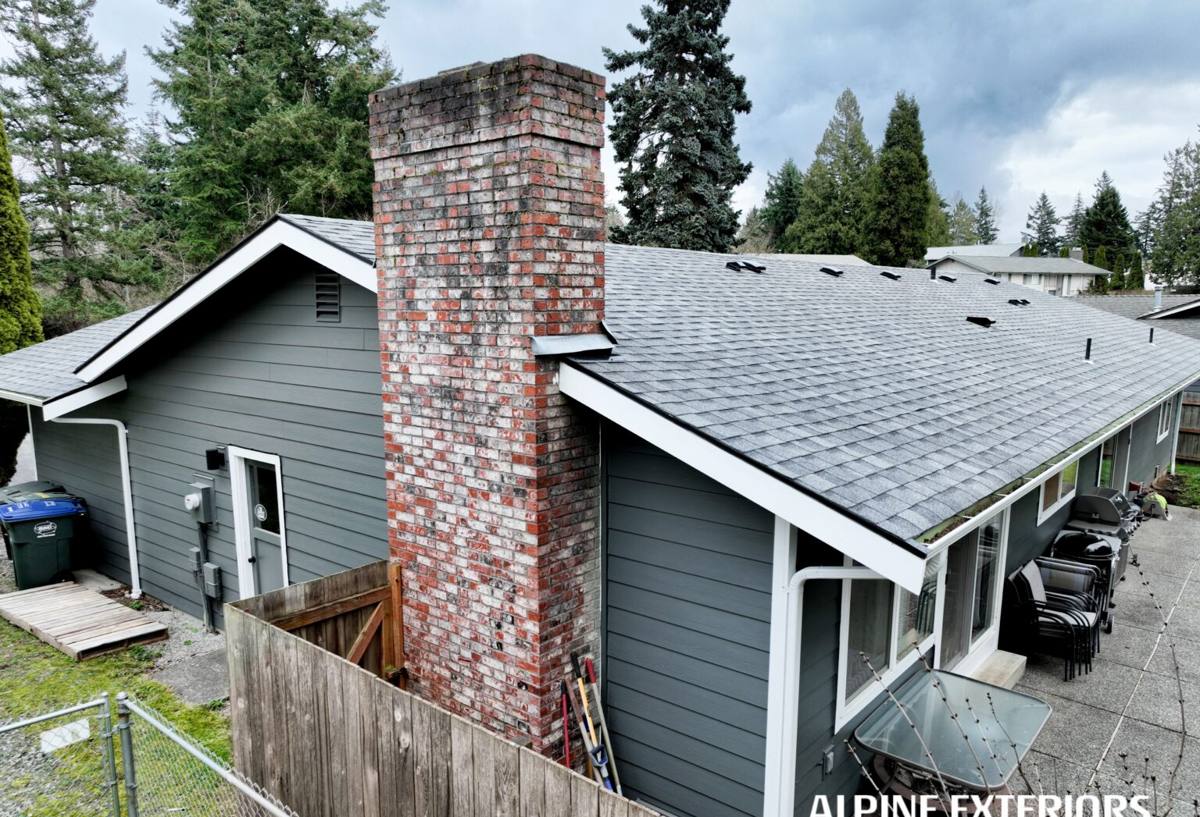
Three conditions define exterior wear here, and they compound rather than acting independently. Salt-tinged marine air accelerates corrosion on exposed fasteners and lower-quality metal trim. Wind-driven rain finds every gap in flashing, every under-caulked joint, and every seam that wasn't lapped correctly on day one. And moss thrives in the shaded, damp conditions common on north-facing walls and tree-covered lots throughout this part of the county, holding moisture against a surface long after a storm has passed.
Why This Matters More Than a Spec Sheet Suggests
A lot of siding products are engineered and marketed for a national average climate, not for a region that stays damp most of the year and gets pushed sideways by real wind-driven storms. The gap between "performs fine in most of the country" and "performs fine on a Kendall home" is exactly where premature siding failure tends to start — usually years after installation, once the warranty conversation has already gotten complicated. We size our recommendations to the climate a Kendall home actually sits in.
Why We Install Only James Hardie Fiber Cement
We install one siding product on every job we take on: James Hardie fiber cement. We don't offer vinyl, LP SmartSide, Cemplank, Allura, primed spruce, or cedar. That's a deliberate professional standard, not a lack of options. Each of those alternatives has genuine strengths — vinyl is inexpensive and low-maintenance in mild climates, engineered wood products install quickly and take paint well, cedar has real visual character — but each one also carries a trade-off we think matters too much in a climate like this to put our name behind.
Vinyl can warp and grow brittle with temperature swings, and its seams and J-channels are exactly where wind-driven rain tends to find a way in. Wood-based products, however well treated, still have an organic core that depends on flawless field priming and caulking at every cut edge to keep sustained moisture out — a demanding standard to hold across an entire crew, on every job, for the life of the siding. Cedar is a genuinely beautiful material, but it's organic too, and it asks for real ongoing maintenance — refinishing, sealing, moss control — to keep performing through a wet season that doesn't offer much of a dry stretch to recover in.
Fiber cement solves the core problem differently: it isn't organic. There's no wood substrate for sustained moisture to work into, and it doesn't feed moss and mildew growth the way wood-based siding can. James Hardie also engineers climate-specific HZ product lines built around exactly this kind of sustained moisture and coastal-influenced exposure, rather than selling one generic formulation everywhere in the country. Paired with a factory-applied ColorPlus finish — baked on under controlled conditions instead of field-painted in whatever weather shows up that week — it holds color and resists cracking longer than most site-applied finishes manage in a climate this damp.
What a Correct Installation Involves
Fiber cement is only as good as the installation behind it. A correct job on a Kendall home addresses the wall as a complete system, not a stack of individual materials nailed up in sequence.
Flashing and Water Management
Most siding failures don't start in the open field of a wall — they start at flashing details around windows, doors, and roofline transitions. Correctly lapped and sealed flashing, integrated with the weather-resistive barrier underneath rather than just caulked over afterward, is what actually keeps wind-driven rain from working its way behind the siding.
Clearance From Grade and Hard Surfaces
Fiber cement siding needs proper clearance from grade, decks, patios, and roof lines. Installing it too close to standing moisture or splash-back defeats a lot of what makes the material worth choosing in the first place, no matter how good the panel itself is.
Fastening Pattern
Correct nail placement, spacing, and depth — following manufacturer specification rather than a shortcut pattern — keeps panels secure and prevents the kind of movement that eventually cracks caulk lines and opens gaps at joints.
Joint and Seam Treatment
How a joint is treated should account for whether that wall face sits in sun or shade. Shaded, moss-prone walls need joint work that accounts for sustained dampness differently than a south-facing wall that dries out between storms.
Factory Finish Matching
Touch-up and trim work should match the factory-applied ColorPlus finish rather than defaulting to a field repaint that fades and weathers at a different rate than the rest of the wall.
Choosing the Right Hardie Product Line
James Hardie makes several distinct siding profiles, and the right one for a Kendall home depends on the look you want and the specific exposure of each wall.
| Product Line | Look | Best Fit |
|---|---|---|
| HardiePlank Lap Siding | Traditional horizontal lap, the most common Hardie profile | Whole-home siding on most Kendall properties, any exposure |
| HardiePanel Vertical Siding | Clean vertical panel look | Modern facades or accent walls, often paired with lap siding |
| HardieShingle Siding | Staggered or straight-edge shingle profile | Homes wanting a traditional shingle look without wood's maintenance burden |
| HardieTrim Boards | Corner boards, fascia, and window/door trim | Finishing details on any of the above, matched to the same ColorPlus palette |
All of these are engineered under the same HZ climate-zone system, so the product being installed on a Kendall home is specified for this region's moisture and exposure levels rather than a one-size-fits-all national formulation.
Cost Factors Worth Understanding
Bids for what sounds like the same siding job can vary by thousands of dollars, and the gap usually comes down to real differences in scope rather than one contractor simply charging more for identical work.
| Factor | What It Affects |
|---|---|
| Existing wall condition | Hidden moisture or rot damage found during tear-off adds repair scope before new siding goes on |
| Siding profile chosen | Lap, panel, and shingle profiles carry different material and labor costs |
| Home size and wall complexity | More corners, gables, and penetrations mean more flashing and cut work |
| Trim package | Detailed corner and window trim adds labor time relative to a minimal trim approach |
| Access and site conditions | Tree cover, tight lot lines, or difficult staging can affect labor time and equipment needs |
| Color and finish selection | Factory ColorPlus finishes vary somewhat in cost by color and product line |
A detailed written estimate that itemizes tear-off, flashing scope, product line, and trim work tells you far more than a single lump-sum number. It's worth asking any contractor to walk through exactly what's included before comparing prices side by side.
How Our Process Works
We keep the process straightforward because a project this size deserves a homeowner who knows what's happening at every stage.
- In-person inspection: We walk the exterior in person, not from a photo, and look at existing siding condition, trim, and flashing details wall by wall.
- Written estimate: You get a clear, itemized bid covering tear-off, flashing, product line, trim package, and cleanup — no vague single-line pricing.
- Scheduling around weather: We build reasonable flexibility into the timeline, since wet-season delays are a normal part of working in this region rather than an excuse.
- Tear-off and substrate check: Old siding comes off, and any hidden moisture or framing damage is addressed before anything new goes up.
- Flashing, weather barrier, and siding installation: Each layer goes on to manufacturer specification, with extra attention at windows, doors, and wall transitions.
- Final walkthrough and cleanup: We review the completed exterior with you and do a full site cleanup before calling the job done.
Why Hiring a Crew That Already Works in Kendall Matters
A crew that regularly works siding jobs in and around Kendall has already seen how salt-tinged air corrodes underspecified fasteners, how wind-driven rain finds its way through improperly lapped flashing, and which wall orientations hold moss longest through the wet season. That's practical, site-specific knowledge that shows up in the small decisions made throughout a job — decisions a crew unfamiliar with this particular climate might not think to make at all.
It also matters after the job is finished. A workmanship warranty is only as good as the company standing behind it, and a contractor with an established, ongoing presence in this part of Whatcom County is the one you can actually reach two or three years later if a question comes up.
A Practical Checklist Before You Choose a Siding Contractor
- Do they install James Hardie specifically, and can they explain why they specify one HZ product line over another for your walls?
- Does the estimate detail flashing scope at windows, doors, and roof transitions, not just "new siding"?
- Is tear-off and substrate inspection included, or do they plan to install over existing siding?
- Do they carry current WA contractor licensing, liability insurance, and workers' compensation?
- Can they point to recent, real work in or near Kendall and the surrounding communities?
- Does the bid separate manufacturer material warranty coverage from their own workmanship warranty?
Signs Your Kendall Home's Siding May Need Attention
Siding failure is rarely sudden. It gives warning signs first, and catching them early is often the difference between a repair and a full re-side.
- Soft spots or visible swelling, which point to moisture that's already reached the substrate
- Peeling or bubbling paint on wood-based siding, a sign moisture is trapped underneath the finish
- Persistent moss or algae staining on shaded or north-facing walls that doesn't wash off
- Cracked or missing caulk at joints, trim, and window and door surrounds
- Warping, buckling, or gaps opening between panels or lap courses
If you're seeing any of these on a Kendall home, it's worth having the siding looked at before the next stretch of wet-season weather rather than waiting for water to find its way inside.
If you'd like an honest, no-pressure look at your Kendall home's siding and a written estimate to compare against anything else you've received, we're glad to come take a look. Use the form below to request a free estimate.