 Lynden Window
 Siding Built for Kendall's Corner of Whatcom County
Kendall sits inland from Lynden along the Nooksack River valley, in the northeastern reach of Whatcom County toward the Mount Baker foothills. It doesn't take direct salt spray the way our waterfront service areas do, but it still sits inside the same marine-influenced weather system that shapes exterior work across this whole part of Washington. Moist air moves in off the Sound and gets funneled up the valley, rain arrives wind-driven more often than straight down, and mild, steady temperatures give moss and mildew a long season to work on any wall that stays shaded or damp. Add in tree cover on a lot of rural Kendall properties, and you've got siding conditions that are genuinely tougher than what a national siding brochure is usually written for.
We install James Hardie fiber cement siding, and only James Hardie fiber cement siding, on homes in Kendall and across Whatcom County. This page covers what that means specifically for this area: what the climate does to a wall over time, what a correct Hardie installation involves, how our process works on a Kendall property, and why hiring a crew that already works this area regularly matters more than it might seem.
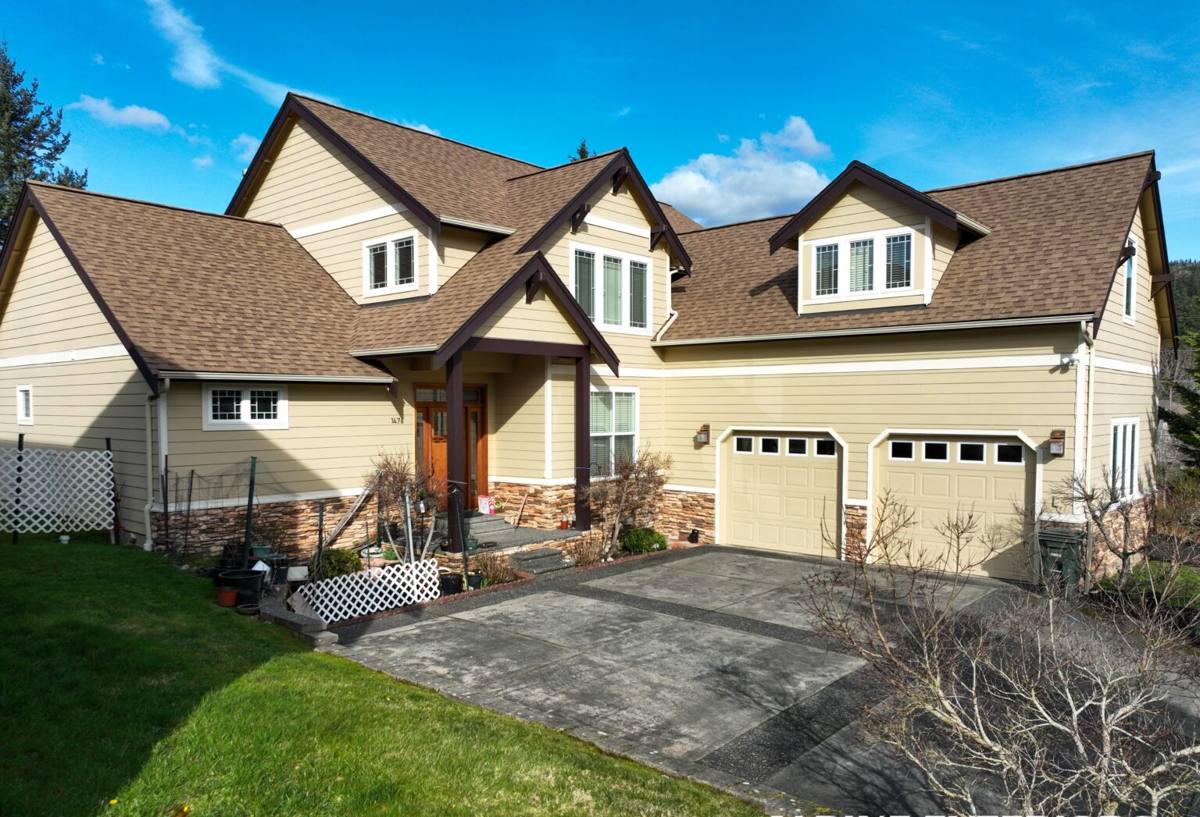
What Salt Air, Driving Rain, and Moss Actually Do to Siding Here
Salt Air and Fastener Corrosion
Salt-tinged marine air travels well inland through Whatcom County, and Kendall isn't far enough removed from it to be exempt. Over years, that exposure accelerates corrosion on lower-grade fasteners, trim hardware, and any factory finish that wasn't formulated for it. The failure isn't usually dramatic — it's a slow fade in coating performance and a rise in rust streaking and loose trim that shows up gradually rather than all at once.
Wind-Driven Rain
Rain up the Nooksack valley rarely falls straight down. Wind pushes it sideways into lap joints, under trim, and into any seam where the flashing or caulking isn't done right. That's a much harder test for a siding system than a simple annual rainfall number suggests, and it's exactly where cheap installation shortcuts show up first — usually behind the wall, long before a homeowner notices anything from the outside.
A Long Moss Season
Shaded, tree-lined lots are common in Kendall, and mild temperatures combined with steady moisture keep moss and mildew active on siding surfaces for most of the year, not just a few wet months. Organic growth on a wall traps moisture against whatever's underneath it, and that trapped moisture is where a lot of long-term siding problems actually start, whether the surface is wood, engineered wood, or a coating that wasn't built to shed it.
Why James Hardie Fits This Climate Better Than the Alternatives
James Hardie siding is fiber cement — a blend of Portland cement, sand, and cellulose fiber, cured into rigid boards and panels. It's an inorganic material, which means there's no wood-based or petroleum-based core to absorb water, swell, rot, or feed insects the way organic siding materials can over time. That matters directly in Kendall's conditions, where sustained moisture and shade are the norm rather than the exception.
The HZ5 Climate-Engineered Line
James Hardie engineers different product lines for different climate zones, and the HZ5 line is built for regions with freeze-thaw cycles and sustained moisture exposure — a closer match to Whatcom County's winters than a product engineered primarily for hot, dry climates. That climate-specific engineering is a concrete reason we standardized on this manufacturer rather than fiber cement as a generic category.
Non-Combustible Construction
Fiber cement doesn't burn. That's a meaningful consideration for properties on wooded, rural lots closer to the foothills, where defensible space and building material choices come up more often in insurance and wildfire-awareness conversations than they used to, even in a historically wet region.
A Factory Finish Instead of Field-Applied Paint
Hardie's ColorPlus finish is baked on in a controlled factory environment, in multiple coats, before the boards ever reach your property. It's backed by its own warranty, separate from the substrate warranty, and it's formulated to hold color and resist fading better than a field-painted finish exposed to years of UV and marine air.
What a Correct Installation Actually Involves
Fiber cement's reputation depends heavily on how it's installed, and we're upfront about that rather than pretending the material does all the work on its own. A rushed or out-of-spec install can undercut even the best siding product, especially in a climate that tests every seam and fastener the way this one does.
| Installation Detail | Why It Matters in Kendall |
|---|---|
| Manufacturer-specified clearances from grade, roofline, and decks | Keeps splash-back and standing moisture off the board edge on a high-rainfall, tree-shaded property |
| Correct fastener type, placement, and depth | Prevents cracking and keeps the water-resistive barrier behind the siding intact |
| Proper flashing at windows, doors, and penetrations | Directs wind-driven rain away from seams instead of letting it collect there |
| Rain screen or drainage plane behind the siding | Lets any moisture that gets past the surface drain and dry instead of sitting against the sheathing |
| Factory-cut edges used wherever possible; field cuts sealed per spec | Preserves the ColorPlus finish's protection at every edge, not just the visible face |
We send manufacturer-trained installers to every job for this reason. A moisture-resistant, non-combustible material can still underperform badly if the details around it — flashing, clearances, fastening — aren't done to spec.
Signs Your Current Siding Is Already Losing the Battle
Most siding failures in this climate don't show up as a single obvious event. They build slowly, and by the time they're visible from the curb, there's often already moisture damage behind the wall. Worth a look if you're seeing any of the following on a Kendall home:
- Persistent moss or dark streaking that comes back within weeks of cleaning
- Soft, spongy, or discolored siding, especially on shaded or north-facing walls
- Paint that's peeling, bubbling, or chalking well before it should
- Visible gaps at seams, corners, or trim where caulk has cracked or pulled away
- Warping, buckling, or panels that no longer sit flat against the wall
- A musty smell near exterior walls, which can point to trapped moisture behind the siding
- Rust streaking from fasteners or trim hardware
Any one of these is worth a professional look before it turns into a sheathing or framing repair on top of a siding job.
How We Approach a Kendall Siding Project
Assessment and Bid
We walk the property, look at the existing siding and what's underneath it where we can, and factor in the specific exposure of your lot — how much shade, how much wind, which walls take the worst of the weather. The bid reflects what your house actually needs, not a flat per-square-foot number that ignores site conditions.
Tear-Off and Prep
Old siding comes off, and we inspect the sheathing and framing underneath for rot or moisture damage before anything new goes up. If we find damage, we tell you before we cover it back up, not after.
Water Management First
Housewrap, flashing, and a drainage plane go in before a single piece of siding does. This is the step that determines whether the finished job actually performs in wind-driven rain, and it's not one we shortcut to save time.
Installation to Manufacturer Spec
Boards and panels go up with correct clearances, fastening, and flashing integration at every window, door, and penetration — the details in the table above, applied consistently across the whole house, not just the visible elevations.
Final Walkthrough
We walk the finished job with you, point out what was done and why, and make sure you know what routine maintenance, if any, the finish actually needs going forward.
James Hardie Product Lines We Install
James Hardie makes several distinct product lines, and the right one for a given wall depends on the look you want and the specific exposure of that elevation.
| Product Line | What It Looks Like | Best Fit |
|---|---|---|
| HardiePlank lap siding | Traditional horizontal lap board, the most common Hardie profile | Whole-house siding on most residential styles |
| HardiePanel vertical siding | Vertical panel look, often paired with board-and-batten trim | Modern or farmhouse-style homes, accent walls |
| HardieShingle siding | Staggered or straight-edge shingle profile | Craftsman-style accents, gable ends |
| HardieTrim boards | Fascia, corner boards, and window/door trim | Finishing detail work around openings and rooflines |
ColorPlus finishes come in a range of factory colors designed to hold up under UV and marine air exposure, and we can walk you through options during the estimate rather than having you guess from a color chip indoors.
What Affects the Cost of a Hardie Siding Job
| Factor | Why It Moves the Price |
|---|---|
| Square footage and wall complexity | More cuts, corners, and trim detail mean more labor time |
| Condition of the sheathing underneath | Rot or moisture damage found during tear-off adds repair scope |
| Product line and profile chosen | Lap, panel, and shingle profiles carry different material and labor costs |
| Trim and detail work | Corner boards, window trim, and accent details add labor beyond the flat wall area |
| Site access and lot conditions | Steep lots, tree cover, and tight access can slow staging and installation |
We give straight, itemized bids rather than a single vague number, so you can see what you're actually paying for and where the cost is coming from.
Why Hire a Crew That Already Works Kendall
A crew that installs siding across this part of Whatcom County through every season sees how salt-tinged air, wind-driven rain, and moss actually behave on real houses over years, not just how a product performs on a spec sheet. That translates into practical decisions on your job: how much attention a shaded, tree-lined wall in Kendall needs compared to an open, sun-exposed one, how aggressive the drainage plane needs to be on a given elevation, and which flashing details are worth the extra time on install day so you're not dealing with a moisture problem two winters later. It also means working with someone who understands the difference between a rural, wooded Kendall lot and a tighter in-town property, and doesn't apply the same approach to both without thinking about it.
Living With Hardie Siding in a Moss-Prone Climate
James Hardie siding is genuinely low-maintenance compared to wood or engineered wood, but "low-maintenance" doesn't mean "no maintenance" in a climate like this one. An occasional gentle wash to keep moss and organic growth from building up on shaded walls goes a long way, and it's a much smaller task than repainting or recaulking a wood-based product on the same schedule. Because the ColorPlus finish is factory-applied rather than field-painted, you're not on the hook for a repainting cycle the way you would be with cedar or primed wood siding. Keeping gutters clear and trimming back vegetation that shades a wall for most of the day are the two simplest things a homeowner can do to keep moss from getting a foothold in the first place.
If you're planning a re-side or a new build in Kendall, we're glad to walk the property, look at what's on the walls now or what the site conditions call for, and give you a straight answer about what we'd recommend and why. Reach out using the form below to schedule a free, no-pressure estimate.