 Lynden Window
 Roof Repair in Laurel: What the Climate Actually Does to a Roof
Laurel sits in a part of Whatcom County where the roof over your head works harder than it does almost anywhere else in the state. The combination of salt-tinged air drifting in off the Salish Sea, long stretches of driving rain, and a moss season that can run most of the year means roofing materials here are under near-constant moisture pressure. It's not one big storm that causes most of the damage we see — it's months of steady dampness finding the smallest gap in flashing, the tiniest lifted shingle tab, or a clogged valley that never quite dries out.
That's the case for repair work that's actually built for this area, not a generic patch job. A roof repair in Laurel needs to account for how slowly things dry here, how aggressively moss and algae take hold, and how much salt-laden moisture works into fasteners and metal flashing over time. Get the repair right and a roof can go years longer before replacement is on the table. Get it wrong — wrong materials, a rushed patch, moss left in place — and the same problem is often back within a season.
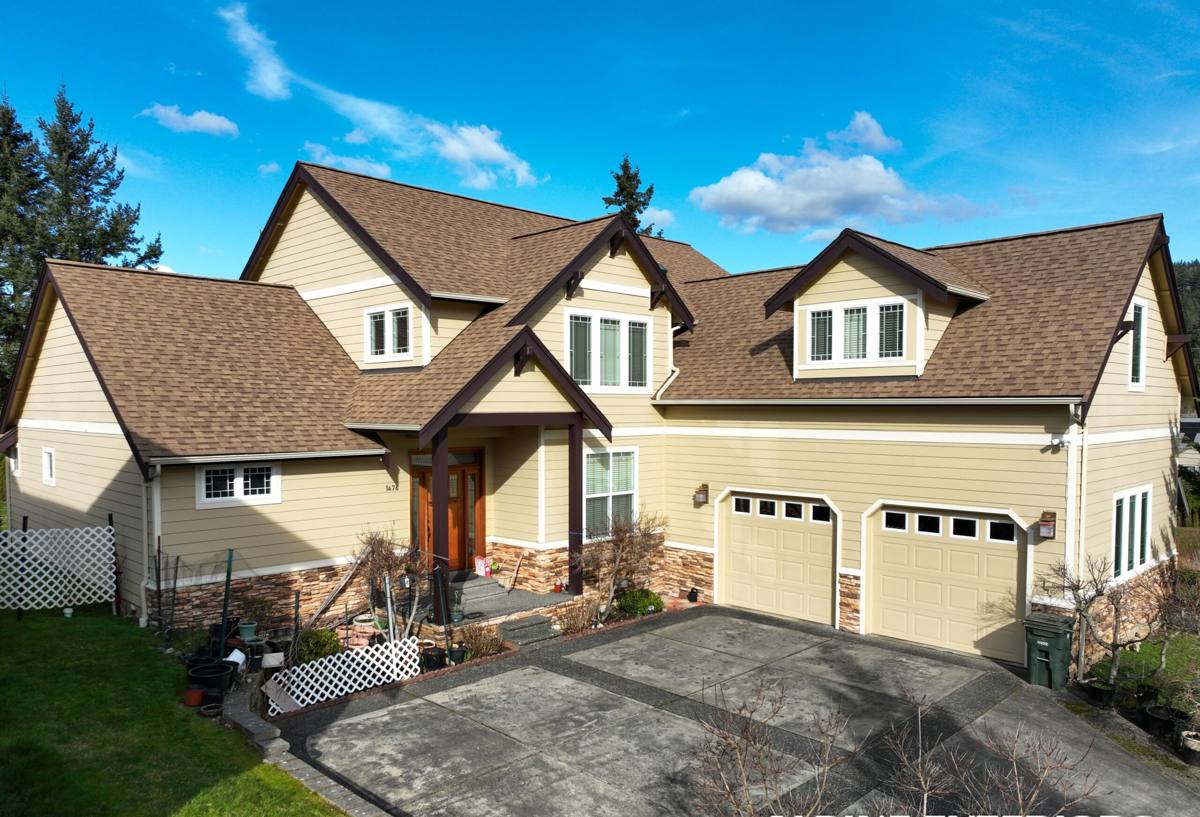
Signs You Need Roof Repair, Not a Full Replacement
Most roofs don't fail all at once. They fail in specific spots while the rest of the roof still has years of life left. Knowing the difference between a repair situation and a replacement situation can save a homeowner real money.
- Water staining on an interior ceiling or wall, especially near a chimney, skylight, or where two roof planes meet
- Shingles that are cracked, curling, or missing in a localized area rather than across the whole roof
- Visible daylight or gaps around roof penetrations — vents, plumbing boots, chimneys
- Moss buildup concentrated on the north-facing or shaded sections of the roof
- Granules collecting in gutters from one section of shingles more than others
- Soft or spongy spots when walked on, which usually points to isolated decking damage rather than a roof-wide problem
If the issues above are limited to one area — a valley, a chimney flashing, a section shaded by trees — a targeted repair is almost always the right call. Roofs rarely need full replacement just because one section is struggling.
Moss and Algae: Whatcom County's Slow Roof Killer
Why Moss Takes Hold So Easily Here
Moss needs shade, organic debris, and moisture that doesn't fully evaporate between rains. Laurel and the surrounding Lynden area check all three boxes for a good chunk of the year. Roofs under overhanging trees or on north-facing slopes stay damp longer, and once moss establishes itself, it holds even more water against the shingle surface, which accelerates granule loss and can lift shingle edges enough to let water underneath.
Removing It the Right Way
Moss removal isn't just about appearance. Done wrong — pressure washing, aggressive scraping, or leaving dead moss debris in place — it can strip protective granules or drive moisture further under the shingle mat, which turns a cosmetic issue into a repair issue. A proper approach uses low-pressure methods, removes debris from valleys and gutters where moss spores collect, and treats the surface to slow regrowth. When we're already repairing flashing or shingles in a moss-affected area, we clear it as part of the job rather than leaving it to grow back around the new work.
The Repairs We're Called Out for Most in Laurel
Some failure points show up again and again in this climate. Knowing what they are helps homeowners recognize a problem early, before it becomes a ceiling stain.
- Flashing around chimneys and skylights — metal flashing seals move over time, and this is one of the most common points of active leaks
- Valley wear — valleys carry the most water off a roof and take the most abuse from debris and standing moisture
- Pipe boots and vent seals — rubber boot seals degrade faster under sustained damp conditions and become brittle or cracked
- Ridge cap shingles — exposed to the most wind-driven rain and often the first shingles to show wear
- Gutter and drip edge issues — when water isn't shed cleanly off the roof edge, it backs up under the first course of shingles
Any one of these left unaddressed for a season or two in a wet climate tends to compound — a small flashing gap becomes rotted decking, a cracked boot becomes a stained ceiling below it.
What a Correct Roof Repair Actually Involves
A repair that holds up here does more than cover the visible problem. It starts with figuring out how water is actually getting in, which is sometimes several feet away from where the stain shows up inside, since water travels along decking and framing before it drips through.
Once the source is confirmed, a proper repair means removing shingles around the damaged area (not just laying new material on top), checking the decking underneath for soft spots or rot, replacing underlayment where it's compromised, and installing new flashing or shingles that tie in cleanly with the surrounding roof. Materials should reasonably match what's already on the roof in color and profile so the repair doesn't stand out or create a mismatched wear pattern down the road. We also check attic ventilation while we're up there — poor ventilation traps moisture from the inside, which works against even a perfectly executed exterior repair.
Our Process, Start to Finish
1. Inspection and Diagnosis
We look at the roof from the ground and up close, tracing the water path rather than just patching where the stain appears. We also check attic access points where available.
2. A Clear, Written Estimate
Before any work starts, the homeowner gets a plain explanation of what's actually wrong, what the repair involves, and what it will cost — no vague line items.
3. The Repair Itself
We remove and replace only what needs it, tie new materials into the existing roof properly, and clear moss or debris from the area as part of the job.
4. Cleanup and Walkthrough
Debris and old materials are hauled off, and we walk the homeowner through what was done and what to watch for going forward.
Repair or Replace? Cost Factors to Weigh
Homeowners in Laurel often ask whether it's worth repairing an older roof or better to start planning for replacement. The honest answer depends on a handful of factors, not just the roof's age.
| Factor | Leans Toward Repair | Leans Toward Replacement |
|---|---|---|
| Extent of damage | Isolated to one section or component | Widespread across multiple slopes |
| Roof age | Under roughly 15-20 years, otherwise sound | Near or past the material's expected service life |
| Decking condition | Solid, no rot found during inspection | Soft or rotted decking in multiple areas |
| Frequency of past leaks | First issue in this spot | Recurring leaks in different areas over time |
| Moss/algae staining | Surface level, removable | Deep granule loss across large areas |
As a rough guide, a small, targeted repair — a section of flashing or a handful of shingles — often runs a few hundred dollars. More involved repairs, such as multiple failure points or decking replacement, can run into the low thousands. Full replacement is a different conversation entirely, and we'll always tell a homeowner honestly which side of that line their roof is on rather than pushing toward the bigger job.
Why Hiring a Crew That Already Works Laurel Matters
Roofing crews who mainly work drier parts of the state sometimes underestimate how much this area's damp, moss-prone conditions change what a repair needs to hold up. A crew already working Lynden and the surrounding communities knows which materials perform better under sustained moisture, which roof orientations in this area tend to hold moss and need extra attention, and how local weather patterns affect the timing of repair work. That familiarity means fewer surprises during the job and a repair that's built for the conditions it actually has to survive, not generic best practices from a drier climate.
It also means being reachable if a repair needs a follow-up visit — something that matters more with a local crew than one that's an hour or two away and unlikely to return quickly for a small callback.
Maintaining a Laurel Roof Between Repairs
A repair lasts longer when it's not fighting the same conditions that caused the original problem. A few habits go a long way in this climate:
- Keep gutters and valleys clear of needles and leaves, especially heading into fall
- Trim back tree branches that keep sections of the roof shaded and slow to dry
- Have moss addressed early, before it spreads or lifts shingle edges
- Check attic ventilation periodically — trapped moisture from inside works against the roof from below
- Walk the roofline visually after major windstorms to catch lifted or missing shingles early
- Address small leaks as soon as they're noticed rather than waiting for dry season
None of this replaces a professional inspection, but it does reduce how often repairs are needed and helps any repair work last as long as it's designed to.
If you're dealing with a leak, moss buildup, or damaged flashing on a Laurel-area roof, we're happy to take a look and give you a straight answer on what it needs. Use the form below to request a free, no-pressure estimate.