 Lynden Window
 A New Roof Built for the Aldergrove Climate
Aldergrove sits close enough to Lynden that the weather is functionally the same weather — the same wet Pacific systems that roll off the Strait of Georgia and up the Nooksack valley, the same long gray stretches between October and April, and the same low winter sun angle that keeps north-facing roof slopes damp for days after a storm passes. If you're planning a new roof installation for a home in or near Aldergrove, BC, the details that matter aren't generic. They're specific to this corner of the Pacific Northwest, and getting them right the first time is what separates a roof that lasts three decades from one that starts causing problems in year eight.
This page covers what a correct new roof installation actually involves here, what a homeowner should expect from the process, and why working with a crew that already services this area — rather than a company driving in once and never coming back — makes a real difference over the life of the roof.
What This Climate Does to a Roof
Three regional factors show up again and again when we inspect older roofs in the Aldergrove and Lynden area:
Salt Air and Airborne Moisture
Even well inland from open saltwater, this region sits in a marine air pattern that carries fine salt and moisture further than people expect. Combined with near-constant humidity, this accelerates corrosion on exposed metal — nails, flashing, vent stacks, and fasteners — faster than it would in a dry inland climate. A roof built with the wrong fastener or flashing metal for this environment will show rust streaks and early failure at those points long before the shingles themselves wear out.
Driving Rain
This isn't gentle drizzle rain. Fall and winter storms here regularly bring wind-driven rain that hits roof planes at an angle instead of falling straight down. That means water gets pushed sideways and upward under shingle tabs, around chimney and skylight flashing, and along roof-to-wall transitions — the exact places a rushed or corner-cutting install tends to skip proper underlayment and flashing detail. A roof that would hold up fine in a calmer climate can leak here simply because the water is attacking from a different angle.
A Long Moss Season
Cool temperatures, shade from mature trees, and near-constant dampness give moss and algae a growing season that runs most of the year in this area, not just a few wet months. Moss holds moisture against the roof surface, works its way under shingle edges as it grows, and can lift tabs enough to let water in — even on a roof that isn't especially old. New roofs installed without any thought to airflow and shade exposure tend to develop moss problems within a few years.
What a Correct New Roof Installation Involves
A new roof is not just "shingles on plywood." Done properly, it's a layered system where every layer has a job, and skipping or shortcutting any one of them is where most premature roof failures start. Here's what should happen on a proper tear-off and reinstall:
- Full tear-off of the old roofing material down to the deck — not a layover, which traps moisture and hides deck problems.
- Deck inspection and repair — any soft, delaminated, or water-damaged plywood/OSB gets replaced before anything new goes down.
- Ice-and-water shield at eaves, valleys, and around all penetrations — the single most important defense against wind-driven rain in this climate.
- Synthetic underlayment across the full deck, properly lapped so water sheds downhill at every seam.
- Metal flashing — corrosion-resistant material, correctly sized and formed — at all valleys, chimneys, skylights, and wall transitions.
- Balanced ventilation (intake at the eaves, exhaust at the ridge) so the attic can actually dry out between storms instead of holding moisture.
- Proper fastening — correct nail placement, pattern, and count for the specific product and local wind exposure, not just "enough to hold it down."
- Manufacturer-compliant installation so the material warranty stays valid if something does go wrong down the line.
Any one of these steps done wrong doesn't usually show up as a problem on day one — it shows up two, five, or ten years later as a leak, a rotted deck section, or moss creeping under a shingle edge. That's why the install matters more than the shingle brand.
Roofing Material Options for This Climate
There's no single "best" roofing material — the right choice depends on budget, roof pitch, how much shade the property gets, and how long you plan to stay in the home. Here's an honest comparison of the options we install most often in this area:
| Material | Typical Lifespan | How It Handles This Climate | Maintenance Burden |
|---|---|---|---|
| Architectural asphalt shingle | 25–30 years | Good with proper underlayment and ventilation; needs periodic moss treatment | Low to moderate |
| Standard 3-tab shingle | 15–20 years | Lower wind resistance and thinner profile; shows wear faster in driving rain | Moderate |
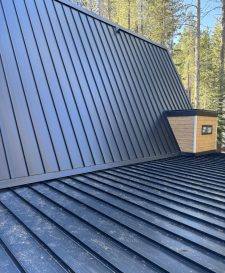
| Metal (standing seam or panel) | 40–50+ years | Sheds moss and rain very well; needs corrosion-appropriate fasteners | Low |
| Cedar shake/shingle | 20–30 years with upkeep | Attractive but retains moisture in shaded, damp areas; highest moss risk | High |
We're generally cautious about recommending cedar in heavily shaded, damp Aldergrove-area lots — not because it's a bad product, but because its moisture-retention behavior works against a climate that already gives moss a long growing season. If a homeowner wants the cedar look with less upkeep, we'll talk through composite or architectural shingle profiles that mimic it without the same maintenance demands.
What Actually Drives the Cost
Homeowners often ask why one roof quote is significantly different from another for what looks like the "same job." In this area, the real cost drivers are usually:
| Factor | Why It Matters Here |
|---|---|
| Roof pitch and complexity | Steeper pitches and multiple valleys/dormers take more labor and more flashing detail |
| Deck condition | Rot from long-term moisture intrusion under old roofing adds replacement plywood cost that's rarely known until tear-off |
| Material choice | Metal and cedar cost more upfront than asphalt but shift the cost curve differently over time |
| Ventilation upgrades | Older homes often need added intake/exhaust venting brought up to a standard that actually works in this humidity |
| Access and site conditions | Steep lots, mature landscaping, and tree cover affect staging, safety setup, and cleanup time |
We'd rather walk a roof in person and give a number based on what we actually find than quote a flat price sight unseen — deck condition especially can't be judged accurately from the ground or from photos.
Our Process
- On-site inspection. We walk the roof, check the attic for ventilation and moisture signs, and assess deck condition where visible.
- Written estimate. A clear breakdown of material, labor, and any deck repair allowance — no vague lump-sum guessing.
- Material selection. We walk through the tradeoffs above based on your budget, roof exposure, and how long you plan to own the home.
- Scheduling around weather. Given how much rain this region gets, we plan tear-off windows carefully and protect an open roof if weather turns mid-job.
- Tear-off and deck repair. Old material removed, deck inspected, any damaged sections replaced before moving forward.
- Underlayment, flashing, and ventilation installed to the standard described above — not skipped to save a day of labor.
- Final material installation per manufacturer specification, so the product warranty is fully valid.
- Cleanup and walkthrough. Magnetic sweep for stray fasteners, full site cleanup, and a final walk-through so you understand what was done and why.
Cross-Border Considerations for Aldergrove Homeowners
Because Aldergrove sits just across the international border from Whatcom County, a few practical questions come up that don't apply to a purely local Lynden job. Permits for roofing work in Aldergrove are pulled through the applicable local authority on the Canadian side, and any structural or code-related decisions follow the standards that apply there — we don't assume Washington-side rules carry over automatically. On the logistics side, scheduling has to account for border crossing times for materials and crew, which is simply a matter of planning the job day realistically rather than treating it as an afterthought. None of this should be invisible to you as the homeowner — a contractor who regularly works both sides of that line should be able to explain clearly how permitting, scheduling, and site logistics work for your specific property before any work begins.
Signs Your Roof Needs Replacing, Not Just Repairing
Not every roof problem calls for a full replacement — but these are the signs that usually mean patching is no longer the honest answer:
- Shingles that are cupping, curling, or losing granules in large patches rather than isolated spots
- Moss established under shingle edges, not just sitting on the surface
- Daylight visible through the attic roof deck, or damp insulation after storms
- Repeated leaks in different locations after previous patch repairs
- A roof deck that feels soft or spongy underfoot in any section
- The roof is at or past the expected lifespan for its material, especially if it's a 3-tab shingle roof over 18–20 years old
If you're only seeing one or two of these, a targeted repair may still make sense — we'll tell you that honestly rather than push a replacement that isn't needed yet.
Moss Prevention After Installation
Given how long the moss season runs here, prevention built into the install matters more than after-the-fact treatment. This includes proper ventilation so the deck can dry between rain events, trimming back overhanging branches where possible so the roof gets more sun and airflow, and in some cases zinc or copper strips near the ridge that discourage moss growth as rain washes over them. None of this eliminates the need for periodic moss removal entirely, but it substantially reduces how often it's needed and how aggressively moss establishes itself.
Why a Crew That Already Works Aldergrove Matters
A roofing crew based in Lynden that regularly services the Aldergrove area isn't guessing at how the climate behaves here — they've already seen what driving rain does to a poorly flashed valley, what a long moss season does to an unventilated attic, and what corrosion looks like on the wrong fastener after a few winters. That local pattern recognition shows up in the small decisions during an install: where extra ice-and-water shield gets added even though it's not strictly required, how flashing gets detailed around a specific roof-to-wall transition, and which ventilation setup actually keeps an attic dry in this specific humidity. A crew that's only passing through once doesn't carry that experience into your job, and they're not the ones you'll call if something needs a look five years from now.
If you're weighing a new roof for your Aldergrove-area home, we're happy to walk the roof, look at the attic, and give you a straightforward, no-pressure estimate — no inflated urgency, just an honest read on what your roof actually needs. Use the form below to get started.