 Lynden Window
 Building New in Laurel: What the Climate Actually Asks of Your Windows
Laurel sits in the flat, farm-country stretch of Whatcom County between Lynden and Bellingham, and like the rest of this corner of Washington, it gets weather that doesn't let up for long. Winters bring driving rain that comes in sideways for days at a time, the marine air off the Salish Sea keeps everything damp and encourages a long moss season on roofs, siding, and anything else that holds moisture, and the salt-tinged air common to this part of the county is slowly hard on exposed metal hardware. None of that is dramatic on any single day. It's the accumulation — season after season — that separates a window installed correctly from one that was just installed.
On a new build, you get one real shot at doing this right. The window itself matters, but so does everything around it: the rough opening, the flashing sequence, the sealants, and how the window ties into the house wrap before siding ever goes on. Get that wrong and you won't see it for a year or two — then it shows up as staining, soft trim, or a musty smell in a wall you can't easily open back up.
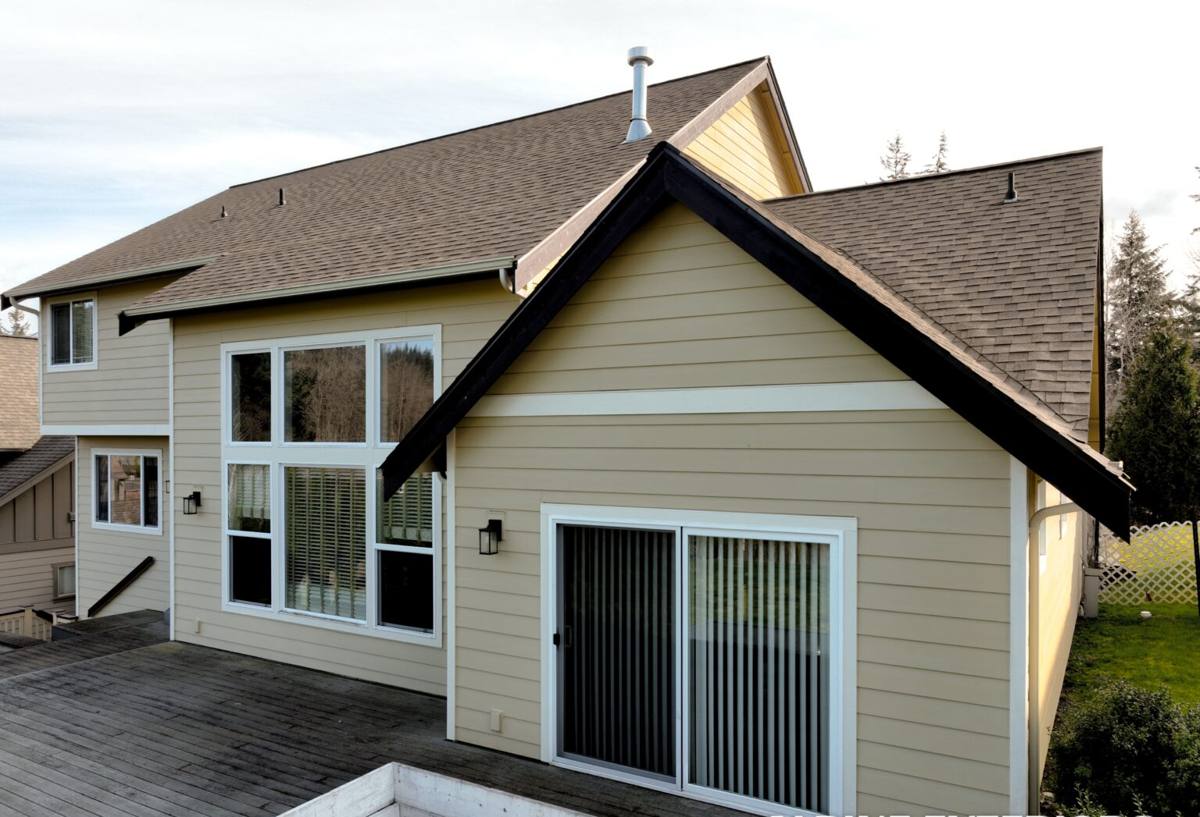
New Construction vs. Replacement: Why the Job Is Different
A lot of homeowners assume window installation is window installation. It isn't. Replacement work fits a window into an existing, finished opening and has to work around siding and trim that's already there. New construction is the opposite — we're setting windows into open framing before the house is closed in, which is a real advantage if it's used correctly.
- Access to the framing: We can inspect and correct rough openings before a window ever goes in, instead of working around problems hidden behind existing siding.
- Full flashing integration: New-construction windows have a nailing fin that ties directly into the house wrap and flashing system — done in the right order, this is the single biggest factor in keeping water out over the life of the house.
- One chance to get sequencing right: Windows have to go in at the correct point in the build — after sheathing and house wrap, before siding — and coordinating that timing with a builder's schedule is its own skill.
- No cosmetic shortcuts: Because trim and siding aren't installed yet, there's no temptation to caulk over a bad fit instead of fixing it. It either goes in square and flashed correctly, or it doesn't.
Getting the Rough Opening and Flashing Right — the Part Nobody Sees
Once siding and trim are on, the flashing behind them is invisible for the life of the house. That's exactly why it's the part worth doing carefully. On a new build in this climate, we treat every opening the same way:
- Confirm the rough opening is square, plumb, and sized correctly for the window schedule before anything is set.
- Install sill pan flashing so any water that does get past the window sheds back outward, not into the wall cavity.
- Set the window and fasten it per the manufacturer's instructions — over- or under-fastening both cause problems down the road.
- Integrate side and head flashing with the house wrap in the correct shingle-lap order, so water always drains down and out, never behind a layer.
- Seal and insulate the perimeter gap properly, avoiding the trap of over-caulking a wall that also needs to breathe.
With Whatcom County's driving rain, a flashing detail that's "close enough" tends to get found out eventually. Building it correctly the first time costs nothing extra in materials — it's a matter of sequence and attention, which is exactly what a crew that's done this hundreds of times brings to the job.
Choosing the Right Window for a New Laurel-Area Build
Frame material matters more here than it does in a drier climate, because whatever you choose is going to sit through decades of damp winters and humid, moss-friendly falls. There's no single "best" material — it depends on your budget, your home's style, and how much long-term maintenance you're willing to take on.
| Frame Material | How It Handles Our Climate | Maintenance | General Cost Position |
|---|---|---|---|
| Vinyl | Won't rot or corrode; performs well in damp, salt-air conditions | Low — occasional cleaning | Most affordable |
| Fiberglass | Very stable dimensionally; strong resistance to moisture and temperature swings | Low | Mid to upper |
| Wood-clad | Good performance if cladding and seals stay intact, but interior wood core is vulnerable if water gets behind the cladding | Higher — needs monitoring at seams and sills | Upper |
| Aluminum | Strong and slim-profile, but a poor thermal performer and prone to condensation without a thermal break | Moderate — watch for corrosion at hardware and fasteners | Mid to upper |
We generally steer new-construction clients in this area toward vinyl or fiberglass for most of the house, specifically because both shrug off the damp, salty air without needing the ongoing seam and sealant maintenance that clad-wood products demand. That's not a knock on wood-clad windows — they can look great and perform well — it's a maintenance-burden and moisture-risk trade-off we're upfront about before you commit to a product for the next 20-plus years.
Glass Package and Orientation
For new builds we also look at how the house sits on the lot. South- and west-facing rooms in an open area like Laurel take more direct sun and wind-driven rain than north-facing walls, so glass selection (low-E coatings, gas fill, and glazing thickness) sometimes varies room to room rather than using one spec for the whole house. This is a conversation worth having at the framing stage, not after the windows are ordered.
Meeting Washington's Energy Code Without Overpaying
Washington's state energy code sets minimum performance requirements for new-construction windows, and builders and homeowners sometimes assume "code minimum" and "right choice" are the same thing. They're often not. Code sets a floor for U-factor and solar heat gain; it doesn't account for your specific site, orientation, or how the house is being used. We help new-build clients understand where it makes sense to build to code minimum and where a modest step up in glass performance pays for itself in comfort — fewer cold spots near glass, less condensation on interior panes during our wet winters, and steadier heating bills.
Our Process on a New Build
Working alongside a builder or general contractor changes how we operate compared to a standalone replacement job. Here's what that looks like on a typical Laurel-area new construction project:
- Plan review: We review the window schedule and rough opening sizes against the actual framing plans before anything is ordered, catching mismatches early.
- Site walk before install: A walk-through of framed openings to confirm they're square, correctly sized, and ready for house wrap and flashing.
- Scheduled install: Coordinated with the builder's timeline so windows go in at the right point — after sheathing and house wrap, before siding starts.
- Flashing and sealing per opening: Every window flashed and sealed using the sequence outlined above, not a one-size-fits-all shortcut.
- Final check: Operation, seal, and squareness verified on every unit before we consider the job handed off.
What a Correct New-Construction Window Job Includes
If you're comparing bids or checking a crew's work on your Laurel build, here's what should be happening — whether it's us or anyone else on the job:
- Rough openings verified square and correctly sized before window delivery
- Sill pan flashing installed under every window, no exceptions
- Manufacturer-specified fastening pattern followed, not "close enough"
- Flashing integrated with house wrap in proper shingle-lap order
- Perimeter gaps insulated and sealed without over-sealing the wall assembly
- Every window checked for smooth operation and even reveal before sign-off
- Glass and frame specs matched to the room's sun and wind exposure where it matters
Why a Crew That Already Works Laurel and Lynden Matters
Laurel doesn't have its own permitting office or building department — new construction here typically runs through Whatcom County processes, and lot conditions, wind exposure, and drainage patterns in this rural, open part of the county are different from a tighter in-town lot in Lynden or Bellingham. A crew that already works this specific area knows what the driving rain does to a west-facing wall with no windbreak, how long moss season runs before it starts creeping onto trim and sills, and how to sequence flashing work around a build schedule that's dealing with the same weather. That familiarity isn't a marketing line — it's the difference between a flashing detail that gets guessed at and one that's been proven on other houses down the road from yours.
Let's Talk About Your Build
If you're framing a new home in Laurel or elsewhere around Lynden and want windows specified and installed correctly from the start, we're happy to take a look at your plans. We offer a free, no-pressure estimate — walk through the window schedule with us, ask questions about materials or flashing, and get a straight answer with no obligation.