 Lynden Window
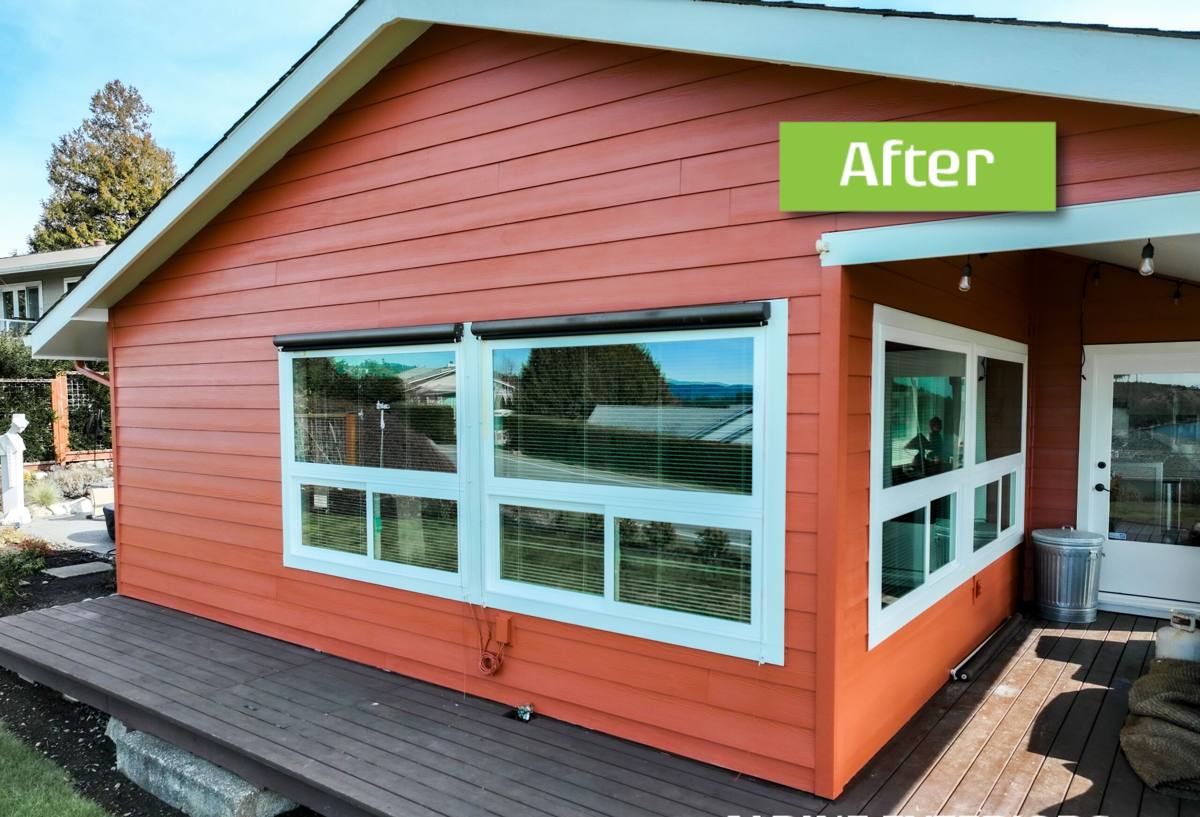
 James Hardie Siding for Abbotsford, BC Homes
Abbotsford sits in the Fraser Valley just north of the Washington border, close enough to Lynden that a short drive through the Sumas-Huntingdon crossing puts you on either side of it. The two towns don't share a country, but they share the same weather system. Moist marine air pushes in from the Strait of Georgia and works its way up the valley, driving rain comes through sideways more often than it falls straight down, and mild, humid stretches give moss and mildew a long season to work on anything that stays shaded or damp. That combination is hard on every exterior material, and it's a big part of why Lynden Window Co installs only one siding product: James Hardie fiber cement.
We're a windows contractor first, but siding, roofing, and decks are part of what we do, and siding is where we've drawn the firmest line. We don't install vinyl, LP SmartSide, Cemplank, Allura, primed spruce, or cedar. This page is specifically about what a correct James Hardie installation looks like on an Abbotsford home, what the local climate demands of it, and how our process works for homeowners on this side of, and just across, the border.
What This Climate Does to Siding in Abbotsford
Marine Air and Long Moss Seasons
The Fraser Valley funnels marine air a long way inland, and Abbotsford gets a steady dose of it even though it isn't a waterfront community. Salt-tinged, moisture-laden air accelerates wear on fasteners, caulking, and lower-grade siding finishes, and the same dampness keeps shaded walls, north-facing elevations, and anything under tree cover wet long enough for moss and mildew to take hold. Once moss establishes itself on a wall, it holds moisture against the surface underneath it, which turns a cosmetic problem into a moisture problem if it's left alone through a few wet seasons.
Driving Rain and Wind-Driven Moisture
Rain here rarely falls straight down. Wind pushes it sideways into seams, laps, and trim, which means the water-shedding details behind the siding, house wrap, flashing, and properly lapped joints, matter as much as the siding material itself. A siding product with a strong factory finish still fails early if it's installed with sloppy flashing or joints that let water track behind the panel instead of off the wall.
Temperature Swings and Material Fatigue
The Fraser Valley sees sharper seasonal and daily temperature swings than the immediate coastline, especially when outflow wind events push cold air down from the interior in winter. Materials that expand and contract a lot with temperature, or that absorb water and then freeze, take more of a beating here than they would in a milder, more moderate coastal climate. That's one more reason dimensional stability matters as much as water resistance when picking a siding product for this area.
Why We Install Only James Hardie
We don't carry a lineup of siding options because, in this climate, we don't think most of them hold up well enough to put our name on. Vinyl can crack in a cold snap and fade over time. Engineered wood products are moisture-sensitive at cut edges and seams. Cedar looks good on day one but demands ongoing maintenance that most homeowners don't keep up with once the excitement of a new exterior wears off. James Hardie fiber cement is non-combustible, dimensionally stable, resists moisture far better than wood-based products, and comes with a factory-applied ColorPlus finish that's warranted separately from the substrate itself. It isn't the cheapest siding on the market, and it isn't the easiest to install; it's heavier and less forgiving of shortcuts than vinyl or engineered wood; but installed correctly, it's the product we've seen hold up best against exactly the conditions Abbotsford deals with every year.
| Material | Moisture & Moss Resistance | Maintenance | Realistic Lifespan Here |
|---|---|---|---|
| James Hardie fiber cement | Excellent; won't rot, resists moss better than wood-based siding | Low; occasional wash, repaint only when you choose to change color | 30-50 years with correct install |
| Vinyl | Won't rot, but can crack in cold snaps and fade in UV over time | Low | 20-25 years |
| Engineered wood (LP SmartSide, etc.) | Vulnerable at cut edges and seams if moisture gets in | Moderate; edge sealing and regular inspection matter | 20-30 years, shorter if detailing is poor |
| Cedar | Attractive but absorbs moisture and feeds moss without upkeep | High; regular staining, sealing, and moss treatment | 15-30 years depending on upkeep |
We'll walk you through this comparison in person if it's useful, but our recommendation for an Abbotsford home doesn't change based on who's asking: James Hardie, installed to spec, is what we'd put on our own house in this climate.
What a Correct James Hardie Installation Involves
Flashing and Water Management
Fiber cement siding is only as good as the water management behind it. That means house wrap installed and lapped correctly, flashing integrated at every window, door, and roof-to-wall transition, and weep paths left clear so any water that does get behind the siding has somewhere to go. Skipping these details is the single biggest cause of siding failure we see, and it has nothing to do with the siding brand.
Fastening, Clearances, and Joints
James Hardie specifies fastener type, spacing, and placement for a reason; get it wrong and you either void the warranty or end up with an install that doesn't perform the way the product is engineered to. The same goes for clearances: siding installed too close to grade, a roofline, or a deck surface holds moisture against the bottom edge and invites the exact rot and moss problems fiber cement is supposed to resist. Butt joints need to be caulked or flashed correctly, not just tight-fit and left alone.
Respecting the Factory Finish
Part of what you're paying for with ColorPlus finished Hardie is a factory-applied, baked-on finish that outperforms field-applied paint. Cut edges need to be sealed with the correct touch-up product, and the panels need to be handled and stored properly on site so the finish isn't damaged before it ever goes on the wall. A crew that treats ColorPlus siding like ordinary lap siding, cutting corners on edge sealing or leaving product exposed to weather before install, undercuts the whole reason to choose it in the first place.
Choosing the Right Hardie Product Line
James Hardie builds its products in climate-specific engineering zones, and for the Pacific Northwest, on both sides of the border, that generally means the HZ5 product line, engineered for regions with real freeze-thaw cycling and sustained moisture, as opposed to the HZ10 line built for hot, humid southern climates. Beyond the zone engineering, there's a choice of profile: traditional lap siding, board and batten for a more vertical, modern look, and panel systems for specific design applications. We'll help you match the profile to your home's style and budget, but the HZ5 engineering underneath it is the part that actually does the work of standing up to this climate year after year.
Our Process, Start to Finish
Every project starts the same way regardless of which side of the border it's on:
- A site visit to assess the existing siding, sheathing, and any moisture damage already present, plus a straightforward conversation about profile, color, and budget
- A written estimate that separates material and labor so you can see where the cost is actually going
- Careful tear-off of the old siding with an inspection of the sheathing and framing underneath before anything new goes up
- House wrap and flashing installed or corrected to current standards, since this is the layer that determines whether the new siding actually performs
- James Hardie installation to manufacturer specification: fastening, clearances, joint treatment, and edge sealing done the way the product is engineered to be installed
- A final walkthrough so you can see the finished work and ask questions before we consider the job done
We don't skip the tear-off inspection step even when a homeowner is eager to move fast. Covering up damaged sheathing with beautiful new siding just delays a much more expensive repair.
Signs Your Abbotsford Home's Siding Needs Attention
- Visible moss or dark streaking that keeps coming back after cleaning
- Soft, spongy, or discolored siding, especially near the bottom edge or around window and door trim
- Warping, buckling, or panels that no longer sit flat against the wall
- Paint or finish that's peeling, chalking, or fading unevenly across the same wall
- Visible gaps at joints, corners, or around penetrations like vents and hose bibs
- A musty smell or rising utility bills that could point to moisture or air leaks behind the siding
- Cracked or missing caulk at trim and window transitions
Any one of these is worth a look before another wet season. Caught early, most of these point to a repair or a partial re-side rather than a full replacement.
Why a Crew That Already Works Abbotsford, BC Matters
Working on both sides of an international border adds a layer most siding contractors never have to think about: coordinating crew and material logistics through the border crossing, and being upfront with homeowners about how permitting and inspection work for a project on the Canadian side versus the U.S. side. A crew that already does this regularly has that logistics figured out, instead of learning it for the first time on your project.
It also means understanding how this specific stretch of the Fraser Valley behaves compared to Whatcom County just across the line. The two areas share the same weather system, but shade patterns, wind exposure, and how far marine air pushes inland can vary from one property to the next. A crew with real hands-on experience in Abbotsford treats those differences seriously, deciding where extra flashing attention pays off and which wall orientations on your specific lot need the most protection, rather than applying a one-size-fits-all approach built for a different property.
Beyond Siding: Windows and the Rest of the Exterior
Siding is one piece of a house's exterior, and it doesn't work in isolation from the windows and trim it wraps around. As a windows contractor, we pay close attention to how new siding integrates with existing window flashing, and we'll flag it honestly if a siding project uncovers a window that's leaking or poorly flashed rather than covering it up and moving on. We also handle roofing and decks, so if your project touches more than one part of the exterior, you're not stuck coordinating multiple contractors and hoping their work lines up correctly where it meets.
Get a Free, No-Pressure Estimate
If your Abbotsford home has siding that's showing moss, damage, or just its age, we're glad to take a look and give you an honest read on what it needs: repair, partial re-side, or full replacement. Reach out using the form below to schedule a free estimate. No pressure, no upsell script.