 Lynden Window
 Everson's Climate Is Harder on Siding Than Most Homeowners Realize
Everson sits in a part of Whatcom County that takes weather from two directions at once. Marine air moves in off the Salish Sea carrying salt and moisture, while the low-lying terrain along the Nooksack River keeps humidity elevated for much of the year. Add the long, wet Pacific Northwest winter — months of driving rain pushed sideways by wind — and you get a climate that stresses exterior siding in ways drier regions never experience.
The two biggest offenders are moisture intrusion and moss growth. Rain that gets behind siding, rather than running off it, is the single most common cause of hidden rot in this region. And moss doesn't just grow on roofs — it colonizes north-facing and shaded wall sections, holding moisture against the siding surface for weeks at a stretch during our gray months. Salt air adds a third, quieter problem: it accelerates the breakdown of fasteners, paint films, and lower-grade composite materials over time.
None of this means siding in Everson is doomed to fail early. It means the installation has to be done correctly, with materials engineered for exactly this kind of exposure, or the same mistakes get repeated every 8-12 years instead of every 30-plus.
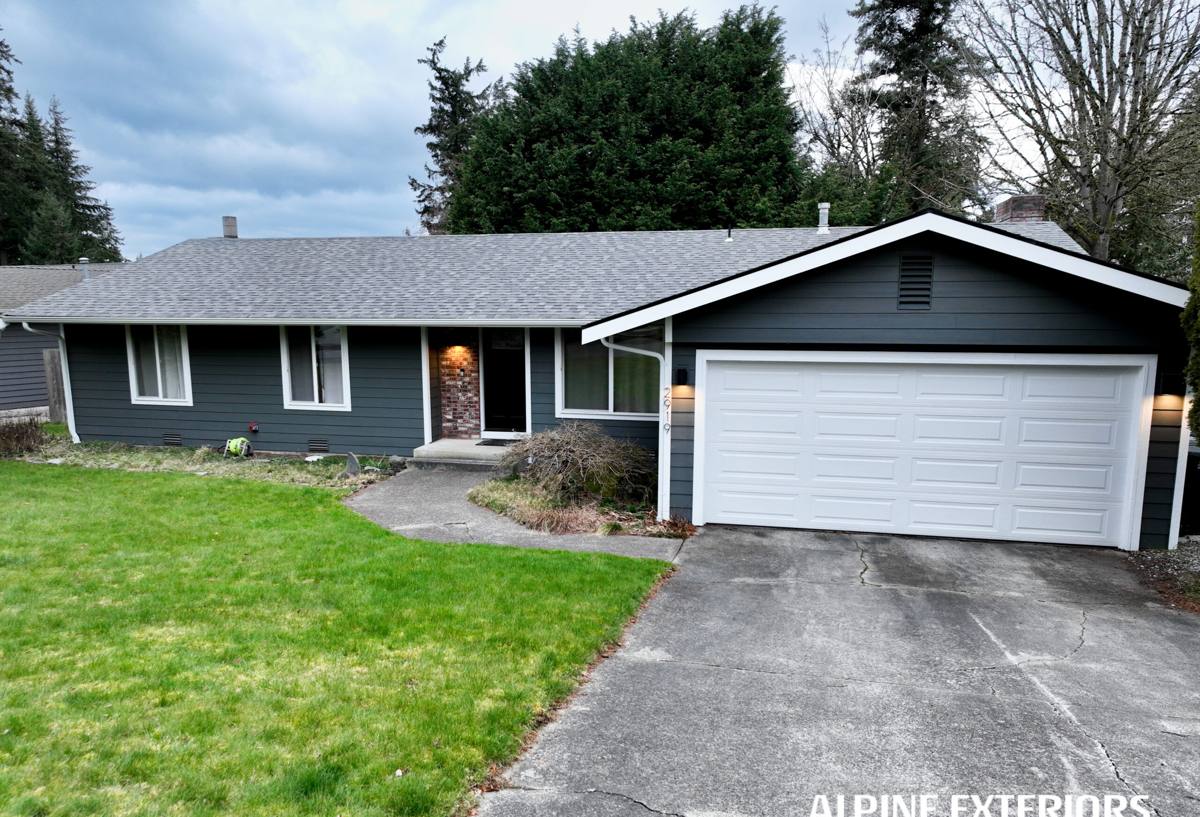
What a Correct Siding Installation Actually Involves
Most siding problems we get called out to inspect aren't material failures — they're installation failures. The siding itself may be fine; what's underneath it isn't. A correct installation in a climate like ours comes down to a handful of details that are easy to skip and expensive to fix later.
The Water-Resistive Barrier (WRB)
Every wall needs a continuous, properly lapped weather-resistive barrier under the siding — not just stapled house wrap with gaps at the seams. Every penetration (outlets, hose bibs, vents) needs to be flashed and sealed back into that barrier, not just caulked over the siding face.
A Drainage Gap
Fiber cement siding installed tight against the wall sheathing traps moisture that gets past the outer surface, with nowhere for it to go. A rainscreen gap — even a thin one — lets bulk water drain and lets the wall assembly dry out between storms. In a climate with as many wet weeks per year as ours, this single detail has an outsized effect on how long siding lasts.
Flashing at Every Horizontal Transition
Window heads, door heads, roof-to-wall intersections, and deck ledgers are where water finds its way in. Step flashing, kick-out flashing, and head flashing at these transitions matter more than the siding brand installed above them.
Fastening to Spec
Fiber cement siding has manufacturer-specified fastener types, spacing, and penetration depth. Under- or over-driven nails, the wrong fastener alloy, or fastening into the wrong substrate all shorten the life of an otherwise good installation.
Why We Install Only James Hardie Fiber Cement
We made a decision as a company to install one siding system — James Hardie fiber cement — and to say no to the rest. That's not a marketing position; it's a reflection of what holds up under the conditions this region actually produces.
Vinyl siding is inexpensive and low-maintenance in mild climates, but it softens and warps under sustained heat reflection and becomes brittle in cold snaps; it also can't be painted to refresh its look as it ages. Engineered wood products like LP SmartSide perform well when the wall assembly stays dry, but their wood-strand core is more sensitive to sustained moisture exposure than fiber cement — a real concern in a region where wall assemblies don't always get to dry out between storms. Primed wood and cedar siding can look excellent, but they demand a repainting and caulk-maintenance schedule most homeowners don't sign up for, especially with moss and mildew working against a painted finish for half the year.
James Hardie fiber cement is non-combustible, dimensionally stable in wet-dry cycling, and comes with a factory-applied ColorPlus finish that's baked on rather than field-painted — which means better UV and moisture resistance at the color layer, not just the substrate. Hardie also engineers its HZ5 product line specifically for the wetter, harsher climate zones the Pacific Northwest falls into, rather than selling one generic product nationwide.
| Factor | James Hardie Fiber Cement | Vinyl | Wood / Engineered Wood |
|---|---|---|---|
| Moisture tolerance | High — won't rot or swell | High, but can warp with heat | Moderate — sensitive to sustained wetness |
| Repainting needed | Rarely (factory finish) | Never, but color is limited to what was molded in | Every 5-8 years |
| Fire resistance | Non-combustible | Combustible, can melt | Combustible |
| Moss/mildew resistance | Good with proper cleaning | Good | Poor without upkeep |
| Typical lifespan (installed to spec) | 30-50 years | 20-30 years | 15-25 years |
Our Installation Process for Everson Homes
1. On-Site Inspection and Wall Assessment
Before we quote anything, we walk the exterior and, where siding is already failing, open up a section to look at the sheathing underneath. This tells us whether we're dealing with a straightforward re-side or whether there's rot, mold, or WRB failure that needs to be addressed first. Skipping this step is how "new siding" ends up covering a wall problem that resurfaces in a few years.
2. Removal and Substrate Prep
Old siding, trim, and damaged sheathing come off. Any soft or water-damaged framing gets repaired before anything new goes back on — new siding over compromised structure is a guaranteed callback.
3. Weather-Resistive Barrier and Flashing
A continuous WRB goes up with proper shingle-lap overlaps, followed by flashing at every window, door, and roof transition. This is the layer that actually keeps water out of the wall — the siding is the second line of defense, not the first.
4. Rainscreen Furring
We install a drainage gap between the WRB and the siding so bulk moisture has a path to drain and the assembly can dry between wet spells — a detail that matters more here than in drier parts of the state.
5. Hardie Installation to Manufacturer Spec
Panels or lap siding go up with the correct fastener type, spacing, and clearance from grade, decks, and roof lines. Butt joints and corners are treated to shed water rather than collect it.
6. Trim, Caulking, and Final Detailing
Trim boards, corner treatments, and touch-up of factory-finished cut edges close out the job. We use sealants and touch-up products compatible with the ColorPlus finish so color and performance stay consistent.
7. Cleanup and Walkthrough
We haul away old materials and debris and walk the finished exterior with the homeowner before calling the job done.
Signs an Everson Home May Need New Siding
- Visible moss or dark streaking on north- or shade-facing walls that returns shortly after cleaning
- Soft spots, bubbling, or a "give" when you press on wall sections, especially near the bottom courses
- Paint that's peeling or bubbling in patches rather than fading evenly
- Warped, cracked, or separated siding panels or lap boards
- Rising utility bills that suggest heat or cooled air is escaping through the wall assembly
- Musty odors near exterior walls, which can indicate trapped moisture behind the siding
- Visible gaps at trim, corners, or window flashing where caulking has failed
What Affects the Cost of a Siding Project
Every home is different, and we won't put a number on a job without seeing the wall assembly, but a few factors consistently move the price up or down:
| Factor | Why it matters |
|---|---|
| Condition of existing sheathing | Rot or mold repair adds labor before new siding can go up |
| Home size and wall complexity | More corners, gables, and dormers mean more cutting, flashing, and trim work |
| Siding profile chosen | Lap width, panel style, and trim details affect material and labor time |
| Story height and access | Second-story and steep-site work requires more scaffolding and time |
| Scope of tear-off | Full removal versus siding over an already-sound assembly changes labor hours |
Why It Matters to Hire a Crew That Already Works in Everson
Siding installation isn't just a materials question — it's a local-conditions question. A crew that regularly works Whatcom County homes already knows how to detail flashing for our rain patterns, how much drainage gap makes sense given our humidity, and which wall orientations in this area tend to hold moss and need extra attention at the WRB stage. That local pattern recognition is hard to replicate with a crew that mostly works drier inland climates or does a handful of Pacific Northwest jobs a year.
There's also a practical side: a contractor based near Lynden isn't driving hours to reach a callback, isn't unfamiliar with local permitting expectations, and has a reputation in the immediate area to protect — which tends to show up in the quality of the punch-list work at the end of a job.
Caring for Hardie Siding After Installation
One of the advantages of a correctly installed fiber cement system is how little ongoing maintenance it asks for compared to painted wood or aging vinyl. That said, a few habits extend its life even further in our climate:
- Rinse siding annually, and hose down shaded or north-facing walls more often if moss tends to form
- Trim back vegetation and tree cover that keeps a wall section damp and shaded
- Re-caulk trim joints if you notice gaps opening up, rather than waiting for water intrusion
- Keep gutters and downspouts clear so roof runoff isn't sheeting down the siding face
- Address any impact damage promptly — a cracked panel is a much smaller repair than a section that's been letting water in for a season
If you're weighing a siding replacement or just want an honest read on what your Everson home's exterior actually needs, we're happy to take a look and walk you through it. There's no cost and no pressure — just a clear picture of your options before you decide anything.