 Lynden Window
 Windows Built for How Acme Actually Weathers
Acme sits in a part of Whatcom County where the weather doesn't do anything halfway. Winters bring long stretches of driving rain that comes in sideways as often as straight down. Humid, salt-tinged air moves inland off the Sound and settles into the valleys and foothills, and it rarely dries out enough between storms to give wood, caulk, or old weatherstripping a real break. That combination is exactly what shortens the working life of a window — not one big storm, but months of steady moisture pressure against seals, frames, and glazing that were never built to handle it.
Energy-efficient windows aren't just about a lower heating bill, though that's real. In this climate, the bigger issue is what happens when a window's seals fail quietly over a few seasons: fogging between panes, soft spots in the sill, drafts that show up only when the wind is from a certain direction, and eventually water finding its way into the wall cavity. A correctly chosen and correctly installed window keeps water out first, and keeps heat in second. Get the order backwards and you end up with a window that tests well on paper but performs poorly on your house.
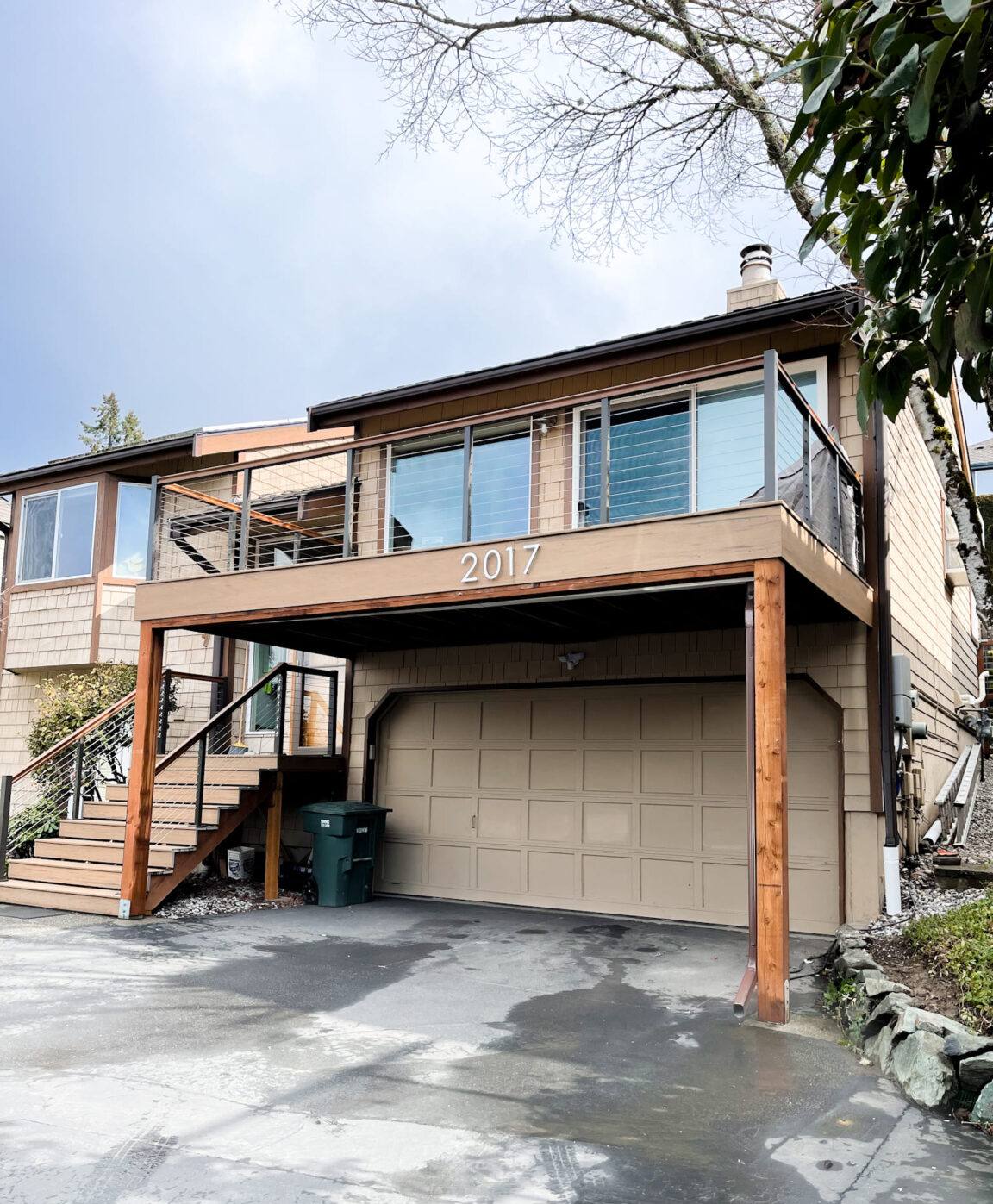
What "Energy-Efficient" Actually Means for a Whatcom County Home
The label gets used loosely. For a house in Acme, three numbers matter more than any marketing claim:
- U-factor — how well the window resists heat loss. Lower is better. This is the number that matters most for keeping heating costs down through a wet, gray winter.
- SHGC (Solar Heat Gain Coefficient) — how much solar heat passes through. In a mostly overcast climate this matters less than it would in a sunnier region, but it still affects comfort on the clear days you do get.
- Air leakage rating — how much air moves through the assembly under wind pressure. This is the one most directly tied to driving rain performance, since a window that leaks air under pressure is usually a window that will eventually leak water too.
Any window sold as energy-efficient should carry an NFRC label showing these numbers. If a quote doesn't reference them, ask.
Frame Material Comparison for This Climate
| Frame Type | Moisture Behavior | Maintenance | Typical Fit for Acme Homes |
|---|---|---|---|
| Vinyl | Won't rot or corrode; seams are the weak point if not welded well | Low — occasional cleaning | Strong all-around choice; good value |
| Fiberglass | Very stable, minimal expansion/contraction with moisture and temperature swings | Low | Excellent for long-term performance, higher upfront cost |
| Wood / Wood-clad | Attractive but needs the exterior cladding intact to keep moisture off the wood core | Higher — cladding and any exposed wood need monitoring | Best reserved for protected elevations or where the look is a priority |
| Aluminum | Conducts heat and cold readily; can condensate more in cold, damp conditions | Low | Least suited to this specific climate unless thermally broken |
We don't push one material on every job. The right call depends on the wall it's going into, how exposed that side of the house is to weather, and what the homeowner wants to maintain over the next 20 years. We'll walk you through the honest trade-offs for your specific openings rather than defaulting to whatever's easiest to sell.
Where Installations Actually Fail in a Rain-Heavy Climate
Most window problems we're called out to fix aren't a bad window — they're a window that was installed without enough attention to water management. In an area that gets sustained, wind-driven rain, the installation details matter as much as the product itself:
Flashing and Drainage
Every window needs a path for water to get out if it ever gets behind the exterior cladding — because eventually, some will. That means proper sill pan flashing, correctly lapped house wrap, and weep holes that aren't sealed shut by well-meaning caulking. Skipping this step is invisible on installation day and expensive five years later.
Sealant Selection and Placement
Not every gap should be sealed. A fully caulked perimeter with no way for incidental moisture to escape can trap water inside the wall instead of keeping it out. Correct installation uses sealant strategically — perimeter air sealing on the interior, a drainage plane on the exterior — not just "more caulk."
Shimming and Squareness
A window that's out of square puts uneven stress on the frame corners, which is where seals fail first. This is a slower process than it looks, and it's the step most likely to get rushed on a crew that's trying to move fast.
Signs Your Current Windows Are Working Against You
- Condensation or fogging between the panes (a failed seal, not a cleaning issue)
- Visible gaps or soft, spongy wood at the sill or corners
- A draft you can feel near the frame on a windy day, even with the window latched
- Difficulty locking or operating the sash — frames can shift as moisture and years take their toll
- Green or black growth building up on the sill or exterior trim faster than it used to
- A noticeable jump in heating costs without a clear reason
- Paint or finish peeling from the inside face of the frame, which often points to moisture intrusion rather than just age
Any one of these on its own isn't necessarily urgent. Several at once, especially on the same wall, usually means it's time for a real assessment rather than another round of caulk.
Our Process for an Acme Window Replacement
- On-site assessment. We look at each opening individually — sun exposure, wind exposure, current framing condition, and how water has historically behaved around that wall.
- Honest product recommendation. We'll explain which frame materials and glass packages actually make sense for that specific opening, and why — not a one-size-fits-all pitch.
- Written estimate. Clear line items, no vague allowances buried in the total.
- Removal and inspection. Once the old window is out, we check the framing and sheathing underneath for hidden rot or moisture damage before anything new goes in. This is the step that gets skipped on rushed jobs and causes problems years later.
- Correct flashing and installation. Sill pan, house wrap integration, shimming to square, and air sealing done in the right order.
- Final check and walkthrough. Operation, locking, and a look at the finished exterior detailing before we call it done.
What Affects the Cost
| Factor | Why It Matters |
|---|---|
| Frame material | Vinyl, fiberglass, and wood-clad carry different material costs and different long-term maintenance costs |
| Number and size of openings | Straightforward per-unit pricing, but larger or custom-shaped windows cost more to fabricate |
| Condition of the existing framing | Hidden rot found during removal adds repair time before the new window can go in |
| Wall exposure | Elevations that take the brunt of wind-driven rain may warrant upgraded flashing details |
| Glass package | Double vs. triple pane, low-E coatings, and gas fill all affect both price and performance |
| Access and site conditions | Second-story openings, tight clearances, or landscaping obstacles can add labor time |
We'd rather walk your specific openings and give you real numbers than quote a per-window average that doesn't hold up once we're actually on site.
Why a Crew That Already Works This Area Matters
A contractor who works regularly in Acme and the surrounding Whatcom County communities already understands how the local weather patterns behave — which elevations of a house take the worst of the driving rain, how quickly moss and moisture build up on north-facing walls, and what kind of wear is normal versus a sign of a bigger problem. That's not something you can fully substitute with a generic checklist. It also means straightforward scheduling, no long mobilization delays, and a crew that's used to working around the same seasonal weather windows you deal with every year.
Living With a Long Moss Season
Moss and algae growth on and around windows isn't just cosmetic. Sustained damp shade — common on shaded or north-facing walls through much of the year here — lets organic growth take hold on sills, trim, and cladding. Left alone, it holds moisture against the surface longer than open air would, which accelerates wear on caulking and finishes. A simple annual rinse and inspection of sills and trim goes a long way, and it's worth doing before the wettest months settle in rather than after you've already noticed a problem.
If you're ready to talk about your windows, we're happy to take a look and give you a straightforward, no-pressure estimate — just fill out the form below.