 Lynden Window
 Deming Roofs Work Harder Than Most People Realize
Deming sits in the shadow of the Cascade foothills, close enough to the Salish Sea that moisture-heavy air moves through the Nooksack valley on a regular basis, and close enough to the mountains that tree cover, shade, and rainfall run heavier than in more open parts of Whatcom County. That combination is hard on a roof. Salt-tinged coastal air accelerates corrosion on exposed metal. Driving rain, pushed sideways by valley wind, finds its way into laps and seams that would stay dry in a calmer climate. And heavy tree canopy keeps large sections of a roof shaded for months at a time, which is exactly the condition moss needs to take hold.
None of this means a Deming roof is doomed to constant problems. It means the repair work has to account for conditions a roof in a drier, more open location never has to deal with. A patch that would hold up fine in a low-moisture climate can fail here in a single wet season if it isn't done with this environment in mind.
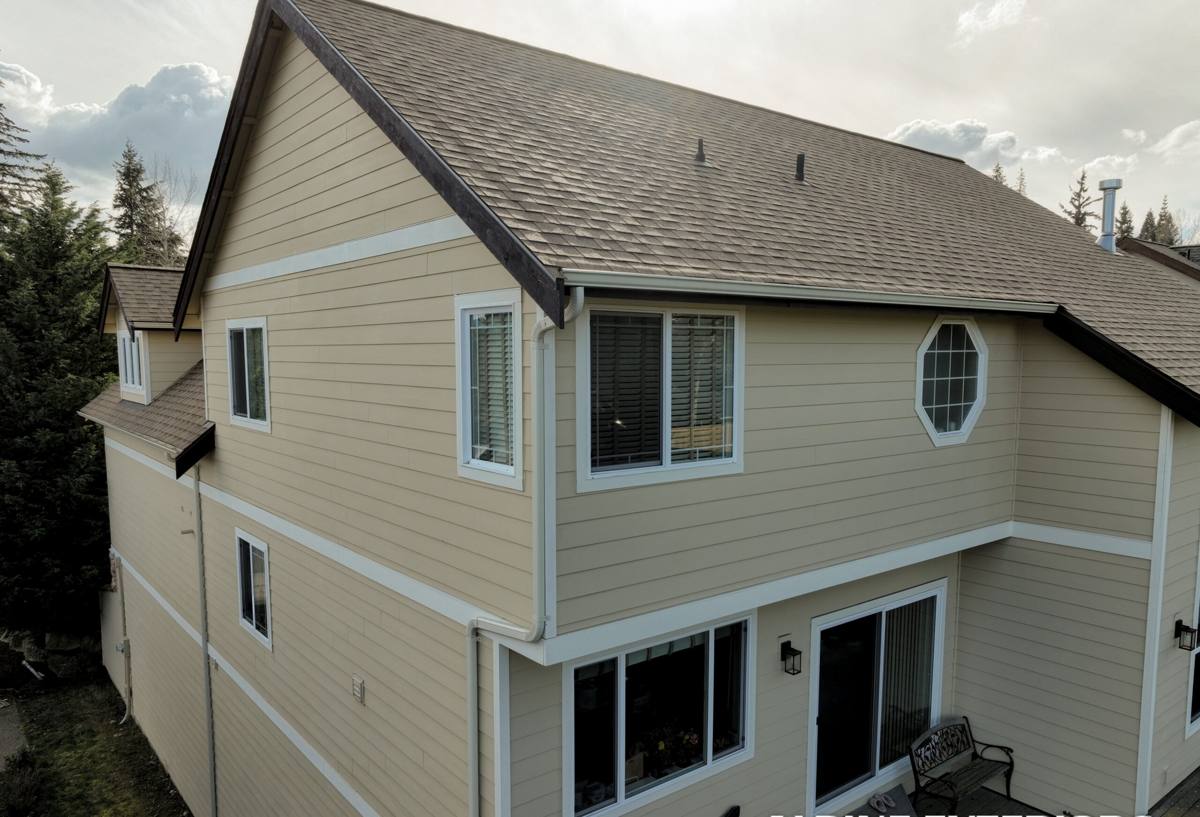
What Moss and Trapped Moisture Actually Do to a Roof
Moss isn't just a cosmetic problem. As it grows, its root structure works down into the granule surface of asphalt shingles and lifts the shingle edges slightly away from the roof deck. Once that happens, wind-driven rain has a path underneath the shingle instead of running over the top of it. Water that gets trapped under moss or built-up debris also stays wet far longer than exposed roofing, which speeds up the breakdown of the shingle mat and the failure of flashing underneath it.
On roofs with heavy shade, this cycle repeats year after year without much sun exposure to dry things back out between storms. By the time a stain shows up on a ceiling below, the moisture has usually been working on the roof deck for a while. That's part of why local roof repair often turns up more decking damage than the size of the leak would suggest.
Where Deming Roofs Typically Fail First
- Valleys where two roof planes meet and water concentrates
- Flashing around chimneys, skylights, and roof-to-wall transitions
- Shaded north-facing slopes where moss and moisture linger longest
- Fastener heads and metal edges exposed to salt-carrying air
- Gutters and eaves clogged with needle drop, which backs water up under the roof edge
Signs a Repair Is Needed Now, Not Next Season
Roof problems in this climate rarely announce themselves clearly. A few consistent warning signs are worth walking your property to check for, especially after a stretch of hard weather:
- Granules collecting in gutters or at the base of downspouts
- Shingles that look cupped, curled, or lifted at the edges
- Dark streaking or thick moss growth concentrated on shaded slopes
- Soft or spongy spots when the roof deck is walked, felt through the shingles
- Water stains on interior ceilings, especially near valleys or chimneys
- Daylight visible through the roof deck from inside an attic space
- Flashing that has pulled away, rusted through, or been caulked over repeatedly as a stopgap
Any one of these on its own might be a small, contained repair. Several at once, especially combined with an older roof, usually means it's worth having someone look at the whole system rather than just chasing the one spot that's currently leaking.
What a Correct Roof Repair Actually Involves
A repair that's done right isn't just about covering the visible damage. It starts with figuring out how the water actually got in, which is often several feet away from where the stain shows up inside the house, since water travels along the underside of the deck before it drips down. From there, the work generally follows the same core steps regardless of the size of the repair:
- Remove the damaged shingles and any moss or debris in the surrounding area, not just the failed section
- Inspect the exposed roof deck for soft spots, rot, or delamination and replace any compromised sheathing
- Replace or reset flashing at valleys, penetrations, and wall transitions rather than simply re-caulking over old flashing
- Install new underlayment in the repaired area so the patch has the same moisture barrier as the rest of the roof
- Match new shingles to the surrounding roofing as closely as the existing product allows
- Check that gutters, downspouts, and roof edges in the area are clear and draining properly, since a repair next to a clogged gutter will fail again quickly
Skipping the deck inspection is the most common shortcut in a rushed repair, and it's also the one that causes the same leak to come back a year later, sometimes worse than before.
Repair or Replace: How We Make That Call
Not every roof problem calls for a full replacement, and not every leak is fixable with a patch. The honest answer depends on the roof's age, how widespread the damage is, and what condition the underlying deck is in.
| Factor | Usually Points to Repair | Usually Points to Replacement |
|---|---|---|
| Roof age | Under 15-20 years, one shingle generation left | At or past the shingle's expected service life |
| Extent of damage | Localized to one area, valley, or penetration | Multiple leaks across several roof planes |
| Roof deck condition | Solid, dry wood outside the damaged section | Widespread soft spots or rot found during inspection |
| Moss and granule loss | Isolated shaded patches | Heavy loss across most of the roof surface |
| Shingle condition nearby | Still flexible and well-adhered | Brittle, cracking, or curling broadly |
We'll tell you plainly which side of that table your roof falls on, and why, before any work starts.
Our Process for a Deming Roof Repair Call
We keep the process straightforward because most homeowners just want to know what's wrong, what it takes to fix it, and what it costs, without a sales pitch attached.
- We inspect the roof from the deck up, not just the visible symptom, including a look inside the attic where access allows
- We show you what we found and explain what caused it in plain terms
- We give you a written estimate that separates the repair scope from any optional items, like moss treatment or gutter clearing, so you can decide what to include
- We schedule the work around the weather window rather than rushing a repair into a storm
- We clean up the work area, including removing old shingles, moss debris, and nails from the ground and gutters
Why a Crew That Already Works This Area Matters
Roofing crews that mostly work drier, more open parts of the state don't always account for how much longer a roof stays wet here, or how much faster moss reclaims a shaded slope after a repair. A crew that regularly works in and around Lynden and the Deming area has already seen how these specific conditions play out over multiple seasons, which shows up in small but important decisions: how much overlap to give underlayment in a valley, whether a section of decking is worth saving, and how a repair should be flashed so it survives sideways rain instead of just vertical rain.
There's also a practical side to hiring local. A roof problem that shows up during a heavy fall storm doesn't wait for a crew to drive in from out of the area. Being close means a faster look at the damage and less time for a small leak to turn into a bigger one while everyone waits on a schedule.
Keeping a Repair From Turning Into a Repeat Visit
A repair holds up better when it's paired with some basic upkeep between visits, especially in a climate that stays damp and shaded for long stretches of the year.
- Have moss growth treated or removed before it spreads across a full slope, not after
- Keep gutters and downspouts clear heading into fall, when needle and leaf drop is heaviest
- Trim back overhanging branches where practical to reduce shade and debris buildup on the roof
- Have the roof looked at after any major windstorm, even if nothing looks obviously wrong from the ground
None of this replaces a proper repair, but it buys the repair more years before it needs attention again.
If you're dealing with a leak, visible moss damage, or just want an honest read on what condition your roof is in, we're glad to take a look. The estimate is free, there's no pressure attached to it, and you can start with the form below.