 Lynden Window
 Deck Building for Deming's Foothill Conditions
Deming sits in the Nooksack River valley, tucked under heavier tree cover than you'll find out on the flatter farmland around Lynden proper. That changes what a deck has to deal with day to day. Homes closer to the coast in Whatcom County fight salt-laden air off the Sound; move inland toward Deming and the North Fork Nooksack, and the bigger enemies become deep shade, slow-drying ground, and a moss season that can run eight months out of the year. Add in the driving rain that comes through the valley corridor, and you have a climate that's tough on any outdoor structure that isn't built with the right materials and details from the start.
We build decks for homes throughout the Lynden area, including Deming and the surrounding foothill properties, and the approach we take out here is different from what we'd spec for a dry, open, south-facing lot in town. This page covers what actually matters for a deck built to last in this specific setting.
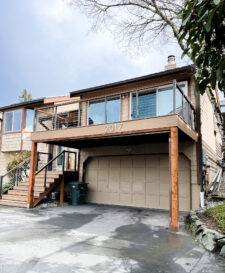
What Makes Deming Properties Different
Three things show up again and again on decks we've inspected or rebuilt in this part of the county:
- Tree canopy shade — mature conifers and big-leaf maples common in the valley keep decking surfaces damp longer after rain, which is the single biggest driver of moss and algae growth.
- Slower ground drying — river-valley soil and the lower elevation mean the ground under and around a deck stays wet longer into spring than it would on more exposed, higher ground closer to town.
- Debris load — needles, leaves, and moss spores land constantly. A deck design that doesn't shed debris easily becomes a maintenance headache fast.
None of these are exotic problems, but they compound. A deck built with generic, catalog-spec details might look fine the first summer and start showing soft spots, black staining, or slick moss growth by the second or third wet season.
Choosing the Right Decking Material
Why This Decision Matters More Here
In a shaded, damp setting, decking material choice affects both how the deck looks in five years and how much work it takes to keep it safe underfoot. Moss on a deck surface isn't just cosmetic — it's a slip hazard, and it holds moisture against the board longer, accelerating whatever decay process is already underway.
| Material | Moisture & Moss Behavior | Maintenance | Typical Lifespan |
|---|---|---|---|
| Pressure-treated wood | Absorbs moisture readily in shade; needs a breathable finish to shed water and slow moss | Annual cleaning and refinishing recommended in shaded areas | 15-20 years with upkeep |
| Cedar | Naturally more rot-resistant but still needs sealing in constant shade | Periodic cleaning and re-oiling | 20-25 years with upkeep |
| Composite decking | Doesn't rot, but can still grow surface moss/algae in deep shade if not cleaned | Occasional washing; no staining or sealing | 25-30+ years, manufacturer warranty backed |
| PVC decking | Fully moisture-resistant surface; best resistance to staining in wet shade | Lowest maintenance of the group | 25-30+ years, manufacturer warranty backed |
We don't push one product on every job. Wood has a place, especially where a homeowner wants a specific look or is working within a tighter budget, but we're upfront that a shaded, damp lot in Deming is exactly the situation where composite or PVC decking earns back its higher upfront cost in reduced maintenance and fewer slip concerns over the years.
A Note on Board Spacing and Grooved Boards
Grooved-edge composite boards with hidden fasteners look clean, but in a heavy-debris setting those grooves can trap needles and organic matter, which holds moisture right at the board seam. On heavily shaded lots we often recommend slightly wider board gapping and, where the design allows, solid-edge boards with face fastening, so debris and water pass through rather than sitting in a channel.
Framing and Footings: Getting the Structure Right
Footings in Wet Ground
Footings need to be sized and set to local frost depth and soil-bearing requirements, and in valley locations where ground stays saturated longer, we pay close attention to drainage around each footing so water isn't sitting against the concrete and post base all winter. A deck is only as good as what's under it, and that's the part nobody sees once it's finished.
Ledger Attachment and Flashing
Where the deck attaches to the house, proper ledger flashing is non-negotiable. In a climate with sustained rain and long wet stretches, a poorly flashed ledger board is one of the most common sources of hidden rot — often not discovered until siding or framing behind it has already been damaged. We install ledger flashing that directs water away from the house band joist, not toward it.
Hardware
All structural hardware — joist hangers, ledger bolts, post bases — should be rated for ground contact and treated lumber compatibility (typically hot-dip galvanized or stainless in high-moisture applications). Cutting corners on fasteners is invisible on day one and expensive to fix once corrosion sets in.
Drainage, Ventilation, and Moss Control
Moss doesn't grow because a deck is old — it grows because moisture sits somewhere too long. Good deck design fights that at three levels:
- Surface drainage — correct board spacing and a slight slope away from the house so water doesn't pool.
- Under-deck airflow — enough clearance and ventilation beneath low decks so the substructure can actually dry out between rain events instead of staying damp all season.
- Surrounding grade — making sure dirt, mulch, or landscaping isn't built up against ledger boards or posts, which traps moisture right where the structure is most vulnerable.
On heavily shaded lots we'll sometimes recommend selective conversation with a homeowner about nearby tree limbs or overgrowth that keeps a deck from ever fully drying — not to change the landscape wholesale, but because a few feet of added light and airflow can meaningfully cut down on moss and algae buildup.
Our Deck Building Process
- On-site assessment — we look at sun exposure, drainage patterns, ground condition, and how the deck will tie into the house before recommending materials.
- Design and material selection — sized to the site conditions above, not a one-size-fits-all spec.
- Permitting — we handle the paperwork with the relevant local building department so the project meets current code.
- Footings and framing — built to proper depth and spacing for the soil and load conditions on your lot.
- Decking, railing, and fastening — installed per manufacturer specification to keep material warranties intact.
- Final walkthrough — we go over basic care for whatever material was installed so you know what upkeep to expect.
Permits and Code Basics
Most decks attached to a home and elevated above a certain height require a building permit in Whatcom County, along with guardrails at a specified height once the deck surface is a certain distance above grade, and stair and guardrail baluster spacing rules meant to prevent falls. Requirements can vary based on deck height, size, and attachment method, so we confirm current requirements for your specific property rather than assuming a past project's permit applies. Skipping permitting on a structural addition like a deck isn't just a paperwork risk — it can also complicate a home sale or insurance claim down the road.
Maintenance Checklist for Deming Deck Owners
Whatever material you choose, a shaded, damp lot needs more attention than an open, sunny one. A simple seasonal routine goes a long way:
- Sweep needles and leaf debris off the surface regularly, especially in fall and through the wet months.
- Rinse or lightly scrub visible moss and algae before it builds up a foothold — it's far easier to remove early.
- Check that gaps between boards stay clear so water keeps draining rather than pooling.
- Inspect ledger flashing and any visible fasteners once a year for corrosion or gaps.
- Keep landscaping and mulch pulled back a few inches from posts and ledger areas.
- For wood decks, plan on cleaning and re-sealing on the schedule the finish manufacturer recommends — shaded decks often need it more often than the label's general guidance assumes.
Why Hire a Crew That Already Works in Deming
A contractor who mostly builds decks on open, sunny lots closer to town can still do solid framing work, but may not default to the drainage and material choices that matter most on a shaded valley property. Crews already familiar with Deming and the surrounding Lynden-area terrain know to ask about tree cover, plan footing drainage for slower-drying ground, and steer material conversations toward what actually holds up under a long moss season rather than what looks best in a showroom. That local familiarity shows up less in the sales pitch and more in the parts of the deck you don't see once it's finished — the flashing, the footing drainage, the fastener choice — which is exactly where problems in this climate tend to start.
If you're planning a new deck or replacing one that's showing its age in Deming or anywhere around Lynden, we're happy to take a look at your property and walk through options with no pressure. Use the form below to request a free estimate.