 Lynden Window
 Custom Windows for Laurel, Built for Whatcom County Weather
Laurel sits in that stretch of Whatcom County where marine air off Bellingham Bay and the Strait of Georgia meets the wetter, wind-exposed farmland east of it. Homes here take a different kind of weathering than a house forty miles inland. Salt-laden air corrodes hardware faster, driving rain off the Pacific storm track finds every gap in a window's seal, and the long gray stretch from October through April keeps north- and west-facing walls damp enough to grow moss and algae on siding, trim, and window sills. Custom windows for a Laurel home need to be selected and installed with that specific combination in mind — not just "good windows," but windows and installation details matched to this microclimate.
This page covers what we look at when we install custom windows for homes in and around Laurel: the climate stresses specific to this area, what separates a correct installation from a sloppy one, how our process works from first look to final walkthrough, and why local installation experience actually changes the outcome.
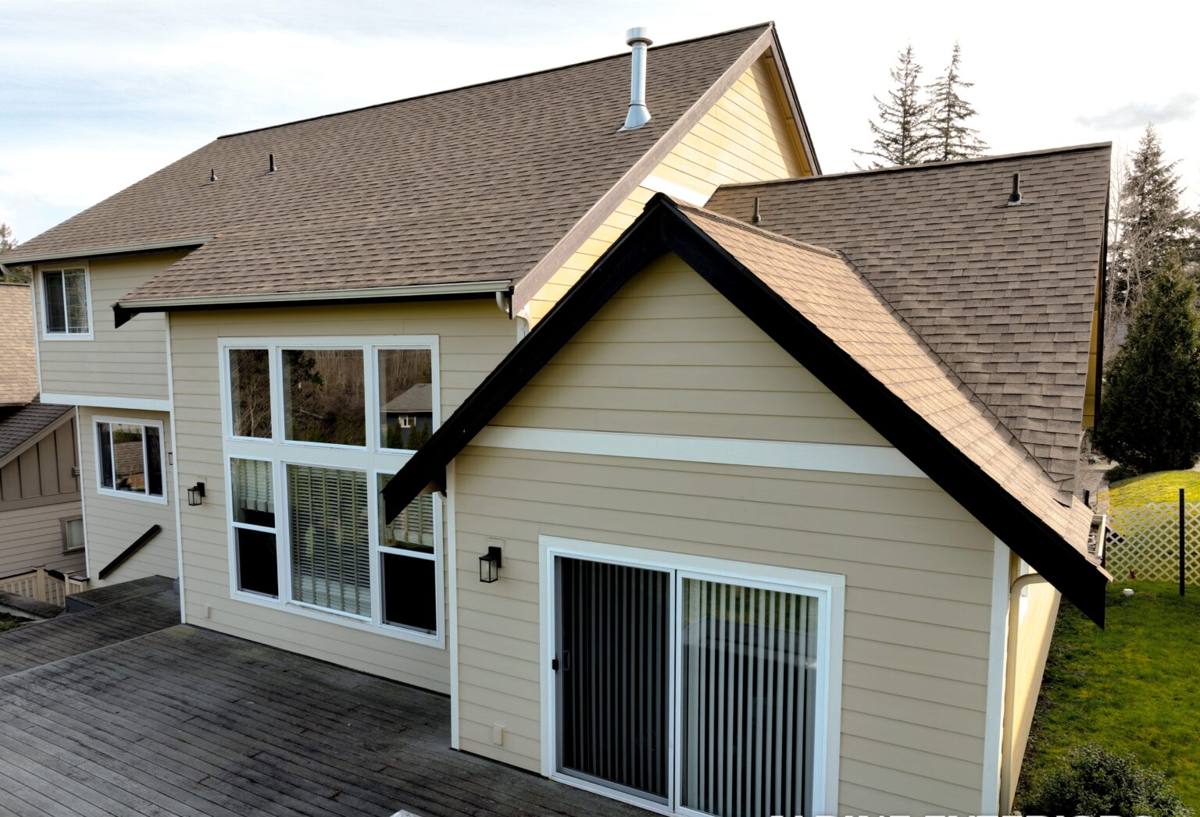
What Laurel Homes Are Up Against
Salt Air and Hardware
Even a few miles inland from Bellingham Bay, marine air carries enough salt to accelerate corrosion on window hardware — hinges, locks, balance mechanisms, and especially unprotected steel fasteners. Over years, that corrosion is what causes windows to bind, sag, or stop locking properly long before the glass or frame itself fails.
Driving Rain
Whatcom County storms frequently come in sideways, not straight down. Wind-driven rain tests a window's weatherproofing in a way that a calm, vertical rain never does — it pushes water sideways and upward into gaps that would otherwise stay dry. This is where flashing details and sill design matter more than the window brand printed on the label.
The Long Moss Season
Shaded and north-facing walls in this area stay damp for months at a time, which is exactly what moss and algae need to establish. On windows, that shows up as green growth in sill corners, swollen wood trim around older frames, and paint or caulk failing faster than it would in a drier climate. Moss holding moisture against a sill or frame is a slow, steady path to rot if it's never addressed.
What a Correct Window Installation Actually Involves
The window unit itself is only part of the job. In a climate like this, the installation details are what determine whether a window performs for 20+ years or starts leaking within five.
- Sill pan flashing — a sloped, sealed pan under the window that directs any water that gets past the frame back outside instead of into the wall cavity.
- Proper head and jamb flashing — layered correctly (shingle-style, top piece overlapping the one below) so water sheds down and out, never in.
- Correct sealant, not excess sealant — a common shortcut is caulking everything shut, which traps moisture that gets in from other paths. The right approach seals where water needs to be kept out and leaves a path for any incidental moisture to drain and dry.
- Shimming and squaring — a window that's out of square will bind, won't seal evenly, and puts uneven stress on the frame that shows up as leaks years later.
- Insulation around the frame — low-expansion foam or backer rod, not compressed fiberglass, to avoid bowing the frame while still cutting drafts.
Get any one of these wrong and the window can look fine for a year or two before problems show up — which is exactly why installation quality matters more than most homeowners expect.
Choosing the Right Frame Material for Laurel's Climate
There's no single "best" window material — it depends on exposure, budget, and how much upkeep you want to take on. Here's how the common options hold up in this specific climate:
| Frame Material | Moisture & Salt Air Behavior | Maintenance |
|---|---|---|
| Vinyl | Won't rot or corrode; performs well in damp, salty air | Low — occasional cleaning |
| Fiberglass | Very stable in wet/dry cycling, strong seal retention over time | Low |
| Wood-clad (vinyl or aluminum exterior) | Exterior handles moisture well; interior wood keeps a traditional look | Moderate — check cladding seams periodically |
| Solid wood | Beautiful, but needs consistent upkeep to resist Whatcom County's damp season and moss growth | Higher — regular painting/sealing |
| Aluminum | Strong but conducts cold and can corrode faster in salt air without proper coating | Moderate |
For most Laurel homes, we lean toward vinyl or fiberglass for straightforward moisture and salt resistance with minimal upkeep, and reserve wood or wood-clad for homes where the look is a priority and the owner is comfortable with the added maintenance.
Our Process From Estimate to Final Walkthrough
- On-site assessment — we look at current window condition, sill and flashing condition behind the trim where visible, sun/wind exposure on each elevation, and any existing moss or moisture staining.
- Honest recommendation — which openings need full replacement versus repair, and which frame material fits the budget and exposure.
- Written estimate — clear line items, no vague allowances.
- Installation — old units removed, framing inspected for hidden rot or water damage before the new window goes in (this is often where a cheaper installer skips a step), sill pan and flashing installed correctly, unit shimmed square, sealed and insulated properly.
- Final walkthrough — every window opened, closed, and locked with you present, and the site cleaned up.
Cost Factors for Custom Windows Near Lynden
Every home is different, so we won't quote a number here without seeing the job — but these are the factors that actually move the price:
| Factor | Why It Matters |
|---|---|
| Frame material | Vinyl is typically the most budget-friendly; wood and wood-clad cost more upfront |
| Number and size of openings | Larger or custom-shaped windows (bay, picture, specialty) cost more than standard sizes |
| Condition behind existing trim | Hidden rot or water damage found during removal adds repair work before the new window can go in |
| Glass package | Double vs. triple pane, low-E coatings, and gas fill all affect both cost and long-term energy performance |
| Access and elevation | Second-story or hard-to-reach windows take more labor time |
Signs Your Current Windows Are Losing the Battle
If a Laurel home has original or aging windows, here's what to watch for before a small issue becomes a wall repair:
- Fogging or moisture between double-pane glass (a failed seal)
- Green growth or dark staining building up in sill corners
- Windows that stick, won't stay open, or are hard to lock
- Visible daylight or a draft around the frame when closed
- Soft or spongy wood trim around the window opening
- Paint or caulk that's cracking or peeling faster than the rest of the house
- A noticeably colder spot in the room near the window in winter
Any one of these on its own isn't an emergency, but a few together usually means the window and its flashing are due for a real look, not just a caulk touch-up.
Why a Crew That Already Works Laurel Matters
Window installation isn't one-size-fits-all across regions. A crew used to working in a drier climate can install a window correctly by their own standards and still leave it under-prepared for driving rain and a months-long wet season. Working regularly in and around Lynden and the surrounding Whatcom County communities means we're used to sizing flashing details, sealant choices, and material recommendations to what this specific climate actually does to a house year over year — not a generic installation checklist. That local pattern recognition is often the difference between a window that's still tight in year fifteen and one that starts leaking in year five.
Simple Maintenance That Extends the Life of New Windows
A correctly installed window still benefits from a little seasonal attention, especially given the moss and moisture this area sees:
- Clear sill tracks and weep holes of debris and moss buildup a couple times a year
- Rinse pollen, salt residue, and grime off glass and frames periodically
- Check and re-caulk any small gaps in exterior trim before the wet season starts
- Operate every window a few times a year, even ones you rarely open, to keep hardware from seizing
None of this is difficult, but skipping it is how a well-installed window ends up needing early attention anyway.
If you're weighing custom windows for a home in Laurel or elsewhere around Lynden, we're glad to take a look and give you a straight assessment — no pressure, no upsell. Use the form below to request a free estimate.