 Lynden Window
 Composite Decking for Custer Homes
Custer sits close enough to the water that salt air is part of daily life, and far enough into Whatcom County's wet season that moss and standing moisture are a fact of life for anything built outdoors. A deck out here does double duty: it has to survive marine-influenced air moving in off the water and it has to shed the long stretches of driving rain and low winter sun that never quite dry a surface out. Composite decking, installed correctly for this specific environment, is one of the few outdoor surfaces that can do both without turning into a maintenance project every spring.
This page is about composite decking specifically for Custer properties — not a general decking overview. The wood species arguments, the fastener choices, the drainage details, all of it gets filtered through what actually holds up a few miles from the Strait, not what works in a dry inland climate.
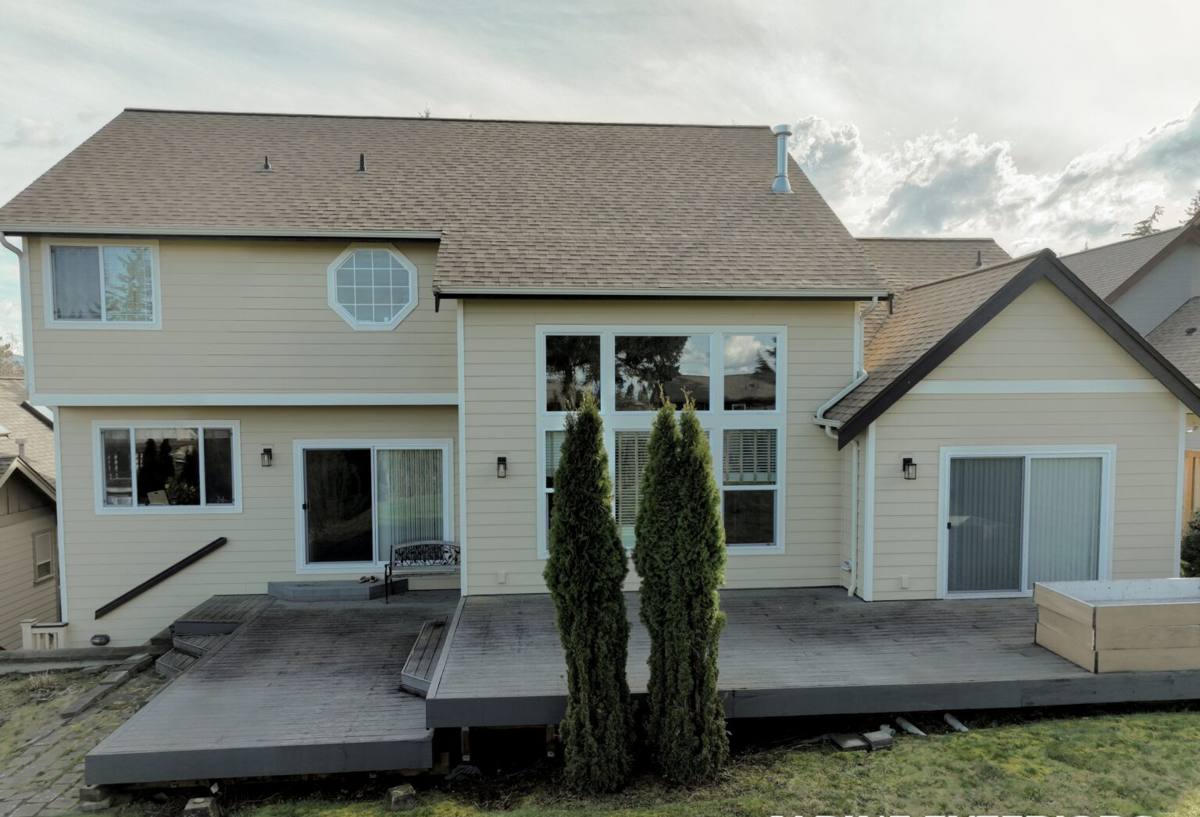
What Custer's Climate Actually Does to a Deck
Salt Air and Fasteners
Salt-laden air corrodes exposed metal faster than most homeowners expect, especially on decks that face open water or sit in the path of prevailing wind off the coast. Standard carbon-steel fasteners will streak and eventually weaken well before a well-built composite deck's boards would ever need replacing. Any deck we build in this area uses stainless steel or coated fasteners rated for coastal exposure, along with hardware built for treated lumber contact, so the frame doesn't become the weak link under a surface that's otherwise rated for decades.
Driving Rain and Drainage
Rain here doesn't fall straight down — wind-driven rain pushes water sideways under railings, against ledger boards, and into any gap that wasn't detailed with drainage in mind. A deck surface that sheds water is only half the job; the substructure underneath has to move that water away from the house rather than trapping it against the band board or the foundation wall.
Moss Season
Whatcom County's moss season runs long — shaded, north-facing, and low-airflow deck areas can stay damp for weeks at a stretch through fall and winter. Moss doesn't just look bad; it holds moisture against whatever surface it's growing on and turns any board into a slip hazard. Composite boards resist moss far better than wood because they don't have the open grain moss needs to root into, but board selection and airflow underneath still matter — a poorly ventilated composite deck can still grow a moss film on the surface itself.
Why Composite Makes Sense Here Specifically
Wood decking in a climate like Custer's is a recurring commitment: annual or biannual sealing, sanding when the surface grays and splinters, and replacing boards that rot from the underside where you can't see it happening. Composite decking shifts that burden. The boards are engineered from wood fiber and recycled plastic, capped with a protective shell that doesn't absorb water the way solid wood does, which matters directly for a property dealing with near-constant moisture exposure and salt in the air.
That doesn't mean composite is maintenance-free — it means the maintenance is different and lighter. A composite deck still needs periodic washing to keep organic growth from getting a foothold, and the substructure underneath (posts, joists, ledger) still needs to be built and protected correctly, because composite boards are only as good as what they're fastened to.
What a Correct Composite Deck Install Involves
Substructure First
Before a single composite board goes down, the framing underneath needs to be right for this climate: pressure-treated or naturally resistant framing lumber, joist tape or a flashing membrane on top of joists to keep fasteners from creating a moisture entry point, and proper joist spacing for the specific composite product being used — composite boards often require tighter spacing than wood to prevent sagging over time.
Ledger Attachment
Where the deck attaches to the house is the single most common source of long-term water damage on any deck in this region. Correct flashing at the ledger board — installed so water is directed out and away from the house wall rather than behind the ledger — is not optional, especially with the amount of wind-driven rain Custer sees through the fall and winter.
Board Layout and Airflow
Composite boards need consistent gapping for expansion and contraction and enough airflow underneath to let moisture escape rather than pool. On lower decks close to grade, or shaded decks tucked against tree lines, we pay particular attention to under-deck ventilation since that's exactly where moss and mildew take hold first.
Fastening System
Most composite systems use hidden fastener clips rather than face screws, which gives a cleaner look and avoids creating screw-head penetrations that can trap water over time. The clips and screws themselves need to be corrosion-rated given the salt air exposure common in this area.
Railings and Edge Details
Railing posts and picture-frame edge boards are where water tends to collect and sit longest. These details get the same flashing and drainage attention as the main field of the deck — skipping it here is one of the most common shortcuts that leads to early failure at the edges while the main deck surface still looks fine.
Comparing Decking Options for This Climate
| Factor | Composite Decking | Pressure-Treated Wood | Cedar |
|---|---|---|---|
| Moss/mildew resistance | High — capped boards resist rooting | Moderate — needs regular sealing | Moderate — natural oils fade over time |
| Salt air / fastener corrosion risk | Low, if hardware is coastal-rated | Moderate | Moderate |
| Maintenance routine | Periodic washing | Annual sealing/staining | Annual sealing/staining |
| Splintering/graying | No | Yes, over time | Yes, over time |
| Upfront cost | Higher material cost | Lower material cost | Moderate to higher |
| Typical lifespan with proper install | 25-30+ years | 15-20 years with upkeep | 15-20 years with upkeep |
None of these options are wrong in every case — a homeowner planning to stain and reseal every year can get good life out of wood. But for a Custer property where salt air and moss season are working against the deck year-round, composite's lower ongoing maintenance is usually the deciding factor.
Our Process for a Custer Composite Deck
- On-site assessment — we look at sun exposure, prevailing wind direction, tree cover, and how close the site is to open water or salt spray, since all of it affects material and hardware choices.
- Substructure inspection or design — for a rebuild, we evaluate existing framing for rot or corrosion before deciding what can stay and what needs to be replaced.
- Material selection — board color, cap style, and railing system chosen based on the specific site conditions, not a one-size answer.
- Flashing and drainage detailing — ledger, joists, and posts get properly flashed before boards go down.
- Installation — boards, hidden fasteners, and railings installed to manufacturer spec for expansion gaps and ventilation.
- Final walkthrough — we check drainage flow, board gapping, and railing attachment before calling the job done.
Signs an Existing Deck Needs Attention
- Soft or spongy spots underfoot, especially near the house or railings
- Rust streaking around fastener heads
- Persistent moss or dark staining that comes back within weeks of cleaning
- Gaps opening up between boards or boards cupping
- Railing posts that feel loose or move under light pressure
- Water pooling anywhere on the surface instead of draining off
Why Hire a Crew That Already Works in Custer
Decking done right in this part of Whatcom County isn't just about following a manufacturer's install manual — it's about knowing which details matter more here than they would somewhere drier and calmer. A crew that's worked other properties in and around Custer already knows which fastener grades hold up, which orientation choices reduce moss buildup, and how to detail a ledger connection so wind-driven rain doesn't find its way behind it. That local pattern recognition is the difference between a deck that needs attention in year three and one that's still solid in year twenty.
We also stand behind the work with a workmanship warranty backed by proper manufacturer product warranties on the composite boards themselves, so you're covered on both the material and the installation.
Planning Considerations Before You Start
A few things worth thinking through before a composite deck project begins in this area:
- Deck orientation relative to prevailing wind and sun — this affects both drying time after rain and long-term moss risk
- Whether the deck ties into an existing structure that may need repair before new decking goes on
- Local permitting requirements, which apply to most deck rebuilds and new builds in Whatcom County
- Railing code requirements for deck height, which affect design options
- Whether existing landscaping or tree cover will need trimming back to improve airflow under and around the new deck
Getting these questions answered early avoids surprises mid-project and helps set realistic expectations on both timeline and cost.
If you're planning a new composite deck or need to replace one that's showing its age, we're happy to walk your Custer property and give you a straightforward, no-pressure estimate — just fill out the form below to get started.