 Lynden Window
 Decks Built for Blaine's Marine Climate
Blaine sits right on the water, and that proximity to Semiahmoo Bay and the Strait of Georgia shapes what a deck has to survive here. Salt-laden air corrodes fasteners and hardware faster than it does further inland. Driving rain off the water finds every gap in flashing and every unsealed end cut. And the long, gray moss season that stretches across Whatcom County from fall through spring keeps deck surfaces damp for months at a stretch, which is exactly the environment moss, algae, and wood rot need to take hold. A deck built to a generic national spec often struggles here. A deck built for this specific stretch of coastline holds up.
We work throughout Lynden and out to Blaine regularly, so we're not guessing at what local weather does to decking over five, ten, or twenty years — we've seen it firsthand on homes in this corner of Whatcom County.
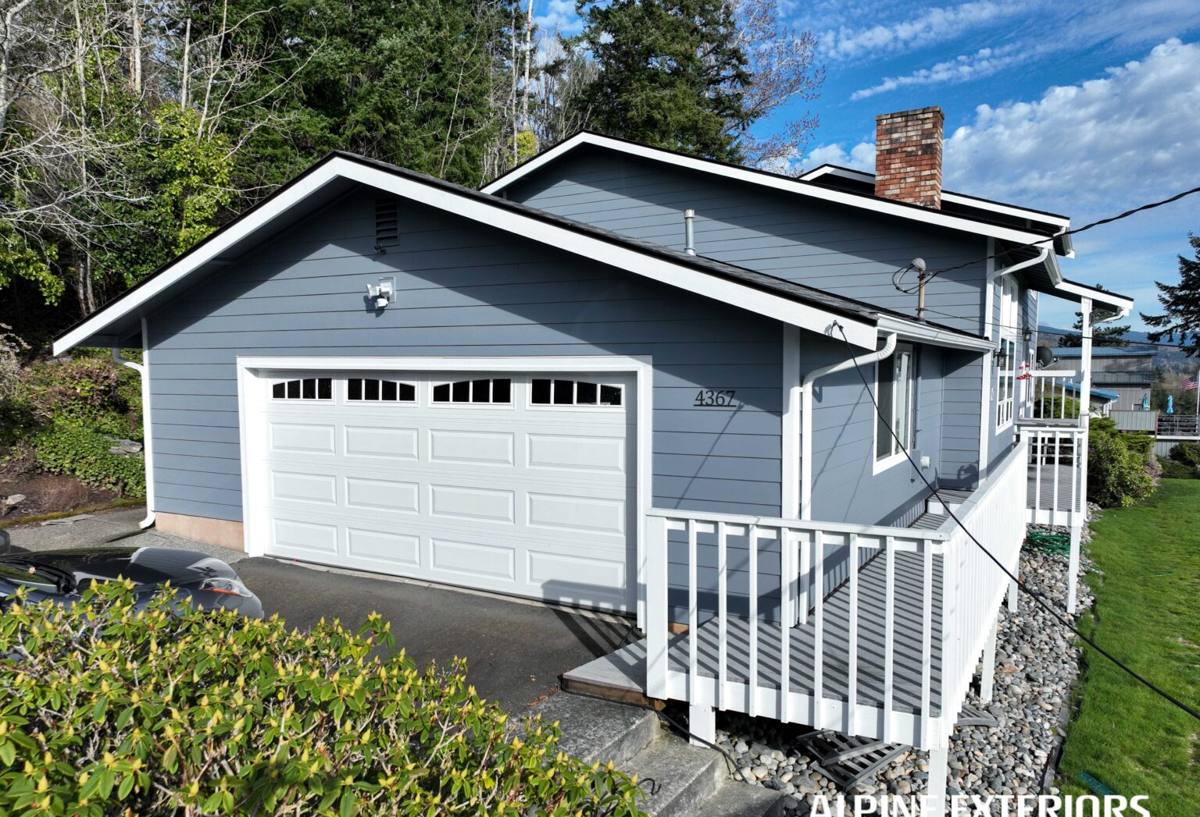
Signs Your Deck Needs Replacement, Not Repair
Not every tired deck needs to come out entirely. But there's a point where patching boards and sistering joists costs more in the long run than starting fresh with a structure built to current standards. Common signs it's time to replace rather than repair:
- Soft or spongy decking boards, especially near the house or in shaded areas that stay wet longest
- Ledger board attachment that's rusted, pulling away from the house, or was never properly flashed
- Support posts or footings with visible rot, movement, or inadequate embedment
- Railings that flex or wobble under moderate pressure — a safety issue, not a cosmetic one
- Persistent moss and algae staining that won't stay clean no matter how often it's washed
- A deck older than 15-20 years built with older fastener standards or undersized framing
If your deck shows one or two of these, a repair might buy time. If it shows several, or the framing itself is compromised, replacement is usually the more honest recommendation — and often the more cost-effective one once you factor in repeated patch jobs.
What a Correct Deck Replacement Involves
Structural Framing and Footings
Everything visible on a deck sits on framing most homeowners never see, and that framing is where long-term failures start. Footings need to be sized and set to the depth required by local frost and load standards, not just poured to whatever depth is convenient. Joists need to be spaced correctly for the decking material chosen — composite and PVC products generally require tighter joist spacing than solid wood, and skipping that step is one of the most common shortcuts that leads to a bouncy or sagging deck years down the road.
Ledger Attachment and Flashing
The ledger board — where the deck attaches to the house — is the single most common point of failure on decks in wet climates like this one. It has to be properly flashed with the flashing lapped correctly under the house's weather-resistant barrier, not just caulked and hoped for. Given how much driving rain Blaine sees off the water, a poorly flashed ledger is a slow leak into the house framing that can go unnoticed for years.
Fasteners and Hardware
Salt air accelerates corrosion on standard fasteners. We use hardware rated for coastal and treated-lumber exposure — stainless steel or heavy hot-dip galvanized, depending on the application — because standard zinc-coated screws and hangers can start showing rust streaks and losing holding strength within just a few years this close to the water.
Railings and Code Compliance
Railing height, baluster spacing, and guard requirements are governed by building code, and they matter both for inspection sign-off and for actual safety. A replacement is the right time to correct any railing that doesn't meet current code, especially on older decks built before current spacing requirements were standard.
Choosing a Decking Material for This Climate
There's no single "best" decking material — the right choice depends on budget, maintenance appetite, and how much direct weather exposure the deck gets. Here's how the common options compare for a home in Blaine or Lynden's climate:
| Material | Moisture Behavior | Maintenance | Typical Lifespan |
|---|---|---|---|
| Pressure-treated wood | Absorbs and releases moisture; prone to checking and splintering if not sealed regularly | Annual cleaning and re-sealing recommended | 10-15 years before major issues |
| Cedar | Naturally more rot- and insect-resistant than treated pine, but still needs sealing | Periodic staining/sealing to preserve appearance and durability | 15-20 years with upkeep |
| Capped composite | Resists moisture absorption; won't rot or splinter | Occasional washing to keep moss and algae from staining the surface | 25+ years, backed by manufacturer warranty |
| PVC decking | Fully synthetic, essentially unaffected by moisture | Low — washing only | 25+ years, backed by manufacturer warranty |
Given how much of the year this area spends damp, we lean toward capped composite or PVC for most Blaine and Lynden decks — not because wood is a bad material, but because moss season here rewards low-maintenance surfaces. Wood remains a solid, more budget-friendly choice for homeowners willing to keep up with annual sealing.
Our Deck Replacement Process
- On-site assessment — we inspect the existing structure, footings, ledger attachment, and framing condition to confirm replacement is the right call and identify anything hidden (rot, undersized framing, drainage issues) before work starts.
- Design and material selection — we walk through decking, railing, and layout options based on your budget and how you actually use the space.
- Permitting — we handle the permit application and inspection scheduling required for your jurisdiction, so nothing gets built that has to be torn out later.
- Demolition and disposal — the old deck comes out, including footings that don't meet current standards, with the site left clean.
- Framing and structural work — new footings, posts, beams, and joists are installed to spec, with all ledger flashing done correctly the first time.
- Decking, railing, and finish work — surface material and railings go in, with fasteners appropriate for coastal exposure.
- Final walkthrough and inspection — we confirm the finished deck passes inspection and walk the homeowner through care and maintenance for the material chosen.
Permits and Local Requirements
Deck replacement in Whatcom County and within Blaine city limits generally requires a building permit, particularly when the deck is attached to the house, elevated above a certain height, or involves structural changes to footings and framing. Requirements can differ slightly between unincorporated Whatcom County and the City of Blaine, and inspectors check things like footing depth, ledger flashing, and railing code compliance before signing off. Skipping the permit process might seem like a shortcut, but it creates real problems at resale and can leave homeowners without recourse if something built off-permit fails. We pull the correct permits and schedule inspections as part of every replacement, so you're not left sorting that out after the fact.
Maintaining Your New Deck Through Moss Season
Whatever material you choose, a little seasonal attention goes a long way in this climate. A simple maintenance routine to keep in mind:
- Sweep debris and standing leaves off the deck regularly through fall — trapped moisture under leaf litter is what starts moss growth
- Wash the surface at least once a year with a deck-safe cleaner to remove algae and moss before it stains or gets slick
- Check railings and stair connections annually for any looseness, especially after winter storms
- For wood decks, reseal on the schedule recommended for your species — skipping a year in this climate shows up fast
- Keep gutters and downspouts near the deck clear so runoff isn't draining directly onto the structure
- Trim back vegetation that shades the deck surface and keeps it from drying out between rains
Why a Crew That Already Works Blaine Matters
A deck built to a generic spec sheet doesn't account for what this specific stretch of Whatcom County coastline does to lumber, fasteners, and finishes over time. Working regularly in Blaine and Lynden means we know which fastener grades hold up against salt air, how deep footings need to go for local soil and frost conditions, and which ledger flashing details actually keep driving rain out of a house wall. It also means we're familiar with the permitting process for both Blaine and the surrounding county, so there are no surprises mid-project. A deck is a structural addition to your home — it deserves the same attention to local conditions as the house itself.
If you're weighing repair versus replacement, or just want an honest read on what your current deck needs, we're happy to take a look. Request a free, no-pressure estimate using the form below and we'll walk the site with you and lay out your options plainly.