 Lynden Window
 Storm Damage Roof Repair Built for Wiser Lake Conditions
Wiser Lake sits close enough to the water, the tree line, and the open farmland east of Lynden that its roofs take a different kind of beating than a roof in a dense subdivision a few miles away. Wind off the lake, moisture that never fully clears out from under a tree canopy, and long stretches of gray, wet weather all add up over a season. When a storm rolls through and knocks something loose — a section of shingles, a flashing seam, a gutter torn off at the fascia — the repair needs to account for all of that, not just patch the visible damage and move on.
This page covers exactly one service, done one way, for one area: storm damage roof repair for homes in and around Wiser Lake. It's not a general roofing overview. It's what we've learned works on this specific type of property, in this specific stretch of Whatcom County.
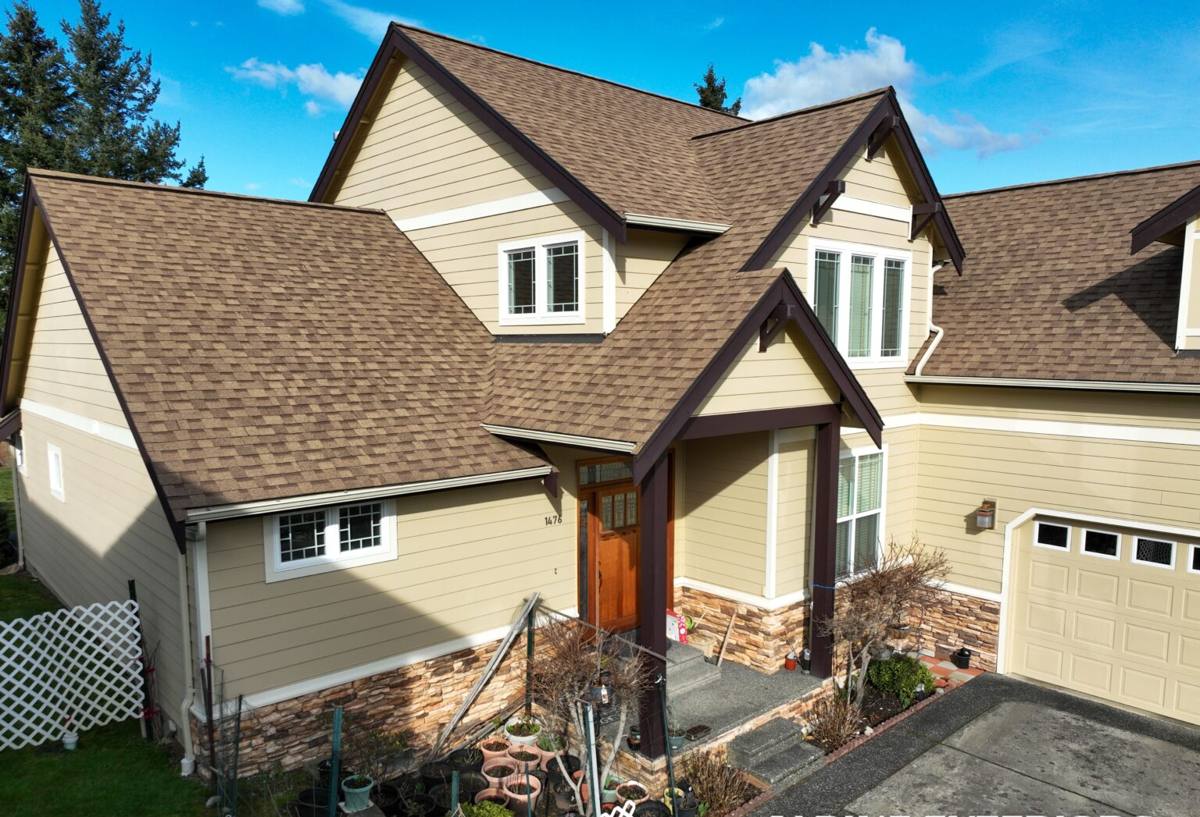
Why Wiser Lake's Climate Is Hard on Roofs
Northwest Washington doesn't get the dramatic hailstorms or hurricane-force winds you'd see elsewhere, but it makes up for that with persistence. A roof here isn't fighting one bad storm a year — it's fighting months of low-grade exposure that eventually finds every weak point.
Moss and Organic Growth
Lake-adjacent properties tend to have more shade, more standing humidity, and more overhanging trees than roofs out in the open. That combination is close to ideal for moss and algae. Left alone, moss doesn't just sit on top of shingles — it works under the tabs, holds moisture against the roof deck, and lifts shingle edges enough that wind gets a place to grab hold. A storm that would barely faze a clean, moss-free roof can peel back shingles that moss has already loosened.
Wind-Driven Rain and Flashing
Rain around here rarely falls straight down. It comes in sideways, driven by wind off the lake and the open fields nearby, which means it finds its way into gaps that a vertical rain would never reach — chimney flashing, valley seams, the transition where a roof meets a wall or dormer. Storm damage repair that only replaces missing shingles and ignores the flashing underneath tends to fail again in the next windstorm.
Salt Air and Metal Fatigue
You don't have to be right on saltwater for airborne salt to matter. Metal flashing, fasteners, and gutter systems in this part of Whatcom County corrode faster than the same materials would inland. A repair that reuses corroded fasteners or unsealed metal flashing is a repair that's already counting down to its next failure.
What Counts as Storm Damage
Homeowners often assume storm damage means a hole you can see from the driveway. Most of what we find is less obvious:
- Shingles cracked, curled, or torn loose at the tab, even if they're still technically in place
- Flashing bent, lifted, or separated from a chimney, skylight, or wall intersection
- Gutters pulled away from the fascia or dented enough to hold standing water
- Granule loss on shingles from wind-driven debris or hail, visible as bare or shiny patches
- Soft or spongy decking under a shingle that looks fine from above but has been absorbing water for weeks
- Moss mats that have lifted shingle edges enough for wind to catch underneath
- Fastener backout — nails or screws that have worked loose from repeated wind flex
Most storm-related leaks trace back to one of these, not a single dramatic hole. That's why a proper inspection matters more than a quick patch.
What a Correct Storm Damage Repair Involves
Emergency Tarping and Stabilization
If a storm has left your roof actively leaking or missing a section, the first job is stopping water from getting further into the structure — not scheduling a full repair for next week. A properly installed tarp, secured so wind can't get under it and tear it loose, buys time to do the real repair correctly instead of rushing it.
Full Assessment Before Repair
We don't quote a storm repair from the ground or from a photo. Storm damage is often worse — or sometimes less extensive — than it looks from the yard. A proper assessment means getting on the roof, checking the decking underneath damaged shingles for soft spots, tracing water stains back to their actual entry point (which is often several feet from where the stain shows up inside), and checking flashing at every penetration, not just the obviously damaged one.
Matching Materials and Proper Tie-In
A patch that doesn't match the surrounding roof — different shingle profile, different color lot, exposed nail heads, flashing that isn't properly woven into the existing courses — is a patch that will show, and often a patch that will leak again at the tie-in line. Correct storm repair work blends into the existing roof and re-establishes the same water shedding path the original installation had, not a shortcut version of it.
Addressing the Cause, Not Just the Symptom
If moss contributed to the damage, we say so and address it — that might mean moss removal and treatment as part of the repair, not just replacing what the moss loosened. If the damage happened because flashing was already marginal before the storm, we replace the flashing, not just the shingles around it. A repair that ignores the underlying cause is a repair you'll be paying for again.
Our Process
- Contact and initial description. Tell us what you're seeing — active leak, missing shingles, storm timing — so we can prioritize urgent situations appropriately.
- On-roof inspection. We physically inspect the affected area and the roof as a whole, since storm damage is rarely confined to just the spot that's visibly leaking.
- Written scope and estimate. You get a clear explanation of what's damaged, what needs to be repaired versus replaced, and an honest cost range before any work starts.
- Stabilization if needed. Active leaks get tarped or otherwise stabilized immediately, separate from scheduling the permanent repair.
- Repair. Matching materials, proper flashing tie-in, and attention to the underlying cause — not just the visible damage.
- Final walkthrough. We show you what was done and what to watch for going forward, particularly around moss and drainage given the local conditions.
Repair vs. Replace: What Actually Drives the Decision
Not every storm-damaged roof needs a full replacement, and not every roof can be responsibly patched. The honest answer depends on a few factors:
| Factor | Favors Repair | Favors Replacement |
|---|---|---|
| Age of existing roof | Under roughly half its expected lifespan | Nearing or past expected lifespan |
| Extent of damage | Isolated to one section or slope | Spread across multiple slopes or widespread granule loss |
| Decking condition | Solid, dry decking under damaged shingles | Soft, delaminated, or water-stained decking in multiple spots |
| Material availability | Matching shingles still available | Discontinued shingle line, visible mismatch unavoidable |
| Moss/organic history | Manageable with cleaning and minor repair | Long-term moss damage has compromised multiple areas |
We'll tell you plainly which category your roof falls into, including when a repair is the right call even though a replacement would be more profitable for us. That's a standard we hold ourselves to, not a sales pitch.
Insurance and Storm Claims
Many storm-related roof repairs are covered by homeowners insurance, but coverage depends on your policy, the cause of damage, and your insurer's own assessment — none of which we control or can guarantee. What we can do is provide clear documentation of the damage, an honest scope of work, and a straightforward estimate that you can bring to your adjuster or claims process. We don't inflate estimates to match an insurance payout, and we don't tell you what your policy covers — that's between you and your insurer.
Why a Crew That Already Works Wiser Lake Matters
A roofing crew that mostly works drier, more exposed neighborhoods can still do competent work, but they're less likely to catch what's specific to this area — how far moss has typically progressed by the time it's visible from the ground, which flashing details tend to fail first under lake-driven wind, how humidity under tree cover affects drying time during a repair. Familiarity with Lynden and the broader Whatcom County climate isn't a marketing point — it changes what we look for and how we sequence the work, especially when weather windows are tight during the wetter months.
Roof Storm-Readiness Checklist
Between storms, a few habits reduce how much damage the next one causes:
- Have moss and debris cleared from the roof and gutters before the wet season builds up
- Check that gutters are securely fastened and draining, not just present
- Trim back branches that overhang the roofline, especially near the lake where shade holds moisture longer
- After any significant windstorm, do a visual check from the ground for lifted or missing shingles
- Address small flashing or shingle issues promptly — they're cheap to fix small and expensive to fix after they've let water in for a season
- Know who to call before the next storm hits, not after water is already coming through the ceiling
Get a Free, No-Pressure Estimate
If a storm has left your Wiser Lake home with a leak, missing shingles, or damage you're not sure how serious it is, we're glad to take a look and give you a straight answer — no obligation, no pressure. Use the form below to get started.