 Lynden Window
 Composite Decking Built for How Sumas Actually Weathers
A deck in Sumas doesn't fail the way a deck fails in a dry climate. It doesn't crack from heat or bleach out from relentless sun. It fails slowly, from the ground up and from the inside out — moisture working into fastener holes, moss taking hold in shaded corners, and boards that never quite finish drying out between one rain event and the next. Whatcom County's marine-influenced weather, the driving rain that comes sideways off a storm front, and a moss season that can run from fall clear through spring all add up to conditions that punish decking materials that aren't built for sustained dampness. Composite decking, installed correctly, is one of the few options that actually holds up to that pattern year after year without turning into a maintenance project every spring.
This page is specifically about composite decking for homes in and around Sumas. Not a general decking overview — the actual considerations that matter for this area: what the climate does to a deck over time, what a correct composite installation looks like, and why the installation details matter more here than they would in a drier part of the state.
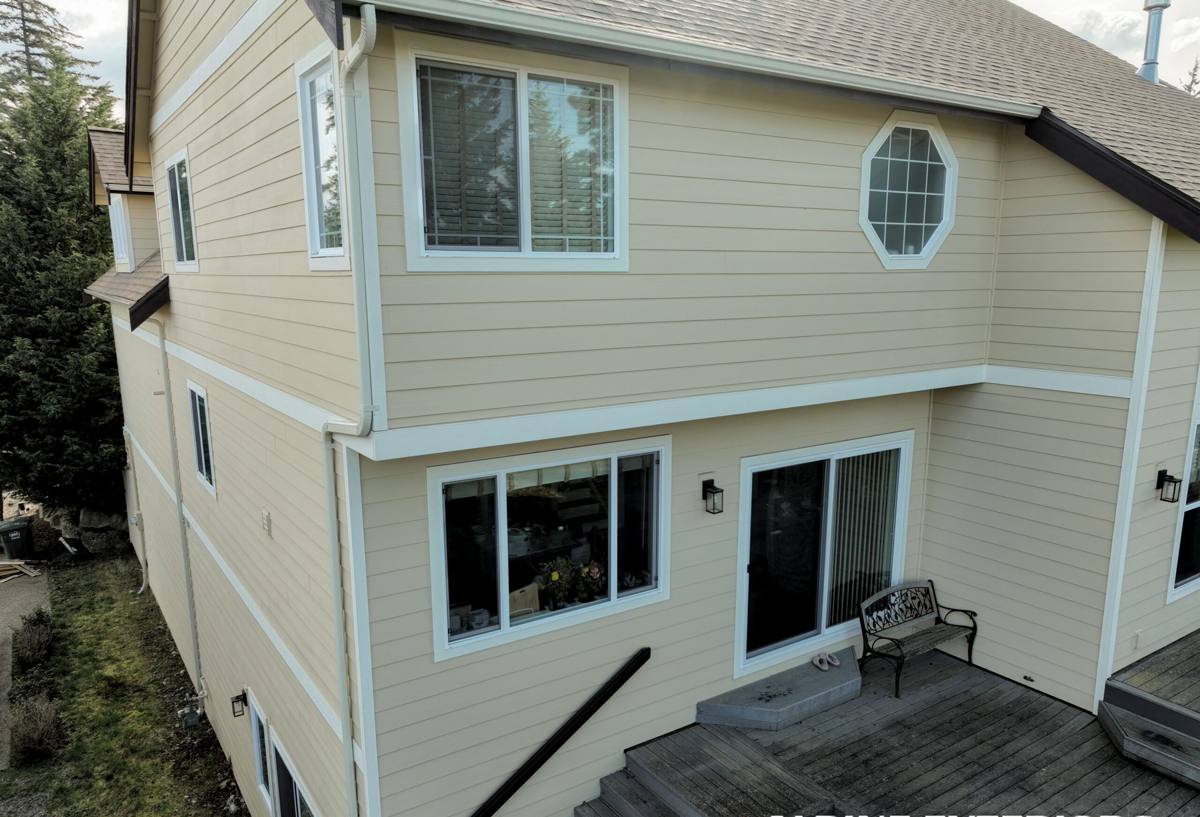
What Whatcom County Weather Does to a Deck Over Time
Moisture That Never Fully Leaves
Wood decking relies on drying cycles to stay stable — it gets wet, then it dries, and that cycle is what keeps rot at bay. In a climate with long stretches of driving rain and overcast, low-evaporation days, that drying window shrinks. Moisture sits in the wood grain, in fastener holes, and especially at board ends and joist contact points, longer than the material was designed to tolerate. That's where rot starts, and it almost always starts from underneath, out of sight, before it ever shows on the surface.
Moss and Algae Growth
A long moss season means any horizontal surface that stays shaded and damp for weeks at a time is a candidate for moss and algae growth. On wood decking, moss doesn't just sit on top — it holds moisture against the board surface and accelerates the exact rot process described above. It also makes a deck genuinely slick and dangerous underfoot, which matters as much for safety as it does for appearance.
Freeze-Thaw and Fastener Stress
Whatcom County gets enough cold snaps to put wet decking material through freeze-thaw cycles. Water trapped in a board or around a fastener expands when it freezes, which stresses wood fibers, loosens screws over time, and opens up small cracks that let even more moisture in the next time it rains. It's a slow, compounding problem — which is exactly why the first few years of a deck's life often look fine while the damage is already underway underneath.
Composite vs. Wood: A Straight Comparison for This Climate
Both materials can build a good deck. The honest difference in a climate like this comes down to how each one handles sustained moisture and low-maintenance seasons.
| Factor | Composite Decking | Pressure-Treated Wood |
|---|---|---|
| Moisture absorption | Very low — most boards are capped and don't wick water into the core | Absorbs and releases moisture constantly, especially at cut ends |
| Moss and algae resistance | Higher — smoother, less porous surface gives moss less to grip | Lower — grain and checking give moss and algae more surface area |
| Annual maintenance | Occasional cleaning, no staining or sealing | Cleaning plus re-staining or sealing every 1–3 years to stay protected |
| Typical lifespan (installed correctly) | 25–30+ years, often with a manufacturer warranty | 10–15 years before major boards need replacement |
| Upfront material cost | Higher per square foot | Lower per square foot |
| Long-term cost of ownership | Lower — fewer replacement boards, no recurring finish cost | Higher over 20+ years once refinishing and repairs are factored in |
For a homeowner planning to stay in the house long-term, the lower maintenance burden of composite is usually the deciding factor in a climate that doesn't give a wood deck much time to dry out between storms.
What a Correct Composite Deck Installation Actually Involves
Composite boards are more forgiving of moisture than wood, but they are not forgiving of a sloppy substructure. Most of the complaints we hear about composite decking failing early trace back to how it was framed and fastened, not the material itself.
The Substructure Still Has to Be Built for Wet Conditions
The joists, beams, and ledger board underneath a composite deck are almost always still wood or engineered lumber, and that structure needs the same rot protection any wood framing needs in this climate — proper flashing at the house connection, joist tape or a moisture barrier on top of the joists, and ledger fastening that doesn't create a path for water to get behind the siding. A composite surface on a poorly protected frame just hides a rot problem for longer before it becomes visible.
Spacing for Drainage and Airflow
Composite boards need consistent gapping — both between boards and at the perimeter — so water can actually shed off the deck surface instead of pooling. Too tight, and you get standing water and debris buildup that feeds moss growth exactly where it's hardest to clean. Too loose, and the deck feels unfinished and collects debris underneath. Manufacturer spacing specs exist for a reason, and they're not optional in a climate that gets this much rain.
Hidden Fasteners, Done Right
Most composite systems use hidden fastener clips rather than face screws, which gives a cleaner look and avoids the exposed screw heads that would otherwise become moisture entry points. But hidden fastener systems require boards to be run straight and joists to be spaced correctly — if the substructure is off, hidden clips fight the installer the whole way and often get forced into place, which is where squeaks and loose boards down the road usually start.
Railing, Fascia, and Stair Details
The trim details — fascia boards, stair stringers, post wraps, railing baseplates — are where water intrusion problems most often start on an otherwise good composite deck. Any place where composite trim meets a fastener, a post, or the house needs to be treated as a potential water entry point and sealed or flashed accordingly, not just screwed and left.
Our Process From Estimate to Finished Deck
- On-site assessment. We look at the existing structure (if there is one), grade and drainage around the deck footprint, sun and shade exposure, and how the deck ties into the house.
- Material and layout discussion. We walk through board options, color, and layout with you — including honest trade-offs on cost, appearance, and maintenance for each option.
- Written estimate. A clear scope covering demo (if needed), framing work, decking, railing, and any structural repairs the assessment turned up — no vague allowances.
- Framing and structural work. This is where the moisture-management details above get built in — flashing, joist protection, correct spacing and footing depth for the site.
- Decking, railing, and trim installation. Boards, fascia, stairs, and railing installed to manufacturer spec, with attention to the trim details that determine whether the deck stays watertight.
- Final walkthrough. We go over the finished deck with you, including what routine care it actually needs — not a generic maintenance sheet, but what applies to your specific setup and exposure.
Cost Factors Worth Knowing Before You Get a Number
Composite decking pricing varies enough between projects that a flat per-square-foot number rarely tells the whole story. The factors that move the price most are usually structural, not cosmetic.
| Cost Factor | Why It Matters |
|---|---|
| Existing structure condition | A deck built on a sound, correctly framed substructure costs less than one where rotted joists or ledger issues need to be fixed first |
| Height and stairs | Elevated decks with stairs and railing add material, labor, and code requirements beyond a low ground-level deck |
| Board tier and brand | Composite lines range from base capped boards to premium multi-tone, higher-density products with longer warranties |
| Railing system | Composite or aluminum railing costs more than basic wood railing but matches the low-maintenance intent of a composite deck |
| Site access | Tight side-yard access or difficult grading can add labor time for material handling and equipment |
We'd rather walk your specific site and give you real numbers than quote a range that doesn't hold up once we see what's actually there.
Maintenance: What Composite Actually Needs in This Climate
Composite decking is low-maintenance, not no-maintenance — and in a climate with a long moss season, skipping the little bit of upkeep it does need is how moss and slick spots get a foothold.
- Sweep off leaves, needles, and organic debris regularly, especially in shaded areas and corners where wind doesn't clear it naturally
- Rinse or wash the deck surface a couple of times a year with a soft-bristle brush and mild soap — avoid pressure washing directly into board grooves
- Check and clear the gaps between boards periodically so debris doesn't dam up water flow
- Keep planters, mats, and furniture legs from sitting in one spot too long, which traps moisture and blocks airflow to the surface underneath
- Inspect railing posts and stair connections once a year for any looseness, since movement at those points is often the first sign of an underlying framing issue
- Address any standing water or slow drainage promptly rather than waiting for moss to establish itself
Why Hiring a Crew That Already Works in Sumas Matters
A composite deck built for a dry climate and a composite deck built for Whatcom County shouldn't look identical underneath the surface, even if the boards on top are the same. A crew that hasn't worked this area regularly may not think twice about joist protection, drainage slope, or trim sealing — details that don't matter much somewhere with a short rainy season but matter a great deal here. A crew that already works in Sumas and the surrounding area has seen what a few years of this climate does to a deck that skipped those steps, and builds accordingly the first time.
That local familiarity also shows up in smaller, practical ways — knowing what permitting and setback requirements typically apply for the county, understanding how a given lot's grading and drainage patterns usually behave, and being straightforward about what a deck in a shaded, damp yard will need versus one that gets more sun and airflow. None of that is complicated, but it only comes from doing the work here repeatedly, not from a one-off job passing through.
Getting Started
If you're weighing composite decking for a home in Sumas, we're happy to come take a look, talk through what your specific site needs, and give you a straightforward estimate — no pressure, no hard sell. Use the form below to request a free estimate and we'll get back to you to schedule a time.