 Lynden Window
 Blaine's Coastal Climate Is Harder on Windows Than Most of Whatcom County
Blaine sits right on the water at the northern edge of Whatcom County, and that location changes what a window has to put up with day to day. Homes closest to the shoreline around Semiahmoo Bay and Drayton Harbor take on salt-laden air that corrodes hardware and dulls finishes faster than homes further inland around Lynden. Add driving rain that comes in sideways off the water during winter storms, plus a long gray, damp stretch that runs roughly November through April, and you get a genuine moss season — the kind that colonizes north-facing sills, frames, and tracks if nothing is done about it.
None of this means windows in Blaine fail faster because the town is unlucky. It means the margin for error is smaller. A window that would perform fine for fifteen years in a drier, more sheltered part of the county can start showing seal failure, wood rot, or corroded hardware in half that time here if it wasn't built, or installed, with this exposure in mind.
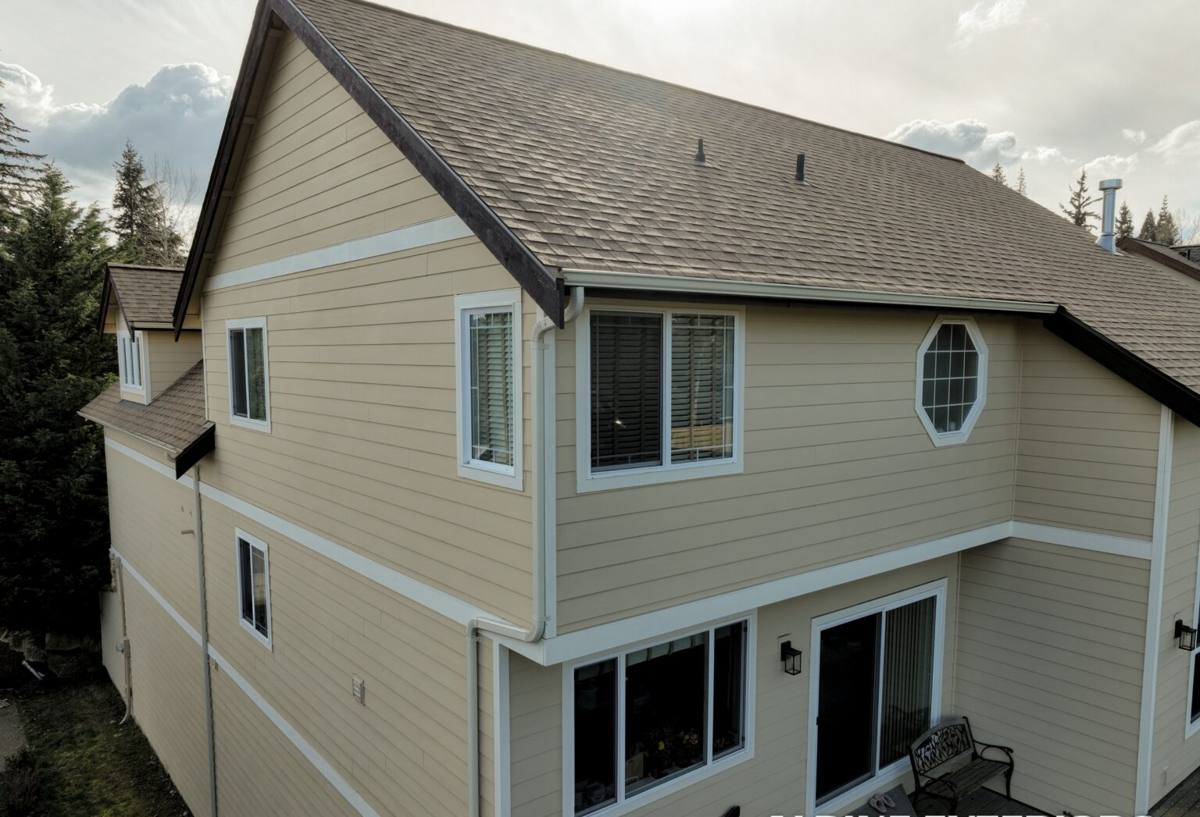
What "Energy-Efficient" Actually Means for a Window
Energy-efficient windows are sometimes sold as a single feature, but efficiency is really a combination of glass, frame, and installation working together. Two numbers on the label matter more than any marketing language on the box.
The Two Numbers That Matter: U-Factor and SHGC
U-factor measures how much heat the window lets escape — lower is better, and it's the number that matters most in a climate like Blaine's, where the dominant cost is keeping heat in through a long, wet, cool season. Solar Heat Gain Coefficient (SHGC) measures how much solar heat passes through the glass. In hotter, sunnier climates, homeowners want a low SHGC to keep interiors cool. Here, with limited direct sun for much of the year, a moderate SHGC that lets in some free solar warmth on clear days is often the better trade-off, especially on south- and west-facing walls. A good window supplier should be able to walk you through both numbers for your specific elevation, not just quote a single "energy-efficient" rating for the whole house.
Frame Material and Salt Air
Frame material choice matters more here than in a lot of the county, because salt air accelerates corrosion and finish breakdown. Vinyl is the most common choice for good reason — it doesn't corrode, holds up well to moisture, and is priced accessibly, though quality varies a lot between manufacturers in weld strength and reinforcement. Fiberglass costs more but resists expansion and contraction across temperature swings and holds paint or finish longer near the coast. Wood offers a look some homeowners want, but it carries the highest maintenance burden in a wet, salt-exposed climate — it needs a disciplined repainting and sealing schedule or it will rot faster near the water than it would ten miles inland. Aluminum frames are prone to pitting and corrosion in salt air and, unless thermally broken, conduct heat and cold directly through the frame, working against the efficiency you're paying for. We'll walk you through the honest trade-offs of each rather than push one option for every house.
Warning Signs Your Current Windows Are Already Losing
Most homeowners don't replace windows because of one dramatic failure — it's a set of smaller signs that add up. Worth checking for before deciding whether repair or replacement makes sense:
- Noticeable drafts around the sash or frame, especially on windy days
- Fogging or a permanent haze between panes on double-glazed units — a sign the seal has failed and the gas fill is gone
- Sashes that stick or swell shut during the wet months and loosen up again in summer
- Visible moss, algae, or dark staining building up on sills, tracks, or the bottom of the frame
- Peeling or bubbling paint on wood frames, or soft spots when you press on the sill
- Cold spots or noticeable temperature drop near the glass in winter, even with the heat running
Any one of these on its own might be a repair. Several together, especially on a home more than fifteen or twenty years old, usually means the windows are costing more in heating bills and slow water damage than a replacement would cost up front.
What a Correct Installation Actually Involves
The efficiency rating printed on a window only means something if the installation keeps water out and air sealed around it. In a climate with driving, wind-driven rain, the installation details matter as much as the product itself — arguably more. A correct job includes sill pan flashing so any water that does get past the exterior has somewhere to drain instead of pooling against the frame, proper integration with the house wrap or weather-resistive barrier, backer rod and sealant at the right joints rather than a bead of caulk smeared over gaps, and a sill that's sloped to shed water outward instead of holding it against the wood.
Shortcuts We Don't Take
There are faster ways to swap a window that look fine on install day and cause problems two or three winters later. We don't rely on foam alone to seal a rough opening without proper flashing behind it — foam blocks air but doesn't manage bulk water. We don't reuse old trim or J-channel that's already showing wear just to save a step. And we don't skip sill pan flashing on exposed or ground-level openings, which is exactly where driving rain off the water does the most damage over time. These aren't dramatic failures at the time — they're the kind of shortcut that shows up as a rot problem behind the wall a few years down the road, after the crew that installed it is long gone.
How We Approach a Blaine Window Project
We're based in Lynden and work throughout Whatcom County, but we treat a Blaine project differently from one a few miles inland, because the exposure is different. Our process:
- On-site assessment — we look at each opening individually, noting which walls face the prevailing weather and water, and check the condition of the existing framing before quoting anything.
- Product selection matched to exposure — a window on a sheltered wall doesn't need the same spec as one facing open water and wind-driven rain; we don't sell a one-size-fits-all package.
- Framing inspection during removal — older homes near the coast sometimes have hidden moisture damage around the rough opening that isn't visible until the old window comes out. We check and address it before setting the new unit, not after.
- Correct flashing and sealing — sill pans, properly lapped house wrap, and sealant at the right joints, every time, regardless of whether it's a one-window repair or a full-house replacement.
- Walkthrough and cleanup — we test operation, check the exterior seal, and leave the site clean before we consider the job done.
What Drives the Cost of a Window Project
Window pricing varies enough between homes that a flat per-window number isn't honest. These are the factors that actually move the price:
| Factor | Why It Matters in Blaine | Effect on the Job |
|---|---|---|
| Frame material | Salt-air resistance and maintenance burden differ a lot between vinyl, fiberglass, and wood | Material cost per unit changes significantly |
| Wall exposure | Windward, water-facing walls need more careful flashing and weatherproofing | More labor per opening on exposed elevations |
| Existing framing condition | Older coastal homes sometimes have hidden moisture damage from years of exposure | Can add repair scope once the old window is out |
| Glass package | U-factor performance matters more here than SHGC, given the cool, cloudy climate | Low-E coatings and gas fills change unit price |
| Full-frame vs. insert replacement | Full-frame lets us correct old flashing problems; insert is faster when the existing frame is sound | Affects both labor time and total price |
| Number of openings done together | Setup, scaffolding, and disposal costs spread across more units | Per-window cost usually drops on larger projects |
Living With Efficient Windows in a Moss-Prone, Salt-Air Climate
A well-installed, efficient window still needs a bit of upkeep in this environment to perform the way it's supposed to for its full lifespan. None of it is difficult, but it matters more here than it would inland:
- Rinse salt residue off frames and hardware periodically, especially on homes closest to the water
- Keep gutters and downspouts clear so runoff doesn't sheet down across window heads
- Clear moss and debris from sills and tracks before it holds moisture against the frame
- Operate each window through its full range a few times a year so weep holes and drainage channels stay clear
- Check exterior caulk and sealant lines yearly for cracking, particularly after a hard winter
- Repaint or reseal wood frames on the schedule the manufacturer recommends, not just when it starts to look bad
Why Hiring a Crew That Already Works in Blaine Matters
A contractor who mostly works drier, more sheltered parts of Whatcom County can still do competent work, but they may not automatically account for how much harder salt air and driving rain are on a window and its installation. That shows up as under-specced flashing, a frame material that looks fine on day one but corrodes faster than expected, or a maintenance schedule that doesn't match the actual conditions. Working in Blaine regularly means we already factor exposure into the product recommendation and the install details, instead of treating it like any other job in the county.
If your windows are drafty, fogged, sticking, or just older than you'd like to admit, we're happy to take a look and give you a straight, no-pressure estimate — use the form below to get started.