 Lynden Window
 Window Installation for Custer Homes, Built for the Local Climate
Custer sits close enough to the water that homes here take a different kind of beating than houses further inland in Whatcom County. Salt-laden air off the coast works its way into metal hardware and vinyl seals. Wind-driven rain finds any gap in flashing or caulking and pushes water sideways, not just down. And the long, damp moss season that defines this part of Washington keeps north-facing walls and window sills wet for weeks at a time. None of that is a problem you solve with a nicer-looking window — it's a problem you solve with correct installation.
We're a Lynden-based crew, and Custer is part of our regular service area, not a stretch assignment. That matters more than it sounds like it should. A crew that installs windows in this specific pocket of the county on a regular basis already knows how the wind hits certain lot orientations, how fast moss builds on shaded siding, and where salt air tends to do the most damage to hardware and finishes. This page is about what that actually means for a window installation job done right in Custer — not a generic rundown of window types.
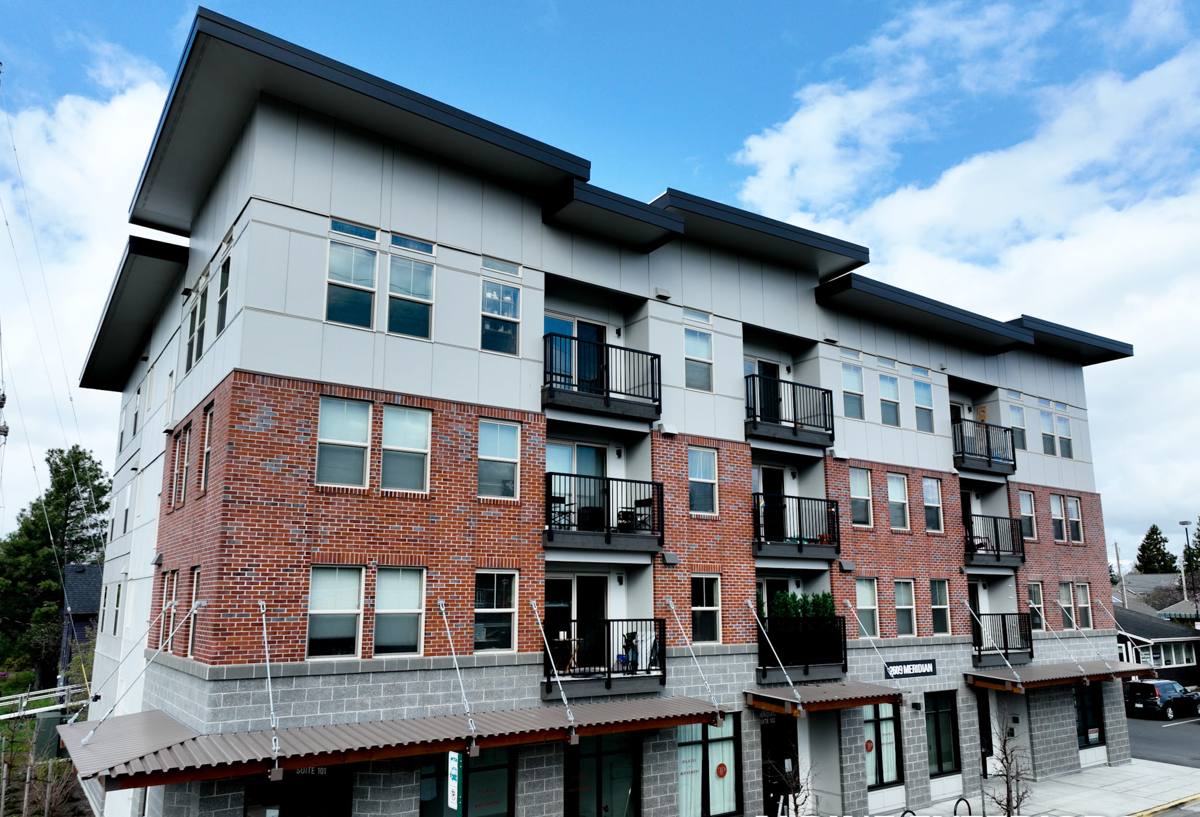
What Salt Air, Rain, and Moss Actually Do to a Window
Salt Air
Airborne salt is corrosive to unprotected metal — window balances, hinges, screen frames, and cheaper cladding fasteners are all vulnerable over time. It doesn't destroy a window overnight, but it accelerates wear on anything metal that isn't rated for coastal-adjacent exposure. Homes in Custer see more of this than homes further inland around Lynden proper.
Driving Rain
Wind-driven rain doesn't just run down a wall — it gets pushed up and under trim, into gaps around a window unit, and behind flashing that wasn't lapped correctly. This is almost always an installation issue, not a window issue. A premium window installed with poor flashing will leak. A mid-range window installed correctly with proper flashing and sealant sequencing usually won't.
Moss and Sustained Moisture
Whatcom County's moss season isn't a cosmetic issue confined to roofs. Moss and algae growth on shaded siding and window trim holds moisture against wood and composite surfaces far longer than open, sun-exposed areas dry out. Sills and bottom rails that stay damp for weeks are where rot starts, and rot at a window opening is expensive to fix because it usually means opening up the wall, not just replacing glass.
Signs a Custer Home Needs Window Installation, Not Just Repair
Homeowners often call about a symptom — a draft, a foggy pane, a sticky sash — when the real issue is that the whole unit or its installation has failed. Here's what tends to point toward full replacement rather than a patch:
- Soft or spongy wood at the sill or bottom corners of the frame
- Persistent fogging or a visible haze between double-pane glass (seal failure)
- Water staining on interior drywall or trim below or beside a window after heavy rain
- Visible moss, algae, or dark streaking on exterior trim that keeps coming back after cleaning
- Windows that are difficult to open, close, or lock — often a sign the frame has shifted or swollen
- Noticeable drafts even with the window fully latched
- Peeling paint or bubbling finish on interior window frames, which usually means moisture is already inside the wall assembly
If you're seeing more than one of these, it's worth having someone look at the whole opening, not just the glass.
What a Correct Window Installation Actually Involves
The window unit itself is maybe a third of what determines whether a job holds up in Custer's weather. The rest comes down to sequencing and materials most homeowners never see once trim goes back on.
- Removal without damage. Old units come out carefully so we can inspect the framing and sheathing underneath before anything new goes in.
- Rot and framing assessment. Any soft wood, compromised sheathing, or signs of past water intrusion get addressed before the new window goes in — not covered over.
- Flashing, correctly lapped. Water-resistive barrier and flashing tape get installed in the correct shingle-lap order (sides, then bottom, then top) so water is always directed outward and down, never trapped behind the window.
- Sill pan installation. A sloped sill pan gives any water that does get past the glazing a path back outside instead of pooling at the bottom of the frame — the single most common failure point we see on older installations in this area.
- Correct fastening and shimming. The unit is shimmed square and plumb and fastened per the manufacturer's schedule, so the frame doesn't rack over time and compromise the seal.
- Insulation and air sealing. Gaps between the window frame and rough opening are filled with a low-expansion foam or backer rod and sealant rated for that use — not just packed with fiberglass, which does nothing to stop air or moisture movement.
- Exterior sealant and trim. A quality, paintable exterior sealant is applied at the final joints, and trim is reinstalled or replaced as needed.
Skip or rush any one of these steps and the window itself becomes irrelevant — water will find the gap.
Choosing a Window Frame Material for a Custer Home
There's no single "best" window material — the right choice depends on how exposed a given wall or elevation is to salt air and driving rain, and how much upkeep you want to do.
| Frame Material | Salt Air / Moisture Behavior | Maintenance | Typical Lifespan |
|---|---|---|---|
| Vinyl | Doesn't corrode; hardware components can still be affected by salt air over time | Low — occasional cleaning | 20–30 years |
| Fiberglass | Very stable dimensionally, handles wet-dry cycling well, resists corrosion | Low | 30+ years |
| Aluminum-clad wood | Good exterior weather resistance, but any breach in the cladding exposes wood beneath to rot | Moderate — cladding seams need periodic inspection | 20–30 years, dependent on cladding integrity |
| Bare wood | Attractive but the most vulnerable to Custer's damp, shaded, moss-prone conditions without diligent upkeep | High — regular repainting/sealing required | Highly dependent on maintenance |
For most Custer homes, especially on north- or west-facing walls that stay damp longer, we steer people toward vinyl or fiberglass for the maintenance savings alone. We're not opposed to wood-frame or clad-wood windows on the right project — they just come with a maintenance commitment that we want a homeowner to go in understanding, rather than discovering after a few wet winters.
Glass and Coating Choices Worth Knowing About
Frame material gets most of the attention, but the glass package affects comfort and condensation just as much:
- Double-pane vs. triple-pane: Double-pane with a good low-E coating is the standard fit for most Custer homes. Triple-pane adds cost and weight and makes the most sense on north-facing exposures or rooms with persistent drafts.
- Low-E coatings: Reduce heat loss in winter and heat gain in summer, and help reduce interior condensation on cold, damp mornings — a real issue during a wet Whatcom County winter.
- Argon or krypton gas fill: A modest but real upgrade to insulating performance between panes; worth it on most replacement jobs given the marginal cost difference.
- Warm-edge spacers: Reduce the cold line right at the glass edge, which is where condensation and eventual seal failure most often start.
Our Installation Process for Custer Projects
Because Custer is part of our regular route, we don't treat these jobs as a special trip — the process is consistent and thorough every time:
- On-site assessment of existing windows, framing condition, and any moisture or moss issues specific to the home's orientation and exposure
- Honest recommendation on frame material and glass package based on that specific wall's exposure, not a one-size-fits-all pitch
- Written estimate with a clear scope — what's included, what happens if we find rot once the old units are out
- Scheduled installation with careful removal, framing repair as needed, and full flashing and sealing per the sequence above
- Final walkthrough so you can see and understand what was done, inside and out
What Drives the Cost of a Window Installation
| Cost Factor | Why It Matters |
|---|---|
| Number and size of openings | More or larger windows mean more material and labor |
| Frame material | Fiberglass typically costs more up front than vinyl; wood-clad more still |
| Glass package | Triple-pane, upgraded low-E, or gas fill add cost over standard double-pane |
| Condition behind the old window | Rot or damaged sheathing found during removal adds repair scope |
| Access and trim work | Second-story openings, unusual shapes, or extensive trim replacement add labor time |
We'd rather walk a homeowner through these factors up front than hand over a number with no context. If our assessment turns up rot or framing damage once we open a wall up, we'll show it to you and talk through it before doing the repair — no surprise invoices.
Why a Local Lynden Crew Matters for a Custer Job
A window installer who mostly works subdivisions an hour away doesn't have a feel for how a Custer lot facing the prevailing wind behaves differently than a sheltered lot a half-mile inland. We do, because we're out here regularly. That translates into practical decisions — where we pay extra attention to flashing, which orientations we flag for upgraded sealant, and what maintenance schedule we actually recommend rather than a generic one pulled from a manufacturer's brochure.
Being local also means we're not disappearing after the invoice clears. If a question comes up in the first rainy season after installation, we're a short drive away, not a call center.
Maintaining Your Windows Through Moss Season
Even a correctly installed window benefits from a little seasonal attention in this climate:
- Clear moss and debris from sills and trim before it holds moisture against the surface
- Check exterior caulk lines annually for cracking or separation, especially after a hard winter
- Keep gutters and downspouts clear so water isn't sheeting down across window openings
- Operate hardware (locks, cranks, balances) a few times through the off-season so components don't seize
- Wipe down interior sills if you notice condensation on cold mornings, and improve ventilation if it's a recurring pattern
Get a Free, No-Pressure Estimate
If you're dealing with drafts, fogged glass, soft sills, or you just want an honest read on whether your current windows are holding up to Custer's salt air and rain, we're happy to take a look. The estimate is free, there's no pressure to move forward, and you'll get a straight answer about what your home actually needs — use the form below to get started.