 Lynden Window
 Building a Deck That Actually Holds Up in Bellingham
Bellingham sits close enough to the water that salt air is part of daily life, and the weather pattern that comes with it does not do decks any favors. Long stretches of driving rain, heavy shade from mature trees, and a moss season that can run from fall well into spring all put steady stress on any outdoor structure. A deck built the way you'd build one in a drier inland climate will show problems here faster than most homeowners expect: soft spots at the ledger board, corroded fasteners, slick moss patches, and boards that cup or crown within a few seasons.
Deck building for Bellingham homes isn't a different trade — it's the same framing and decking work done with different priorities. The details that matter most are the ones that deal with moisture and the ones that deal with salt in the air. Get those right and the rest follows.
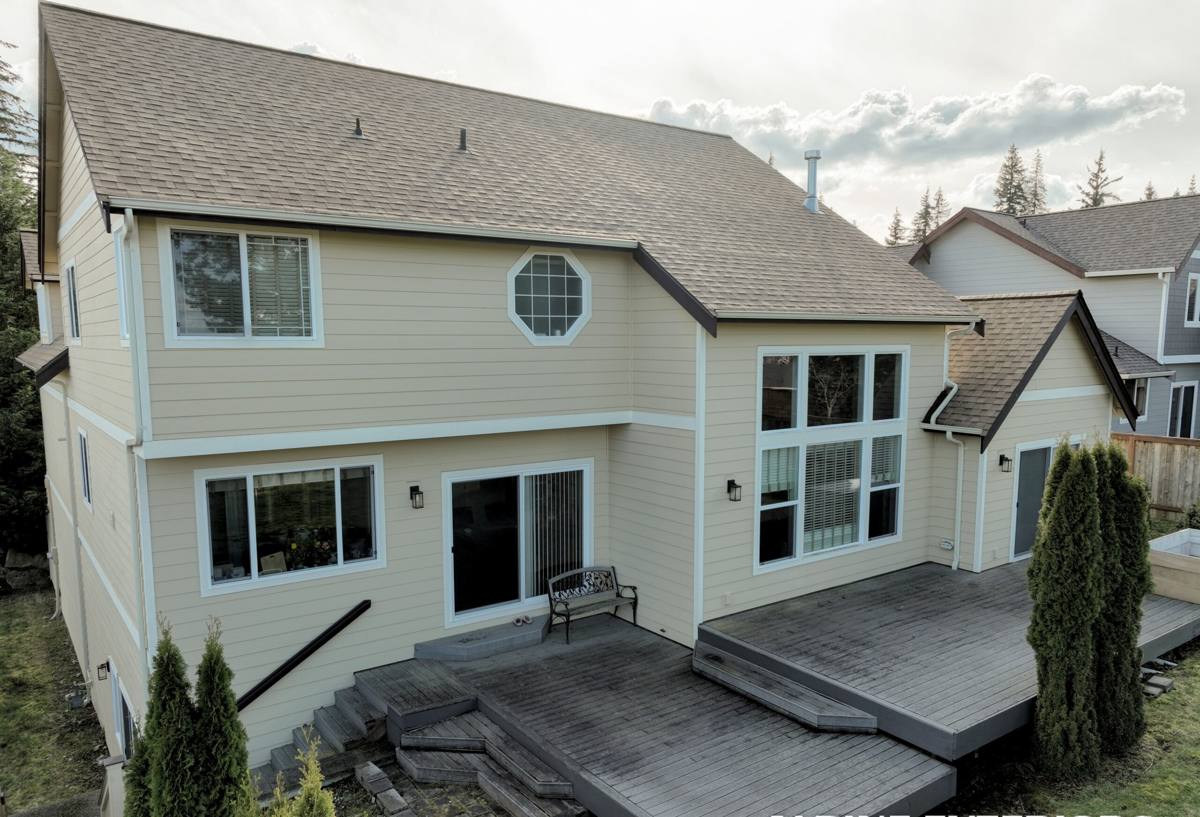
What Bellingham's Climate Actually Does to a Deck
Salt Air and Metal Fasteners
Homes closer to Bellingham Bay deal with a low but steady level of airborne salt. It doesn't take a direct ocean view for this to matter — moist, salt-tinged air travels and settles on any exposed metal. Standard fasteners and connectors that aren't rated for coastal exposure will corrode faster than the wood around them, which is a problem because the fastener is usually what's holding the structure together. Corroded hardware is one of the more common hidden issues we find on older Bellingham decks during inspections.
Driving Rain and Trapped Moisture
Rain that comes in sideways off Bellingham Bay finds its way into gaps and seams that vertical rain would never reach. Ledger boards, stair stringers, and the underside of decking are the usual failure points. Once water gets behind flashing or under a board and can't dry out, rot sets in — and it's almost always worse than it looks from the surface.
Moss Season
Shaded decks, north-facing decks, and decks under tree cover in and around Bellingham can stay damp for months at a time. That's exactly what moss needs to take hold. Beyond the look of it, moss holds moisture against the decking surface and creates a genuinely slippery walking surface — a real safety issue on stairs and ramps, not just a maintenance annoyance.
What a Correctly Built Deck Requires Here
A deck that's going to hold up through Whatcom County winters needs a few things built in from the start, not added later:
- Corrosion-resistant fasteners and connectors rated for coastal or wet-climate exposure, not general-purpose hardware
- Ledger board flashing that actually sheds water away from the house rim joist instead of channeling it behind the siding
- Joist tape over framing to keep standing water off the top of every joist
- Proper board spacing and airflow underneath the deck so wood surfaces can actually dry between rain events
- Footings sized and set for local soil conditions, since Whatcom County's clay-heavy and often saturated soils behave differently than well-drained inland ground
- Stair and railing hardware that gets the same corrosion protection as the frame, since these see the most handling and the most weather
None of this is exotic. It's standard deck-building practice applied consistently, instead of skipped where it's inconvenient.
Choosing a Decking Material That Fits This Climate
There's no single "best" decking material for every home — it depends on how much upkeep you want to do, how shaded the deck is, and your budget. Here's how the common options actually perform under Bellingham's rain and moss conditions:
| Material | Moss & Moisture Behavior | Maintenance | Typical Lifespan |
|---|---|---|---|
| Pressure-treated wood | Needs airflow and regular cleaning to resist moss buildup in shaded spots | Annual cleaning, periodic staining/sealing | 10-15 years with upkeep |
| Cedar | Naturally moisture-resistant but still hosts moss in deep shade without maintenance | Regular cleaning and sealing | 15-20 years with upkeep |
| Composite decking | Sheds water well; moss can still grow on the surface film in constant shade and needs washing | Occasional washing, no staining/sealing | 25-30 years |
| PVC decking | Fully moisture-resistant board, least hospitable surface for moss | Occasional washing | 25-30+ years |
We'll walk through these trade-offs honestly during your estimate. Composite and PVC cost more up front but cut the maintenance load substantially, which matters on a deck that sits in shade most of the year. Wood costs less initially but only performs well if it's cleaned and resealed on schedule — skip that upkeep in this climate and moss and graying show up fast.
Framing and Substructure: Where Most Deck Failures Actually Start
Most deck problems homeowners notice on the surface — bounce, soft boards, a railing that feels loose — trace back to the framing underneath, not the decking itself. The ledger connection to the house, the beam and post layout, and the joist spacing all need to be sized for the actual loads and spans involved, not just built to whatever lumber was on hand. We check the ledger flashing and the house's water management at that connection point closely, since that's the single most common spot for hidden rot on older decks in wetter climates like ours.
Our Process for Bellingham Deck Projects
1. On-Site Assessment
We look at sun exposure, drainage patterns around the foundation, existing structure if it's a rebuild, and how the deck will actually be used before recommending a design or material.
2. Design and Material Selection
We talk through decking material, railing style, and layout with the climate trade-offs laid out plainly — no upselling toward the most expensive option if it's not the right fit for how shaded or exposed the site is.
3. Permitting
Deck permitting requirements depend on your jurisdiction and the deck's size and height. We handle the permit process as part of the job rather than leaving it to the homeowner to sort out.
4. Framing and Waterproofing
Ledger flashing, joist tape, corrosion-resistant hardware, and proper footings go in at this stage — these are the parts that are invisible once the decking is down, so they need to be right the first time.
5. Decking, Railing, and Finish Work
Final surface installed to manufacturer spacing specs for the material chosen, with attention to drainage and airflow underneath.
6. Final Walkthrough
We go over the finished deck with you, including what maintenance (if any) the material needs and what to watch for as the seasons change.
Permits and Local Code Considerations
Whether your deck needs a permit typically depends on its height above grade, its size, and whether it's attached to the house. Bellingham and the surrounding Whatcom County jurisdictions each have their own permitting process and inspection points, and requirements can differ from a project just outside city limits. We handle this as a normal part of the job — pulling the right permit for your specific location, scheduling inspections, and building to the code that actually applies to your address rather than a generic standard.
Deck Moss and Moisture Maintenance Checklist
- Sweep leaves and debris off the deck surface regularly, especially in fall
- Rinse or wash the surface periodically in shaded areas to keep moss from establishing
- Check that gaps between boards are clear and not packed with organic debris
- Look under the deck occasionally for standing water or blocked airflow
- Inspect visible fasteners and connectors yearly for rust or corrosion
- Reseal or restain wood decking on the schedule recommended for the product you chose
- Address any soft or spongy boards right away rather than waiting for them to fail
Why Hiring a Crew That Already Works in Bellingham Matters
A deck built to a generic national standard can still fail here because Bellingham's combination of salt-tinged air, sideways rain, and long shaded moss seasons isn't the norm most framing crews plan around. A crew that already works this area knows which hardware actually holds up near the bay, which framing details keep moisture out of a ledger connection, and which local permitting offices need what. That knowledge doesn't show up in a generic estimate — it shows up years later, in whether the deck is still solid or already showing rot and corrosion.
We build decks the same way throughout Whatcom County, adjusting details for each site's exposure, shade, and drainage rather than treating every project as identical.
Ready to Talk Through Your Deck Project?
If you're planning a new deck or need to replace one that's showing its age, we're happy to take a look and talk through what makes sense for your home's exposure and budget. Use the form below to request a free, no-pressure estimate — there's no obligation, and we'll give you an honest read on what your deck actually needs.