 Lynden Window
 Roofs Around Wiser Lake Work Harder Than Most
Wiser Lake sits in a pocket of Whatcom County where the weather does a little bit of everything to a roof, often in the same week. Moisture-laden marine air moves in off the Strait of Georgia and Puget Sound and settles over the lowland areas around Lynden, carrying a fine film of salt and organic moisture that clings to roofing surfaces longer than it would further inland. Add driving rain that comes in sideways during fall and winter storms, tree cover close to the water that keeps roofs shaded and damp, and a moss season that can run eight months or longer, and you have a roof environment that punishes shortcuts.
None of this means a Wiser Lake roof needs to be replaced every few years. It means repairs have to be done correctly the first time, with materials and techniques suited to how wet this area actually stays. A patch that would hold up fine in a drier climate can fail here in a single winter if it's not detailed properly.
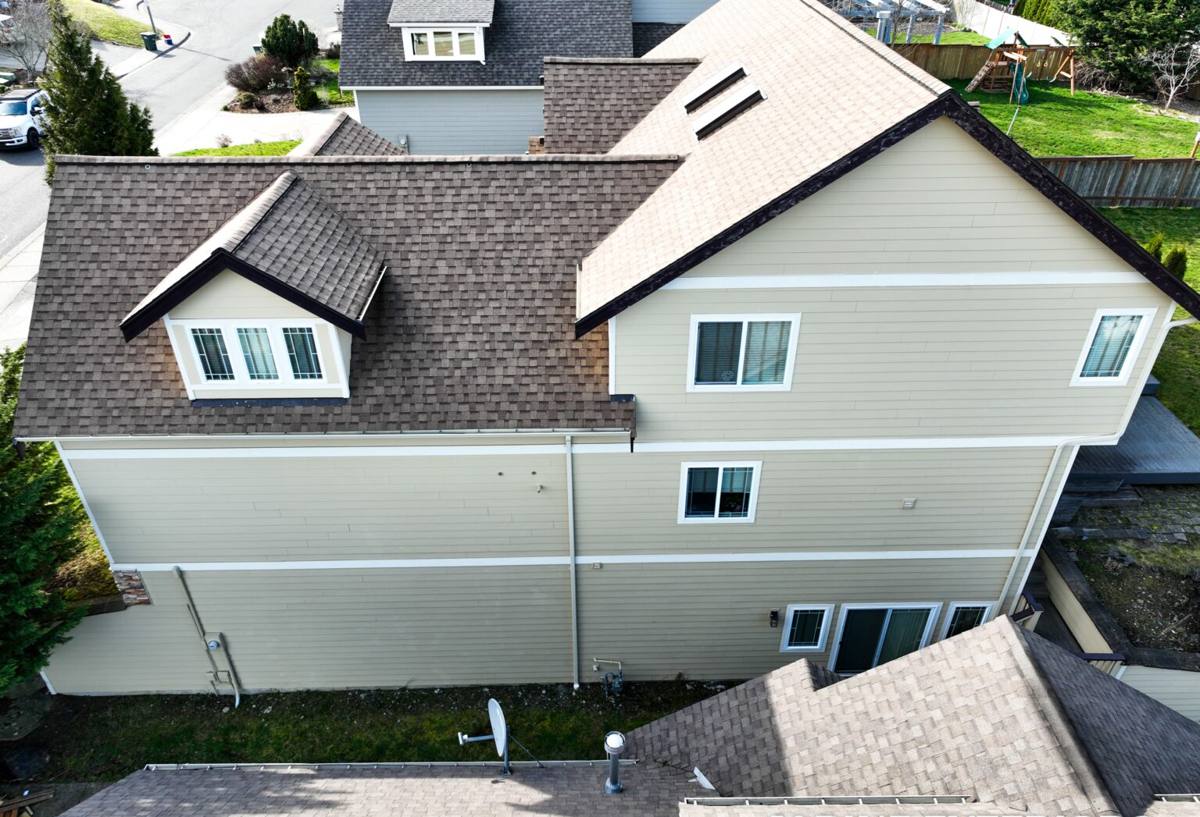
Signs a Wiser Lake Roof Needs Repair — Not Necessarily Replacement
Most roofs don't fail all at once. They show warning signs first, and catching those signs early is usually the difference between a repair bill and a replacement bill.
- Dark streaking or a green-black cast on north-facing slopes — early moss and algae growth, common on shaded roofs near the lake
- Granule buildup in gutters or at downspout outlets, which means shingles are wearing faster than they should
- Soft or spongy spots when walked, usually a sign of trapped moisture in the decking below
- Curling, cracking, or lifted shingle edges, especially on slopes that catch the prevailing wind and rain
- Water stains on interior ceilings or in the attic, particularly near chimneys, skylights, or valleys
- Rust streaks or gaps at flashing points around chimneys, vents, and wall intersections
- Visible daylight through the roof deck when viewed from inside the attic
Any one of these on its own is often a straightforward repair. Several showing up together, especially combined with soft decking, is when we start talking honestly about whether a repair will actually hold or whether it's throwing money at a roof that needs to be replaced within a couple years anyway. We'll tell you which situation you're in — that's part of the job, not an upsell.
What a Correct Roof Repair Actually Involves
Finding the Real Source, Not Just the Visible Damage
Water rarely shows up where it enters. A stain on a bedroom ceiling can trace back to a flashing gap ten feet away, or to a valley that's been slowly failing under moss buildup. A repair that only patches the spot you can see from the ground, without tracing the actual path water is taking, tends to come back — often worse, because now there's hidden rot to deal with too.
Matching Materials, Not Just Covering the Hole
Shingles fade and wear at different rates depending on sun exposure, so a patch using new material next to old often stands out and, more importantly, doesn't always seal the same way against the surrounding courses. A correct repair blends into the existing roof's layout and uses compatible materials so the patched section sheds water the same way the rest of the roof does.
Flashing, Valleys, and Penetrations Get the Most Attention
The overwhelming majority of roof leaks we find around Wiser Lake trace back to flashing — around chimneys, skylights, vent pipes, and wall-to-roof transitions — or to valleys where two roof planes meet and water concentrates. Field shingles rarely leak on their own; the connections between roof elements are where water finds a way in, and that's where careful repair work matters most.
Moss, Algae, and the Long Wet Season
Whatcom County's combination of shade, moisture, and mild temperatures is close to ideal growing conditions for moss and algae, and roofs near Wiser Lake with nearby tree cover see it worse than most. Moss isn't just cosmetic. As it grows, it lifts shingle edges, holds water against the roofing surface long after a storm has passed, and works its root structure into seams and granule layers. Left long enough, it accelerates the exact kind of granule loss and shingle deterioration that leads to leaks.
Proper moss treatment during a repair visit includes gentle removal — not aggressive pressure washing, which can strip granules and do more damage than the moss itself — along with treatment to slow regrowth and a look at whether nearby branches are keeping a section of roof shaded and damp enough to invite it back quickly. We'll flag this even when it's not the reason you called, because it's usually cheaper to manage moss on a schedule than to keep repairing the damage it causes.
Common Roofing Materials on Wiser Lake Homes
What a repair involves depends heavily on what's already on the roof. Here's how the common options behave in this climate and what that means for repair work.
| Material | How It Handles Wiser Lake's Climate | Repair Considerations |
|---|---|---|
| Asphalt composition shingle | Most common choice locally; performs well when granule coverage is intact and ventilation is adequate | Easiest to patch and color-match if the roof isn't too far into its service life; older shingles can be brittle in cold, wet conditions |
| Cedar shake or shingle | Traditional look but needs consistent airflow underneath to dry out between rain events; more moss-prone | Requires careful sourcing of matching stock and attention to spacing so replaced shakes can dry properly, not just fit visually |
| Metal roofing (standing seam or panel) | Sheds moss and moisture well due to smooth, non-porous surface; long service life in wet climates | Repairs are less about patching and more about resealing fastener points, seams, and penetrations — needs a crew familiar with the system |
| Older or transitional roofing (mixed materials, multiple layers) | Common on older lake-area homes that have been repaired over decades | Often the hardest to diagnose — leaks can travel between layers before showing up, so tracing the source takes more care |
Our Process for Wiser Lake Roof Repair Calls
- Inspection first. We walk the roof and the attic when access allows, checking flashing, valleys, penetrations, and the general condition of the roofing material — not just the spot you flagged.
- Honest diagnosis. We explain what's actually causing the problem, in plain terms, and whether it's isolated or part of a broader wear pattern.
- Written scope and estimate. You'll know what's being done, what materials are being used, and roughly what it costs before any work starts.
- Repair work. Matched materials, proper flashing detail, and moss or debris cleared from the work area — done to hold up through a full wet season, not just patched over.
- Walkthrough. We show you what was done and what to watch for going forward, including any maintenance that would extend the life of the rest of the roof.
Cost Factors in Roof Repair
Every roof repair is different, so we're not going to put a number here that doesn't mean anything for your specific situation. What we can do is walk through what actually drives the cost up or down.
| Factor | Why It Matters |
|---|---|
| Extent of decking damage | Surface-level shingle repair costs far less than a repair that requires replacing rotted plywood or sheathing underneath |
| Roof pitch and access | Steep roofs or ones with limited access near trees or water take longer and require more safety setup |
| Material match availability | Discontinued shingle colors or aged cedar can require sourcing time or a broader patch area to blend properly |
| Number and condition of penetrations | Each chimney, vent, or skylight is a separate flashing detail that may need attention |
| Moss and organic buildup | Heavier growth adds cleanup time and may reveal additional wear once cleared |
We'll always give you a written estimate before starting, and we'll tell you plainly if a repair isn't the right long-term call for your roof.
Why It Matters to Hire a Crew That Already Works Wiser Lake
Roof repair is one of those jobs where local experience shows up in details that are easy to miss otherwise. A crew that regularly works the Wiser Lake area already knows which roof styles and ages are common out here, how quickly moss comes back given the tree cover and moisture, and what flashing details tend to fail first in homes exposed to this area's wind-driven rain. That familiarity means less time spent diagnosing and more time spent fixing the right thing.
It also matters for response time. Roof leaks rarely wait for convenient scheduling, and having a contractor based in and around Lynden — not driving in from out of county — means a faster look when water is actively getting into your home.
A Simple Checklist Before You Call for a Repair
If you're not sure whether what you're seeing is worth a service call, this covers the basics worth checking first.
- Check the attic (if accessible) for staining, damp insulation, or daylight through the decking
- Look at gutters and downspout outlets for granule buildup after a rain
- Note which slopes show moss or dark streaking, and whether nearby trees keep that section shaded
- Check around chimneys, vent pipes, and skylights from the ground for obvious flashing gaps or rust
- Write down when the problem started and whether it worsens during specific weather (heavy rain, wind direction, after a storm)
- Avoid walking the roof yourself if it's wet, mossy, or steep — that's exactly the condition that causes falls
If you're seeing any of these signs on a home near Wiser Lake, we're happy to take a look and give you a straight answer — no pressure, no inflated scope. Use the form below to request a free estimate, and we'll get back to you to schedule a time to inspect the roof and talk through what it actually needs.