 Lynden Window
 Why Decks Near Wiser Lake Take Extra Punishment
Wiser Lake sits in a pocket of Whatcom County that gets more shade, more standing moisture, and more moss pressure than a typical open lot. Homes ringed by cedar and fir canopy along the water get less direct sun to dry a deck surface after a storm, and that lack of dry-out time is the single biggest reason decks here fail earlier than decks in more exposed parts of Lynden. Add in the marine climate that defines this whole region — salt-tinged air riding inland off Bellingham Bay on the prevailing westerlies, mixed with the near-constant drizzle Whatcom County is known for — and you get a wood-moisture cycle that never really lets a deck rest.
The pattern shows up the same way on almost every older deck we look at around the lake: moss and algae building up in the board grain, fasteners weeping rust stains, and joints that stay damp for days after everyone else's yard has dried out. None of that is a sign of bad luck or a bad build. It's what this specific climate does to a wood structure that sits outside, uncovered, year after year. The fix isn't complicated, but it does need to account for where the deck actually sits — not just what a generic repair checklist says.
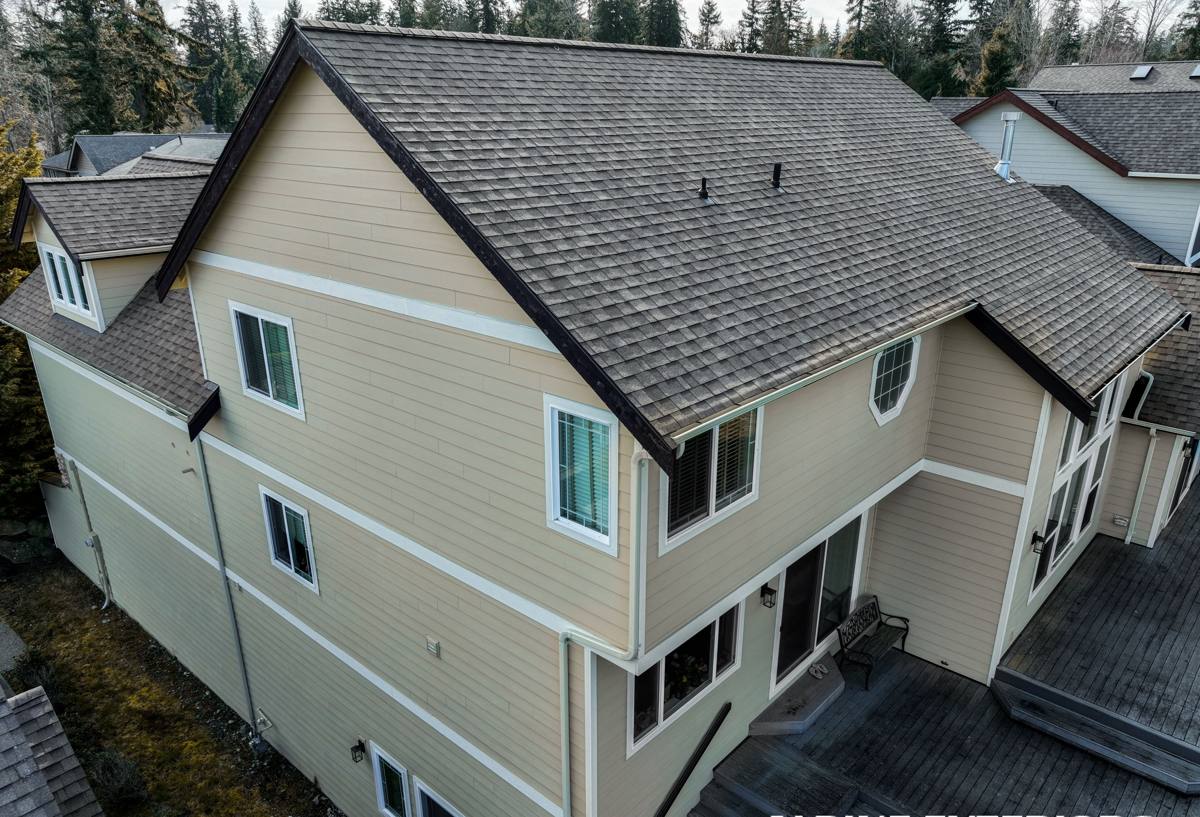
Signs Your Deck Needs Repair, Not Replacement
Most decks don't fail all at once. They send warning signs for a season or two before something actually breaks. Around Wiser Lake, we typically catch these early enough that a repair — not a full rebuild — solves the problem.
- Boards that feel spongy or flex underfoot, especially near the house or over shaded ground
- Persistent green or black staining that scrubbing doesn't remove for long
- Railings or guardrail posts that wiggle when you push on them
- Fastener heads rusted, popped up, or leaving black streaks down the board
- Gaps opening between deck boards, or boards cupping and lifting at the edges
- Visible daylight or soft wood where the ledger board meets the house
- Stair stringers that feel less solid than they used to, or steps that have started to bounce
Any one of these on its own is usually a repair. Several at once, especially if the framing underneath is affected, is when we start talking about partial or full replacement instead.
What a Correct Deck Repair Actually Involves
A repair that actually holds up isn't just swapping out the boards that look bad on top. The wood you can see is the last thing to fail — by the time surface boards are visibly rotten, the framing underneath has usually been wet longer than you'd think.
Structural Framing and the Ledger Board
The ledger — the board that bolts the deck to the house — is the most important structural connection on the whole deck, and it's also the one most exposed to trapped moisture, since it sits tight against the siding with limited airflow. We check it for rot, confirm the flashing behind it is actually shedding water and not funneling it into the wall, and replace or sister any joists that have gone soft. This is the step that gets skipped on a quick cosmetic repair, and it's the step that determines whether the deck is actually safe.
Decking Boards and Fasteners
Individual boards get replaced when they're cracked, cupped, or soft — not automatically resurfaced across the board just because a few are bad. We match spacing and fastening to the surrounding boards so the repair doesn't stand out as a patch, and we use fasteners rated for the wood and the exposure, not whatever's cheapest at the hardware store.
Railings and Guardrails
Loose railings are a safety issue before they're a cosmetic one. We re-anchor posts into solid framing (not just into a board that happens to be there), tighten or replace hardware, and confirm the whole rail system meets a basic push test before we call it done.
Footings and Posts
On lake-adjacent lots with softer, wetter soil, post bases are worth a real look — not just a glance. Concrete footings that have shifted, posts that have wicked up moisture from ground contact, or hardware that's corroded all get addressed at this stage, since this is the part of the deck you don't get a second easy chance to fix once the decking is back down.
Repair or Replace? Weighing the Cost Factors
Every deck is different, but the factors that push a project one direction or the other are consistent. This is the kind of honest read we give on-site before any work starts.
| Factor | Leans Toward Repair | Leans Toward Full Replacement |
|---|---|---|
| Framing condition | Joists and ledger are solid, dry to the touch | Widespread soft or spongy framing |
| Age of structure | Under 15-20 years, built to a reasonable standard | Older deck, undersized or outdated framing |
| Extent of damage | Isolated boards, rails, or fasteners | Damage spread across most of the surface |
| Ledger and flashing | Flashing intact, connection sound | Water has been getting behind the siding |
| Design fit | Layout and size still work for the home | Family's needs have outgrown the current deck |
| Budget goal | Extend the deck's life at lower up-front cost | Want a long-term reset, not a patch |
As a rough guide, a targeted repair usually runs a fraction of a full rebuild's cost, but that only holds true if the framing is genuinely sound. We'll tell you plainly if we think a repair is going to be a short-term fix on a deck that's structurally past its useful life — that's not a call we make lightly, and we'd rather lose a repair job than sell someone a patch that fails in two years.
Material Choices That Hold Up Around Wiser Lake
Given the shade and moisture around the lake, material choice matters more here than it would on a sun-baked, open lot in a drier part of Whatcom County.
Wood: Cedar and Pressure-Treated Fir
Both remain solid choices for repairs, especially when matching an existing wood deck. Cedar handles moisture naturally better than most softwoods but still needs periodic sealing in a climate this wet. Pressure-treated framing lumber is the standard for structural members that stay hidden, since it's built for ground and moisture contact.
Composite Decking for Repair Sections
Composite boards can be a reasonable option when replacing a full section of decking, since they resist moss staining and don't need refinishing. The trade-off is that composite doesn't always blend cleanly into an existing wood deck, it costs more up front, and it still needs periodic cleaning — moss and algae will grow on composite too if it sits in shade without airflow. We'll walk through the real trade-offs for your specific deck rather than push one material as a default.
Fasteners and Hardware
This is a small detail that makes a big difference over time. Standard fasteners corrode fast against treated lumber and in a damp, shaded environment. We use fasteners and structural hardware rated for treated wood contact and outdoor exposure, because the alternative is a repair that starts rusting and staining within a season or two.
How We Approach a Deck Repair
Inspection
We start underneath, not on top — checking joists, the ledger connection, post bases, and footings before we ever look at the surface boards. That's where the real condition of the deck shows up.
A Written, Specific Scope
You get a clear, itemized plan: what's being repaired, what's being replaced, and what we're leaving alone because it doesn't need touching. No vague "as needed" language.
The Repair Itself
Framing and structural issues get addressed first, then decking, then railings and hardware. We work board-by-board where a full tear-off isn't warranted, matching fastener pattern and spacing so the repair reads as part of the deck, not a patch bolted onto it.
Moss and Drainage Prep
Before we close anything up, we address what's letting moisture sit in the first place — gaps for airflow under low decks, clearing debris that traps water between boards, and making sure water actually sheds off the surface instead of pooling.
Why a Crew That Already Works Wiser Lake Matters
A deck built for a dry, open lot in eastern Washington and a deck built for a shaded, damp lot on Wiser Lake shouldn't be repaired the same way, even if the visible damage looks similar. Crews who work this specific area regularly know which lots hold moisture longest, which framing details tend to fail first under this tree cover, and how much drying time to actually plan around when the forecast in this part of Whatcom County rarely cooperates.
There's also a practical scheduling advantage. Local knowledge means fewer surprises mid-job — knowing that a lake-adjacent lot's soil stays soft longer after rain, or that a north-facing deck under mature trees needs an extra day before boards are dry enough to fasten properly. That's the kind of judgment that only comes from doing this work in this specific area, not from a general repair playbook.
Keeping a Repaired Deck Healthy Year-Round
A good repair buys you years, but a bit of seasonal upkeep buys you more. Here's what actually matters for a deck in this climate, separate from the repair itself:
- Sweep debris out of board gaps regularly, especially in fall when leaves and needles pile up
- Clean moss and algae off the surface before it stains or gets slick underfoot
- Re-seal or refinish wood decking on a regular cycle — shaded decks need it more often than sunny ones
- Check railings and stair connections once a year for anything that's come loose
- Keep nearby plantings trimmed back so air can actually move across the deck surface
None of this is complicated, but skipping it is exactly how a sound repair turns into a repeat repair a few years down the road.
If your deck near Wiser Lake has soft spots, moss buildup, loose rails, or you're just not sure whether it needs a repair or something more, we're happy to take a look and give you an honest read — no pressure, no upsell. Fill out the form below for a free estimate.