 Lynden Window
 Deck Replacement for Acme's Foothill Climate
Acme sits inland from the open water that shapes weather for towns like Blaine or Birch Bay, tucked into the forested foothill country of eastern Whatcom County along the South Fork Nooksack drainage. That distance from the coast doesn't mean the county's marine-influenced weather skips this part of the map — moist air still moves up the valley, rain still arrives wind-driven more often than straight down, and the tree cover that gives Acme properties their privacy and shade also holds moisture against a deck longer than an open, sun-exposed lot would. A deck out here deals with a different mix of the same underlying problem: sustained dampness, salt-tinged air carried further inland than most homeowners assume, and a moss season that can run most of the year on a shaded surface.
When a deck reaches the point where boards are soft, fasteners are failing, or the substructure itself is in question, repair stops being the honest answer and replacement becomes the real conversation. This page covers what a deck replacement in Acme actually needs to hold up long-term, what a correct job involves, and how our process works for a replacement project in this specific part of Whatcom County.
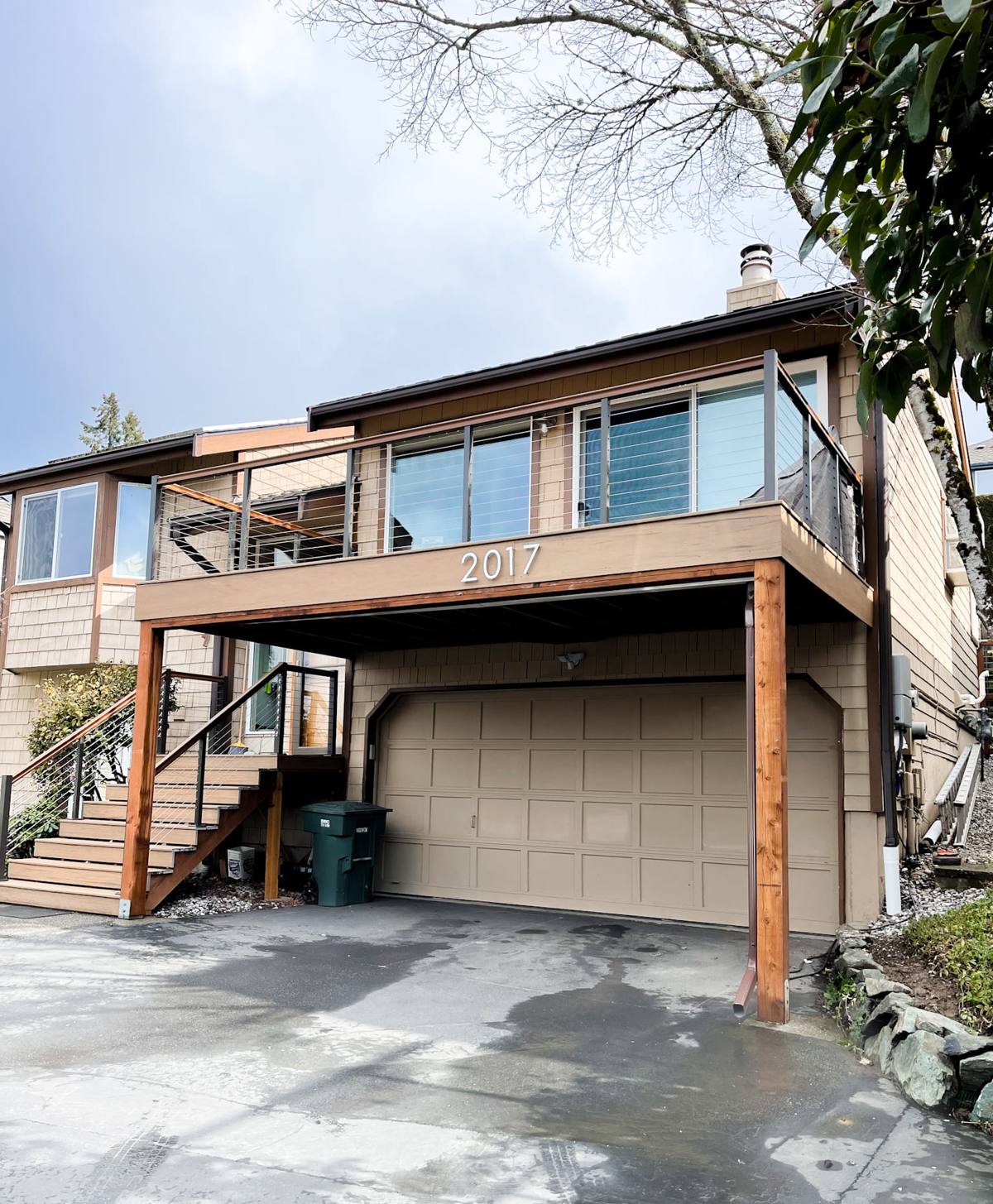
What Wears Down a Deck in This Part of the County
Salt Air That Reaches Further Inland Than Expected
Acme isn't waterfront, but it still sits inside the same marine-influenced air system that carries salt-tinged moisture up the valleys of Whatcom County. That exposure is lighter here than it is on a bluff overlooking open water, but it's steady, and over years it still accelerates corrosion in exposed fasteners, brackets, and hardware on an aging deck — often faster than homeowners expect from a property with no water view at all.
Driving Rain and Standing Moisture
Storm systems moving through this part of the county bring rain that's frequently pushed sideways by wind rather than falling straight down, and it finds its way into ledger connections, under railings, and between boards that weren't gapped correctly to begin with. On a wooded lot, less direct sun and airflow means that moisture also takes longer to dry out between storms than it would on an open, exposed deck.
Heavy Tree Cover and an Extended Moss Season
The same forest canopy that makes Acme properties feel private and shaded is exactly what extends moss season on a deck surface. Shaded, damp wood or composite gives moss and mildew a longer growing window here than it gets on a sun-exposed deck closer to open water, and horizontal surfaces like decking are usually the first place it takes hold because they hold standing moisture longer than a vertical wall.
Signs Your Acme Deck Needs Replacing, Not Repairing
Not every aging deck needs full replacement — but certain conditions are a reliable signal that patch repairs are just delaying an inevitable, more expensive job. Worth checking for before deciding which direction to go:
- Soft, spongy, or spring-feeling boards anywhere on the deck surface, especially near the house or in shaded areas
- Visible rot, splitting, or dark staining at the ledger board where the deck attaches to the house
- Wobbly, loose, or corroded railing posts and connectors
- Support posts or joists that show soft spots, cracking, or insect damage when checked from underneath
- Fasteners with heavy rust staining bleeding into the surrounding wood or decking
- A deck more than 15-20 years old that has never had its substructure inspected
- Persistent moss or algae growth that returns within weeks of cleaning, even after treatment
Any one of these on its own might point to a targeted repair. Several together, especially anything involving the ledger board or support posts, usually means the structure itself has reached the end of its useful life.
Repair vs. Replacement: Making the Honest Call
A deck repair makes sense when the problem is isolated — a handful of surface boards, a single loose railing section, or hardware that's corroding faster than the rest of the structure. Replacing those pieces on an otherwise sound frame is the more cost-effective choice, and we'll tell you when that's the case rather than pushing a full rebuild you don't need.
Replacement is the honest answer once the substructure itself is compromised — soft or rotted joists, a ledger connection that's been leaking into the house framing, or posts and footings that were undersized or poorly set to begin with. Patching decking boards on top of a failing frame just hides the real problem under a new surface for a season or two before it resurfaces, often as a bigger repair than if the whole structure had been replaced up front.
Choosing Decking Material for This Climate
Material choice matters more here than it would in a drier climate, because the gap in performance between a well-suited product and a poorly-suited one shows up faster under sustained shade and moisture. The main options homeowners weigh are wood, capped composite, and cellular PVC.
| Material | Moisture & Shade Performance | Moss Resistance | Upkeep |
|---|---|---|---|
| Cellular PVC | Excellent — no wood fiber to absorb moisture, even in heavy shade | Strong, smooth non-porous surface | Occasional washing |
| Capped composite | Strong — cap layer resists moisture absorption and staining | Good on most product lines | Occasional washing |
| Uncapped composite | Moderate — exposed fiber can absorb moisture over time | Fair; more prone to buildup in shaded areas | Periodic cleaning |
| Cedar | Moderate — natural resistance, but needs sealing to perform under sustained shade | Fair when sealed and maintained | Regular oiling or sealing |
| Pressure-treated wood | Weak against sustained moisture and shade without upkeep | Poor without regular treatment | Regular sealing or staining |
On a heavily wooded Acme lot, the difference between a capped product and an uncapped or untreated one tends to show up faster than it would on an open, sun-exposed deck elsewhere in the county — there's simply less sun and airflow doing the drying work for you.
What a Correct Deck Replacement Involves
The decking surface gets the attention, but the framing and connection details underneath are what actually determine how long a replacement lasts in this climate. A correctly done replacement includes:
- Full removal of the old structure down to sound framing, not just a new surface layered over questionable joists
- Pressure-treated framing lumber sized correctly for the span and load, matched to the new decking product's requirements
- Stainless steel or coastal-grade corrosion-resistant fasteners throughout, rather than standard hardware that starts corroding within a few seasons in this moisture load
- Proper ledger board flashing at the house connection — one of the most common failure points on the deck it's replacing
- Correct board gapping for drainage and material movement, so moisture can actually shed and dry between boards instead of sitting
- Post footings set to current code depth and bearing requirements, not just matched to whatever was there before
- Grading and airflow underneath the new deck so moisture doesn't collect against the framing between storms
Skipping any of these still leaves you with a deck that looks right on day one. The shortcuts show up a few wet seasons later, in exactly the same places the old deck failed.
Site Considerations on a Rural Acme Property
Replacement projects on wooded, rural lots like the ones common around Acme come with a few practical wrinkles that don't come up as often on a tighter in-town lot. Access for equipment and material delivery can be more limited on a longer gravel driveway or a lot with mature trees close to the house, which affects how demolition debris gets hauled out and new material gets brought in. Septic system locations and well setbacks sometimes factor into where posts and footings can go, and permitting for a property outside city limits runs through Whatcom County rather than a municipal building department. We sort through those specifics as part of planning the job, not as a surprise once work has already started.
How Our Replacement Process Works
We start with a site visit to assess the existing deck from the ground up — checking the ledger connection, probing joists and posts for soft spots, and looking at how much sun, shade, and tree cover the specific spot actually gets. That assessment tells us honestly whether you're looking at a repair or a full replacement, and we'll say so plainly either way.
Once we've settled on replacement, we handle permitting through Whatcom County, then move through demolition, framing, and decking in sequence — old structure out, new framing set and inspected, decking and railing installed to the details above. We finish with a walkthrough covering what your specific decking material needs going forward, since that upkeep differs meaningfully between wood, composite, and PVC.
Why It Matters That We Already Work This Part of the County
A crew that mostly builds decks on open, in-town lots can still do competent work on a rural Acme property, but wooded, shaded sites have failure patterns that don't show up as often elsewhere — moss and mildew pressure that runs longer under tree cover, ledger and framing rot that develops more slowly and less visibly in constant shade, and site access that takes more planning than a standard suburban lot. Working this area regularly means we're not guessing at those conditions on your project. We've seen which decking materials actually hold up under Acme's specific mix of shade, moisture, and moss, and which framing and fastener details are worth the extra time rather than an unnecessary upsell.
Get a Straight Answer About Your Deck
If your Acme deck is showing soft boards, a failing ledger connection, or hardware that's clearly on its way out, we're glad to take a look and give you an honest read on whether it needs repair or full replacement. Reach out below for a free, no-pressure estimate.