 Lynden Window
 Building New in Sumas Means Getting the Window Install Right the First Time
When you're building a new home in Sumas, the windows aren't just an afterthought item picked off a spec sheet — they're one of the few components that has to perform correctly for decades without anyone opening up the wall to check on it. Once siding, trim, and interior finish go on, a poorly flashed or improperly set window becomes a hidden problem that shows up as a stain on drywall two or three winters later. In new construction, you get exactly one chance to do it right before the wall closes up around it.
Whatcom County's climate doesn't make that easier. Homes here deal with salt-laden air moving in off the water, long stretches of driving, wind-blown rain, and a moss season that can run most of the year on north-facing surfaces. New windows in a new envelope are supposed to be the strong point of the house — but only if the install matches the conditions they'll actually face, not just the conditions on a spec sheet from somewhere else.
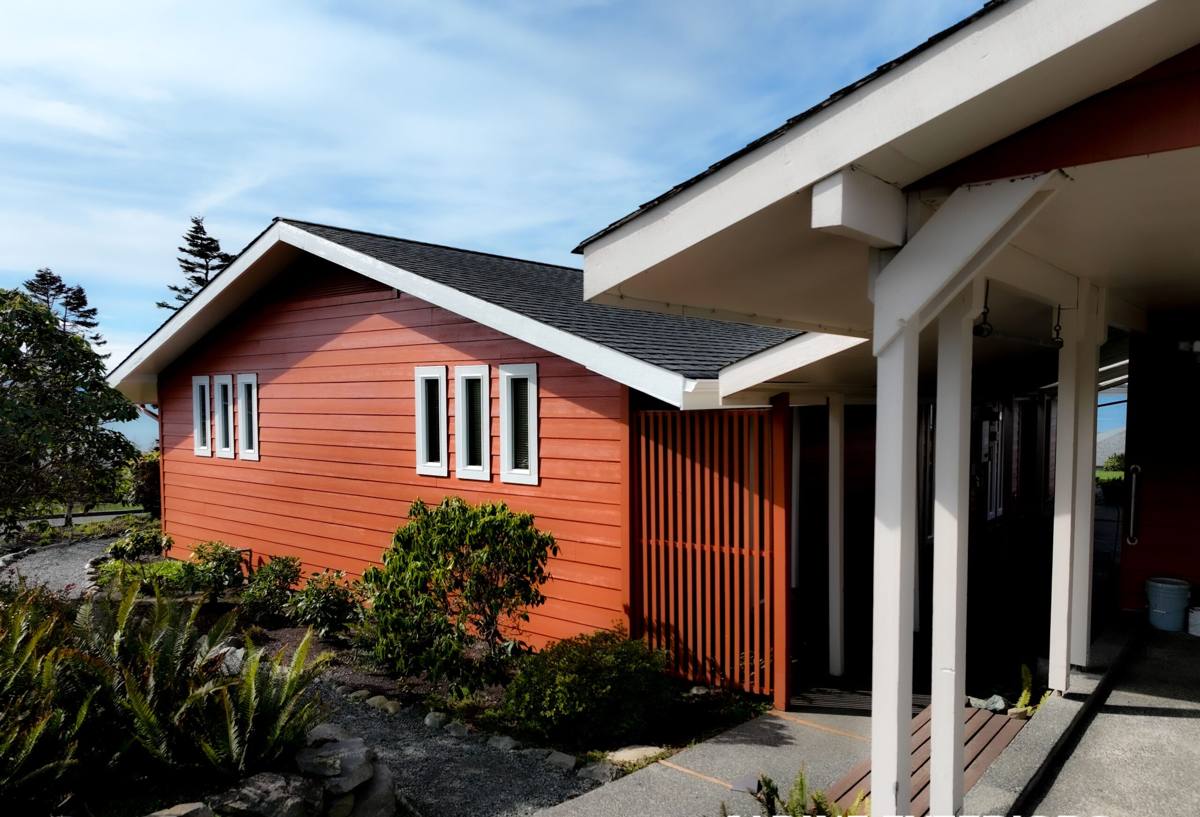
What Sumas Homes Need From Their Windows
A new build gives you the chance to plan for the climate instead of reacting to it later. A few things matter more here than in a drier, calmer region:
- Water management, not just water resistance. Driving rain doesn't just hit a window — it gets pushed sideways and upward by wind, which means flashing details and sill pans matter as much as the window unit itself.
- Frame and hardware materials that shrug off salt air. Corrosion-prone fasteners and hardware age faster near the coast; the right frame and hardware choices slow that process down.
- Surfaces that don't feed moss and mildew. Deep exterior trim profiles, ledges, and poorly sloped sills collect moisture and organic growth. Simpler, well-sloped details shed water and dry out faster.
- Consistent thermal performance in a marine climate. Whatcom County winters aren't brutally cold, but the damp, cool, gray stretches are long — window performance affects comfort and condensation control every single day of the year, not just on a handful of extreme days.
New-Construction Windows vs. Replacement Windows: Why the Distinction Matters
New-construction windows and replacement windows are installed completely differently, and mixing up the two approaches is one of the most common — and costly — mistakes on a new build.
New-construction windows have a nailing fin around the perimeter of the frame that gets fastened directly to the wall sheathing before the house wrap and siding go on. That fin is what ties the window into the building's water management system. Replacement windows, by contrast, are designed to be inserted into an existing, already-finished opening without disturbing the siding — they rely on the old frame and flashing that's already in the wall.
On a new build, you want new-construction units installed with proper fin integration, because that's what lets the window become part of a continuous drainage plane with the house wrap, flashing tape, and sill pan — not a separate component bolted on after the fact.
What a Correct New-Construction Window Install Actually Involves
The window unit itself is often the easy part. The details around it are what determine whether the install lasts. A proper sequence looks like this:
- Sill pan first. A sloped, sealed pan under the opening gives any water that gets past the window somewhere to go — out, not into the wall cavity.
- Flashing integration with the house wrap. Flashing tape and house wrap need to be layered correctly — like shingles — so water is always directed outward and downward, never trapped behind a seam.
- Setting the window plumb, level, and square before fastening through the nailing fin, with shims placed to avoid distorting the frame (a racked frame won't seal or operate correctly even if it looks fine from the outside).
- Fastening the nailing fin per the manufacturer's pattern — skipping fasteners or over-driving them are both common shortcuts that show up as leaks or warranty denials later.
- Insulating and air-sealing the gap between the frame and rough opening without overfilling it, which can bow the frame inward.
- Head flashing last, lapped over the house wrap above the window so water sheds past the top corners instead of pooling there.
Every one of those steps is inspectable at the time it happens and invisible once siding goes on. That's exactly why the install quality matters more than the brand name on the window itself.
Choosing a Window Line for a Sumas New Build
There's no single "best" frame material — it's a set of trade-offs, and the right call depends on your budget, your home's design, and how much upkeep you want to take on. Here's how the common options stack up for this climate:
| Frame Material | Moisture & Salt-Air Handling | Maintenance | Good Fit For |
|---|---|---|---|
| Vinyl | Good — won't rot or corrode; seams are the main watch point | Low | Budget-conscious builds, rental or spec homes |
| Fiberglass | Very good — dimensionally stable, resists warping in temperature swings | Low | Homes wanting durability without high upkeep |
| Wood-clad | Good on the exterior; interior wood needs protection from condensation | Moderate to high | Homes prioritizing interior wood aesthetics |
| Aluminum | Prone to condensation and corrosion near salt air unless thermally broken | Moderate | Specific architectural styles, large glass spans |
For most new construction in this area, we steer homeowners toward vinyl or fiberglass frames with a factory-applied low-maintenance exterior finish. That's not a knock on wood-clad or aluminum — both can work well — it's just that vinyl and fiberglass ask less of you over the next 20 years in a climate that's damp more often than it's dry.
Energy Performance and Building Code on a New Build
New construction in Washington has to meet the Washington State Energy Code, which sets minimum U-factor and performance requirements for windows based on the home's overall energy compliance path. Because you're building from scratch, this is the easiest point in the whole process to hit strong performance numbers — you're not retrofitting around an existing wall assembly, you're specifying the window and the wall together.
Low-E coatings and argon or krypton gas fills between panes are standard on most new-construction units now, and they make a real difference in a marine climate where you're managing both heat loss and condensation risk on the glass. We'll help you land on a spec that clears code with margin, not just barely passes.
Our Process, Start to Finish
We work new-construction jobs on a schedule that's dictated by your builder's framing timeline, not the other way around, so coordination matters as much as installation skill.
- Plan review and takeoff. We work from your architectural plans to confirm sizes, egress requirements, and rough opening dimensions before anything is ordered.
- Ordering and lead-time management. Custom sizes and specific glass packages can carry real lead times — we order early enough that windows are on-site when the framer needs them, not holding up the job.
- Install at the correct framing stage. Windows go in after the rough opening is framed and house wrap is ready, following the sill-pan-to-flashing sequence above.
- Documentation. We photograph flashing and sill pan details before they're covered by siding, so there's a record of what's behind the finish work.
- Final walkthrough. Every window gets operated, checked for square, and inspected for a clean, consistent reveal before we sign off.
Mistakes We Watch For on New-Build Sites
Most window failures in new construction trace back to a handful of repeat offenders. Before we sign off on a job, we check for:
- Missing or improperly lapped sill pan flashing
- Nailing fins fastened before the window is confirmed plumb and square
- Head flashing installed under the house wrap instead of over it
- Over-shimming or over-insulating a frame, causing it to bow and bind
- Skipped fasteners along the nailing fin to save time
- Exterior trim details that trap water or moss against the frame
None of these are visible once the siding is on — which is exactly why catching them during the install, not after, is the whole job.
Why It Matters to Hire a Crew That Already Works Sumas
A crew that works regularly in Sumas and the surrounding Lynden area already knows how this climate treats a house — where wind-driven rain tends to hit hardest, how fast moss establishes on north- and shaded elevations, and which details hold up over years rather than just passing a walkthrough. That local pattern recognition is hard to replace with a generic install checklist, and it's the difference between windows that are still performing well in year fifteen and windows that start showing problems in year three.
We also work directly with local builders and GCs on scheduling, so your window install lines up with the framing timeline instead of becoming the thing that holds up the next trade.
If you're building new in Sumas and want windows specified and installed correctly from the start, we're happy to walk your plans with you. Reach out for a free, no-pressure estimate — there's no obligation, just an honest look at what your build needs.