 Lynden Window
 Why Sumas Homes Need a Different Siding Approach
Sumas sits at the edge of Whatcom County where the Nooksack River valley funnels marine air in off the Salish Sea and holds onto it. That means siding here deals with more than an average Pacific Northwest winter. Homes get long stretches of driving, wind-pushed rain rather than gentle drizzle, damp air that lingers in low-lying areas and under tree cover, and a moss and algae season that can run eight or nine months out of the year. Add in the freeze-thaw swings that show up in a valley pocket like this, and you have a climate that finds every weak seam, every gap in flashing, and every spot where the wrong material was asked to do a job it wasn't built for.
We install fiber cement siding on homes throughout Lynden, Sumas, and the surrounding Whatcom County countryside, and the pattern is consistent: siding failures out here are almost never about the product itself failing outright. They're about installation details that didn't account for how much water this area actually sees, or a material that was never designed to shrug off constant moisture in the first place.
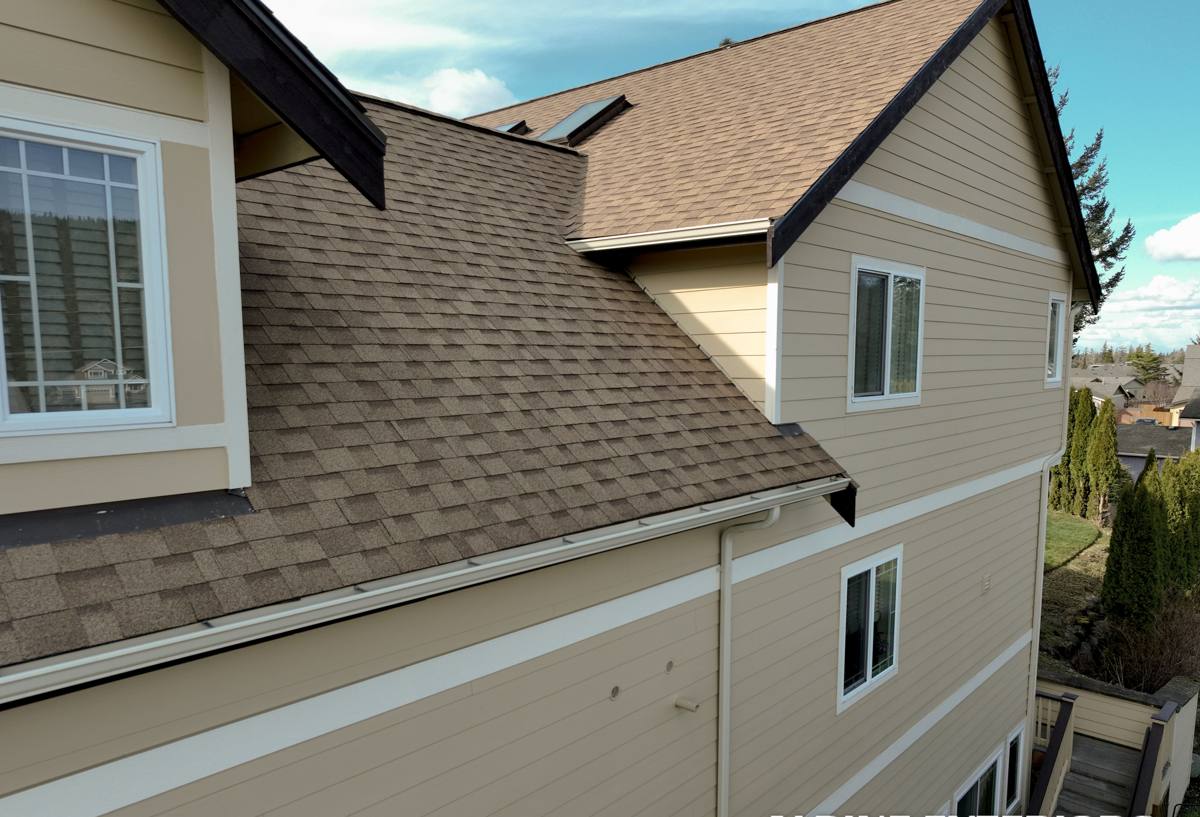
What This Climate Does to Siding Over Time
Moisture at Seams and Penetrations
Rain that comes in sideways doesn't just wet a wall's surface — it drives into every joint, every window and door penetration, and every spot where trim meets siding. On a home in a more sheltered climate, a slightly undersized gap or a missed bead of sealant might never become a problem. In Sumas, wind-driven rain finds that gap eventually, and once moisture gets behind the cladding, it stays there far longer than it would in a drier region, because the air itself rarely dries things out.
Moss, Algae, and Shaded North County Lots
A lot of Sumas properties sit on larger, tree-lined lots, which is part of the area's appeal, but it also means shaded siding faces that stay damp for days after a storm. Moss and algae need exactly that: shade, moisture, and time. Siding materials that absorb water or hold surface moisture give moss something to root into. Siding that sheds water and dries quickly gives it far less to work with.
Freeze-Thaw and Seasonal Swelling
Whatcom County winters bring enough freeze-thaw cycling that any siding material prone to swelling when wet and shrinking when it dries will eventually show it — cracked paint, raised grain, delaminating edges. Over several winters, that cycle compounds.
Why We Install Only James Hardie Fiber Cement
We made a deliberate call to install James Hardie fiber cement exclusively — not vinyl, not LP SmartSide, not primed wood, not other fiber cement brands. Fiber cement as a category resists moisture absorption far better than wood-based siding, and it doesn't expand and contract with temperature the way vinyl does. Within fiber cement, James Hardie's HZ product lines are engineered specifically for climate zones like ours, and the ColorPlus factory-finish process bakes color onto the board under controlled conditions rather than relying entirely on a field-applied coat. That matters in a place where siding spends most of the year wet. We stand behind the installation and the manufacturer stands behind the product with a strong transferable warranty — but only when it goes on correctly, which is the part actually in our control.
What a Correct Fiber Cement Siding Job Involves
Water Management Behind the Siding
The siding itself is only half the system. A correct install starts with a weather-resistive barrier, properly lapped and taped, followed by rainscreen furring or an equivalent drainage gap so any moisture that does get past the cladding has somewhere to go instead of sitting against the sheathing. Flashing at every window, door, and roof-to-wall intersection gets installed before the siding goes up, not patched in afterward. In a climate that sees as much driving rain as Sumas does, skipping or shortcutting this layer is the single most common reason siding fails early — and it's invisible once the job is done, which is exactly why it has to be done right the first time.
Fastening, Clearances, and Joint Detailing
James Hardie specifies exact nailing patterns, fastener types, and butt-joint treatment for a reason — get any of it wrong and you create a path for water to travel behind the board. We also hold strict clearance from grade, roofing, decks, and patios, because ground-level moisture and splashback are a real issue on lower-lying Sumas lots near the river valley. Caulking only goes where the manufacturer specifies it — over-caulking traps moisture just as surely as leaving a real gap unsealed.
Protecting the Factory Finish
ColorPlus finish holds up better than field-painted siding, but only if cut edges are sealed with the correct edge sealant and the boards aren't handled or stored in a way that damages the coating before installation. It's a small step that gets skipped on rushed jobs and shows up as fading or chipping at cut edges years later.
Our Process, Start to Finish
- On-site assessment — we walk the exterior, check existing sheathing and moisture conditions, and look at drainage, grade, and shade exposure specific to your lot.
- Product and color selection — we go over HZ product lines, profiles, and ColorPlus color options suited to your home and the local climate.
- Detailed estimate — a written scope covering water-resistive barrier, drainage plane, flashing details, and siding profile, so there's no ambiguity about what's included.
- Tear-off and sheathing inspection — we check for hidden moisture damage before anything new goes on, since covering up an existing problem never solves it.
- Weather barrier, flashing, and drainage gap installation — the part of the job that determines whether the siding actually performs.
- Siding installation to manufacturer spec — correct fastening, clearances, and joint treatment throughout.
- Final walkthrough — we review the finished work with you before calling the job done.
Choosing the Right Hardie Line for This Climate
Not every Hardie product or plank width fits every home, and the right call depends on your home's exposure, existing trim details, and the look you want. Here's how the main options generally compare for a Sumas property:
| Product | Best Suited For | Climate Consideration |
|---|---|---|
| HardiePlank Lap Siding (HZ5) | Most homes, traditional or modern lap look | Engineered for wetter, colder climate zones like Whatcom County |
| HardiePanel Vertical Siding | Modern facades, accent walls, gables | Fewer horizontal joints where wind-driven rain can catch |
| HardieShingle Siding | Craftsman and cottage-style homes | More seams overall — needs precise installation on exposed elevations |
| HardieTrim Boards | Window, door, and corner trim | Matched expansion behavior with the field siding, unlike wood trim |
Darker ColorPlus finishes hold up well under Hardie's baked-on process, but on elevations that get heavy moss pressure from shade, a lighter or more reflective color can make routine cleaning easier to keep up with.
Cost Factors for a Sumas Siding Project
Every home is different, but the same handful of factors move the price on most Sumas projects:
| Factor | Why It Matters Here |
|---|---|
| Existing sheathing condition | Hidden moisture damage from past water intrusion adds repair scope before new siding goes on |
| Home size and wall complexity | More corners, dormers, and penetrations mean more flashing and detail work |
| Product line and profile | Panel vs. lap vs. shingle profiles carry different material and labor costs |
| Site access and lot conditions | Larger wooded lots common in Sumas can affect staging and equipment access |
| Trim and accessory scope | Full trim replacement alongside siding versus reusing sound existing trim |
We give straightforward, written estimates rather than vague ranges, because guessing at scope is how homeowners end up with surprise costs mid-project.
What to Ask Before Hiring a Siding Crew in Sumas
- Do you install a proper drainage gap and weather-resistive barrier, or does the siding go directly over existing sheathing?
- Are you a certified or trained James Hardie installer, and can you explain their fastening and clearance specs?
- Will you inspect and document sheathing condition before covering it with new siding?
- How do you handle flashing at windows, doors, and roof lines specifically?
- What does the manufacturer's warranty actually cover if something goes wrong, and what voids it?
- Do you have experience with homes in this specific area's climate, not just siding in general?
Why It Matters to Hire a Crew That Already Works in Sumas
A crew that's worked on homes throughout Lynden and the Sumas area already knows how much rain a given elevation typically takes, where moss pressure tends to build fastest, and which lots sit low enough to need extra attention to grade clearance and drainage. That local pattern recognition doesn't replace following manufacturer specs — it's what makes sure those specs get applied to the parts of your home that actually need it most. We'd rather spend an extra half hour checking flashing details than come back in five years to fix water damage that a shortcut caused.
If your Sumas home's siding is showing moss buildup, cracked or peeling paint, soft spots, or you're simply planning ahead for a replacement, we're happy to take a look and walk you through what we'd recommend. Reach out for a free, no-pressure estimate using the form below.