 Lynden Window
 Why Siding Takes a Beating in Nooksack
Nooksack sits in the river valley north of Lynden, close enough to the Canadian border and the Salish Sea that marine air pushes inland all year. That combination — driving rain off Pacific storm systems, salt-tinged marine humidity, and long stretches of overcast, damp weather — is exactly the environment that wears out siding faster than most homeowners expect. Add in moss season, which in this part of Whatcom County can run from fall through spring, and you've got a climate that never really gives exterior siding a chance to dry out completely.
Rural and semi-rural properties around Nooksack often add to the exposure: open farmland means fewer windbreaks, which means rain hits walls at an angle instead of falling straight down. That driving rain finds every gap in flawed flashing, every hairline crack in old paint, and every spot where caulk has failed. Over years, that's how rot starts behind siding that still looks fine from the curb.
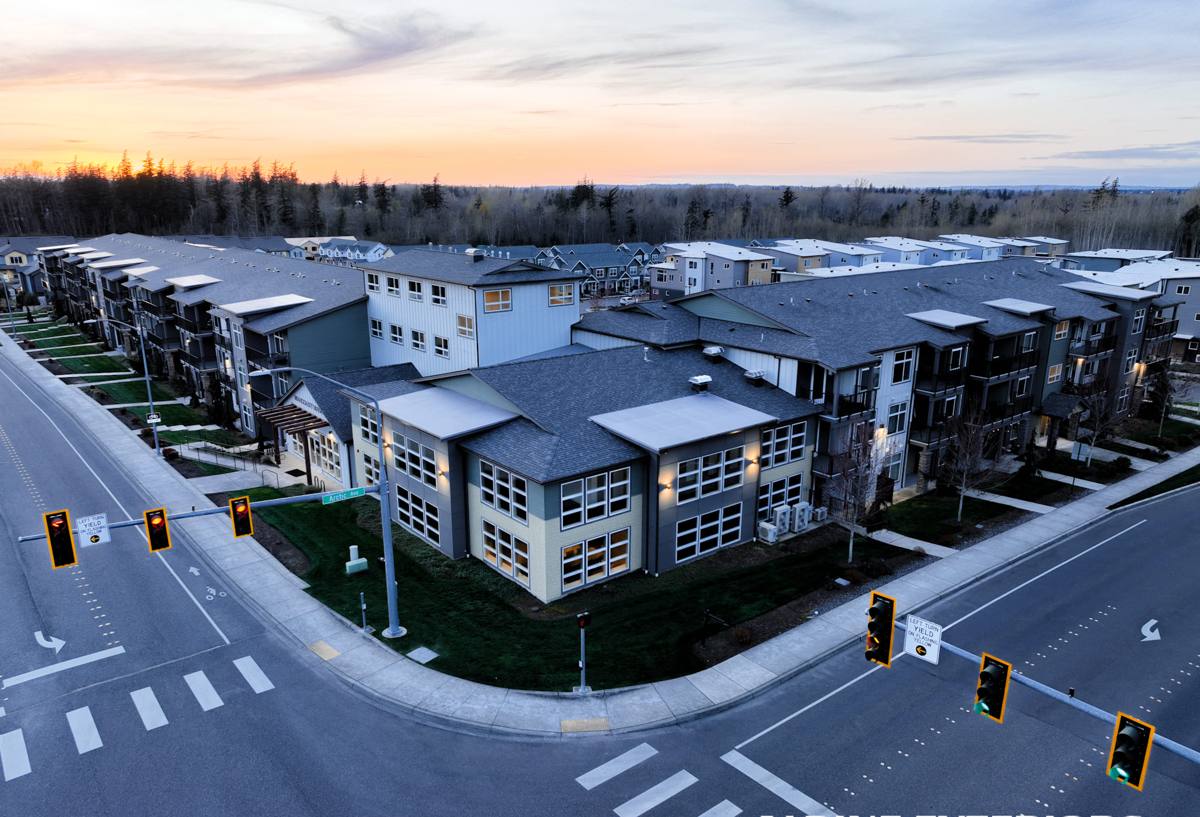
What a Correct Siding Installation Actually Involves
Siding is a system, not just a finish. The board you see is the last piece installed and the first piece to fail if anything behind it was done wrong. A correct installation in this climate means getting the unseen parts right first.
Water-Resistive Barrier and Flashing Come First
Before any siding goes up, the wall needs a continuous water-resistive barrier (WRB) that's lapped correctly — upper courses over lower courses, so water sheds down and out instead of behind the barrier. Every window, door, and penetration needs proper flashing integrated into that barrier, not just caulked over it. In a climate with as much wind-driven rain as Whatcom County sees, flashing details are where most premature siding failures actually start, even though the siding itself gets blamed.
Fastening, Clearances, and Field Cuts
Fiber cement siding has manufacturer-specified fastening patterns, nail types, and clearances from grade, roofing, and other trim — these aren't suggestions. Fastening too tight or too loose, skipping ground clearance, or butting siding directly against a rooflines without proper flashing all shorten the life of the installation regardless of how good the material is. Field cuts at corners, around penetrations, and at butt joints need to be sealed with the correct sealant so water can't wick into the cut edge, which is one of the more vulnerable points on any fiber cement installation.
Why We Install Only James Hardie Fiber Cement
We don't install vinyl, LP SmartSide, primed spruce, cedar, or other fiber cement brands. That's a deliberate standard, not a lack of options. In a climate that stays wet for months at a time, we want a siding system that's engineered specifically for Pacific Northwest moisture exposure, backed by a manufacturer with a track record here, and finished in a way that doesn't depend on field paint holding up against constant rain and moss.
ColorPlus Factory Finish vs. Field-Painted Siding
James Hardie's ColorPlus finish is baked on at the factory in multiple coats under controlled conditions — a process that produces more consistent, longer-lasting color adhesion than paint applied on-site after installation. Field-painted siding (primed wood, some fiber cement competitors) is only as good as the weather conditions and prep work on the day it was painted, and it needs repainting on a cycle that ColorPlus is designed to outlast.
Engineered for This Climate: The HZ Product Line
Hardie's HZ5 formulation is engineered for climates with freeze-thaw cycling and sustained moisture exposure — which describes Whatcom County winters well. It's not the same product sold in dry southern climates; the composition is adjusted for regions where siding stays wet for extended periods. That matters more than most homeowners realize when comparing fiber cement products that look similar on a sample board.
How Hardie Compares to Other Siding Materials
| Factor | James Hardie Fiber Cement | Vinyl | Wood / LP SmartSide |
|---|---|---|---|
| Moisture behavior | Non-combustible, dimensionally stable, resists swelling | Can warp or buckle with heat/cold cycling | Wood fiber can absorb moisture if edges aren't sealed |
| Moss & algae resistance | Factory finish resists staining; cleans up well | Prone to algae streaking in shaded, damp areas | Organic content can support moss/mold growth if compromised |
| Maintenance cycle | Occasional wash; repaint only if ever needed, decades out | Low maintenance but can't be effectively repainted | Repaint/reseal every several years |
| Fire rating | Non-combustible material | Combustible | Combustible |
| Typical warranty | Long, transferable manufacturer warranty | Varies widely by product tier | Shorter, often prorated warranty |
Vinyl is inexpensive and low-maintenance, but it's a combustible plastic product that can't be repainted and tends to show its age in UV exposure and impact damage. LP SmartSide and other engineered wood products perform reasonably well when installation is flawless, but they're wood-based, which means the moisture rules are less forgiving than fiber cement — a caulking failure or an unsealed cut edge matters more. We'd rather put a product on your home that gives you margin for error over twenty and thirty years, not one that requires everything to go perfectly forever.
Our Siding Installation Process in Nooksack
The steps don't change much from house to house, but the details we pay attention to are shaped by what we've seen fail on other homes in this area.
- On-site assessment. We walk the exterior, check for existing moisture damage around windows, corners, and roof intersections, and evaluate the condition of the sheathing underneath the current siding.
- Tear-off and substrate check. Old siding comes off and we inspect the sheathing for rot before anything new goes up. Damaged sheathing gets repaired or replaced — covering it over is how small problems become expensive ones.
- Water-resistive barrier and flashing. A new WRB goes on with correctly lapped seams, and every window, door, and penetration gets flashed as part of that barrier system.
- Hardie installation. Boards, panels, or shingle-style siding go up per manufacturer fastening specs, with proper clearances at grade, roofing, and trim, and sealed field cuts.
- Final walkthrough. We go over the finished work with you, including care basics for ColorPlus finishes, before calling the job done.
What Affects Your Project Cost
| Cost Factor | Why It Matters |
|---|---|
| Square footage & home height | More surface area and multi-story access both add labor time |
| Tear-off vs. existing damage | Sheathing repair from hidden rot adds cost beyond the siding itself |
| Siding profile & trim detail | Lap siding, shingle-style panels, and detailed trim work vary in labor |
| Access & site conditions | Rural lots, landscaping, or limited equipment access can affect scheduling and setup |
| Color & finish selection | ColorPlus factory finishes vs. field-painted trim can shift material costs |
We don't quote from a distance — every estimate starts with an actual look at your home, because the condition behind the old siding usually matters more to the final number than the square footage alone.
Signs Your Nooksack Home May Need New Siding
- Persistent moss or algae staining that comes back soon after cleaning
- Soft or spongy spots when you press on the siding, especially near the bottom courses
- Paint that's peeling, bubbling, or chalking heavily on wood or engineered wood siding
- Visible warping, cupping, or gaps opening up at seams and corners
- Rising energy bills that suggest the wall assembly isn't sealing the way it used to
- Water stains or discoloration on interior walls near exterior corners or window headers
Why a Crew That Already Works Nooksack Matters
A lot of exterior work in this area comes down to knowing what a wall assembly looks like after years of this specific climate — where moisture tends to collect on a farmhouse with wide eaves versus a newer build with tighter clearances, how moss establishes itself on north-facing walls shaded by outbuildings or tree lines, and what flashing details tend to fail first on homes exposed to open fields with no windbreak. That's knowledge that comes from doing the work here repeatedly, not from a general contractor passing through the county.
It also means straightforward scheduling and follow-up. A crew based in and around Lynden and Nooksack isn't juggling long drives between job sites spread across multiple counties, and if a question comes up after the job is done, we're not hard to reach.
If you're weighing a siding replacement on a Nooksack home, we're happy to take a look and give you a straightforward, no-pressure estimate — no obligation, just an honest read on what your siding needs and what it would take to do it right. Use the form below to get started.