 Lynden Window
 When Blaine's Weather Turns on Your Roof
Blaine sits right on Semiahmoo Bay, at the edge of Whatcom County, which means the roofs here take a beating that inland homes never see. Wind comes off the water with nothing to slow it down, driving rain sideways into ridge caps and flashing, and the salt in that air works on metal fasteners and flashing year-round, not just during a named storm. Add in a moss season that can run from fall through spring in this climate, and a roof that looked fine in August can be hiding real damage by the time the winter storms roll through.
Storm damage isn't always the dramatic kind — a tree limb through the decking or shingles peeled back in a windstorm. Just as often it's slower and easier to miss: a few lifted shingle tabs after a wind event, a flashing seam that opened up during a hard rain, or granule loss that's been accelerated by salt exposure and moss holding moisture against the roof surface. Both kinds need attention, and both are what we mean when we talk about storm damage repair in Blaine.
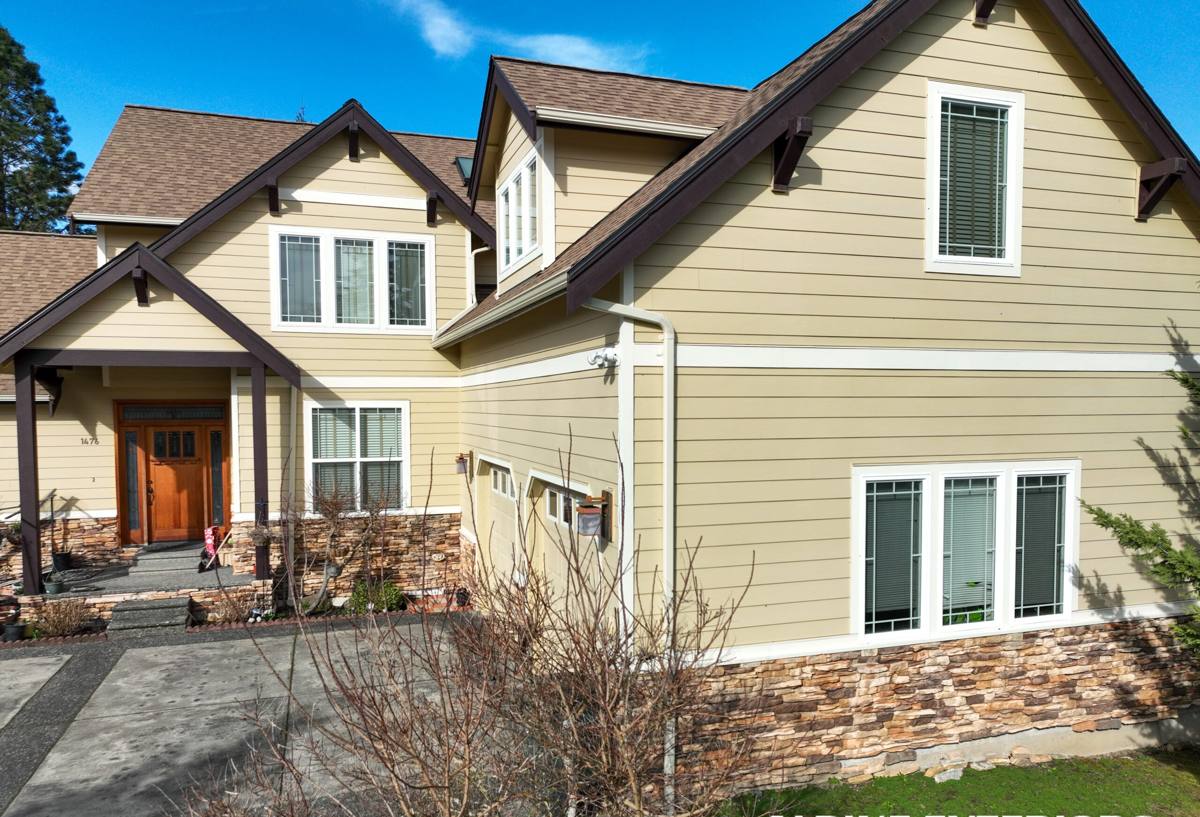
What Actually Counts as Storm Damage
Wind Damage
Sustained wind off the bay can lift shingle tabs, crease them, or tear them off completely, especially along ridges, hips, and roof edges where wind uplift is strongest. Once a shingle's seal is broken, it usually won't reseal on its own — even if it looks like it's lying flat again, the adhesive strip has failed and water will find its way underneath the next time it rains.
Wind-Driven Rain Intrusion
This is the damage homeowners see last, because it often shows up as a stain on a ceiling weeks after the storm that caused it. Rain driven sideways by wind can work its way under flashing at chimneys, skylights, and wall intersections, or through a shingle that's lost its seal, and travel a surprising distance along the underlayment or decking before it drips through drywall.
Debris Impact
Falling limbs and wind-blown debris are common after the kind of windstorms this area gets in fall and winter. Impact damage can range from a cracked or punctured shingle to, in worse cases, damaged decking underneath. Even a small puncture is a direct path for water and needs to be addressed, not just monitored.
The Salt Air and Moss Factor
Two things make roofs in Blaine age differently than roofs even twenty miles inland, and both change how a repair should be done, not just whether one is needed.
Salt air accelerates corrosion on exposed metal — flashing, drip edge, fasteners, and any exposed roofing nails. A repair that uses standard fasteners or flashing without accounting for that corrosion risk is a repair that fails early. It's a maintenance and materials decision, not a scare tactic: in a coastal-influenced climate like this, corrosion-resistant fasteners and properly lapped, sealed flashing aren't optional upgrades, they're what a repair needs to actually hold.
Moss is the other factor, and it's really a moisture problem wearing a green coat. A long, wet moss season means moss and organic debris can sit on a roof for months, holding moisture against the shingle surface and working into seams and under tabs. After a storm, moss-covered areas are often where we find the most granule loss and the softest decking, because the moss has been trapping water there long before the storm ever hit. Any honest storm damage assessment in this area includes a look at moss buildup, not just the obvious storm damage itself.
What a Correct Repair Actually Involves
Inspection Before Anything Else
A storm damage repair starts with a full inspection, not a patch job on the one spot that's leaking. That means checking the whole roof plane for lifted or missing shingles, examining flashing at every penetration and transition, and checking the decking underneath any area where shingles are damaged or missing. Water rarely stays exactly where it entered, so we look at the surrounding area, not just the visible damage point.
Matching Materials and Flashing Details
Shingles fade with UV and salt exposure, so an exact color match on an older roof isn't always possible — we'll tell you honestly what to expect rather than promise an invisible repair. What matters more is that the replacement materials are compatible in type and weight with the existing roof, that flashing is properly lapped (never just caulked over a gap), and that any exposed fasteners are corrosion-resistant given the salt air this close to the water. A repair that looks right but skips proper flashing detail will leak again — usually in the next big wind event.
Our Process, From Call to Cleanup
- Assessment: We inspect the affected area and the roof as a whole, including decking condition where accessible, and document what we find with photos.
- Explanation: We walk you through what's actually damaged, what's just cosmetic, and what we'd recommend — in plain terms, before any work starts.
- Written estimate: You get a clear scope of work and price before we schedule anything.
- Repair: We remove and replace damaged materials, correct any flashing issues found along the way, and check decking integrity anywhere it was exposed.
- Cleanup and walkthrough: Debris and old materials are hauled off, and we walk the finished repair with you before we consider the job done.
Repair Approach Comparison
Not every storm-damaged roof needs the same fix. The table below outlines how the common approaches differ, so you know what questions to ask when you're comparing options.
| Approach | Best For | What to Watch For |
|---|---|---|
| Spot shingle replacement | Isolated wind or debris damage on an otherwise sound, newer roof | Requires close color/type match; won't address underlying moss or flashing issues |
| Section repair with flashing rework | Damage clustered around a chimney, valley, or wall intersection | Flashing must be re-lapped correctly, not just resealed with caulk |
| Decking repair plus shingle replacement | Punctures or long-term moisture damage that softened the sheathing | Decking condition often isn't visible until shingles are pulled back |
| Full roof replacement | Widespread damage, or a roof already near the end of its service life | Worth evaluating if repair costs start approaching a meaningful fraction of replacement cost |
Signs You May Have Storm Damage
Some damage is obvious right after a storm. Other signs take a closer look, especially with moss and salt exposure masking what's underneath. Worth checking after any significant wind or rain event:
- Shingles that look lifted, curled, or missing at the roof edges or ridge
- Granules collecting in gutters or at downspout outlets after a storm
- New or worsening ceiling stains, especially near chimneys, skylights, or where two roof planes meet
- Visible gaps or lifted seams in flashing around penetrations
- Heavy moss growth in areas that also show soft spots or discoloration
- Debris — branches, twigs, needles — that's been sitting on the roof rather than falling off
- Drafts or daylight visible in the attic where none existed before
If you notice any of these, it's worth having it looked at before the next storm rather than after.
Insurance Claims: What Homeowners Should Know
Many storm damage repairs are covered under homeowners insurance, but coverage depends on your specific policy and the cause of the damage — that's between you and your insurer, and we're not in a position to promise coverage. What we can do is document the damage thoroughly with photos and a clear written scope of the repair, which is the kind of documentation an adjuster typically wants to see. If you're filing a claim, it's worth getting that documentation before any temporary repairs disturb the damaged area, and worth knowing that a quick, honest assessment from a local roofer can help you understand what you're dealing with before the adjuster visit, not just after.
Why a Blaine-Familiar Crew Matters
A roofer who works this specific stretch of Whatcom County — right up against the water, with the wind exposure and salt air that come with it — has already seen what these conditions do to fasteners, flashing, and shingles over time. That matters when a repair is being scoped, because it changes material choices and where we look for hidden damage. It also matters for response time: after a wind event, roofs across the area need attention at once, and a crew that already works locally can get to yours faster than one driving in from further out.
We're not going to oversell a repair, and we're not going to talk you into a full replacement when a proper section repair will hold. Our job is to tell you honestly what your roof needs, do that work correctly the first time, and account for the salt air and moisture this area throws at every roof — not just patch what's visible and hope the rest holds until next winter.
If your roof took a hit in a recent storm, or you're just not sure whether what you're seeing is a problem, we're happy to take a look. Reach out for a free, no-pressure estimate using the form below.