 Lynden Window
 Roof Repair for Kendall Homes, Not a One-Size Patch Job
Kendall sits in a part of Whatcom County that puts a specific kind of pressure on a roof. Salt-tinged air drifting in off the water works on exposed metal and fasteners over time. Rain here doesn't just fall straight down — it gets driven sideways and up under shingle edges by wind, finding gaps that a fair-weather roof would never expose. And a long, damp moss season settles into shaded and north-facing slopes and stays put for months, holding moisture against the roof surface long after a sunnier climate would have dried it out. Most roof problems we get called out for in Kendall trace back to one of those three things, or some combination of all three.
A roof repair done right in this area isn't just about stopping the immediate leak. It's about understanding why that spot failed and whether it's an isolated problem or a sign that something nearby — flashing, ventilation, moss buildup — is going to cause the same call again next winter. This page covers what a proper Kendall roof repair actually involves, when repair makes sense versus replacement, and how our process works from first look to final walkthrough.
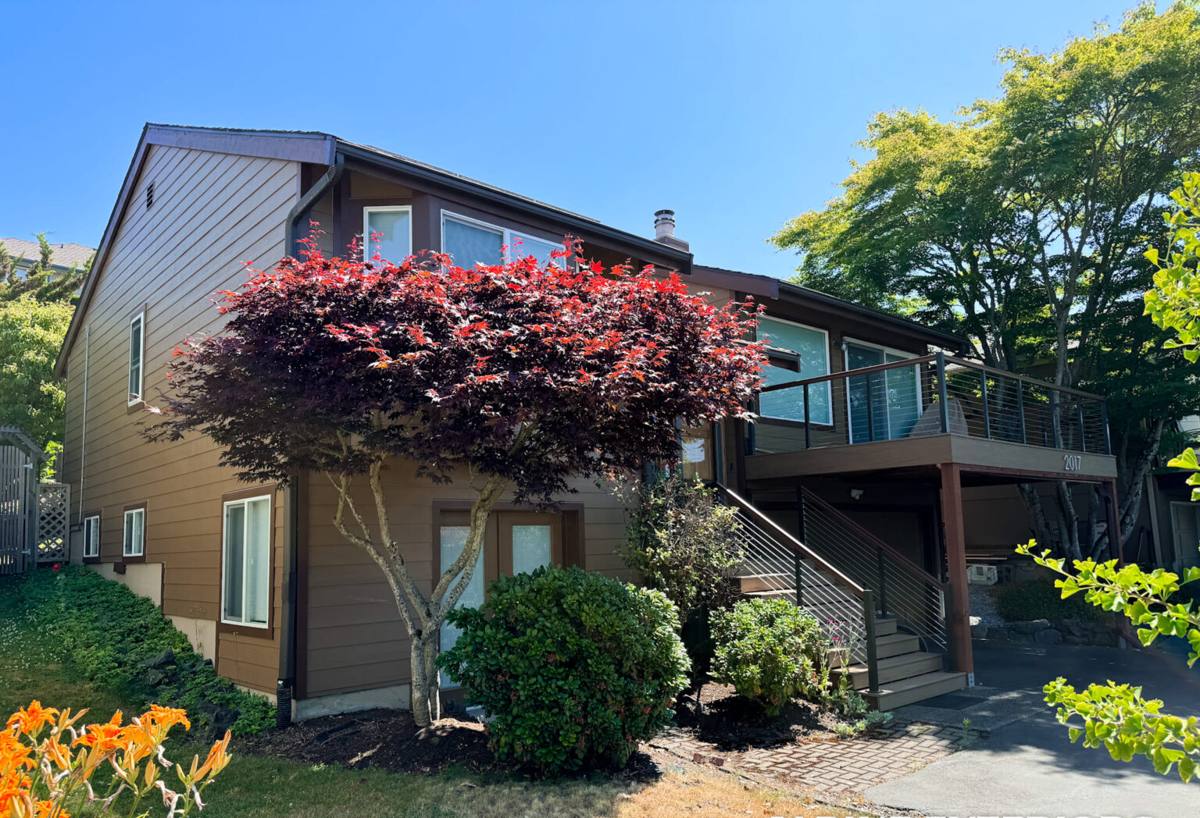
What Kendall's Climate Does to a Roof Over Time
Every roofing material ages differently depending on what it's exposed to, and Kendall's combination of coastal-influenced air, wind-driven rain, and extended damp shade is a specific stress test.
Salt Air and Corrosion
Fasteners, flashing, and any exposed metal on a roof are the first things to show wear from salt-tinged air. A nail head or flashing seam that would last decades in a dry inland climate can start corroding years earlier here, and once metal starts to go, water finds its way in around it long before the surrounding shingles or panels look worn.
Wind-Driven Rain
Rain that's pushed sideways by wind behaves differently than rain falling straight down. It gets forced up under shingle tabs, into valleys, and around penetrations that were never designed to see water moving in that direction. A roof that sheds a straight downpour just fine can still leak badly in a wind-driven storm if the underlayment, laps, or flashing weren't built with that in mind.
Moss and Trapped Moisture
Shaded and north-facing roof planes in Kendall hold moisture long enough for moss to take hold, and moss does real damage — it lifts shingle edges, holds water against the roof surface, and works its root structure into seams over time. Left alone through a full moss season, what starts as a cosmetic issue turns into a moisture problem underneath the surface.
Repair or Replace? How We Make That Call
Not every roof problem in Kendall needs a full replacement, and we don't push one when a targeted repair will genuinely hold up. The decision usually comes down to how localized the damage is and what condition the rest of the roof is in.
| Situation | Usually Points To |
|---|---|
| Isolated leak at a single flashing point, vent, or valley | Targeted repair |
| Roof is under 15 years old with good granule coverage elsewhere | Repair the damaged section |
| Widespread granule loss, curling, or multiple leak points | Repair is a short-term fix at best — replacement conversation is honest |
| Roof deck shows soft spots or rot beyond the immediate leak area | Repair alone won't solve the underlying problem |
| Roof is near or past its expected lifespan for its material | Replacement usually costs less over time than repeated repairs |
We'll tell you honestly which category your roof falls into, including when a repair is the right call even if a bigger job would be more profitable for us. A roof that just needs one section addressed doesn't need to be sold a full tear-off.
What a Correct Roof Repair Actually Involves
A roof repair that actually holds up starts with figuring out where water is really getting in, which isn't always where it shows up inside the house. Water can travel along rafters or decking before it drips somewhere visible, so a repair based only on the interior stain often misses the real entry point.
Diagnosis Before Anything Gets Fixed
We get on the roof and, where accessible, into the attic to trace the actual path water is taking. That means checking flashing at valleys, chimneys, vents, and wall intersections first, since that's where the large majority of leaks in this region actually start — not in the open field of the roof.
Removing and Replacing Damaged Material
Damaged shingles, underlayment, or decking in the affected area get removed rather than patched over. Sealing over a soft or rotted section might stop water for a season, but it doesn't address wood that's already compromised, and that section will fail again, usually worse the second time.
Flashing Repair or Replacement
If the leak traces back to flashing — and in this climate it often does — that flashing gets properly reformed, lapped, and integrated with the surrounding roofing material, not just caulked. Caulk is a short-term seal, not a repair, and it's one of the most common reasons a "fixed" leak comes back within a year or two.
Matching Materials
Where possible, we match the existing shingle or roofing product so the repair blends in and performs consistently with the surrounding roof. When an exact match isn't available because the original product has aged or been discontinued, we'll tell you that upfront and talk through the closest reasonable option.
Moss and Debris Clearing
If moss or trapped debris contributed to the failure, we clear it as part of the repair rather than fixing the leak and leaving the underlying moisture source in place to cause the same problem again next season.
Common Kendall Roof Repair Situations
- Flashing leaks at chimneys and vent stacks: Often the first place corrosion or improper sealing shows up.
- Valley leaks after a wind-driven storm: Where two roof planes meet is a high-volume water path, and any weakness there gets exposed fast.
- Moss-related lifting on shaded slopes: Shingle edges lifted by moss growth let wind-driven rain get underneath them.
- Isolated wind damage: Missing or torn shingles after a storm, usually on the roof's most exposed side.
- Nail pops and fastener failure: Corroded or improperly seated fasteners working loose over time.
- Skylight and penetration leaks: Any point where something interrupts the roof plane is a spot that needs its own flashing detail, and those details fail more often than the open roof field.
Cost Factors for Roof Repair
Repair pricing varies more than people expect, and the difference usually comes down to real scope, not one contractor simply charging more for the same work.
| Factor | What It Affects |
|---|---|
| Size and number of affected areas | Material and labor time |
| Roof pitch and accessibility | Staging, safety equipment, and time on the roof |
| Extent of deck damage found underneath | Whether decking repair is needed in addition to the surface repair |
| Flashing scope | Whether flashing needs partial or full reforming |
| Material match availability | Whether the exact existing product can be sourced or a close alternative is needed |
| Moss or debris removal | Added labor to clear the underlying cause, not just the visible damage |
A written estimate that itemizes what was actually found and what the repair covers is worth far more than a flat number over the phone. We won't quote a repair without getting eyes on the roof first, because guessing at scope from a description almost always misses something.
How Our Process Works
- In-person inspection: We get on the roof and check the attic where accessible, rather than quoting from a description or a photo.
- Honest diagnosis: We show you what we found and explain whether it's a contained repair or a sign of something bigger, before any work is scheduled.
- Written estimate: A clear, itemized scope covering what's being removed, replaced, and sealed, and why — no vague single-line pricing.
- Repair work: Damaged material comes out, flashing gets properly addressed, and matching material goes back in to manufacturer-appropriate standards.
- Final check: We walk the repair with you and confirm the fix before calling the job done, including a look at surrounding areas that could be next in line for attention.
Why a Crew That Already Works Kendall Matters
A crew that regularly works roofs in and around Kendall already knows which flashing details fail first in salt-tinged air, how wind-driven rain finds its way under improperly lapped shingles, and which roof orientations hold moss longest through the wet season. That's the kind of practical knowledge that shapes a repair decision in the field — recognizing a symptom of a bigger issue instead of just patching the visible spot and moving on.
It also matters after the work is done. A repair warranty only means something if the company behind it is still around and reachable locally a year or two later, not a crew that came through once from out of the area and is hard to track down if the same spot acts up again.
A Practical Checklist Before You Hire a Roof Repair Contractor
- Do they inspect in person before quoting, rather than pricing from a phone description?
- Does the estimate specify what's being removed and replaced, not just "fix the leak"?
- Do they explain whether flashing is part of the repair scope, given how often that's the real cause?
- Do they carry current WA contractor licensing, liability insurance, and workers' compensation?
- Can they point to recent, real local work in or near Kendall?
- Will they tell you honestly if a repair isn't going to hold and replacement makes more sense?
Signs Your Kendall Roof Needs a Repair Now, Not Later
Roof problems in this climate tend to get worse through the wet season rather than staying static, so catching them early keeps a small repair from turning into a bigger one.
- Water staining on ceilings or in the attic, especially after a windy storm
- Visible moss buildup on shaded or north-facing slopes
- Lifted, curling, or missing shingles, particularly on the roof's most exposed side
- Granules collecting in gutters or downspouts
- Daylight visible through the roof deck from inside the attic
- Rust staining or visibly corroded flashing around chimneys or vents
If any of these sound familiar, it's worth having the roof looked at before the next stretch of wind and rain rather than waiting for a small leak to become a bigger repair.
If you'd like an honest look at your Kendall roof and a written estimate to compare against anything else you've received, we're glad to come take a look — free, no pressure, and no upsell if a repair is genuinely all it needs. Use the form below to request a free estimate.