 Lynden Window
 Siding Repair in Abbotsford: Built Around This Valley's Weather
Abbotsford sits just across the international border from Lynden, in British Columbia's Fraser Valley, and it shares the same marine-influenced Pacific Northwest weather pattern that shapes exterior work throughout Whatcom County and the towns just north of it. Moist air pushes in off the Salish Sea and up the valley, rain arrives wind-driven more often than it falls straight down, and mild year-round temperatures give moss and mildew a long stretch of the calendar to work on any siding surface that stays shaded or damp. Siding sits on the front line of all of that, which is why a repair that looks fine from the curb can still be hiding a moisture problem underneath.
Lynden Window Co installs, repairs, and replaces windows across Whatcom County and the nearby Fraser Valley communities we serve, and we also handle siding, roofing, and decks, because exterior components rarely fail in isolation. This page covers siding repair specifically for Abbotsford homes: what the local climate does to different siding materials, what a correct repair actually involves, and how we decide between a targeted repair and a more honest recommendation to replace.
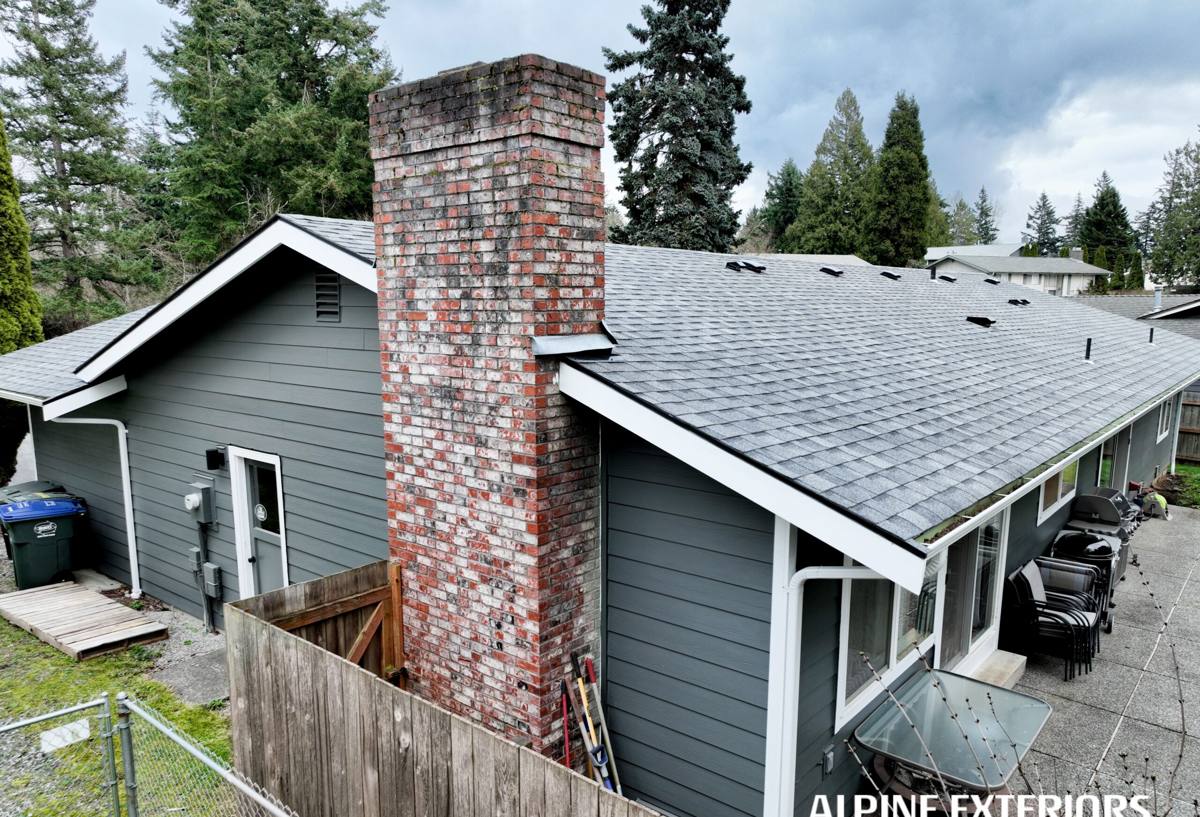
What Abbotsford's Climate Does to Siding
Salt-Tinged Marine Air
Even set back from open water, Abbotsford and the surrounding Fraser Valley sit inside a marine air pattern that carries a steady trace of salt-laden moisture off the Salish Sea and Strait of Georgia. Over years, that accelerates corrosion in exposed fasteners and metal trim, and it wears down unfinished or poorly finished siding faster than a drier inland climate would. It's rarely dramatic — more a slow erosion of whatever finish is protecting the material underneath.
Driving Rain and Wind-Driven Moisture
Storms moving through the valley don't just drop rain straight down; wind pushes it sideways into seams, laps, and butt joints in siding that a calm-weather installation might never really get tested against. That sideways load is much more a test of installation quality — how panels are lapped, how seams are sealed, how flashing is integrated — than it is a test of the siding material itself. A well-made product installed with sloppy seams will leak; a modest product installed correctly usually won't.
A Long Moss and Mildew Season
Shaded walls, tree cover, and siding that doesn't get much direct sun hold moisture longer here than they would in a drier region, and that gives moss and mildew a long season to take hold. It usually shows up first as discoloration, then as soft or lifting material at seams and low corners where moisture has nowhere to drain. Left alone, it's a gradual problem, which is also why it's easy to underestimate until a repair becomes a much bigger job.
Signs an Abbotsford Home's Siding Needs Repair
Most siding repairs start with one of a handful of warning signs. It's worth a call if you notice:
- Soft, spongy, or crumbling material when you press on a panel or board, especially near the bottom courses or window and door trim
- Visible cracking, splitting, or buckling in individual panels or boards
- Gaps opening up at seams, corners, or where siding meets trim, flashing, or the foundation
- Discoloration, staining, or a persistent damp smell along an interior wall that backs onto an exterior siding section
- Bubbling, peeling paint, or a chalky finish worn through to bare material
- Moss or mildew buildup that keeps returning to the same section no matter how often it's cleaned
- Small holes or pest damage that can let moisture in behind the siding
Any one of these is worth a look before it moves through another wet season. Caught early, most are a straightforward, contained repair. Left alone, several of them point to water damage in the sheathing or framing behind the siding, which turns a repair into a much larger job.
Repair or Replace? How We Make the Call
Not every siding problem calls for full replacement, and we don't default to recommending one. The honest answer depends on the material, how widespread the damage is, and what we actually find once the affected area is opened up.
| Siding Material | Common Failure Mode Here | Repairability | Honest Outlook |
|---|---|---|---|
| Vinyl | Cracking in cold snaps, warping near heat sources, seams opening | Individual panels can often be replaced if matching stock exists | Color-matching older vinyl gets harder every year it's on the wall |
| Cedar or wood | Rot at seams, sills, and low corners from sustained moisture | Spot repairs possible if rot is contained and caught early | Rot rarely stays contained; worth rechecking yearly once it starts |
| LP SmartSide / engineered wood | Edge swelling and delamination where moisture reaches the substrate | Limited — swollen sections usually need full board replacement, not patching | Once swelling starts at an edge or seam, it tends to spread |
| James Hardie fiber cement | Impact damage, caulking failure at seams, damage from other trades | High — individual planks replace cleanly, and the ColorPlus finish holds its match | Our standard for anything beyond a small, contained repair |
When a home already has James Hardie siding, repair is usually straightforward — we replace the damaged plank or section, and the factory-applied ColorPlus finish keeps the color match close, since it isn't a hand-mixed paint fading unevenly against a patch. When a home has a material we don't install, we'll still tell you plainly whether a repair makes sense or whether that money is better spent replacing the affected section, or the wall, with something that won't need the same repair again in a few years.
What a Correct Siding Repair Involves
A repair that only addresses what's visible from the outside is a repair that's likely to fail again. On every job, that means:
Checking Behind the Siding, Not Just the Surface
Before we replace a damaged panel or board, we check the sheathing, house wrap, and framing behind it for moisture damage. Siding that looks fine on top can be hiding rot or saturated sheathing underneath, and putting new material over a compromised wall doesn't fix anything — it just hides the problem for another season.
Flashing and Drainage, Not Just Caulk
Where siding meets windows, trim, or another material, water needs a path to shed outward, not just a bead of caulk holding it back. A repair that skips flashing and drainage details and relies on sealant alone tends to fail again within a few wet seasons, usually right around the same spot.
Matching Material and Finish
Whether it's a Hardie plank matched to an existing ColorPlus color, or a repair on another material where we're matching an existing paint or stain, getting the material and finish right is the difference between a repair that looks finished and one that looks patched.
When Repair Isn't the Honest Answer
Lynden Window Co installs James Hardie fiber cement as our standard siding product, and we don't install vinyl, LP SmartSide, Cemplank, Allura, primed spruce, or cedar. That matters for repair work too: when damage on one of those materials is widespread rather than contained — swollen LP SmartSide along multiple seams, rot spread through several courses of cedar, or vinyl cracked and faded across a whole elevation — patching individual sections stops being a real fix and starts being a way to delay a decision that's coming anyway.
In those cases we'll say so directly, and explain why we'd rather replace that section, or that wall, with James Hardie than keep patching a material that's already showing its age. Hardie's non-combustible fiber cement, factory-applied ColorPlus finish, and climate-engineered HZ product line are built for the sustained moisture and moss pressure this valley produces, and it carries a strong transferable warranty when installed to spec. We won't push a full re-side on a repair call where it isn't warranted, but we also won't quietly keep patching a wall that's telling us it needs more than that.
Our Siding Repair Process for Abbotsford Homes
We start with a site visit to look at the damage directly — how widespread it is, what material is involved, and whether there's any sign of moisture behind the siding at the affected area. From there we give you a straight read: a contained repair, a larger section replacement, or a recommendation to address the whole wall. If it's a repair, we source matching material where possible, address the flashing and drainage details around the repair, and finish with a walkthrough of what we found and what, if anything, is worth keeping an eye on going forward.
Why It Matters That We Already Work This Area
A crew that mostly works well south of the border can still do competent repair work in Abbotsford, but a job here has a few things that don't come up as often elsewhere — a valley climate that behaves a little differently than Lynden's own inland setting, cross-border logistics for scheduling and material delivery, and homeowners who reasonably want to know a contractor understands both sides of that line. Working this area regularly means we're not learning those details on your project. We know how Fraser Valley moisture behaves on real siding over years, not just how a product performs on a spec sheet, and we're upfront about the scheduling and logistics differences that come with a cross-border job rather than assuming everything works the same way it does at home.
Get a Free, No-Pressure Estimate
If your Abbotsford home has siding that's cracking, soft, discolored, or just past a simple cleaning, we're glad to take a look and give you a straightforward read on whether it needs a repair or something more. Reach out using the form below to schedule a free estimate — no pressure, no upsell script.