 Lynden Window
 Windows Built for Nooksack's Weather, Not Just the Catalog
Nooksack sits in a part of Whatcom County where the weather doesn't do a home any favors. Winters bring long stretches of damp, gray days with wind-driven rain that finds every gap in a tired window frame. Homes on shaded or north-facing walls fight a losing battle against moss and algae most of the year. And the mild salt-tinged air that moves in off the Sound corrodes hardware and finishes faster than homeowners expect. None of that shows up in a glossy window brochure, but it's exactly what determines whether a window performs for fifteen years or starts failing in five.
"Energy-efficient" gets used as a marketing word a lot. For a Nooksack home, it has to mean something specific: a window that keeps heat inside during our long heating season, resists the moisture load our climate throws at it, and is installed in a way that keeps water moving out and away from the wall assembly instead of trapped behind the trim. That's the standard we hold every job to.
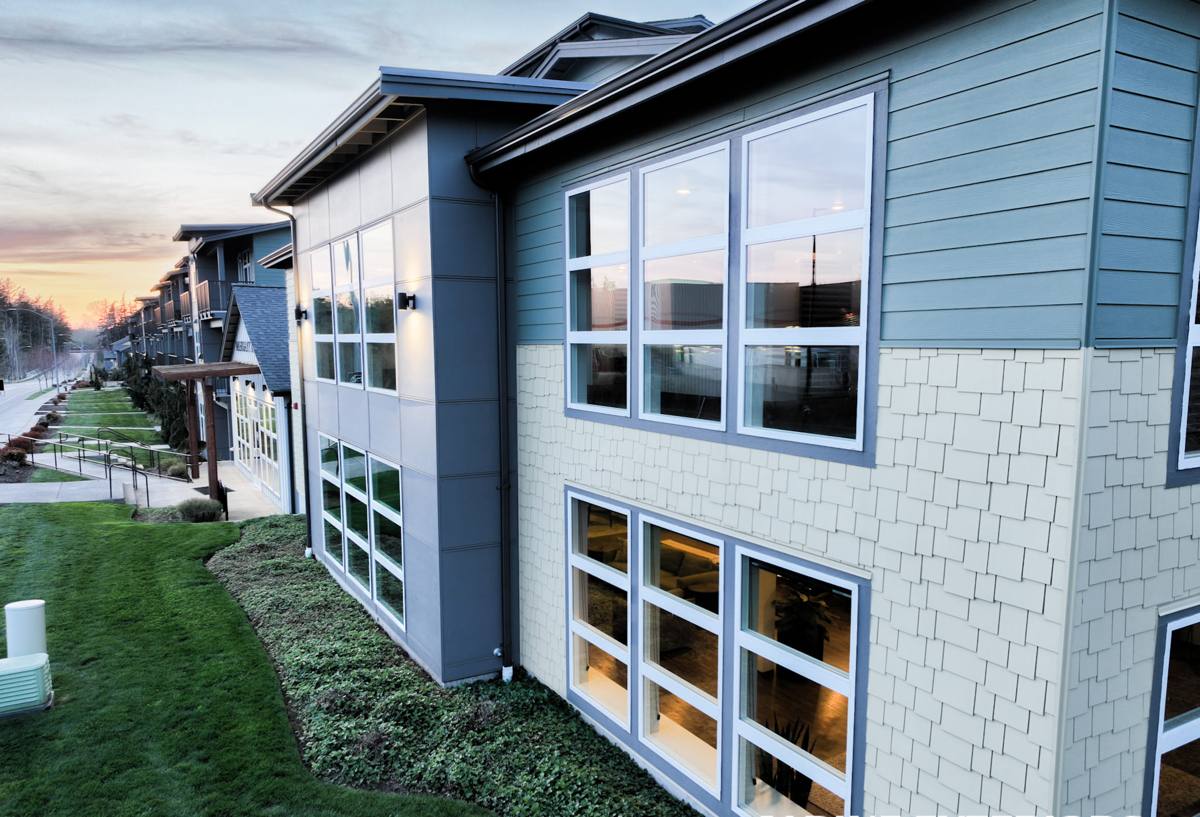
What Energy Efficiency Actually Means in a Window
Frame Material and Thermal Performance
The frame is a bigger part of a window's energy performance than most homeowners realize. Vinyl and fiberglass frames both include internal chambers that slow heat transfer, but they behave differently over time in a wet climate — vinyl can expand and contract more with temperature swings, while fiberglass tends to hold its shape and seal integrity longer. Wood-clad frames offer a traditional look but require more attention to keep moisture from reaching the wood core over the years.
Glass Packages: Low-E Coatings and Gas Fills
Double-pane glass with a low-emissivity (Low-E) coating and an argon or krypton gas fill between the panes is the baseline for real energy performance in this climate. The Low-E coating reflects heat back into the room in winter without noticeably darkening the glass, and the inert gas fill slows heat transfer across the airspace. In a marine climate like ours, where the priority is retaining heat through a long, mild-but-persistent heating season, the coating type matters more than it would in a hot, dry region.
U-Factor and Solar Heat Gain Coefficient
Every quality window carries an NFRC (National Fenestration Rating Council) label listing its U-factor and Solar Heat Gain Coefficient (SHGC). U-factor measures how well the window resists heat loss — lower is better for our climate. SHGC measures how much solar heat passes through the glass; in Whatcom County we generally want to hold onto whatever solar heat we get rather than block it, so this number gets balanced differently than it would for a south-facing window in a hot climate. Reading these two numbers, not just the sales pitch, is the real way to compare windows.
The Local Climate Factors That Change the Job Here
Moss, Algae, and Organic Growth
Shaded siding and sills around Nooksack stay damp longer than they would in a drier region, and that dampness is exactly what moss and algae need to take hold. Left alone, organic growth around a window's exterior trim holds moisture against the wood or cladding and accelerates rot at the very point where the window meets the wall. Trim details and drainage paths need to be built to shed water quickly, not just look finished on installation day.
Wind-Driven Rain and Flashing
Rain in this region rarely falls straight down — it comes in sideways during winter storms, which puts real pressure on the flashing and sealant details around a window opening. A window can have excellent glass and still leak if the flashing isn't lapped correctly or the sill pan isn't sloped to drain outward. This is where a lot of "good enough" installations fail years later, usually quietly, behind the wall.
Salt-Influenced Air and Hardware
Homes closer to the water pick up a fine, salt-tinged moisture in the air that speeds up corrosion on cheap hardware, screws, and unprotected metal components. Locks, hinges, and balance systems built for inland, dry climates don't always hold up as well here. We favor hardware and fasteners rated for coastal or high-moisture exposure, even on homes that aren't directly on the water, because the air quality in this corridor of Whatcom County trends damp and mildly corrosive year-round.
Signs Your Nooksack Home's Windows Are Losing Energy
Most window failure in this climate is gradual — you feel it before you see it. Watch for:
- Cold drafts near the window frame even when it's fully latched
- Visible condensation or fogging between the panes (a sign the seal has failed)
- Soft or discolored trim and sill wood, especially on shaded or north-facing walls
- Moss or dark streaking building up on the exterior trim year after year
- Windows that are hard to open, close, or lock — a sign the frame has shifted or swollen
- A noticeable rise in heating costs without a change in usage habits
- Peeling paint or bubbling finish on interior sills, which often points to trapped moisture
What a Correct Installation Involves
Assessment First
Every job starts with a look at the actual condition behind the trim, not just the window itself. Rot, past water intrusion, and out-of-square openings are common in older Nooksack homes and need to be addressed before a new window goes in — otherwise you're sealing a problem inside the wall instead of fixing it.
Removing the Old Window and Prepping the Opening
We remove the existing window carefully, check the sheathing and framing underneath for damage, and repair anything compromised before moving forward. This step gets skipped by crews trying to move fast, and it's the single biggest reason installations fail early in wet climates.
Flashing, Sill Pan, and Air Sealing
A sloped sill pan, properly lapped flashing tape, and a continuous air seal between the window frame and the rough opening are what keep wind-driven rain out and conditioned air in. This is the least visible part of the job and the most important one.
Setting, Shimming, and Finish
The window gets shimmed level and plumb so it operates smoothly and seals evenly for its full lifespan, then trimmed and finished to match the home. We test operation and check the seal before calling any job done.
Comparing Frame Options for This Climate
| Frame Type | Moisture Resistance | Maintenance | Typical Lifespan |
|---|---|---|---|
| Vinyl | Good, sealed multi-chamber design | Low — occasional cleaning | 20-30 years |
| Fiberglass | Very good, stable in temperature swings | Low | 30-40+ years |
| Wood-Clad | Depends on cladding integrity; wood core vulnerable if breached | Higher — periodic inspection of seals and cladding | 20-30 years with upkeep |
| Aluminum | Poor thermal performance; prone to condensation in this climate | Low, but not our recommendation here | Varies |
We generally steer Nooksack homeowners toward vinyl or fiberglass for most applications because both hold up well to sustained moisture exposure with minimal upkeep. Wood-clad is a reasonable choice for homeowners who want that look and are committed to periodic maintenance, but it carries more long-term risk in a climate this wet if the cladding is ever compromised.
What Affects the Cost
Pricing on window replacement varies based on a handful of real factors, not a flat rate per window:
- Frame material — vinyl is typically the most affordable, fiberglass and wood-clad cost more
- Glass package — upgraded Low-E coatings and gas fills add cost but improve performance
- Condition of the existing opening — rot repair or resizing adds labor
- Number of windows and whether it's a full-home replacement or select units
- Trim and finish work needed to match the existing exterior
Most full-home replacements land in a broad mid-to-upper thousands range depending on these factors, with single-window replacements priced individually. We give homeowners a real, itemized number after seeing the actual openings — not a phone-quote guess.
Why Hiring a Crew That Already Works in Nooksack Matters
A window that performs well in a dry inland climate doesn't automatically perform well here. Crews who work regularly in Whatcom County know which flashing details actually hold up against our wind-driven rain, which frame materials fight moss and moisture best on shaded elevations, and which hardware won't corrode prematurely in our damp, salt-touched air. That local pattern recognition is the difference between a window that's tight for two decades and one that starts leaking behind the trim in year four. We show up knowing the climate we're building for, not learning it on your house.
If your Nooksack home has drafty, foggy, or hard-to-operate windows, we're happy to take a look and give you a straightforward, no-pressure estimate — just fill out the form below and we'll go from there.