 Lynden Window
 Nooksack's Climate Is Hard on Any Siding — Especially Vertical Profiles
Nooksack sits along the river bottom east of Lynden, in the part of Whatcom County where farmland, tree lines, and low-lying ground all trap moisture longer than the surrounding hills do. Marine air moves in off Puget Sound and the Georgia Strait on the prevailing westerlies, mixing with the valley's own humidity from irrigated fields and the river itself. Add driving rain that comes in sideways during fall and winter storms, and a moss and algae season that can run eight months of the year on shaded walls, and you have conditions that will find every weak point in a siding installation within a few winters.
Board and batten is a beautiful profile — the vertical lines read as a farmhouse or craftsman look that fits Nooksack's rural character well. But vertical siding behaves differently in weather than horizontal lap siding, and it punishes shortcuts harder. This page is about what that profile needs to hold up here, and how we build it.
Why Vertical Boards See More Water Than Horizontal Lap
Horizontal lap siding is designed so each course overlaps the one below it, shedding water down and away from the wall in a shingle pattern. Board and batten runs the boards vertically, with a narrower strip — the batten — covering each seam. Water still runs down the face, but every batten joint is a place where wind-driven rain can be pushed sideways and upward under pressure, especially during the kind of storms that blow through the Nooksack valley in November and December. That means the drainage plane behind the siding, not the caulk line in front of it, is what actually keeps the wall dry.
Moss, Algae, and the North-Facing Wall Problem
Rural properties around Nooksack often have mature trees, outbuildings, or windbreaks that shade one or two walls for most of the day. Those walls dry slower after rain, and slower drying means more moss, algae, and mildew growth on the siding surface over the season. On an untreated wood product, that growth holds moisture against the board itself. On a factory-finished fiber cement product, it's a surface condition that rinses off — a real difference in long-term maintenance, not a cosmetic detail.
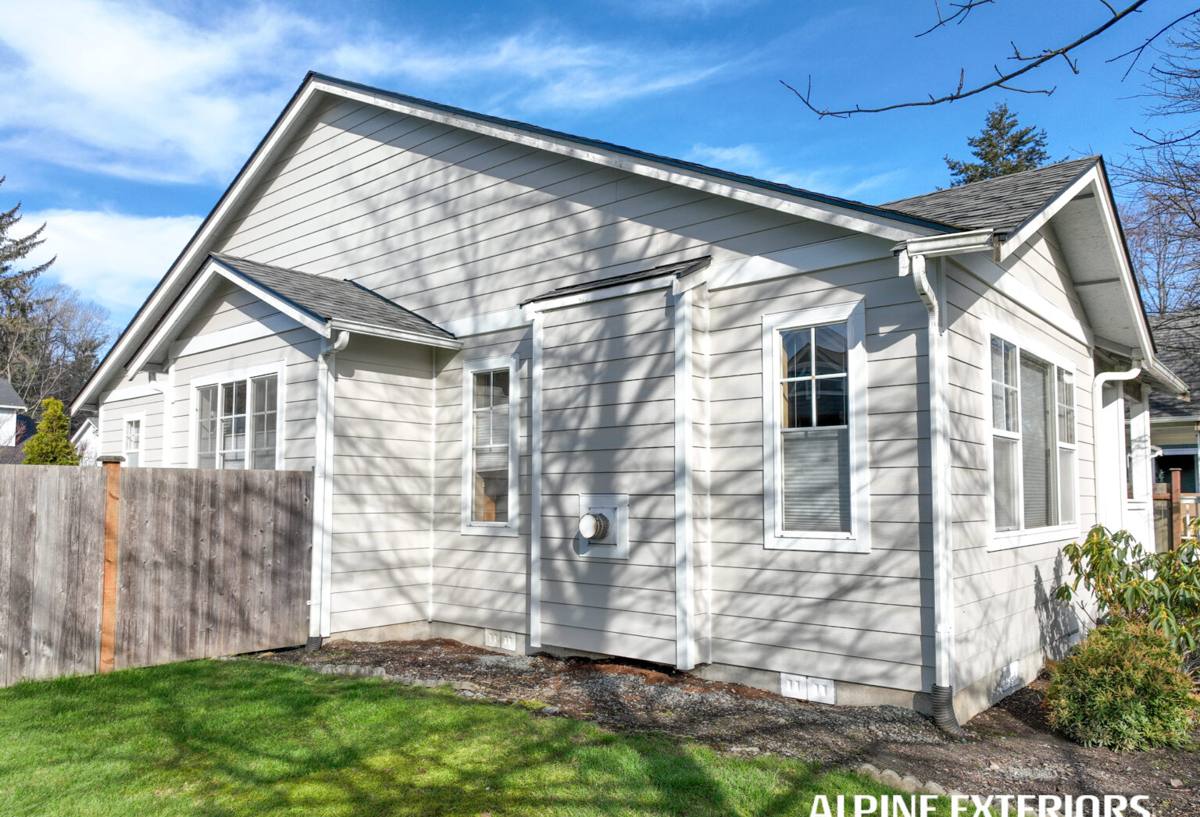
What Board & Batten Siding Actually Is
Board and batten is not a single product — it's a profile that can be built several different ways, and the way it's built matters more than the way it looks from the driveway.
Vertical Boards Over a Rainscreen Cavity
Done correctly, board and batten is installed over a drainage gap — thin vertical furring strips fastened through the weather-resistive barrier into the studs, with the siding fastened to the furring rather than flat against the wall sheathing. That gap lets any water that does get past the face of the siding drain down and out at the bottom, instead of sitting against the sheathing. Skipping this step is the single most common shortcut we see on vertical siding jobs, and it's the one that causes the most rot years later.
Batten Width, Spacing, and Reveal
The battens themselves need consistent spacing and a reveal that's proportioned to the wall — too wide and the wall looks busy, too narrow and you lose the clean vertical lines the style is known for. Batten placement also has to line up with the framing behind it wherever fasteners land, which takes more layout planning than a straightforward lap job.
Why We Install Board & Batten Only in James Hardie Fiber Cement
We get asked to bid board and batten in LP SmartSide, vinyl panel systems, primed spruce, and cedar. We don't install any of those, and it's worth explaining why rather than just saying no.
LP SmartSide is an engineered wood product with a resin-treated strand substrate. It holds paint well and is easier on a crew to cut and fasten, but it's still wood at its core — cut edges and any point where moisture gets past the finish are places it can swell and delaminate over time. In a climate with Nooksack's rain volume and moss season, that's a maintenance risk we're not willing to put our name behind.
Vinyl board and batten panels are low-maintenance in one sense — they don't rot — but they're a thin extruded plastic that expands and contracts significantly with temperature, which limits how it can be fastened and trimmed, and the color is baked into the material rather than a separately engineered finish, so it fades and chalks with UV exposure over the years. It also doesn't give the crisp, deep-shadow-line look that real board and batten is chosen for in the first place.
Primed spruce and cedar are real wood, and real wood needs a maintained paint or stain film to keep moisture out. In a place with Nooksack's rain and shade cycles, that's a repainting schedule measured in a handful of years, not decades, and any gap in that maintenance lets water in fast.
James Hardie fiber cement is cement, sand, and cellulose fiber — non-combustible, dimensionally stable, and engineered specifically for wet marine climates in its HZ5 product line. The factory-applied ColorPlus finish is baked on under controlled conditions, which is why it holds color and resists the fading and chalking that field-painted products see. It's also backed by a transferable material warranty, which matters on a property that may change hands someday. That combination is why it's the only material we put behind a board and batten profile.
What a Correct Board & Batten Installation Involves
A lot of what makes a board and batten job last is invisible once the project is finished. Before you sign off on any bid, these are the items worth confirming are actually included:
- A continuous weather-resistive barrier installed and lapped correctly before any furring or siding goes up
- Vertical furring strips creating a real drainage gap behind the boards, not siding fastened flat to the sheathing
- Flashing at every horizontal transition — window and door heads, water tables, and any place a roofline meets the wall
- Fastener type, spacing, and placement that follow the manufacturer's engineering, not just "however the last job was done"
- Batten spacing planned to hit framing members, not just centered by eye
- Caulk used only where it's designed to seal a joint — never as a substitute for flashing that was left out
- Field cuts sealed on exposed edges to preserve the factory finish where the ColorPlus coating was cut through
- A clear bottom termination and starter strip that keeps the first course off grade and draining freely
Our Process for a Nooksack Board & Batten Project
Site Assessment and Moisture Check
We start by walking the property and checking the existing wall assembly, especially on any shaded or north-facing sides, since those are the walls most likely to be holding moisture already. We check for soft sheathing, existing trim rot, and drainage patterns around the foundation before we ever talk about the new siding itself.
Installation
We install the weather-resistive barrier and flashing details first, then the rainscreen furring, then the boards and battens per Hardie's fastening specifications. Window and door details, corner boards, and trim get built out to match the vertical lines cleanly rather than as an afterthought.
Finish, Cleanup, and Warranty Registration
Cut edges get sealed, the site gets cleaned of debris and cutoffs, and we walk the finished job with you before registering the material warranty in your name. You get straightforward documentation of what was installed and what it's covered for.
Board & Batten Profile Comparison for This Climate
| Profile / Material | Moisture Handling | Ongoing Maintenance | Typical Lifespan |
|---|---|---|---|
| James Hardie board & batten | Excellent with proper rainscreen install | Occasional wash; no repainting cycle | Decades with factory finish intact |
| LP SmartSide board & batten | Good if finish stays intact; edges are the risk point | Watch cut edges and joints; repaint over time | Moderate, finish-dependent |
| Vinyl board & batten panel | Sheds water but seams and expansion gaps are common leak points | Low, but color fades and can't be repainted easily | Moderate, appearance fades faster |
| Cedar or primed spruce board & batten | Poor without a strict maintenance schedule | Regular repainting or staining required | Short to moderate without upkeep |
What Affects the Cost of Board & Batten Siding in Nooksack
Every property is different, but the same handful of factors drive most of the bid difference on vertical siding jobs in this area.
| Cost Factor | Why It Matters |
|---|---|
| Condition of existing wall sheathing | Shaded, moss-prone walls sometimes hide rot that has to be repaired before new siding goes on |
| Wall height and roofline complexity | Gables, dormers, and multi-story walls take more time and staging to detail correctly |
| Trim and corner detailing | Board and batten's clean lines depend on corner boards and trim being built out to match |
| Color selection | Factory ColorPlus finishes are included in the material cost; custom field-painted colors add labor |
| Removal of old siding | Tear-off and disposal of the existing material adds time versus siding over furring on new construction |
Why Hiring a Crew That Already Works in Nooksack Matters
A crew that regularly works this part of Whatcom County knows which walls on a rural property are going to be the problem spots before they even pull out a moisture meter — the ones shaded by a windbreak, the ones facing the prevailing storm direction, the ones near an outbuilding that blocks airflow. That local pattern recognition means fewer surprises mid-project and a better read on how much rainscreen ventilation a given wall actually needs. It also means familiarity with Whatcom County's permitting expectations and with the practical realities of working on agricultural and rural residential properties, rather than treating every job like a suburban tract house.
If you're weighing board and batten for a home in or around Nooksack, we're happy to walk the property, look at your existing walls, and give you a straightforward, no-pressure estimate on what a correct James Hardie installation would involve. There's a form below to get started.