 Lynden Window
 Why Bellingham Roofs Wear Differently Than Roofs Inland
A roof in Bellingham does not age the same way a roof forty miles east does. Being this close to Bellingham Bay and the Salish Sea means homes here deal with salt-laden air that slowly works on exposed metal, fasteners, and flashing. Add in Whatcom County's long wet season, where driving rain comes in sideways off the water more often than it falls straight down, and you get a roof that's under near-constant moisture pressure for months at a time. Then there's moss. The combination of shade, moisture, and mild temperatures gives moss and algae an ideal home on north-facing slopes and anywhere debris collects, and once it takes hold it holds water against the roofing material long after the rain has stopped.
None of this means a roof in Bellingham is doomed to fail early. It means the installation has to account for these conditions from the start — the right underlayment, the right fastener choices, the right attention to ventilation and flashing detail. A roof built the same way you'd build one in a dry inland climate will underperform here, even if the shingles themselves are rated for decades.
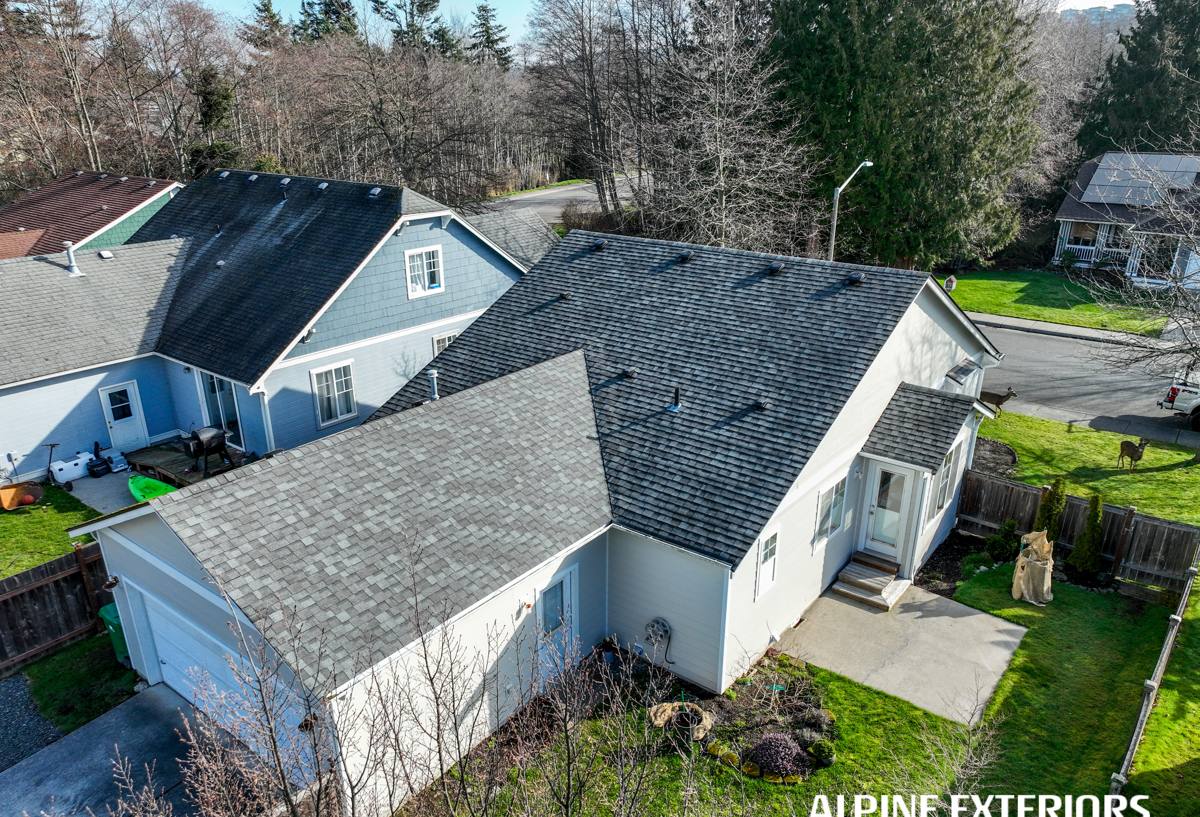
Signs a Bellingham Roof Needs Replacement, Not Another Repair
Homeowners often ask whether a problem area can just be patched. Sometimes it can. But there's a point where patching becomes throwing money at a roof that's structurally past its service life. Some signals worth taking seriously:
Granule Loss and Bald Patches
Asphalt shingles shed their protective granules as they age. If you're finding granules collecting in gutters or downspouts, or you can see bare, shiny patches on the shingle surface, the material has lost the UV and weather protection it needs.
Widespread Moss Rooting Into the Shingle Mat
Light surface moss can often be cleaned. Moss that has been left to grow for a season or more works its rhizoids down into the shingle itself, lifting edges and creating channels for water to travel underneath. At that stage, cleaning won't restore the shingle — the damage is already done.
Soft Decking or Interior Staining
Ceiling stains, soft spots when walking the attic, or daylight visible through the roof deck all point to moisture that's already past the shingle layer. This is no longer a surface problem.
Age Alone
Most asphalt composition roofs in this climate are realistically looking at replacement in the 18-25 year range, sometimes sooner on shaded, moss-prone slopes. If your roof is in that window and showing any of the signs above, it's worth a full inspection rather than another round of spot repairs.
What a Correct Roof Installation Actually Involves
A new roof is more than laying new shingles over what's there. Done right, it's a system, and every layer matters in a climate like ours.
Full Tear-Off and Deck Inspection
We remove the old roofing down to the deck rather than layering over it. This lets us actually see the plywood or OEM sheathing underneath, which is the only way to catch soft or rotted decking before it's sealed under new material. Any compromised sheathing gets replaced — covering it up just relocates the problem.
Ice and Water Barrier at Vulnerable Points
Eaves, valleys, and any low-slope transitions get a self-adhering waterproof membrane underneath the main underlayment. In a region where wind-driven rain regularly gets pushed uphill under shingle edges, this layer is what keeps water from reaching the deck at the points where it's most likely to try.
Synthetic Underlayment Across the Field
A quality synthetic underlayment resists moisture absorption far better than old-style felt, which matters when a roof deck can stay damp for days during a stretch of Pacific Northwest weather.
Flashing at Every Penetration and Transition
Chimneys, skylights, sidewalls, and roof-to-wall transitions are where the majority of roof leaks actually start — not in the open field of shingles. New step flashing, counter-flashing, and properly lapped valley metal at every one of these points is not optional in our climate.
Balanced Ventilation
Intake at the eaves and exhaust at the ridge keep air moving through the attic space, which controls moisture buildup from the inside and helps prevent the temperature swings that accelerate shingle aging. A roof can be installed perfectly and still underperform if the attic beneath it is trapping humid air.
Choosing a Roofing Material for This Climate
There's no single "best" roofing material — the right choice depends on your home's slope, shading, budget, and how much long-term maintenance you're willing to take on. Here's how the common options compare for a home in the Bellingham area:
| Material | Typical Lifespan Here | Moss/Algae Resistance | Maintenance |
|---|---|---|---|
| Standard 3-tab asphalt | 15-20 years | Low without algae-resistant granules | Regular moss treatment recommended |
| Architectural (laminate) asphalt | 20-30 years | Better with algae-resistant granules | Periodic cleaning, still moss-prone in shade |
| Standing seam metal | 40-50+ years | High — sheds moss and needles well | Low, but coastal fastener corrosion should be watched |
| Cedar shake | 20-30 years with upkeep | Low — moisture-retentive, needs regular treatment | High — periodic treatment and inspection required |
For most Bellingham homes, an architectural asphalt shingle with algae-resistant granules hits the right balance of cost, appearance, and performance. Metal is worth serious consideration on steeper, shaded roofs where moss has been a repeat problem, since it gives water and debris almost nothing to hold onto. We'll walk through the honest trade-offs for your specific roof rather than pushing one product across the board.
Moss, Algae, and Salt Air: What Ongoing Care Looks Like
Even a well-installed roof needs some seasonal attention here. Keeping gutters and valleys clear of needles and leaves removes the organic material moss needs to establish itself. Zinc or copper strips near the ridge can help suppress regrowth on shaded slopes by releasing trace metals that discourage moss during rain events. For homes closer to the water, rinsing accumulated salt residue off metal flashing and fasteners during a routine roof check can extend their service life. None of this replaces a properly installed roof — it's what keeps a good installation performing the way it's supposed to for its full lifespan.
Our Installation Process
- Inspection and estimate — we look at the existing roof, deck condition, ventilation, and any problem areas, and give you a written estimate with material options.
- Material selection — we go over the trade-offs for your roof's slope, shading, and budget so you're choosing with full information.
- Scheduling around weather — we plan installs around dry weather windows where possible, since a roof deck needs to stay dry during the tear-off and dry-in stages.
- Tear-off, deck repair, and dry-in — old material comes off, the deck is inspected and repaired as needed, and the roof is made watertight the same day whenever the scope allows.
- Full installation — underlayment, flashing, ventilation components, and roofing material go on to manufacturer and code specifications.
- Final walkthrough — we review the completed roof with you, including gutters, downspouts, and any areas that will need routine attention.
Why Local Experience in Bellingham Matters
A crew that works this area regularly already knows which slopes in a given neighborhood tend to hold moss, how prevailing wind and rain direction off the bay affects flashing decisions, and what Whatcom County's permitting and inspection process actually requires. That's the kind of knowledge that doesn't show up in a generic estimate — it shows up in fewer callbacks and a roof that's built for the conditions it's actually going to face, not a textbook average.
What Affects Your Roof Replacement Cost
| Factor | Why It Matters |
|---|---|
| Roof size and number of slopes/valleys | More complex geometry means more flashing, cutting, and labor time |
| Existing deck condition | Rotted sheathing found during tear-off adds material and labor |
| Material choice | Asphalt, metal, and cedar carry significantly different material and install costs |
| Roof pitch and access | Steep or hard-to-access roofs take longer and require more safety setup |
| Ventilation and flashing upgrades | Bringing older systems up to current standards adds scope but reduces future problems |
We'll give you a clear, itemized estimate before any work starts, so you know what you're paying for and why — no vague lump-sum numbers.
Questions Worth Asking Any Roofer Before You Hire
- Will you do a full tear-off, or are you proposing to install over the existing roof?
- What underlayment and ice/water barrier are included, and where will they be used?
- How will you handle flashing at chimneys, skylights, and sidewalls specifically?
- Is attic ventilation part of the scope, or being left as-is?
- What does the written warranty cover — materials only, or labor as well, and for how long?
- Are you licensed and insured to work in Washington, and can you provide proof?
If a roofer can't give you clear, specific answers to these, that's worth noticing before you sign anything.
If your Bellingham home's roof is showing its age or you're just planning ahead, we're happy to take a look and give you a straightforward, no-pressure estimate. Fill out the form below and we'll get you scheduled.