 Lynden Window
 Getting Windows Right the First Time in a Ferndale New Build
New construction is the one point in a home's life when windows can be installed exactly the way they're supposed to be — flashed into the wall assembly from the stud out, before siding, trim, or paint cover up any shortcuts. On a replacement job, an installer works around whatever is already there. On a new build in Ferndale, we get to set the sill pan, lap the weather-resistant barrier, and seal the fin correctly the first time, with nothing hidden yet. That's a real advantage, but only if the crew doing it understands what this specific area asks of a window assembly over the next twenty or thirty years.
Ferndale sits close enough to the water and open farmland that homes here take a different kind of weather beating than houses twenty miles inland. Salt-laden air, wind-driven rain off the Strait, and long stretches of shaded, damp weather all work on window components in ways that don't show up on a spec sheet. Building the opening correctly at the framing stage is cheaper, faster, and far more effective than fixing a leak or a failed seal after the siding is already up.
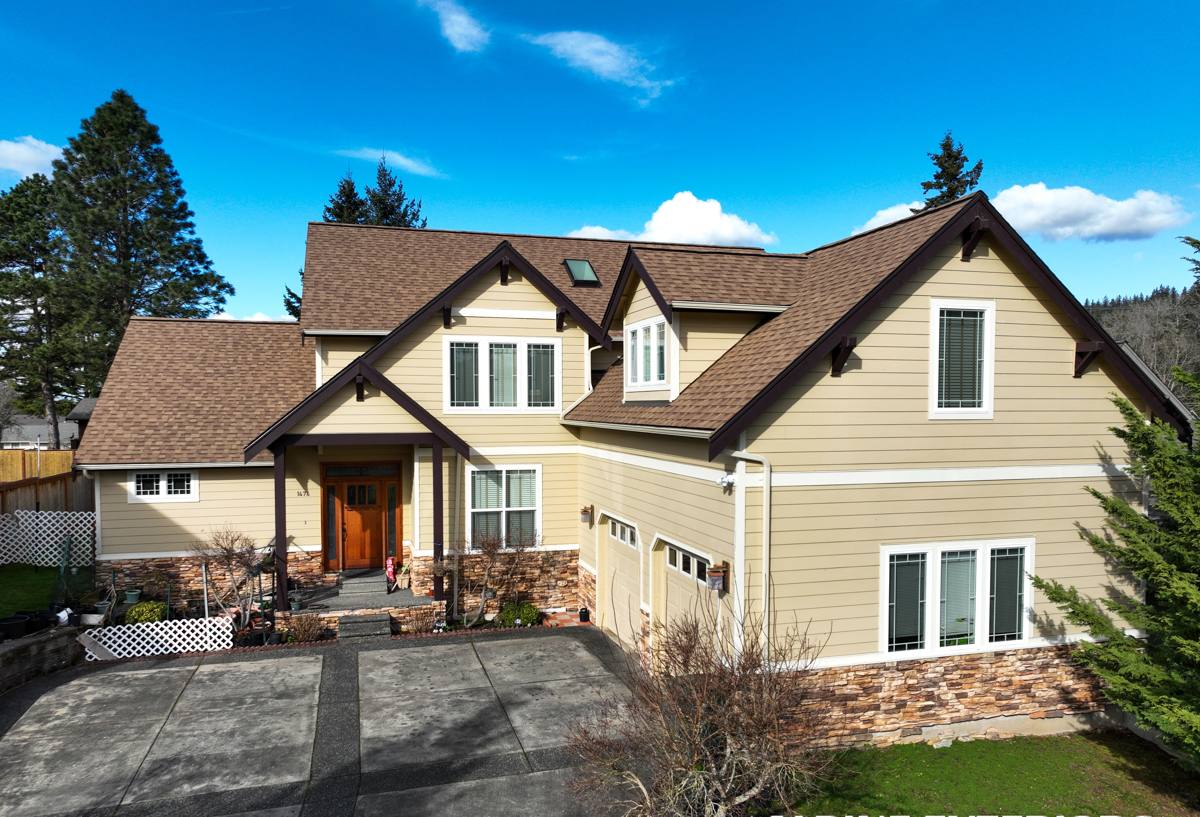
What Ferndale's Weather Does to Windows Over Time
Salt Air and Marine Moisture
Homes closer to Bellingham Bay and the Strait of Georgia pick up a steady trace of salt in the air, even well inland of the immediate shoreline. Salt-bearing moisture is hard on unprotected fasteners, low-grade cladding, and window hardware finishes. It won't destroy a window in a season, but over years it accelerates corrosion on anything not rated for a marine-influenced environment — cheap screws, unsealed aluminum, and painted-over hardware are the first things to show it.
Driving Rain Off the Strait
Whatcom County storms frequently come with real wind behind the rain, not just straight-down drizzle. Wind-driven rain gets pushed sideways and upward into gaps that a calm-weather install would never expose. A window opening built for this area needs flashing details that shed water even when it's arriving at an angle, not just a bead of caulk at the edges.
A Long Moss Season
Western Whatcom County stays damp and shaded for much of the year, and moss and algae take hold anywhere moisture sits without airflow — window sills, the base of trim boards, and the transition between cladding and window frame. Left alone, that growth holds moisture against the wood or composite trim around a window and slowly breaks it down. Good drainage and airflow at the sill are as important as the window itself.
Choosing a Frame Material for a New Build Here
There's no single "best" frame material for every house — it depends on budget, exposure, and how the window sits relative to weather and sun. For a new build in Ferndale, here's how the common options generally hold up:
| Frame Material | Salt Air / Moisture Behavior | Maintenance | Best Fit |
|---|---|---|---|
| Vinyl | Won't corrode or rust; performs well in marine-influenced air | Low — occasional cleaning | Most Ferndale new builds, value-driven jobs |
| Fiberglass | Very stable in moisture and temperature swings, holds paint well | Low to moderate | Exposed elevations, larger openings |
| Aluminum-clad wood | Good exterior protection if cladding and seals are intact; interior wood needs monitoring | Moderate — seal and finish upkeep | Homes wanting a wood interior look |
| Bare aluminum | More prone to corrosion and condensation in this climate unless thermally broken | Higher | Limited use; we typically steer builds away from it here |
We don't push a single brand or material on every job. We'll talk through what the elevation, sun exposure, and budget actually call for, and explain the trade-offs honestly rather than defaulting to whatever is easiest to install.
What a Correct New-Construction Install Actually Involves
Sill Pans and Flashing Sequence
Every rough opening should get a sloped, sealed sill pan before the window ever goes in — something built to carry any water that gets past the window back out to the exterior, rather than letting it sit on raw framing. From there, the weather-resistant barrier and flashing tape need to be lapped in the correct shingle order — barrier over the pan, tape over the sides, barrier over the head flashing — so water always drains down and out, never into a seam. Skipping or reversing this order is the single most common cause of hidden rot behind new windows.
Nail-Fin vs. Block-Frame Windows
Most new construction in this area uses nail-fin (flange) windows, set and flashed into the rough opening before siding goes on. The fin gets fastened to the sheathing and integrated directly with the WRB, which is what makes new-construction installation different — and generally more watertight — than a retrofit install into an existing opening. Block-frame windows are sometimes used on masonry or specific architectural details, but for a typical Ferndale wood-framed home, a properly flashed nail-fin window is the standard approach.
Rough Opening Tolerances and Timing
Windows need to arrive on site sized to the actual framed openings, not the plan set — framing tolerances vary, and an opening that's off by even a half inch changes how well a window can be shimmed, leveled, and sealed. We coordinate directly with the general contractor's schedule so windows go in at the right point after framing and wrap, and before siding closes everything up. Getting this timing wrong is how crews end up forcing an ill-fitting window into place under schedule pressure.
Code, Egress, and Energy Performance in Whatcom County
New construction in Washington falls under the Washington State Energy Code, which sets minimum performance targets for window U-factor and solar heat gain based on climate zone — Whatcom County falls in a zone where energy code baselines are meaningfully stricter than warmer parts of the state. On top of energy performance, bedroom windows have to meet egress requirements for minimum opening size and sill height, which affects what window styles and sizes are usable in sleeping rooms. We build these requirements into window selection from the plan-review stage, not as an afterthought once product is ordered.
Condensation resistance also matters more here than in a drier climate. A window with a marginal U-factor or a poor thermal break can fog or sweat on cold, damp mornings — common in this area for a good chunk of the year. We generally recommend performance a step above the code minimum on north- and west-facing openings, where interior condensation risk is highest.
Our New-Construction Window Process
Here's what we actually do on a Ferndale new-build job, from plan review to final walkthrough:
- Review window schedule and rough opening sizes against the framing plan before ordering
- Confirm egress and energy code requirements for each opening by room type
- Coordinate install timing with the general contractor around framing and wrap completion
- Verify sill pan flashing and WRB shingle-lap sequence before any window is set
- Set, shim, and level each window to the fin, checking square and reveal
- Seal and flash the head, jambs, and sill per manufacturer instructions
- Walk every opening with the builder or homeowner before siding closes it in
- Provide install documentation for warranty and future resale purposes
Why Hire a Crew That Already Works Ferndale Job Sites
A crew that only occasionally works this area treats every job as a fresh guess about weather timing, flashing detail, and local inspection expectations. A crew that regularly works Ferndale new builds already knows how tight the rain-free install windows can get, which hardware finishes actually hold up near the water, and how to sequence work with local general contractors without becoming the bottleneck on the schedule. That familiarity shows up less in what gets said on site and more in what doesn't go wrong six years later — no rot at the sill, no failed seal at the head, no hardware seizing up from salt exposure.
Cost Factors to Expect
New-construction window pricing depends on more variables than a simple per-window number can capture. In broad terms, expect the total to move based on:
- Frame material — vinyl generally costs less than fiberglass or clad-wood
- Glazing package — standard low-E double pane versus upgraded triple pane or specialty coatings
- Opening size and window count across the whole build
- Special shapes, large picture windows, or engineered structural openings
- Site access and how many openings need install in a single visit
We'll walk your plans and give you real numbers rather than a rough guess pulled from a national average — new construction pricing should be based on your actual window schedule, not a generic per-opening rate.
Let's Talk About Your Ferndale Build
If you're framing a new home in Ferndale or planning ahead for one, it's worth getting window details reviewed before the openings are locked in. We'll look at your plans, talk through frame material and glazing options suited to this climate, and give you a straightforward, no-pressure estimate — use the form below to get started.