 Lynden Window
 Windows Built for Maple Falls Conditions
Maple Falls sits up against the foothills of the North Cascades, and that location shapes what your windows have to deal with day to day. Homes here sit under heavier tree cover than most of lowland Whatcom County, get more rainfall over the course of a year, and see wider temperature swings between summer afternoons and winter nights. Add in the marine-influenced air that moves through the whole county and you get long stretches where wood, weatherstripping, and old sealant simply don't dry out. That combination is hard on window frames, hard on glazing seals, and it's why window failures in Maple Falls tend to look different than they do in a drier, more open part of the state.
A window installation done right for this area isn't just about picking a good product. It's about how that product gets sealed, flashed, and fitted into a wall assembly that's going to spend a good chunk of the year wet on the outside and warm on the inside. Get that wrong and you're looking at rot, fogged glass, or drafts within a few years no matter how good the window itself was.
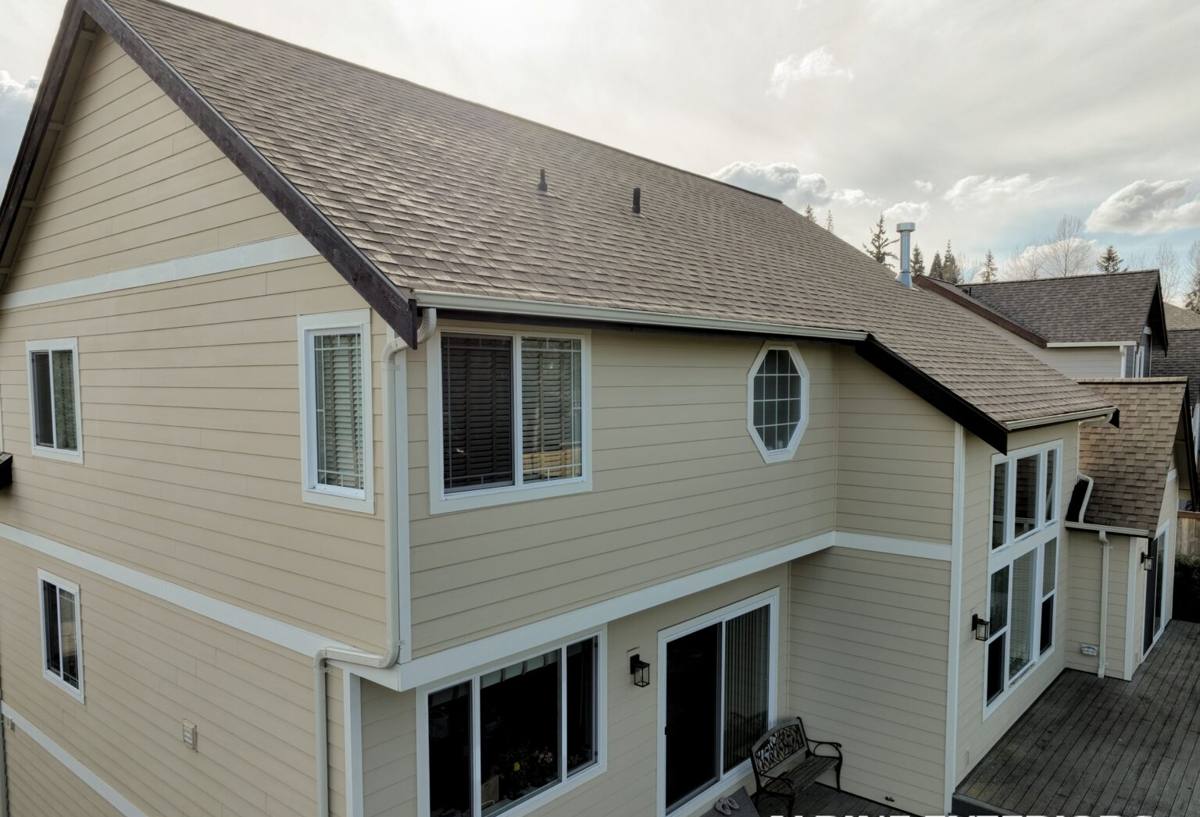
What the Local Climate Does to Windows Over Time
Driving Rain and Wind-Driven Moisture
Storms coming off the water push rain sideways as much as down, and shaded, tree-lined lots around Maple Falls don't get the sun exposure that would otherwise dry siding and trim between storms. Water finds its way behind poorly sealed trim, into weep holes that were never cut correctly, and around old caulk joints that have shrunk and cracked.
The Long Moss Season
Shade, humidity, and mild temperatures are exactly what moss and algae need to establish themselves on siding, trim, and window sills. Once organic growth takes hold around a window opening, it holds moisture against the wood or cladding far longer than open air would, which accelerates rot in wood-framed windows and breaks down caulk and sealant faster than manufacturers account for in their warranty terms.
Freeze-Thaw and Condensation
Maple Falls sits at higher elevation and further from the moderating effect of the water than coastal towns, so winter nights run colder here. That means more condensation risk on older or poorly rated glass, and more stress on seals as materials expand and contract through freeze-thaw cycles.
Signs a Maple Falls Home Needs Window Attention
- Fogging or a visible film between the panes of double- or triple-glazed windows — the seal has failed and the gas fill is gone
- Soft or spongy wood at the sill or bottom corners of the frame
- Moss or dark staining building up on the sill, especially on north- or shade-facing walls
- Windows that are noticeably harder to open, close, or lock than they used to be
- Visible daylight or a draft you can feel around the frame on a windy day
- Condensation forming on the inside of the glass regularly, even when the house isn't overly humid
- Paint or finish that's peeling specifically around the window opening rather than the wall in general
What a Correct Installation Actually Involves
The window unit itself is only part of the job. In a climate that stays wet as long as this one does, the installation details matter as much as the product:
- Flashing sequence: Sill pan flashing, side flashing, and head flashing installed in the correct shingle-lap order so any water that gets past the exterior cladding is directed back out, not into the wall cavity
- Sealant, not just caulk: The right sealant for the substrate at each joint, applied so it seals but doesn't trap moisture where it needs to drain
- Proper shimming and squaring: A window that isn't shimmed level and square will bind, won't seal evenly against its weatherstripping, and will wear unevenly
- Weep hole and drainage checks: Confirming the window's own drainage path is clear and functional before it's ever closed up behind trim
- Insulation without over-packing: Gaps filled with a low-expansion foam or backer rod and sealant, not compressed so tightly it bows the frame
Any one of these steps done poorly can undo the benefit of an otherwise good window. This is where a lot of the problems we get called out to fix in older Whatcom County homes actually started — not with a bad window, but with a rushed or incomplete installation years earlier.
Choosing a Frame Material for This Climate
There's no single right answer for every home, but here's how the common options hold up specifically against the rain, shade, and humidity Maple Falls sees:
| Frame Material | Moisture Behavior | Maintenance | Best Fit |
|---|---|---|---|
| Vinyl | Won't rot; handles constant damp well | Low — occasional cleaning | Most Maple Falls homes, budget-conscious replacements |
| Fiberglass | Excellent — dimensionally stable, resists warping in freeze-thaw | Low | Homes wanting a wood-look profile without wood's upkeep |
| Wood-clad | Good if maintained; vulnerable where cladding is nicked or seals fail | High — finish and caulk need regular attention | Homes prioritizing a traditional interior wood look |
| Aluminum | Prone to condensation without a thermal break; conducts cold | Moderate | Rarely our recommendation for this climate |
We install vinyl and fiberglass in the large majority of Maple Falls jobs because they hold up to the local moisture load with the least long-term maintenance. Wood-clad windows can still be the right call for the right homeowner, but we'll walk you through the upkeep commitment honestly before you commit to it.
How We Handle a Maple Falls Installation
1. On-Site Assessment
We look at the existing window openings, check for hidden moisture or rot in the surrounding framing, and take real measurements — not catalog guesses. Shaded, wooded lots and older framing are common enough out here that we plan for surprises rather than being caught off guard by them.
2. Product Selection
We go over frame material, glass package, and grille style options based on your home's exposure, your budget, and how the room is actually used. A north-facing window in deep shade doesn't need the same glass package as one that bakes in summer sun.
3. Removal and Prep
Old windows come out carefully, and we check the rough opening for rot or damage before anything new goes in. If we find compromised framing — which isn't unusual on older homes here — we address it before installing, not after.
4. Installation and Flashing
New units are set, shimmed square, flashed in the correct sequence, and sealed with materials chosen for the specific substrate. This is the step that determines whether the window lasts the way it's supposed to.
5. Interior and Exterior Finish
Trim, casing, and touch-up work are completed to match your home, and we clean up the site before we leave.
6. Walkthrough
We show you how the new windows operate, what maintenance (if any) they need, and what the warranty covers — plainly, without sales pressure.
Replacement vs. New Opening Considerations
Most Maple Falls jobs are straight replacements — same size opening, new window. That's usually the faster, less invasive option and keeps existing flashing and trim largely intact if it's still sound. New or resized openings — for a remodel, an added window, or correcting a badly rotted original opening — take more time because they involve reworking the wall assembly, not just the window unit. We'll tell you upfront which category your project falls into and what that means for cost and timeline, rather than letting you find out partway through.
Cost Factors to Expect
| Factor | Why It Affects Cost |
|---|---|
| Frame material | Vinyl is typically the most economical; fiberglass and wood-clad cost more upfront |
| Number and size of openings | More or larger windows mean more material and labor |
| Condition of existing framing | Rot or moisture damage found during removal adds repair scope |
| Access and site conditions | Second-story, tight, or heavily wooded access can add labor time |
| Glass package | Upgraded low-E coatings or gas fills add cost but pay back in comfort and condensation resistance |
We'll give you a written, itemized estimate before any work starts, so you know exactly what you're paying for and why.
Why a Crew That Already Works in Maple Falls Matters
Rural and semi-rural properties around Maple Falls come with real logistics — longer driveways, septic and well locations to work around, limited staging space on wooded lots, and weather windows that close faster than they do in town. A crew that regularly works this part of Whatcom County already knows how to plan around those factors instead of learning them on your job. We also know what this specific microclimate does to a window installation over five or ten years, which shapes the flashing details and sealant choices we default to here versus a drier, more open part of the county.
Local presence also matters after the install. If a warranty question or an adjustment comes up, you're dealing with a crew that's a short drive away and familiar with your home, not a call center.
If your Maple Falls home has windows showing their age — fogged glass, drafts, sticking sashes, or moss creeping in around the sills — we're happy to take a look and give you a straightforward, no-pressure estimate. Use the form below to get started.