 Lynden Window
 Siding Repair for Maple Falls: A Different Job Than a Bellingham Street Repair
Maple Falls sits well up the Nooksack River valley toward the Mt. Baker foothills, a different setting than the flatter, more open lots closer to Lynden proper. Lots out here tend to run larger and sit under heavier conifer cover, homes are spread further apart, and the weather that reaches this part of the county comes with its own local twist — the same driving rain and moss season that define exterior work across Whatcom County, plus more shade, more standing tree debris, and colder winter nights than you'll find closer to the water. That combination changes what siding repair actually looks like on a Maple Falls home compared to a repair job in town.
This page is specifically about siding repair for the Maple Falls area — not a full re-side, and not a generic overview of siding in general. We're covering what tends to go wrong out here, what a repair actually needs to include to hold up, and how we approach the work differently than a crew that doesn't already spend regular time in this part of the county.
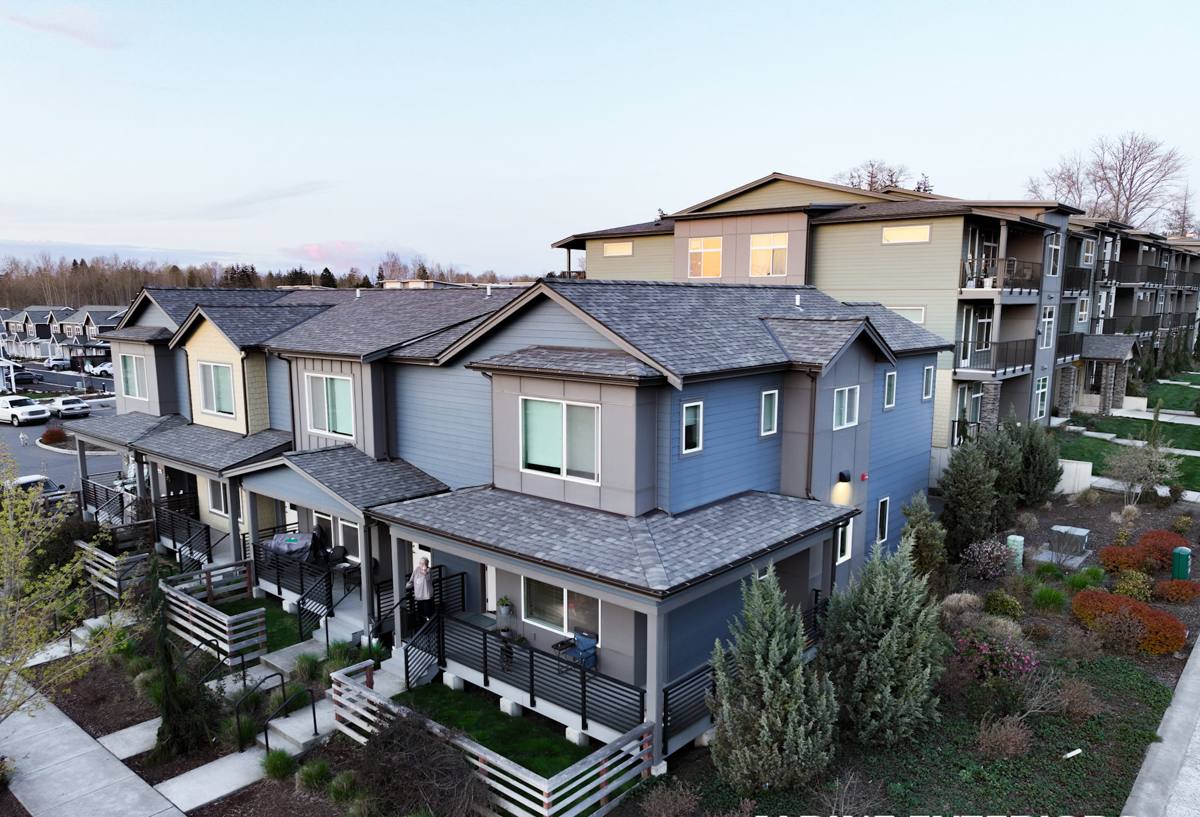
What Maple Falls' Climate Does to Siding That's Already Aging
Heavy Tree Cover and a Long Moss Season
Conifer canopy is thicker out here than closer to town, and that shade keeps siding wetter for longer after every rain. Needles and organic debris collect in corners, behind trim, and along the bottom courses of siding, holding moisture against the surface even after the rest of the wall has dried. On aging or already-damaged siding, that extended dampness is exactly what accelerates rot, delamination, and the kind of soft, spongy spots that start small and spread if they're not addressed.
Driving Rain in a Valley Setting
Storms moving up the valley don't always fall straight down by the time they reach a Maple Falls property — wind funneled through the foothills can push rain sideways into walls, testing seams, trim joints, and flashing the same way it does in the flatter parts of the county, just with less warning and more force behind it on exposed walls. Repairs that only patch the visible damage without correcting the flashing or lap detail underneath tend to fail again in the same spot within a season or two.
Colder Nights and Freeze-Thaw Stress
Elevation and distance from the water mean Maple Falls sees colder overnight temperatures and more freeze-thaw cycling through the winter than towns closer to Bellingham Bay. Materials that have already absorbed moisture — a soft spot in wood siding, a swollen edge on engineered wood — expand when that moisture freezes and contracts again as it thaws, which widens cracks and gaps that started small. Salt-tinged marine air still moves through this part of the county on weather systems off the water, just less directly than at the coast, so fastener and flashing corrosion is still a factor worth checking during any repair.
Signs Your Siding Needs Repair, Not Full Replacement
Not every problem on a Maple Falls home means a full re-side. A lot of what we get called out for is a genuine repair — a section of damage that can be corrected and blended into the surrounding siding without tearing off a whole wall. Here's what we look for to make that call:
- Soft or spongy spots limited to a specific board, corner, or area rather than spread across a wall
- Visible gaps at seams, trim, or window and door casings where water has an obvious entry point
- Isolated cracking, splitting, or checking on a small number of boards
- Moss or organic buildup concentrated on shaded sections rather than the whole exterior
- Corroded or backed-out fasteners in one area, without widespread failure elsewhere
- Discoloration or staining that traces back to a single flashing or caulk failure
When damage is isolated and the sheathing behind it hasn't been compromised, a correct repair can solve the problem for a fraction of what a full re-side costs. When we open up a section and find rot has already reached the sheathing or framing, or the damage pattern repeats across most of the exterior, we'll tell you that directly rather than patching around a bigger problem.
Common Repair Issues by Material on Maple Falls Homes
Maple Falls has a mix of older cabins, full-time residences, and newer construction, so we see a wide range of existing siding materials when we're called out for repair work. What tends to fail — and how it fails — differs by material:
| Existing Material | Common Failure Point Out Here | What a Correct Repair Requires |
|---|---|---|
| Cedar or primed wood | Cupping, checking, and soft spots from repeated wet-dry cycling under heavy shade | Cutting back to sound wood, correcting flashing, and repainting or replacing affected boards |
| Vinyl siding | Cracked or warped panels from cold-snap contraction, plus gaps at seams letting wind-driven rain behind panels | Panel replacement with correct overlap and expansion clearance for temperature swings |
| LP SmartSide / engineered wood | Edge swelling and delamination where cut ends or seams weren't fully sealed | Removing affected sections, sealing new cut edges properly, and correcting the drainage detail behind them |
| Older or damaged fiber cement | Cracked caulk joints and isolated fastener corrosion, usually from age rather than the material itself | Recaulking, refastening, and matching replacement boards as closely as possible to the existing finish |
What a Correct Siding Repair Actually Involves
Diagnosing the Cause, Not Just the Symptom
A visible crack or stain is rarely the whole story. Before we touch a board, we're checking what's happening behind it — whether water is tracking down from a flashing gap higher on the wall, whether a nearby roof-to-wall transition is contributing, and whether the sheathing underneath is still sound. Patching over a symptom without correcting the source is the single most common reason a "repaired" section fails again within a year or two.
Matching Materials and Color
James Hardie's ColorPlus finish is baked on at the factory under controlled conditions, which is part of why it holds up so well — but it also means a repair section needs to be matched carefully rather than touched up with a can of field paint. We source the correct Hardie product and, where an exact factory-finish match isn't available for an older run, we talk through the realistic options with you upfront rather than promising an invisible seam we can't deliver.
Correcting Flashing and Fasteners
Any repair we do includes checking and correcting the flashing, fastener type, and fastener spacing in the affected area — not just replacing the visible board. Out here specifically, that means paying close attention to how water is shed at trim, window casings, and lap joints on the walls that catch the most wind-driven rain and stay shaded the longest.
Repair vs. Full Re-Side: How We Help You Decide
| Factor | Points Toward Repair | Points Toward Full Re-Side |
|---|---|---|
| Extent of damage | Isolated to one or two areas | Recurring across multiple walls or elevations |
| Sheathing condition | Sound once damaged siding is removed | Soft, delaminated, or showing rot underneath |
| Age of existing siding | Relatively recent, with remaining service life | Already near or past its expected lifespan |
| Material on the house now | Fiber cement that can be closely matched | A product we don't install, where a lasting repair isn't realistic long-term |
When a home has non-Hardie siding — cedar, primed wood, an engineered wood product, or vinyl — a targeted repair can still make sense if the damage is limited and the goal is a few more years of service. But if we open a wall and find the underlying problem is the material itself struggling against this climate rather than a one-time installation flaw, we'll say so plainly, and a partial or full re-side with James Hardie fiber cement is usually the option we recommend rather than repeatedly patching a product that's fighting the same moisture and freeze-thaw exposure every year.
Our Process for a Maple Falls Repair
Inspection and Estimate
We start with a real look at the affected area and the surrounding wall, checking for hidden moisture and confirming whether the sheathing is sound. Given the distances involved out here, we schedule the inspection and the repair visit together where the scope allows, so you're not waiting on multiple separate trips for a straightforward job.
The Repair
Once we know what we're dealing with, we remove the damaged material back to sound substrate, correct any flashing or fastener issue we find, and install matched replacement material with the same fastener spacing and sealant details Hardie's installation spec calls for.
Follow-Up
We walk the repair with you before we leave so you know exactly what was found, what was corrected, and what to keep an eye on — particularly on shaded, tree-covered walls where moss and moisture will keep testing the repair every wet season going forward.
Why a Crew That Already Works Maple Falls Matters
A lot of contractors treat the foothill end of the county as a place they'll drive to for a big enough job, not somewhere they show up for a repair call. That shows in the details — knowing which elevation on a tree-covered lot takes the worst of the wind-driven rain, understanding how much longer a shaded wall out here stays wet compared to an open one in town, and not being surprised by gravel access or a longer driveway when scheduling a visit. We already work this stretch of the valley regularly, which means a repair call doesn't wait behind a full week of city-side scheduling, and the person diagnosing your siding has actually seen how this specific climate behaves on homes near yours.
Only James Hardie, Even When We're Just Repairing
We install James Hardie fiber cement exclusively, and that standard carries into repair work too. When a repair calls for new siding material — not just recaulking or refastening — we're sourcing and installing Hardie product, matched as closely as the situation allows, rather than mixing in a different brand or product line to save a step. We don't install LP SmartSide, vinyl, Cemplank, Allura, primed spruce, or cedar as replacement material, even for a small patch, because a mismatched material at a repair seam tends to age differently than the surrounding siding and creates a new weak point exactly where you just paid to fix one.
If you're dealing with a damaged section, a persistent leak, or just want an honest read on whether your Maple Falls home needs a repair or something more, we're happy to take a look. Reach out below for a free, no-pressure estimate.