 Lynden Window
 Storm Damage Roof Repair for Laurel Homes
Laurel sits in the flat, exposed farmland north of Lynden, in the part of Whatcom County that takes the full brunt of whatever comes off the Strait of Georgia and rolls inland with nothing to slow it down. There are no foothills to break the wind here, no dense urban canopy to buffer driving rain. When a storm moves through, it hits Laurel roofs straight on, and it hits them often. That combination — open exposure, salt-tinged marine air, and long stretches of wet, shaded weather that never quite let a roof dry out — is exactly why storm damage repair in this area needs to be handled differently than it might be in a drier, more sheltered part of the state.
This page covers one thing specifically: what storm damage roof repair looks like for a home in Laurel, what a correct repair actually involves, and how our process works when you call us after a windstorm, a hard rain event, or when you've simply noticed something isn't right up there.
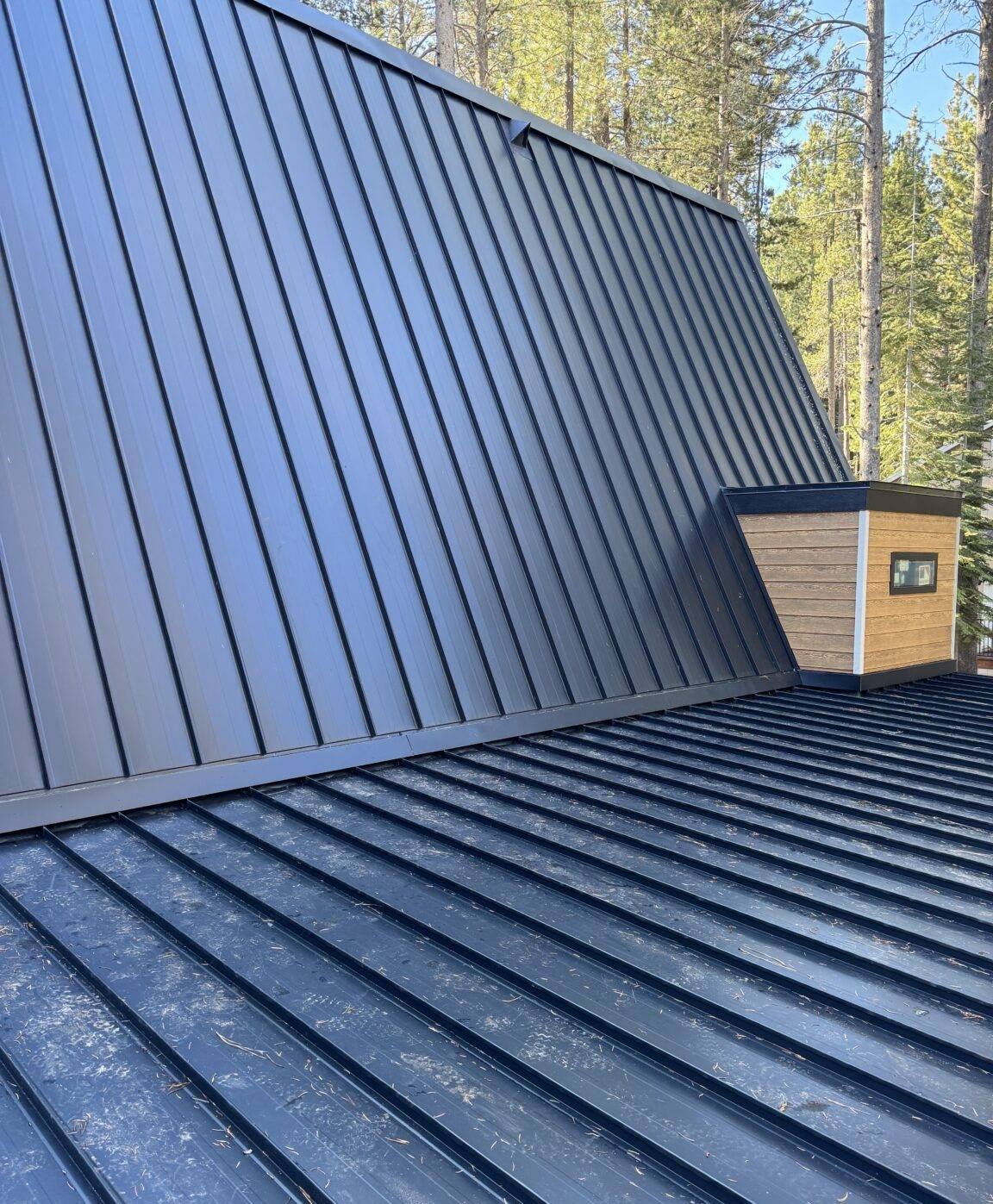
What Whatcom County Storms Actually Do to a Roof
It's rarely one dramatic event that causes the damage homeowners eventually deal with. More often it's an accumulation — a windstorm lifts a few shingle tabs, then weeks of driving rain work water underneath them before anyone notices a stain on a ceiling. A few patterns show up again and again on roofs in this area:
- Wind uplift on shingle edges and ridge caps — sustained wind off open farmland catches under loosened tabs and peels them back, especially along eaves and ridges where wind pressure is highest.
- Wind-driven rain intrusion — rain here rarely falls straight down. When it's pushed sideways by wind, it finds any gap in flashing, underlayment laps, or fastener penetrations that would stay dry in calmer weather.
- Moss and organic buildup — long stretches of overcast, wet weather and shaded roof sections (north slopes, areas under trees) grow moss steadily through fall, winter, and spring. Moss holds moisture against the roofing material and works its way under shingle edges, which accelerates granule loss and softens decking underneath.
- Salt-influenced corrosion — the marine air moving in from the Strait carries enough salt content to speed up corrosion on exposed metal flashing, fasteners, and gutter hardware faster than you'd see further inland.
- Debris impact — branches and debris coming off nearby trees during wind events can crack or puncture shingles and, less often, damage decking.
Individually, most of these are minor. Left alone through another wet season, they compound. A lifted shingle tab that isn't resealed becomes a soft spot in the decking a year later. That's the core reason storm damage repair is worth treating seriously and promptly rather than as a cosmetic fix.
Why Moss Season Matters More Here Than It Looks Like It Should
Moss doesn't just sit on a roof looking untidy. As it grows, it lifts shingle edges slightly and holds a layer of moisture against the roofing surface for months at a time. On a roof that's already taken storm damage — a cracked shingle, a compromised flashing seal — moss buildup right at that damaged spot means the wound never gets a chance to dry out between rain events. That's often the difference between a repair that's a few hours of work and one that involves replacing rotted decking.
Signs of Storm Damage Worth Checking After a Bad Weather Event
Most storm damage isn't visible from the ground, and a lot of homeowners don't know something's wrong until there's a stain on a ceiling or ice-cold water finds daylight. After any significant wind or rain event, these are worth a look, either from the ground with binoculars or by having a crew check for you:
- Shingle tabs that look lifted, curled, or missing entirely, especially along the ridge and the edges of the roof
- Granules collecting in gutters or at the base of downspouts — a sign shingles are wearing faster than normal, sometimes accelerated by wind abrasion
- Visible gaps or lifted metal at flashing points — chimneys, vent stacks, valleys, and where the roof meets a wall
- Soft or spongy-feeling decking when walked on the interior attic space near suspect areas
- Water stains, discoloration, or a musty smell in the attic or on interior ceilings
- Moss buildup that's thickened noticeably since the last dry stretch, particularly on north-facing slopes
- Sagging sections along the roofline, which can indicate saturated or weakened decking
If you notice any of these, it's worth having it looked at before the next storm rolls through — not because every one of these is an emergency, but because each one gets more expensive to fix the longer water has access to it.
What a Correct Storm Damage Repair Involves
A proper storm damage repair isn't just replacing the shingles that are visibly missing. It's a sequence, and skipping steps is exactly how a roof ends up needing the same repair again in eighteen months.
1. Full-Roof Inspection, Not Just the Obvious Spot
Wind and rain damage rarely stay confined to the area that's visibly affected. A proper inspection covers the whole roof plane — decking, underlayment condition where accessible, flashing at every penetration, and the attic side, not just the spot a homeowner pointed to.
2. Decking Assessment
Any area where water has been sitting under damaged shingles needs the decking checked for softness or rot before new roofing material goes down. Repairing over compromised decking is one of the most common shortcuts that leads to a repair failing early.
3. Matching and Replacing Roofing Material
Shingles, underlayment, and flashing get replaced to match the existing roof as closely as possible in material, profile, and where feasible, color, so the repair doesn't stand out as a patch and performs consistently with the surrounding roof.
4. Flashing and Fastener Correction
Given how much of the damage in this area traces back to wind-driven rain finding a gap, flashing details get particular attention — valleys, chimney flashing, vent boots, and any wall-to-roof transitions.
5. Moss Treatment Where Relevant
If moss contributed to the damage or is present near the repair area, it gets addressed as part of the job rather than left to keep working at the new material the same way it did the old.
Our Process, Start to Finish
- Contact and initial description — you describe what you've noticed (a leak, visible damage, a recent storm) and we schedule a time to look at it.
- On-site inspection — we assess the full roof, not just the reported area, including attic access where possible, and document what we find.
- Written estimate — you get a clear explanation of what's damaged, what needs to be repaired versus what can wait, and an honest cost range before any work starts.
- Repair — the actual work: decking replacement if needed, new roofing material matched to the existing roof, flashing correction, and moss treatment if applicable.
- Final walkthrough — we go over the completed repair with you so you know exactly what was done and what to watch for going forward.
Repair Approach Comparison
| Approach | What It Addresses | Where It Falls Short |
|---|---|---|
| Surface patch only (shingles over damage) | Visible, cosmetic damage | Leaves compromised decking or underlayment in place; damage often resurfaces within a season or two |
| Full spot repair (decking + underlayment + shingles + flashing) | Root cause of the leak or damage, not just the symptom | Costs more upfront than a surface patch |
| Full spot repair without moss treatment | The storm damage itself | Moss regrows into the same repair area within a wet season if left untreated nearby |
| Full repair with moss treatment and flashing review | The damage, the moisture source, and the conditions that caused it | None — this is the standard we build repairs to |
What Affects the Cost of a Storm Damage Repair
| Factor | Why It Matters |
|---|---|
| Extent of decking damage | Rotted or soft decking has to be cut out and replaced, which adds labor and material beyond the visible shingle repair |
| Roof pitch and accessibility | Steeper or harder-to-access roof sections take longer to work safely |
| Age and material match of existing roof | Older roofing material can be harder to source an exact match for, which may affect material cost |
| Number of affected areas | A single localized repair costs less than damage spread across multiple roof planes |
| Flashing and moss condition | Additional flashing correction or moss treatment adds scope beyond the shingle repair itself |
We give a specific number after an inspection, not before — anyone quoting a firm price over the phone hasn't actually seen your roof.
Insurance Considerations
Many storm damage repairs in this area do qualify for homeowners insurance coverage, particularly when there's a clear wind or storm event tied to the damage. We document damage clearly with our inspection notes, which homeowners are welcome to use when filing a claim. We're not a public adjuster and don't handle the claim itself, but a clear, honest assessment of what's damaged and why makes that conversation with your insurer more straightforward.
Why It Matters That We Already Work in Laurel
A crew that's worked on roofs throughout Laurel and the surrounding Lynden area already knows what this exposure does over time — which slopes tend to hold moss longest, how quickly salt-influenced air corrodes exposed fasteners, and which flashing details tend to fail first under sustained wind-driven rain. That's not something you get from a general contractor passing through the area once. It means less time spent explaining your situation and more time spent actually assessing and fixing it correctly the first time.
After the Repair: What to Keep an Eye On
- Check the attic for new staining after the next significant storm to confirm the repair is holding
- Clear gutters and downspouts regularly — clogged gutters push water back under roof edges
- Keep overhanging branches trimmed back to reduce both debris impact and shade that encourages moss
- Have moss treated or removed on a routine basis rather than waiting until it's thick
- Have the roof looked at after any severe wind event, even if nothing looks obviously wrong from the ground
- Address small issues — a lifted tab, a small stain — as soon as they're noticed rather than waiting for the next storm to make them worse
If a recent storm has you wondering about your roof, or you've noticed a stain, missing shingles, or heavy moss buildup, we're glad to come take a look. The estimate is free, there's no pressure to move forward, and you'll walk away knowing exactly what condition your roof is actually in — use the form below to get started.