 Lynden Window
 Laurel's Climate and What It Means for a Shingle Roof
Laurel sits in the flat, low-lying farmland between Lynden and Bellingham, close enough to Bellingham Bay to pick up a steady dose of salt-carrying marine air on top of the same wet weather pattern that shapes exterior work across Whatcom County. That combination is harder on an asphalt shingle roof than most homeowners realize. Salt air accelerates corrosion on exposed fasteners, flashing, and vent components years before a roof's shingles are actually worn out. Driving rain, wind-pushed rather than falling straight down, tests every seam, valley, and edge detail on a roof, finding the one spot where flashing or underlayment was installed as an afterthought. And a long, mild moss season, stretched out by shaded lots and surrounding tree lines, gives moss and algae months at a time to take hold on any roof plane that doesn't dry out quickly.
None of that means asphalt shingle roofing is the wrong choice for Laurel. It means the roof has to be built, from the deck up, for exactly this climate rather than for a generic weather forecast. That's the standard we hold every Laurel roofing job to, whether it's a full replacement, a repair, or a maintenance visit.
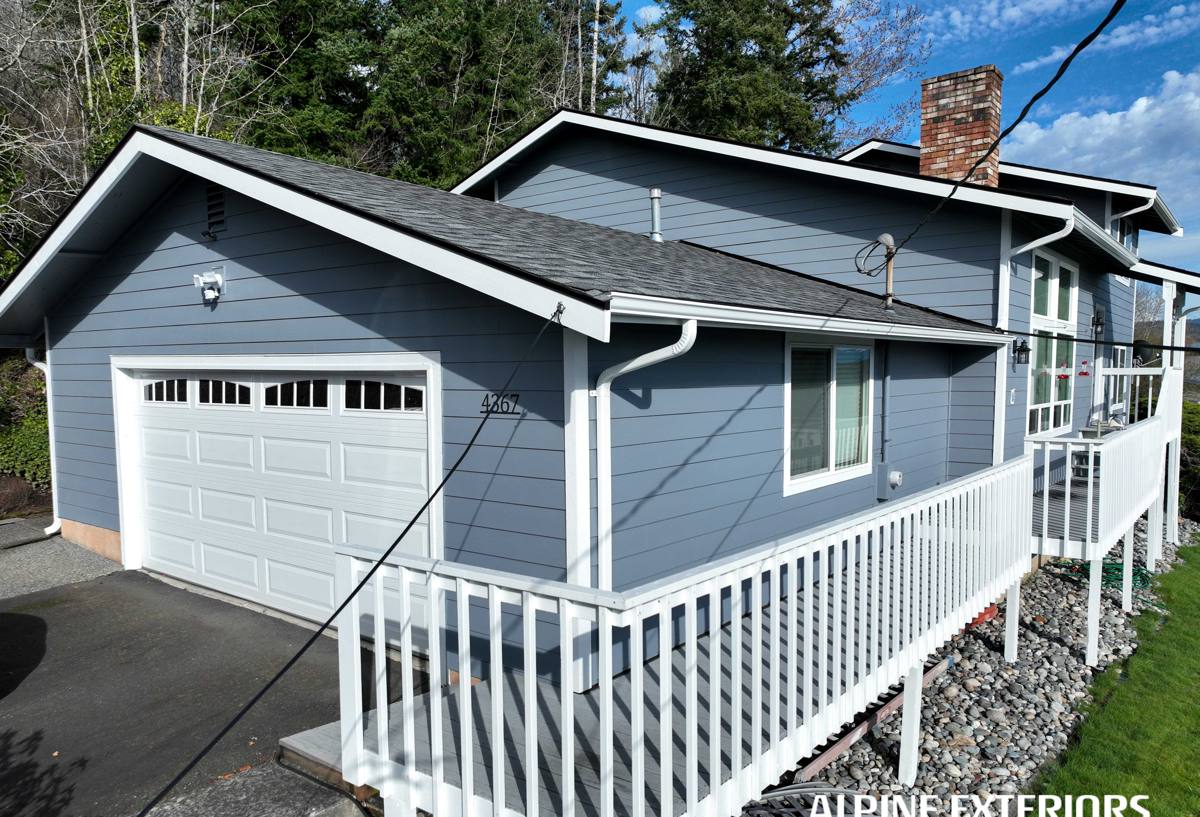
Why Asphalt Shingle Roofing Still Makes Sense Here
Asphalt shingles remain the most common roofing material in this part of Washington for good reason: reasonable upfront cost, a wide range of style and color options, straightforward repair when damage is localized, and a service life that, done correctly, comfortably covers two to three decades. The trade-off is that asphalt shingles are more sensitive to installation quality than some alternatives. A shingle roof installed with the right underlayment, ventilation, and flashing details holds up well against this area's rain and moss. One installed to minimum code, with shortcuts in any of those details, tends to show granule loss, moss intrusion, and edge lifting years earlier than it should.
We install asphalt shingle roofs because, for most homes in this area, they're the most sensible balance of cost and performance, not because they're the only option. If a particular home's pitch, budget, or long-term plans point toward a different material, we'll say so plainly rather than defaulting to shingles out of habit.
Shingle Grades: What the Difference Actually Buys You
Not all asphalt shingles are built the same, and the difference matters more in a climate that stays damp for months at a stretch than it would somewhere drier.
| Shingle Type | Wind Rating | Moss & Algae Resistance | Typical Lifespan Here |
|---|---|---|---|
| Three-tab | Lower, typically around 60-70 mph | Standard granules unless AR-rated | 15-20 years |
| Architectural / laminate | Higher, often 110-130 mph when installed correctly | Usually available with algae-resistant (AR) granules | 20-30 years |
| Premium / designer | Comparable to or better than architectural | Typically AR-rated, heavier granule coverage | 25-30+ years |
Algae-resistant, or AR, shingles use copper-infused granules that resist the blue-green algae staining common on shaded roofs in this climate. That staining is cosmetic rather than structural, but on a roof that stays damp as long as many Laurel roofs do, AR granules are usually worth the modest cost difference. We'll walk through which grade fits your roof's exposure, your budget, and how long you plan to stay in the house, rather than steering every job toward the same shingle by default.
What a Correctly Installed Roof Needs in This Climate
Underlayment and Ice-and-Water Shield
Underlayment is the roof's backup layer, the barrier that has to hold if wind-driven rain gets past the shingles. We use underlayment rated for sustained moisture exposure rather than the bare minimum, and we install self-adhering ice-and-water shield membrane at eaves, valleys, and around every penetration, the spots where wind-pushed water is most likely to work its way backward under a shingle edge.
Ventilation
A roof deck that can't breathe traps moisture underneath the shingles, which shortens shingle life and can lead to deck rot over time. Balanced intake and exhaust ventilation, usually soffit vents paired with a ridge vent, lets that moisture escape instead of sitting against the underside of the roofing.
Flashing and Moss-Resistant Details
Step flashing at walls, proper chimney and valley flashing, and correctly lapped drip edge are what actually stop leaks; the shingles themselves are the least likely point of failure on most roofs we inspect. On roofs with heavy shade or a history of moss buildup, we'll often recommend zinc or copper strips near the ridge, which release trace metal ions that inhibit moss growth on the courses below them over time.
Fasteners and Wind Resistance
Salt-influenced air corrodes low-grade fasteners faster than most homeowners expect, so we use corrosion-resistant nails and metal components throughout. We also follow manufacturer nailing patterns exactly; enough nails, in the right spots, matter more to a shingle's wind rating than the shingle itself does.
How We Approach a Laurel Roofing Job
Every asphalt shingle job on a Laurel home follows the same sequence, whether it's a small section or a full tear-off:
- Inspect the existing roof, deck, and attic ventilation before quoting anything, so the estimate reflects what your roof actually needs
- Remove old roofing down to the deck and inspect for soft spots, rot, or prior water damage
- Repair or replace any compromised decking before anything new goes down
- Install ice-and-water shield at eaves, valleys, and penetrations, followed by rated underlayment across the full deck
- Install drip edge, starter strip, and step flashing at walls and chimneys
- Install shingles to manufacturer nailing specifications, with moss-resistant strips added where the roof's exposure calls for them
- Finish ridge venting and ridge cap, then walk the full roof for a final quality check
- Clean the site thoroughly, including a magnetic sweep for stray nails
Moss and Algae: Living With a Long Wet Season
Even a correctly installed roof will see some moss and algae activity in this climate; the goal is keeping it from taking hold rather than pretending it won't show up. Light moss on a shaded slope is a maintenance issue if it's addressed early. Left alone through another wet season, it holds moisture against the shingle surface and can work its way under shingle edges, lifting them. We recommend gentle moss removal methods, soft brushing or a low-pressure treatment rather than pressure washing, which strips protective granules and shortens shingle life far more than the moss itself would. Keeping gutters and valleys clear of debris also matters more here than in drier climates, since trapped organic material holds moisture right where a roof needs to dry out fastest.
Signs Your Laurel Roof Needs Attention
- Moss returning quickly on shaded slopes even after cleaning
- Granules building up in gutters or at the base of downspouts
- Curling, cupping, or missing shingles, especially after a windstorm
- Water staining on interior ceilings near exterior walls or chimneys
- Daylight visible through the roof deck from inside the attic
- Soft spots or noticeable give when the roof is walked
- Flashing that looks lifted, rusted, or missing sealant
Any single item on that list is worth a professional look. Caught early, most of these are a repair. Ignored through another wet season, several of them turn into a full tear-off.
Repair or Replace, and What Actually Drives the Cost
We don't default to recommending replacement. A localized leak or a section of storm damage on an otherwise sound roof is usually a straightforward repair. A roof nearing the end of its service life, with moss-related damage spread across multiple slopes or a deck showing soft spots from long-term moisture, is more honestly addressed with replacement. Either way, several factors drive what a project actually costs.
| Factor | Why It Matters |
|---|---|
| Roof size and pitch | More surface area and steeper pitches mean more material and labor time |
| Number of valleys, dormers, and penetrations | Each one adds flashing work and installation time |
| Tear-off and layers | Removing multiple existing layers takes longer than a single-layer tear-off |
| Deck condition | Rotted or soft decking needs repair or replacement before new roofing goes down |
| Shingle grade | Three-tab, architectural, and premium shingles carry different material costs |
| Ventilation upgrades | Adding or correcting ridge and soffit venting adds labor but pays off in shingle lifespan |
We give a written estimate that breaks these factors down for your specific roof rather than a flat per-square number that hides what's actually driving the price.
Why a Crew That Already Works Laurel Matters
A roofing crew that works this area regularly knows how local conditions play out on real houses, not just on a manufacturer's spec sheet. That means recognizing which roof orientations in Laurel's farmland setting hold shade and moisture longest, understanding how much closer this area sits to Bellingham Bay's salt-influenced air than roofs farther inland, and knowing which flashing and ventilation details are worth the extra time on install day so you're not dealing with a callback two winters later. It also means being available for a follow-up moss check or a minor repair without a long drive being part of the equation.
If your Laurel home needs a roof inspection, a repair, or you're weighing a full asphalt shingle replacement, we're glad to take a look and give you a straightforward, honest read on what it actually needs. Reach out using the form below to schedule a free, no-pressure estimate.