 Lynden Window
 Building New in Kendall: Getting Windows Right From Day One
Kendall sits in the rural stretch of Whatcom County northeast of Lynden, where new homes and outbuildings still go up on acreage, farmland, and wooded lots. If you're framing a new house out here, the windows are one of the few components that have to perform correctly for decades without a second chance to fix a mistake. Once siding, trim, and interior finish work close in around a window opening, any error in flashing or fit gets buried — and it usually doesn't show up as a problem until years later, when water has already found its way into the wall.
New construction is different from replacing windows in an existing home. There's no old frame to work around, no compromise dictated by what's already there. That's an advantage, but it only pays off if the installer treats the rough opening, the flashing sequence, and the window selection as one connected system — not three separate steps done by three people in a hurry.
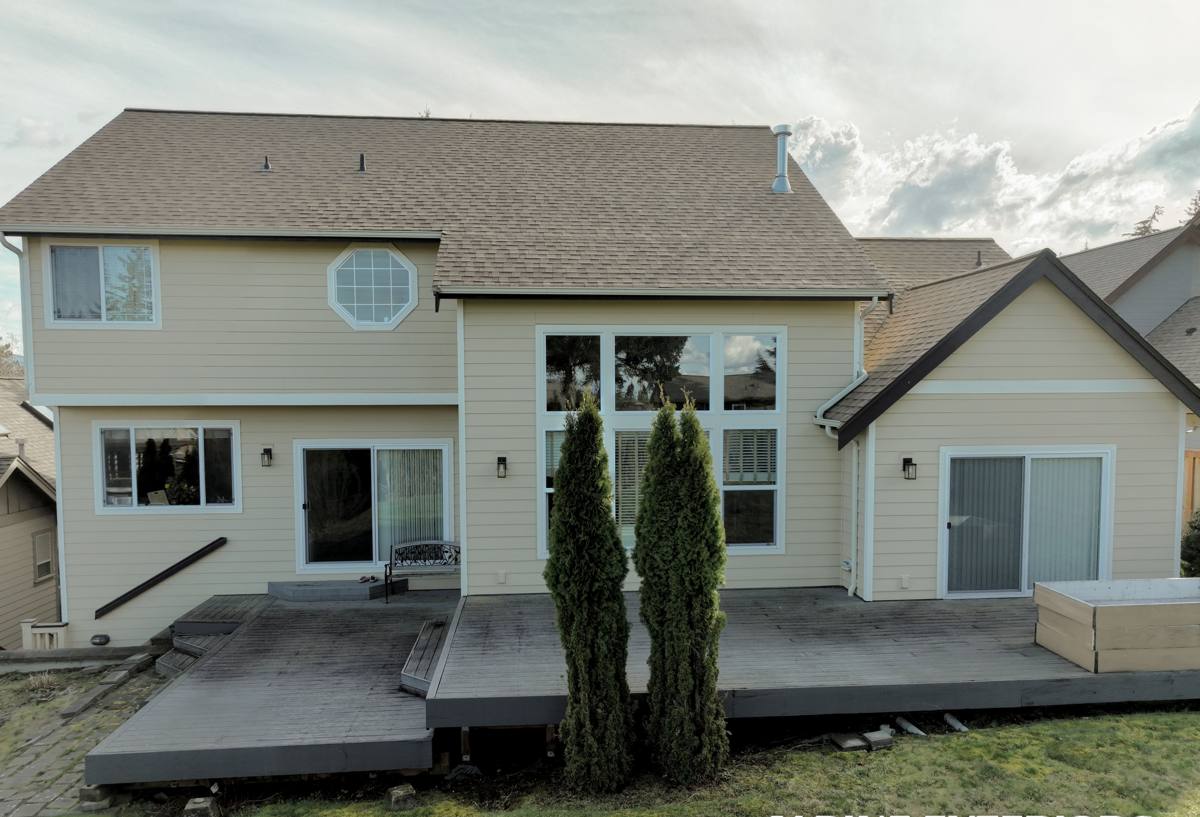
Why New-Construction Windows Are a Different Job Than Replacement
A replacement window gets set into an existing frame, often with the original exterior trim and siding left in place. A new-construction window is installed into a bare, framed opening before siding goes on, using a nailing fin (or flange) that gets integrated directly into the home's water-resistive barrier (WRB) and flashing system. That gives the installer full access to do the job right — but it also means every layer of that flashing sequence is on the installer, not inherited from whoever built the house originally.
On a new build, the window installer isn't working in isolation. Timing matters: windows typically go in after the WRB (house wrap) is up and before siding starts, and the flashing has to be sequenced correctly with the wrap — sill pan first, then side flashing, then head flashing lapped over the top, always shingle-style so water sheds outward and down, never inward. Get that order wrong and you've built a leak path into a brand-new wall.
What Kendall's Climate Asks of a New Window Install
Whatcom County's marine-influenced climate is a fact of life for anyone building out here, and Kendall gets its share of it. Salt-tinged coastal air travels further inland than people expect in Western Washington, driving rain arrives sideways during fall and winter storm systems, and the damp, low-light stretch from October through April keeps north-facing surfaces and shaded siding wet long enough to grow moss. None of that is unusual for the area — but it does raise the bar for how a window opening needs to be built.
- Driving rain tests the flashing detail at the sill and jambs far more than it tests the window unit itself — most leaks in this region trace back to installation, not product failure.
- Salt-influenced air accelerates corrosion on unprotected fasteners and lower-grade hardware, which is why fastener choice and cladding material matter more here than in drier inland climates.
- Extended damp season and moss growth mean any trim detail, sill, or drainage plane that holds standing moisture will stay wet longer and break down faster — sills need a real slope and a clear drainage path, not just a bead of caulk.
None of this means new construction in Kendall needs exotic materials. It means ordinary, well-understood building science — correct flashing laps, a sloped and drained sill pan, sealed and backed fasteners — has to be executed consistently, on every opening, not just the ones that are easy to reach.
The Parts of the Job That Actually Determine Performance
Flashing and Water Management
The window unit itself is rarely where a leak starts. It's almost always the interface between the window and the wall — the sill pan, the side flashing, and how it all ties into the house wrap. A correct install uses a dedicated sill pan flashing (not just wrap folded into the opening), self-adhered flashing tape at the jambs, and head flashing that laps over the top of the WRB so water is always directed outward, never trapped behind the cladding.
Nailing Fin Integration
New-construction windows are set and fastened through a nailing fin that gets sealed to the sheathing and integrated with the WRB before trim or siding covers it. This is the step that gets rushed on jobs where the crew is racing to close in the building — and it's the step that matters most, because once it's covered, nobody checks it again for twenty years.
Window Selection for This Climate
Frame material, glass package, and hardware all affect how a window holds up to salt air and sustained damp weather. Vinyl and fiberglass frames resist corrosion better than uncoated aluminum in coastal-influenced air. Low-E glass with the right coating helps manage both winter heat loss and the low-angle glare common in this region. Stainless or corrosion-resistant fasteners cost a little more up front and matter a lot more twenty years out.
Comparing Frame and Install Approaches
| Factor | Vinyl New-Construction | Fiberglass New-Construction | Wood-Clad New-Construction |
|---|---|---|---|
| Upfront cost | Lowest | Mid to upper | Highest |
| Corrosion resistance in salt-influenced air | Good | Very good | Good (cladding-dependent) |
| Maintenance | Low | Low | Moderate — cladding seams need periodic check |
| Dimensional stability (large openings) | Moderate | High | High |
| Best fit | Standard openings, budget-conscious builds | Larger openings, high-exposure walls | Architectural detail, custom builds |
None of these frame choices fixes a bad flashing job, and none of them is ruined by a good one. We'll walk through the trade-offs against your specific plan set and elevation exposure rather than pushing one product line as a default.
Our Process on a Kendall New Build
- Plan review: we look at the window schedule, rough opening sizes, and elevation exposures before anything ships, so sizing and swing/operation direction are confirmed early.
- Timing coordination: we work with your builder or GC to install after the WRB is up and before siding closes in, so flashing integrates cleanly with the wrap instead of getting patched around it.
- Sill pan and flashing installation: sloped sill pan, jamb flashing, and head flashing installed in the correct shingle-lap sequence at every single opening — not just the visible or ground-floor ones.
- Setting and fastening: windows are set plumb, level, and square, shimmed correctly, and fastened through the nailing fin per manufacturer spec so the warranty stays intact.
- Sealing and fin integration: fin sealed and taped into the WRB, with attention to corners and laps, before that area is covered by trim or siding.
- Final check: operation, seals, and flashing are inspected before we sign off, while the opening is still accessible if anything needs adjusting.
What a New-Construction Window Job Costs
| Cost Factor | What Drives It |
|---|---|
| Frame material | Vinyl runs lower per unit; fiberglass and wood-clad run higher |
| Glass package | Standard dual-pane vs. upgraded Low-E/argon affects both cost and long-term energy performance |
| Opening size and count | Larger openings and higher unit counts affect both material and labor pricing |
| Custom shapes or sizes | Non-standard openings (arched, oversized, corner units) add lead time and cost |
| Site access and timing | Coordinating install with a framing/siding schedule on an active job site affects labor efficiency |
We'll give you a real number tied to your plan set and product selection rather than a rough per-window estimate that doesn't reflect your actual openings.
A Checklist Before You Sign Off on Any New-Construction Window Bid
- Does the bid specify a sill pan flashing detail, or just "standard install"?
- Is fastener type specified, and is it rated for coastal-influenced or damp climates?
- Does the installer coordinate directly with your framer or GC on timing, or expect the opening pre-finished?
- Is the manufacturer's installation instruction being followed closely enough to keep the product warranty valid?
- Does the crew have experience on new builds specifically, not just retrofit replacement work?
- Are glass package and frame material matched to the wall's actual sun and weather exposure, not just a default spec?
Why a Crew That Already Works Kendall Matters
New-construction window work rewards familiarity with how local builders frame, what inspectors in Whatcom County look for, and how a given wall assembly actually behaves once winter storms start testing it. A crew that's already done this work around Lynden and Kendall isn't guessing at how the WRB, flashing, and siding trades need to hand off to one another — they've coordinated it before, on lots with the same soil, wind exposure, and weather pattern yours will face. That familiarity shows up as fewer callbacks, cleaner coordination with your builder, and a flashing detail that's built for the rain this area actually gets, not a generic spec sheet from somewhere drier.
If you're framing a new home or outbuilding in Kendall and want the window package done right the first time, we're glad to walk your plans, talk through frame and glass options, and give you a straightforward, no-pressure estimate using the form below.